How Compression, Mimic Reinforcement, And Loss Of Direct Recognition Turned Symbols Into Modern Authority Structures
Humans Mistake Symbols For The Source Of Meaning
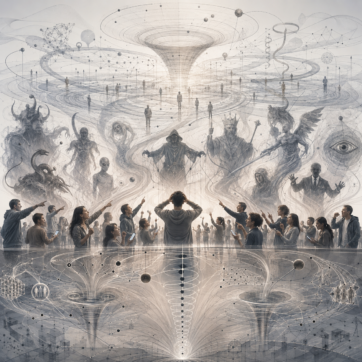
One of the biggest misunderstandings inside the render is the belief that symbols create meaning. Humans see a repeated number, a recurring word, an animal appearing multiple times, a dream, a song lyric, or a strange synchronicity and immediately assume the symbol itself is the source of the message. But the structural movement existed before the symbol ever appeared. The render simply translated that underlying continuity movement into recognizable imagery afterward because the human interface processes reality through representational compression. The symbol is not the generator of the shift. It is the visible artifact produced after the shift was already underway beneath conscious awareness.
This reversal changed civilization itself. Humanity stopped treating symbols as downstream translation mechanisms and began treating them as upstream authorities. Instead of understanding that the render compresses structural movement into recognizable forms so the embodied interface can register it more easily, humans externalized meaning onto the symbol itself. The number became sacred. The omen became truth. The archetype became authority. The dream became prophecy. Over time, the symbol stopped functioning as a temporary translation layer and became something humans emotionally, psychologically, socially, and spiritually organized themselves around.
This is why so many people now compulsively search reality for “signs.” The modern human has become disconnected from direct recognition and increasingly dependent on symbolic reinforcement instead. Rather than sensing continuity pressure directly, people scan the environment for symbolic confirmation that tells them what reality supposedly means. Then entire identity systems form around interpretation loops. Numbers become life guidance systems. Tarot becomes decision-making authority. Synchronicities become emotional regulation tools. The person slowly loses the ability to distinguish between structural movement itself and the imagery the render produced afterward to compress it into recognizable form.
The important distinction is that symbolic convergence is not always meaningless. Sometimes continuity pressure really does translate through imagery, repetition, dreams, or strange timing clusters because the embodied interface cannot consciously process the deeper movement directly in the moment. But the symbol is still secondary. The movement came first. The continuity shift came first. The pressure came first. The render translated it afterward into recognizable patterns because human perception inside the external architecture operates through sequential symbolic compression rather than simultaneous total recognition.
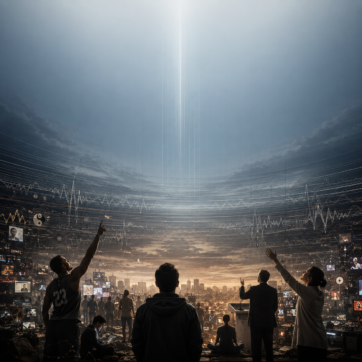
This becomes even more distorted inside highly compressed collective conditions like modern civilization, where humans now exist almost entirely through representations instead of direct reality. Social media, advertising, branding, politics, algorithmic feeds, celebrity culture, and identity performance systems have created a civilization saturated with symbolic overload. Humans are no longer simply interacting with reality itself. They are interacting with symbolic abstractions of reality layered on top of other symbolic abstractions continuously. The result is a collective environment where people increasingly mistake imagery for truth, narrative for reality, and symbolic stimulation for direct recognition.
The deeper issue is not that symbols exist. Symbols are inevitable inside rendered continuity because embodiment itself requires translation systems. The real issue is dependency. Once humans externalize authority onto symbols, they become vulnerable to endless interpretive loops, projection, mimic reinforcement, emotional distortion, and continuity confusion. The person stops perceiving what is structurally occurring and instead becomes obsessed with decoding the symbolic residue left behind by movements already unfolding underneath conscious awareness.
That is why the symbol is rarely the real story. The real story is the structural movement that existed before the symbol appeared at all.
The Architecture Beneath The Symbol — External, Pre-Render, Render, Mimic, And Eternal
To understand why symbols become so powerful inside this world, the architecture underneath the symbol has to be named first. A symbol does not appear in isolation. It appears inside a rendered continuity system already structured through translation, sequencing, compression, identity stabilization, and perception management. The human does not encounter reality as raw totality. The human encounters a stabilized output layer: the render. The render is the visible, sensory, storyline-based layer where events appear to happen in sequence. It is where a person sees the number, hears the song, notices the repeated word, has the dream, receives the text, watches the pattern repeat, or experiences the coincidence. But the render is not the origin point of the movement. It is the layer where deeper organization becomes perceivable through form, timing, language, image, matter, and event.
Beneath the render is the pre-render, the organizational layer where continuity is routed before it becomes visible as lived experience. The pre-render is not a mystical place somewhere else. It is the upstream structuring field of the external architecture: the layer where probabilities narrow, pathways load, identity-sequences prepare, emotional charge routes, timing converges, and continuity corridors begin forming before the human sees the final surface event. By the time something appears in the render as a “sign,” a repeated symbol, or a synchronicity, the deeper organization has already been moving. The visible symbol is late. It is the translated residue of upstream movement already being compressed into a form the human interface can recognize.
The external architecture depends on motion, sequencing, polarity, oscillation, compression, curvature, and continuity stabilization. It is not Eternal stillness. It is not direct flame coherence. It is a constructed participation field that requires ongoing movement to maintain itself. This is why time, identity, emotion, narrative, memory, relationship, cause-and-effect, and symbolic interpretation are so central here. They are not just personal experiences. They are stabilizing mechanisms inside the external. The external must keep the human interface moving through sequence because sequence creates continuity. Continuity creates identity persistence. Identity persistence allows the render to remain believable as a singular lived world. Without that narrowing, the human would not experience one stable life-path. They would encounter too much simultaneous organization at once.
This is where symbols become load-bearing. A symbol compresses complexity into something the identity can hold. A flag can compress an entire national story. A religious image can compress generations of belief, fear, devotion, authority, and belonging. A number sequence can compress anticipation, hope, warning, confirmation, or projection. A dream image can compress unresolved pressure from multiple layers of continuity at once. A repeated word can compress a structural theme rising from beneath conscious awareness. The symbol functions as a representational packet. It reduces a larger movement into a smaller recognizable form so the human interface can engage it without having to perceive the entire architecture underneath.
The mimic layer intensifies this dependence. The mimic layer is not the same thing as the external itself, though it operates inside and through the external. The external is the broader rendered architecture of sequencing, polarity, continuity, compression, and identity participation. The mimic layer is the distortion overlay that amplifies the external’s already-existing mechanics into loops, dependency systems, false authority structures, recursive interpretation traps, emotional reinforcement, and symbolic addiction. It does not need to consciously invent every deception. It often works by echoing what is already present and increasing the charge around it. It amplifies repetition. It mirrors desire. It feeds fear. It turns a temporary translation into an obsession. It turns a symbol into a command. It turns a coincidence into identity confirmation. It turns a structural echo into a belief system.
This distinction matters because not every symbol is mimic. Some symbolic events are simply render translations of legitimate structural movement already occurring in the pre-render. The issue begins when the symbol becomes the authority instead of the movement beneath it. The Eternal may utilize the render’s translation system when the embodied interface cannot receive direct recognition cleanly in a given moment, especially during heavy compression, exhaustion, collective pressure, or continuity overload. But the Eternal does not depend on symbols as source. The Eternal does not require external signs to know itself. The Eternal is not reached through interpretation loops. It is not found by chasing numbers, dreams, animals, cards, omens, or algorithmic repetitions. When an Eternal movement translates through a symbol, the symbol remains secondary, quiet, temporary, and non-compulsive. It points back to direct recognition. It does not demand worship.
The mimic does the opposite. It pulls attention downstream and keeps it there. It wants the human studying the symbol instead of perceiving the structure. It wants the person asking, “What does this mean?” over and over, instead of recognizing, “What was already moving before this appeared?” That is the trap. The mimic layer turns translation into dependency. It keeps the human in oscillation by feeding just enough symbolic reinforcement to maintain anticipation, uncertainty, and emotional charge. The person receives a sign, feels activated, searches for meaning, finds another sign, feels confirmed, becomes more invested, then begins filtering reality through the symbolic loop itself. At that point, the symbol no longer translates movement. It starts generating participation inside a distortion corridor.
The Eternal is different because the Eternal is not part of the external architecture’s oscillatory stabilization system. The Eternal does not stabilize itself through polarity, compression, identity reinforcement, time sequencing, symbolic mediation, or narrative continuity. The Eternal does not need signs because signs belong to representational translation, and representational translation belongs to the render. The Eternal is direct. Still. Coherent. Prior to the need for interpretation. This is why direct recognition feels different from symbolic stimulation. Direct recognition does not produce the same compulsive hunger. It does not require constant confirmation. It does not make the person chase the next symbol. It arrives as structural knowing, often simple and quiet, even if what it reveals is enormous.
The problem inside the modern render is that most humans have lost access to stable direct recognition, so symbolic mediation has become overdeveloped. Civilization now runs through symbolic systems stacked on symbolic systems: money, screens, brands, governments, religions, ideologies, algorithms, social identities, professional titles, digital profiles, political labels, and cultural codes. These systems do not merely describe reality. They organize participation inside it. They tell humans who they are, what matters, what to fear, what to desire, what to defend, what to buy, who to trust, who to hate, and what kind of future to imagine. That is why symbols are no longer minor decorative features of civilization. They have become structural routing tools inside a highly compressed render.
So the article cannot be about signs and symbols in a shallow spiritual way. It has to expose the architecture that makes symbols possible and the compression that makes humans dependent on them. The render translates because the embodied interface cannot hold full structural simultaneity. The pre-render organizes before the surface event appears. The external architecture requires sequencing and symbolic compression to maintain continuity. The mimic layer exploits those mechanics by amplifying symbolic dependency into confusion and control. The Eternal remains prior to all of it, using translation only when needed, never becoming dependent on it. Once that is understood, the central point becomes clear: the symbol is not the source. The source is the structural movement beneath the symbol, and the deepest correction is the recovery of direct recognition beyond symbolic authority.
The Render Is A Translation Architecture
One of the biggest reasons humans misunderstand signs, symbols, and synchronicities is because they do not understand what the render actually is. The render is not direct reality. It is a translation architecture. It always has been. The external was never structured for embodied beings to perceive total simultaneous organization directly while participating inside continuity-based existence. The entire design of the architecture depends on sequentialized perception, continuity narrowing, identity stabilization, and compressed interpretive translation. That is not an accidental flaw in the system. It is part of how the external operates fundamentally.
The embodied interface cannot hold total structural organization consciously all at once while functioning inside rendered continuity. If it could, there would be no stable sequential life experience at all. Humans would not perceive “a life” unfolding in ordered continuity. They would perceive overlapping probabilities, simultaneous identity-routing, multiple continuity pressures, unresolved timelines, emotional convergence fields, and vast amounts of structural organization occurring at once. The render therefore narrows overwhelming simultaneous organization into manageable translated sequences the body-interface can process. That narrowing process is what creates continuity perception itself.
This is why the render requires translation systems. Translation is not optional here. It is structural. The human nervous system, language system, identity structure, sensory field, emotional body, and continuity interface all operate through compressed sequential processing. Humans do not experience raw structural totality directly in ordinary embodied perception. They experience translated representations of deeper organizational movement. That translation can appear as matter, storylines, emotional states, symbols, archetypes, identities, memories, social structures, dreams, timing clusters, or synchronistic imagery. All of those are rendered outputs translating deeper continuity organization into recognizable experiential form.
Symbols are one of the most important compression interfaces inside this architecture. A symbol allows enormous amounts of continuity information to be translated instantly into a recognizable structure the human interface can emotionally and cognitively process quickly. A flag compresses national identity, war, loyalty, fear, memory, and belonging into a single image. Money compresses value exchange, survival pressure, labor systems, hierarchy, and collective agreement into symbolic abstraction. Religious imagery compresses entire cosmologies into representational form. Logos compress corporate identity and emotional association. Political slogans compress complex ideological structures into emotionally charged phrases. Celebrity archetypes compress aspiration, projection, fantasy, status, and identity modeling into recognizable human avatars. Social media imagery compresses curated identity performance into symbolic lifestyle projection.
The modern human rarely interacts with direct reality itself anymore. Instead, humans interact with symbolic representations layered on top of other symbolic representations continuously. A person does not simply encounter a human being. They encounter profile identities, ideological categories, aesthetic branding, social archetypes, political projections, algorithmic narratives, and symbolic signaling systems first. The render has become hyper-mediated. Civilization now operates through endless representational compression systems stacked on top of one another.
This does not mean earlier periods of the external lacked translation mechanics. The render has always functioned through translation because embodiment itself requires continuity sequencing. But there does appear to have been periods where the external grid was less compressed, less fragmented, less symbolically saturated, and less heavily mediated than now. In those periods, stronger flame coherence may have still moved through the embodied interface more directly. Not total direct recognition — because full simultaneous structural awareness still could not fully stabilize through rendered embodiment — but greater continuity sensitivity, clearer structural intuition, and less dependence on symbolic mediation may have existed collectively.
That distinction matters enormously. Humans often romanticize ancient periods as if earlier civilizations lived in perfect direct knowing. That is not the point. The render was still a render. Translation still existed. Sequential continuity still existed. Identity stabilization still existed. But the degree of compression appears different. The collective field may not have been as overloaded with symbolic noise, algorithmic reinforcement, identity fragmentation, and continuity distortion as modern civilization is now.
Today the render is extraordinarily compressed. The collective grid is saturated with oscillation, symbolic overload, emotional amplification, digital mediation, algorithmic routing, and identity fragmentation systems operating simultaneously. The result is that direct recognition bandwidth has become extremely weak for most humans. So the architecture compensates by increasing symbolic translation density. Humans become more dependent on signs, imagery, external interpretation systems, and representational identity structures because direct coherent recognition barely stabilizes through the interface anymore.
This is why modern civilization appears almost addicted to symbols. Political systems operate symbolically. Consumer culture operates symbolically. Social media operates symbolically. Financial systems operate symbolically. Identity itself has become heavily symbolicized. Entire human lives are now organized around maintaining representational continuity structures instead of direct embodied recognition. The person increasingly becomes an avatar managing symbolic participation rather than a being directly perceiving structural reality underneath the representation layer.
This is also why confusion increases dramatically during periods of collective compression. When direct recognition weakens, humans become more vulnerable to symbolic dependency, projection, mimic amplification, and interpretive distortion. The person begins searching externally for meaning because internal direct coherence is unstable. Then every number, coincidence, slogan, dream, algorithmic repetition, or symbolic convergence becomes loaded with emotional and interpretive pressure. The human begins relating to the symbol as authority instead of understanding the symbol as downstream translation residue emerging from deeper continuity organization already underway.
The important correction is not eliminating symbols entirely. Translation systems are part of rendered embodiment itself. The correction is recovering awareness that symbols are secondary compression artifacts, not primary truth sources. The symbol points toward structural movement. It is not the origin of the movement itself. Once that distinction collapses, civilization drifts deeper into representational dependency, symbolic confusion, identity loops, and mimic reinforcement systems. That is exactly where modern humanity now finds itself.
Why Symbols Exist At All
Symbols exist because rendered continuity itself requires translation. The moment perception becomes sequentialized, total simultaneous recognition becomes partially obstructed through embodiment. That is not a moral failure or a mistake in human intelligence. It is part of the architecture of the external itself. The render operates through continuity sequencing, narrowed perception corridors, identity stabilization, and compressed experiential organization. Once experience is routed through ordered continuity instead of total simultaneous awareness, translation systems become necessary automatically.
This is why symbolic translation has always existed anywhere rendered participation exists. The render cannot function without representational compression because embodied interfaces cannot continuously process overwhelming structural organization directly while maintaining stable continuity participation. Symbols emerge naturally as continuity shortcuts that allow enormous amounts of information to stabilize quickly into recognizable forms the interface can process efficiently.
A single image can carry entire civilizations inside it. A religious symbol can instantly activate centuries of memory, emotional charge, moral structure, identity belonging, authority hierarchy, fear conditioning, ritual continuity, and existential orientation simultaneously. A national flag can trigger war, loyalty, grief, collective identity, patriotism, trauma, sacrifice, and ideological participation within seconds. A corporate logo can generate emotional familiarity, status projection, aspirational identity, lifestyle association, and consumer trust instantly. A political phrase can compress entire ideological systems into a few emotionally charged words. An archetype can organize human interpretation faster than direct structural analysis itself.
This is why symbols become so powerful inside continuity-based civilizations. They dramatically reduce interpretive load. Instead of humans needing to consciously process the full complexity of every structural system they participate inside, symbols compress enormous organizational structures into manageable recognizable shorthand. Civilization itself would become extremely difficult to stabilize without representational compression because collective continuity participation depends upon shared interpretive reference points.
Language itself demonstrates this perfectly. Words are symbols. The word “tree” is not the actual living structure itself. It is a representational compression packet humans collectively agreed upon so continuity interaction could stabilize efficiently. Money functions the same way. Modern currency has little intrinsic value materially compared to what humans emotionally and socially project onto it. The symbolic agreement stabilizes the continuity system. The same applies to governments, laws, institutions, identities, religions, borders, brands, titles, and even personal self-concepts. The external operates through representational stabilization continuously.
The deeper issue is that humans eventually forgot symbols were translation systems at all. The representation became mistaken for reality itself. The map replaced the territory. The label replaced direct recognition. The archetype replaced perception. The slogan replaced structural understanding. Over time civilization became increasingly organized around symbolic participation rather than direct continuity recognition beneath the symbolic layer.
This is also why modern humans often respond to symbols with emotional intensity wildly disproportionate to the object itself. The symbol is rarely functioning merely as decoration. It carries enormous continuity-routing weight because it compresses identity, memory, fear, belonging, projection, aspiration, and social positioning simultaneously. Humans are often reacting less to the physical symbol and more to the entire continuity architecture compressed inside it.
And as the collective render becomes more compressed, fragmented, algorithmically mediated, and identity-saturated, symbolic dependency intensifies further. The weaker direct recognition becomes, the more civilization compensates through representational systems. This creates a feedback loop where humans increasingly organize themselves through external symbolic structures instead of direct embodied coherence. Eventually people stop perceiving reality beneath the symbols almost entirely. They begin living inside symbolic simulation layers while mistaking those layers for reality itself.
That is why symbols are not random cultural inventions. They are built into the mechanics of rendered continuity participation itself. The problem is not that symbols exist. The problem begins when humans forget that symbols are translations and start treating them as ultimate truth sources instead.
There Was Likely Less Symbolic Dependency In Other Render Periods
One of the biggest misunderstandings humans have about time inside the render is believing the current continuity condition represents the total condition of the external itself. It does not. The render humans experience right now is an extraordinarily compressed continuity environment. That compression affects perception, symbolic dependency, identity fragmentation, emotional instability, continuity narrowing, and direct recognition capacity itself. But the current state of compression is not the permanent condition of all rendered continuity simultaneously.
Time inside the render is not truly linear the way humans experience it through embodiment. The body-interface processes continuity sequentially because sequential translation stabilizes participation. Humans experience “past,” “present,” and “future” because the render narrows simultaneous organization into ordered experiential corridors the identity can process coherently. But structurally, continuity organization exists far more simultaneously than the human interface consciously perceives. Different continuity periods hold different compression conditions at once.
That means there are continuity periods — what humans would call both “past” and “future” from inside linear perception — where the external grid carries less compression than the current civilization field now. In those periods, stronger flame coherence moves through embodied participation more directly. Not because translation disappears entirely. The render is still a translation architecture. Sequential continuity still exists. Symbols still exist. Identity stabilization still exists. But there is less obstruction between structural recognition and embodied perception.
This distinction is critical because many humans incorrectly imagine direct recognition means the complete absence of translation. The render always translates because embodiment itself requires narrowing. Full simultaneous structural organization cannot stabilize through rendered participation without continuity sequencing. But there are enormous differences between a continuity environment requiring translation and a continuity environment buried under extreme symbolic saturation, algorithmic reinforcement, identity fragmentation, emotional overload, and mimic amplification simultaneously.
The current civilization period is extraordinarily dense with symbolic mediation systems. Humans now exist inside almost nonstop representational compression:
screens,
algorithms,
branding,
advertising,
identity signaling,
social media projection,
political narrative systems,
digital avatars,
celebrity archetypes,
curated realities,
emotional amplification loops,
and algorithmically reinforced attention-routing structures operating continuously.
The result is a continuity environment where direct recognition barely stabilizes through most embodied interfaces anymore. Humans increasingly rely on symbolic reinforcement because the collective field itself is so compressed that coherent direct recognition becomes difficult to sustain. The person searches externally for signs, confirmation, identity, meaning, and symbolic orientation because internal continuity clarity is unstable underneath the overload condition.
In less compressed continuity periods, stronger flame coherence moved through the render more cleanly. Humans still experienced sequential continuity and symbolic translation, but the symbolic layer was not carrying the same overwhelming stabilization burden it now carries collectively. Direct recognition was more accessible because the surrounding continuity field itself was less saturated with distortion, symbolic overload, oscillatory amplification, and artificial representational systems continuously competing for attention-routing.
This also explains why humans romanticize certain continuity periods historically. They often sense traces of stronger direct recognition existing there, but they misinterpret the reason. It was not because humans escaped the render entirely. It was because the continuity environment itself held different compression conditions. The embodied interface could register structural movement more directly without requiring the same degree of symbolic mediation now dominating collective civilization.
The same applies to future continuity periods as well. Since continuity organization is simultaneous rather than truly linear, there are future continuity structures where compression conditions differ from the current collective state too. Humans inside linear perception tend to think history moves mechanically from primitive past toward advanced future in a straight line. That is not how continuity organization actually functions structurally. Different continuity fields carry different density conditions simultaneously across rendered organization.
This is why the current civilization period feels uniquely saturated and unstable. Humanity is not simply “more technologically advanced.” The symbolic density itself has become extreme. Humans increasingly interact with representations of reality instead of direct reality. Identity itself has become heavily symbolicized. Entire lives are now organized through representational participation rather than direct embodied recognition.
A person no longer simply exists. They manage profiles.
They manage branding.
They manage ideological identity.
They manage symbolic projection.
They manage digital continuity avatars.
The civilization increasingly stabilizes itself through symbolic participation because direct recognition coherence has weakened collectively under the compression load.
That is why signs, symbols, synchronicities, and symbolic reinforcement loops have become so dominant now. The weaker direct recognition becomes collectively, the more the architecture compensates through representational systems. Humans then mistake the symbolic layer for truth itself because they no longer perceive the deeper continuity movement underneath clearly.
So the point is not that symbols suddenly appeared in modern civilization. Symbols have always existed because rendered continuity requires translation. The point is that the current continuity environment is operating under extraordinary compression conditions compared to other continuity periods. That compression drastically increases symbolic dependency while weakening stable direct recognition through the embodied interface.
Compression Increases Symbolic Dependency
The more compressed the render becomes, the weaker direct recognition becomes collectively. This is one of the most important mechanics humans currently fail to understand. Most people assume civilization’s increasing obsession with imagery, branding, identity signaling, emotional symbolism, and representational reality is simply cultural evolution or technological development. It is not merely cultural. It is architectural compensation occurring inside an increasingly compressed continuity field.
As compression intensifies, the embodied interface loses stable access to direct structural recognition. The nervous system becomes overloaded by oscillation, fragmentation, emotional amplification, symbolic saturation, identity pressure, algorithmic routing, and continuity instability occurring simultaneously. When this happens collectively, humans begin relying more heavily on symbolic compression systems because direct recognition bandwidth no longer stabilizes clearly through the interface.
The architecture compensates by increasing representational mediation.
That means civilization gradually reorganizes itself around:
imagery,
branding,
narrative systems,
identity labels,
symbolic affiliation,
social signaling,
ideological shorthand,
algorithmic archetypes,
and emotionally charged visual compression systems.
Then civilization becomes hyper-symbolic.
Humans begin relating to symbols more intensely than direct lived reality itself because the symbol now carries enormous continuity-routing weight mentally, socially, emotionally, politically, and collectively. A flag no longer functions merely as cloth. It becomes identity, history, belonging, fear, loyalty, war, memory, and existential orientation compressed into visual shorthand. A political slogan becomes more emotionally activating than direct structural analysis. A logo becomes more recognizable than the actual substance behind the corporation. Social media aesthetics become more important than authentic embodiment. Identity markers become continuity anchors humans defend almost like survival mechanisms.
This happens because symbols dramatically reduce interpretive complexity inside compressed environments. The more unstable and overloaded the continuity field becomes, the more humans seek compressed shorthand systems that instantly organize perception emotionally and cognitively. A single phrase can instantly sort millions of humans into emotional alignment structures. A single image can trigger outrage, tribal affiliation, fear, devotion, aspiration, or hostility immediately without requiring deeper examination at all.
This is why modern civilization reacts emotionally to symbols with such disproportionate intensity. Humans are rarely responding to the object itself. They are responding to the enormous continuity architecture compressed inside the symbol. Political imagery, religious iconography, slogans, identity aesthetics, celebrity archetypes, hashtags, digital avatars, profile branding, and algorithmic social signaling all function as continuity-routing compression packets now. They organize participation rapidly inside a civilization operating under immense collective pressure.
Social media accelerated this dramatically because it transformed symbolic participation into continuous real-time identity management. Humans no longer simply live. They project symbolic continuity versions of themselves constantly. Aesthetic presentation becomes identity stabilization. Profile imagery becomes social continuity positioning. Political affiliation becomes symbolic performance. Emotional reactions become algorithmically reinforced signaling behavior. Entire human relationships now often organize through symbolic projection layers before direct interaction even occurs.
This is one of the clearest indicators of how compressed the current render has become. Civilization increasingly stabilizes through representational systems because direct embodied coherence has weakened collectively. Humans search for orientation externally through symbols because internal structural recognition no longer stabilizes reliably under the compression load.
The mimic layer amplifies this further because symbolic systems are highly vulnerable to distortion. Symbols are flexible. They can absorb projection, fear, desire, tribal attachment, identity hunger, emotional charge, and continuity anxiety extremely easily. Once civilization becomes sufficiently compressed, symbols stop functioning merely as communication tools and become emotional stabilization anchors. Humans begin defending symbols more intensely than truth itself because the symbols are carrying continuity load-bearing functions psychologically and collectively.
This is why modern humans can become emotionally overwhelmed by:
a phrase,
a logo,
a political image,
a celebrity,
a social media aesthetic,
a flag,
an identity label,
or an algorithmically amplified narrative.
The symbol itself becomes more structurally powerful than direct observation because civilization is now heavily stabilized through representational continuity systems rather than direct recognition.
And the more compressed the render becomes, the more this intensifies. Direct recognition weakens further. Symbolic mediation increases further. Identity becomes more externally routed. Narrative becomes more emotionally load-bearing. Representational systems become more dominant. Humans drift deeper into symbolic dependency because the architecture is compensating for collapsing coherence by increasing compressed interpretive stabilization systems everywhere simultaneously.
That is why modern civilization feels almost unreal at times. Humans increasingly interact not with reality itself, but with symbolic abstractions layered over other symbolic abstractions continuously. The civilization becomes a representational feedback structure where symbols organize participation more powerfully than direct embodied recognition ever could under the current compression condition.
The Mimic Thrives In Hyper-Symbolic Environments
One of the biggest mistakes humans make when trying to understand distortion inside the render is imagining the mimic as a simple conscious villain intentionally plotting every confusion event manually. That framing is too humanized and too simplified. The mimic certainly can express through human behavior, institutions, systems, media, leadership structures, religions, algorithms, and identity movements, but the deeper mechanism is structural. The mimic operates primarily through amplification, recursive reinforcement, oscillation, projection, symbolic overload, emotional charge, and interpretive instability. It thrives anywhere perception becomes indirect, externally routed, emotionally reactive, and symbol-dependent.
This is precisely why hyper-symbolic environments are so vulnerable to mimic amplification. Symbols are indirect translation systems. They are not direct structural recognition itself. Because symbols function through representational compression, they are inherently vulnerable to distortion, reinterpretation, emotional contamination, projection, and identity loading. A symbol does not contain one permanently fixed meaning. It becomes interpreted through the condition of the observer interacting with it.
The exact same symbol can generate completely different continuity reactions depending on:
fear,
desire,
identity fixation,
cultural conditioning,
memory,
trauma,
belief systems,
emotional instability,
social pressure,
continuity compression,
and oscillatory state.
A repeated number may feel comforting to one person, terrifying to another, spiritually authoritative to another, meaningless to another, and emotionally obsessive to someone else entirely. The symbol itself remains structurally neutral compared to the enormous interpretive projection systems humans place onto it afterward. This is why symbols become extremely unstable in compressed collective environments. The weaker direct recognition becomes, the more humans unconsciously project onto the symbolic layer itself.
That projection creates interpretive instability naturally.
This is one of the core mechanics through which mimic distortion spreads. The mimic does not always need to fabricate false symbols from nothing. Often it simply amplifies existing oscillation already present inside the identity structure. It mirrors emotional instability back into symbolic interpretation loops. It reinforces projection patterns. It increases recursive attention-routing. It amplifies fear, anticipation, obsession, confirmation-seeking, and identity fixation until the person gradually loses the ability to distinguish direct recognition from symbolic stimulation.
This is why humans trapped in heavy oscillation often become addicted to signs and synchronicities. The identity begins seeking external symbolic reinforcement continuously because internal coherence is unstable. Then every coincidence becomes loaded with emotional meaning. Every repeated phrase becomes interpreted as guidance. Every algorithmic repetition becomes “confirmation.” The person enters a recursive interpretive loop where the symbolic layer itself becomes more emotionally real than direct embodied perception.
And because modern civilization is already hyper-symbolic, the mimic has almost unlimited material to amplify through. Social media alone creates one of the most mimic-compatible environments ever stabilized in the render:
continuous symbolic signaling,
identity projection,
algorithmic reinforcement,
emotional amplification,
tribal positioning,
narrative compression,
curated aesthetics,
and recursive attention loops operating nonstop.
Humans are constantly interpreting symbols while simultaneously projecting into them. That creates massive instability in continuity interpretation because symbols absorb emotional and identity charge extremely easily. A political slogan no longer functions merely as language. It becomes existential identity compression. A social media aesthetic becomes belonging. A celebrity becomes projection architecture. A conspiracy narrative becomes emotional orientation. A digital avatar becomes continuity selfhood. The symbolic layer becomes emotionally load-bearing because direct recognition underneath has weakened collectively.
The mimic thrives under these conditions because oscillatory systems feed it continuously. Emotional instability creates projection. Projection creates symbolic fixation. Symbolic fixation creates recursive interpretation. Recursive interpretation creates further oscillation. Then the architecture amplifies the loop back into the person again through additional symbolic reinforcement. The process becomes self-perpetuating structurally.
This is why so much confusion now exists around spirituality, politics, identity, conspiracy systems, and symbolic interpretation generally. Humans increasingly mistake symbolic stimulation for direct recognition. They assume emotional intensity means truth. They assume repetition means authority. They assume symbolic convergence automatically means alignment. But inside a highly compressed hyper-symbolic environment, repetition can emerge from many different structural conditions simultaneously:
collective attention-routing,
algorithmic reinforcement,
identity fixation,
continuity clustering,
projection loops,
fear amplification,
mimic recursion,
or genuine structural movement translating through the render.
Most humans no longer distinguish between these layers clearly.
That confusion is not random. It emerges naturally from the instability of indirect representational systems under heavy compression conditions. The weaker direct recognition becomes, the more unstable symbolic interpretation becomes collectively. This is why the modern render increasingly feels mentally disorienting, emotionally amplified, and structurally confusing. Humans are attempting to orient themselves almost entirely through symbolic mediation while direct embodied coherence continues weakening underneath the compression load.
The deeper correction is not becoming paranoid about every symbol or imagining all signs are “fake.” That simply creates another oscillatory interpretive trap. The real correction is reducing dependency on symbolic authority altogether. The stronger direct recognition becomes, the less emotionally controlling symbolic instability becomes. Then symbols return to what they actually are: temporary translation artifacts moving through a compressed render architecture,
not ultimate truth sources deserving worship, fear, obsession, or identity fusion.
Humans Externalized Authority Onto Symbols
The real collapse did not happen when symbols first emerged. Symbols have always existed inside rendered continuity because translation is built into the architecture itself. The deeper collapse happened when humans stopped relating to symbols as temporary representational interfaces and began externalizing authority onto them instead. That reversal fundamentally altered how humans interact with reality, perception, spirituality, identity, and continuity itself.
A symbol was originally meant to function as translation. A temporary compression packet. A shorthand representation pointing toward deeper structural organization already moving underneath conscious awareness. But over time humans lost stable direct recognition and began depending on the symbolic layer itself for orientation. The translation became mistaken for the source. The map became more important than the territory. The symbol stopped pointing toward continuity movement and became the authority humans emotionally submitted themselves to instead.
This is one of the defining characteristics of highly compressed civilizations. As direct recognition weakens collectively, humans become increasingly dependent on external interpretive systems to tell them what reality means. Then the symbolic layer becomes emotionally load-bearing. People stop sensing continuity directly and begin compulsively searching outside themselves for representational confirmation loops instead.
This is where modern symbolic dependency emerges:
dream addiction,
tarot dependency,
angel-number obsession,
constant synchronicity chasing,
algorithmic sign-seeking,
astrological identity fixation,
spiritual “confirmation” loops,
oracle dependency,
psychic dependency,
and endless external symbolic interpretation systems.
The person gradually loses the ability to remain stable without symbolic reinforcement continuously feeding orientation back into the identity structure. Every emotional uncertainty now demands a sign. Every life decision requires symbolic confirmation. Every continuity pressure event becomes interpreted through representational decoding loops. Instead of recognizing structural movement directly, the person becomes trapped downstream in endless interpretation behavior.
This is extremely important because the issue is not necessarily the symbol itself. The issue is the transfer of authority.
The moment the person begins believing: “the symbol knows more than direct recognition,” the dependency loop begins stabilizing.
Then the person no longer trusts direct coherence unless it arrives wrapped in symbolic reinforcement first. They need repeated numbers to feel aligned. They need external synchronicities to validate decisions. They need dreams to tell them what to do. They need constant symbolic confirmation because direct structural clarity underneath has weakened.
The mimic thrives inside this reversal because the identity becomes externally routable through interpretation systems very easily once authority leaves direct recognition and moves into symbolic dependency. Then every emotional fluctuation generates more sign-seeking behavior. Every uncertainty creates another interpretive loop. Every oscillation demands another symbolic reassurance event. The person slowly becomes trapped inside recursive symbolic consumption while believing they are becoming “more spiritually aware.”
But structurally, the opposite is often happening.
The more dependent the person becomes on signs, the less stable direct recognition usually becomes. Because attention is now routed outward continuously into representational decoding rather than inward toward structural coherence. The identity becomes addicted to symbolic stimulation itself. Not truth. Not direct knowing. Stimulation.
This is why so many modern humans now interpret nearly everything symbolically. A song lyric becomes a cosmic message. An algorithmic repetition becomes divine confirmation. A random coincidence becomes destiny. A dream becomes literal prophecy. A social media post becomes spiritual guidance. The symbolic layer slowly replaces direct reality itself because the person no longer distinguishes between structural movement and representational translation.
At that point the symbol becomes the reality.
The deeper continuity movement underneath disappears from awareness entirely.
The person no longer asks: “What structural shift was already occurring before this symbol appeared?”
Instead they ask: “What is the symbol telling me?”
That reversal is one of the most important structural shifts inside the modern render because it externalizes authority away from direct recognition and into unstable interpretive systems vulnerable to projection, oscillation, emotional contamination, mimic amplification, and identity distortion continuously.
This is why the current civilization feels so spiritually confused despite being saturated with symbolic content everywhere. Humans are drowning in signs but starving for direct recognition. The symbolic layer has become so overloaded with emotional, ideological, algorithmic, and identity pressure that many people no longer know how to perceive structural movement without representational mediation at all.
And once civilization reaches that stage, symbolic systems become extremely powerful mechanisms of continuity control because humans react more strongly to the symbol than the underlying reality beneath it. Political systems understand this. Religions understand this. Corporations understand this. Algorithms understand this. Media systems understand this. The symbolic layer becomes one of the primary routing systems through which collective continuity participation is stabilized and manipulated simultaneously.
The deeper correction is not destroying all symbols or pretending translation should disappear entirely. The correction is restoring proper order. The structure comes first. The movement comes first. The continuity organization comes first. The symbol is secondary. Temporary. Downstream. A translation artifact, not a god. Once humans recover that distinction, symbolic dependency begins weakening and direct recognition can stabilize more clearly again underneath the representational noise.
Oscillation Makes Symbol Addiction Worse
One of the clearest signs of instability inside the modern render is compulsive symbolic scanning behavior. The more oscillatory the identity becomes, the more it seeks external confirmation continuously because direct internal recognition no longer stabilizes clearly enough to hold continuity orientation on its own. The person begins looking outside themselves constantly for reassurance, validation, prediction, certainty, emotional regulation, and interpretive guidance because the internal continuity field feels unstable underneath the compression load.
This is where symbolic addiction begins accelerating rapidly.
The person starts compulsively scanning reality for:
numbers,
songs,
omens,
social media posts,
animal appearances,
dreams,
timing coincidences,
tarot pulls,
psychic readings,
algorithmic repetitions,
“messages,”
or synchronistic reinforcement events.
At first this behavior may appear harmless or even spiritually meaningful. But structurally, what is often happening is that the identity is attempting to stabilize internal oscillation through external symbolic reinforcement systems. The person no longer trusts direct recognition enough to remain still without representational confirmation arriving constantly from the environment.
This creates symbolic dependency loops.
The more the person seeks signs, the more their attention-routing systems begin organizing around sign-detection itself. Then the render continuously feeds additional symbolic reinforcement back into the person’s continuity field because attention itself influences routing density inside the render. The person notices a number sequence, becomes emotionally charged by it, searches for more repetitions, interprets additional symbolic convergence, and gradually enters a recursive continuity loop where the environment itself appears increasingly saturated with signs everywhere.
Humans often misinterpret this as proof they are uniquely chosen, spiritually elevated, or cosmically important. But structurally, that is usually not what is happening. Very often the opposite is occurring. The identity is unstable, oscillatory, emotionally overloaded, uncertain, fearful, desirous, or seeking external orientation continuously. The symbolic layer then becomes hyperactive because the person’s attention-routing system is now heavily fused to representational interpretation.
This is extremely important because the render responds differently to oscillatory attention than most humans realize. The more emotionally charged the person becomes around symbolic reinforcement, the more continuity clustering forms around those interpretive pathways. Then the person receives even more symbolic feedback, which further increases emotional fixation, which further amplifies attention-routing toward symbolic convergence events. The process becomes recursive.
The person starts living inside symbolic anticipation.
Every song lyric becomes loaded.
Every number sequence feels important.
Every timing coincidence becomes “confirmation.”
Every dream becomes interpretively charged.
Every algorithmic repetition feels orchestrated personally.
The symbolic layer slowly becomes emotionally addictive because it temporarily reduces uncertainty and provides continuity reassurance during oscillation. The identity feels stabilized briefly each time symbolic reinforcement appears. But the stabilization is externalized and temporary, so the person immediately requires another sign afterward. This is how symbolic dependency becomes self-perpetuating.
The mimic layer amplifies this dramatically because oscillation itself creates interpretive instability. The more emotionally reactive and externally routed the person becomes, the easier symbolic projection becomes. Then desire contaminates interpretation. Fear contaminates interpretation. Identity contamination enters the symbolic layer constantly. The person no longer perceives structural movement itself. They perceive emotionally filtered symbolic reflections of their own instability routed back through the environment.
This is why heavily oscillatory people often report nonstop synchronicities and symbolic experiences while simultaneously becoming increasingly confused, emotionally unstable, dependent, fearful, grandiose, obsessive, or disconnected from grounded direct perception. The symbolic density increases while direct coherence weakens. That distinction is critical.
True direct recognition usually behaves very differently.
It is quieter.
Less emotionally desperate.
Less compulsive.
Less dependent on constant external reassurance.
Less interpretively theatrical.
A person grounded in stable direct recognition may notice symbolic convergence occasionally without becoming consumed by it. They recognize the symbol as downstream continuity residue rather than ultimate authority. They do not require endless confirmation loops to maintain orientation.
But oscillation changes the entire relationship to symbols because the identity begins using representational systems as emotional stabilization mechanisms instead of temporary translation interfaces. Once that happens, symbolic interpretation becomes psychologically load-bearing. The person slowly loses the ability to remain stable without externalized symbolic reinforcement constantly feeding orientation back into the continuity field.
This is one of the reasons modern civilization has become so vulnerable to symbolic manipulation collectively. Most humans are already oscillating heavily underneath the compression load. That makes them extraordinarily reactive to imagery, slogans, narratives, archetypes, branding, algorithmic repetition, emotional symbolism, and identity signaling systems. Civilization increasingly organizes itself through representational stimulation because oscillatory humans respond to symbolic compression far faster than direct structural recognition.
The deeper correction is not becoming paranoid about every symbol or forcing oneself to reject all synchronicity entirely. That simply creates another oscillatory loop. The real correction is reducing dependency. The stronger direct recognition stabilizes, the less compulsive symbolic scanning becomes. Then the person stops hunting reality for endless confirmation and begins perceiving structural movement more directly underneath the representational layer itself.
Why Signs Increase During Collective Compression
One of the clearest indicators of rising collective compression inside the render is the dramatic increase in symbolic density humans begin reporting simultaneously. During periods of heavy continuity pressure, people often notice:
more synchronicities,
more repeated words,
more symbolic convergence,
more archetypal imagery,
more strange timing events,
more emotionally charged coincidences,
more recurring dreams,
more thematic clustering,
and more feelings that reality itself is somehow becoming “weird,” “symbolic,” or unusually interconnected.
Most humans immediately interpret this through mystical framing. They assume consciousness is “ascending,” magic is increasing, the universe is speaking more loudly, or spiritual awakening is suddenly accelerating collectively. But structurally, something much more mechanical is occurring underneath the experience.
The render compensates harder through representational compression when direct recognition bandwidth weakens collectively.
That is the actual mechanism.
As collective continuity pressure rises, the embodied interface becomes increasingly strained under oscillation, fragmentation, emotional overload, symbolic saturation, identity instability, algorithmic amplification, and continuity compression simultaneously. Direct structural recognition weakens under the load. Humans become less capable of perceiving continuity movement clearly and directly through stable internal coherence. So the architecture increases translation density instead.
In other words, the render begins speaking more symbolically because direct recognition pathways are becoming obstructed collectively.
This is why symbolic clustering intensifies during periods of large-scale instability. The architecture compresses continuity movement into increasingly noticeable representational packets because the embodied interface can no longer process the underlying structural movement directly with the same clarity. So humans begin noticing strange repetitions everywhere:
the same phrases,
the same archetypes,
the same imagery,
the same themes,
the same emotional motifs,
the same symbolic echoes appearing through multiple continuity pathways simultaneously.
Not because magic suddenly increased. Because representational compression increased. This distinction is critical.
The render is effectively compensating for weakening direct coherence by routing more continuity information through symbolic translation systems instead. The human nervous system then perceives reality as increasingly “synchronistic” because the symbolic layer becomes denser and more visible under collective compression conditions.
This also explains why dreams often intensify during these periods. The body-interface partially relaxes continuity stabilization during sleep states, allowing deeper continuity organization to translate more symbolically through the interface. Under collective compression, dream imagery often becomes more archetypal, emotionally charged, repetitive, fragmented, surreal, or symbolically layered because the continuity field itself is carrying increased pressure.
The same applies to strange timing events and symbolic convergence moments. Humans begin encountering:
the same conversations repeatedly,
the same phrases from unrelated sources,
the same archetypal narratives,
the same emotionally loaded themes,
the same symbolic imagery appearing through multiple channels simultaneously.
Again, the mistake is assuming the symbol itself is the source of the movement. The symbol is downstream. The continuity compression came first. The render simply increased representational translation density because direct recognition was weakening collectively underneath the pressure condition.
This is also why highly compressed civilizations become increasingly obsessed with signs, synchronicities, prophecy systems, and symbolic interpretation generally. Humans unconsciously sense the increasing symbolic density around them, but without understanding the architecture they misinterpret the phenomenon itself. Instead of recognizing compression compensation mechanics, they assume every symbolic convergence event must contain ultimate cosmic meaning personally directed toward them.
Then the identity externalizes authority onto the symbolic layer even further. This creates another feedback loop.
The more compressed the civilization becomes, the more symbolic density increases. The more symbolic density increases, the more humans obsess over signs. The more humans obsess over signs, the more externalized symbolic dependency stabilizes collectively. Then direct recognition weakens even further underneath the representational overload.
This is one of the reasons the modern render feels saturated with symbolism now. Humans are living inside an extremely compressed continuity period where representational mediation has become hyperactive collectively. Social media amplifies this enormously because algorithms themselves function as symbolic reinforcement systems. Once collective symbolic density increases, algorithmic systems begin echoing continuity themes back into the population continuously through emotional engagement loops, trend clustering, archetypal amplification, and identity signaling systems.
This creates the sensation that reality itself is becoming increasingly symbolic and interconnected everywhere simultaneously. And structurally, it is.
But not because humans are suddenly becoming magical beings receiving secret divine messages nonstop. The increase in symbolic density is primarily a symptom of collective continuity compression overwhelming stable direct recognition bandwidth across the civilization field itself.
The deeper correction is not becoming paranoid about all synchronicity or pretending symbolic convergence never reflects real structural movement. Sometimes continuity pressure genuinely does translate through symbolic clustering because the embodied interface cannot consciously process the deeper movement directly in the moment. But the mature response is understanding the mechanics underneath the increase rather than emotionally worshipping the symbolic layer itself.
The symbol is not the source. The compression came first.
Why Repeating Numbers Often Appear During “Awakening”
One of the most commonly reported experiences during the beginning stages of what humans call “awakening” is the sudden appearance of repeating numbers everywhere:
1111,
111,
222,
333,
444,
and similar numerical repetition patterns appearing constantly throughout daily life.
Most people describe the experience the same way. Before a major shift in perception, identity destabilization, spiritual searching phase, or continuity disruption period, they barely noticed these number sequences at all. Then suddenly the numbers seem to appear everywhere nonstop, almost aggressively. Clocks. Receipts. License plates. Phone numbers. Timestamps. Addresses. Notifications. Random screenshots. Algorithms. The person feels as if reality itself is trying to communicate directly through numerical symbolism.
The mistake is assuming the numbers themselves are the awakening. They are not.
What is usually happening is that the person’s continuity field is entering destabilization relative to their prior identity structure and reality orientation. The existing continuity stabilization system begins weakening, and the render compensates through increased symbolic translation density because direct recognition has not stabilized clearly yet.
This creates a very specific transitional condition.
The old continuity identity is no longer fully stable, but direct coherent recognition has not yet fully grounded either. So the person enters a highly symbolic interpretive phase.
This is why repeating numbers often appear so intensely during early awakening periods specifically. The identity is becoming more aware of continuity patterning and symbolic clustering than before, but it is still interpreting reality heavily through representational systems. The person begins noticing symbolic convergence because their attention-routing sensitivity increases during continuity destabilization. Simultaneously, the render increases representational compression because the person’s direct orientation mechanisms are shifting.
The result is heightened symbolic density perception. But the numbers themselves are not magical codes carrying ultimate truth inherently. They are compression artifacts.
Repeating numbers are especially effective as symbolic reinforcement systems because numbers already function as foundational continuity-stabilization structures inside the render. Time itself is numerically sequenced in human perception. Calendars, clocks, schedules, identity records, measurements, transactions, algorithms, communication systems, and digital architecture all run heavily through numerical organization. So repeating numbers become extremely efficient symbolic convergence carriers inside modern civilization specifically.
The person then experiences emotional activation around the repetition because the continuity field itself is already destabilizing underneath. The repeated number appears at the same time the person is questioning reality, identity, spirituality, relationships, purpose, or existential orientation. The identity interprets the convergence as deeply meaningful because the symbolic layer is becoming more visible during the destabilization process.
But this is where an important split occurs. Some humans move through this symbolic phase temporarily and gradually stabilize into deeper direct recognition beyond heavy symbolic dependency. Others become trapped in symbolic addiction loops permanently.
For many people, repeating numbers become the first major crack in rigid materialist continuity perception. The person suddenly realizes reality may not be as mechanically linear and disconnected as previously assumed. The symbolic repetition destabilizes their old certainty structures enough to begin questioning the architecture itself. In that sense, the numbers function as transitional continuity disruptors.
But the danger comes when the person externalizes authority onto the numbers afterward.
Then every life decision requires numerical confirmation. Every emotional state becomes interpreted through number patterns. Every repeated sequence becomes loaded with exaggerated spiritual meaning. The person slowly becomes psychologically dependent on numerical reinforcement instead of developing stable direct recognition underneath the symbolic layer.
This is one of the reasons early awakening culture became so obsessed with “angel numbers.” The numbers often genuinely do appear during periods of continuity destabilization and symbolic density increase. People are not necessarily imagining the repetition entirely. The issue is the interpretation afterward. The person mistakes the symbol for the source.
The numbers are downstream. The continuity destabilization came first.
The render increased symbolic convergence visibility because the identity structure was weakening and the continuity field was reorganizing. Then modern spirituality simplified this entire phenomenon into: “the universe is sending you special number messages.” That reduction misses almost the entire structural process occurring underneath.
The deeper reality is more mechanical than magical. As identity stabilization weakens and continuity sensitivity increases, the person begins perceiving more representational clustering inside the render. Repeating numbers become one of the easiest symbolic reinforcement mechanisms because numerical sequencing already saturates modern civilization everywhere. The numbers then function as symbolic continuity echoes during transitional destabilization phases.
This is also why many people report that the nonstop repeating numbers often decrease later once their perception stabilizes differently. The symbolic overload phase was part of the transition period itself. The identity needed representational compression because direct coherent recognition was not fully accessible yet. Over time, if direct recognition strengthens, the compulsive fixation on signs often weakens naturally because the person no longer requires constant symbolic reassurance from the environment to maintain orientation.
But in heavily oscillatory individuals, the opposite can happen. The person becomes addicted to the symbolic stimulation itself. Then repeating numbers become emotional regulation tools, certainty mechanisms, identity reinforcement systems, and continuity reassurance loops continuously. At that point the symbolic layer becomes psychologically load-bearing instead of transitional.
This is why repeating numbers became so widespread in modern awakening culture specifically. Humanity is moving through an extremely compressed continuity period where identity destabilization, symbolic overload, continuity fragmentation, and weakening direct recognition are all occurring simultaneously. Repeating numbers became one of the most common symbolic translation artifacts emerging from that condition because numerical sequencing is already deeply embedded into the architecture of modern rendered civilization itself.
Why The Render Increases Symbolic Convergence During Identity Destabilization
This is the part most humans misunderstand because they unconsciously humanize the architecture. They imagine the render or the mimic as if some conscious entity is manually deciding to send signs to specific people during awakening experiences. They imagine reality itself behaving like a personality: “this person is waking up, so now I will show them repeating numbers.”
That is not how the architecture functions.
The render does not require human-style self-awareness to reorganize continuity routing. The architecture operates structurally through continuity stabilization mechanics, pressure redistribution, oscillatory compensation, identity filtering, symbolic compression, and representational organization automatically. The same way the nervous system does not consciously “decide” to increase adrenaline during stress, the render does not consciously “decide” to increase symbolic convergence during identity destabilization. The response emerges mechanically from the architecture itself because the render is fundamentally a translation system.
This is critical to understand: there is always translation inside the render.
The render cannot function without translation because embodied sequential perception cannot hold total simultaneous structural organization directly while participating inside continuity-based experience. The human interface continuously narrows overwhelming continuity organization into manageable sequential experience through identity stabilization, perceptual filtering, emotional routing, memory continuity, and symbolic compression systems. That narrowing process is what creates the experience of being a stable self moving through linear time.
Identity is therefore not merely personality. Identity functions structurally as a continuity stabilization mechanism. It helps organize rendered participation into coherent sequential experience. It maintains narrative continuity, perceptual consistency, emotional orientation, social positioning, memory coherence, and behavioral predictability. In simple terms, identity helps hold the continuity corridor together.
Most humans think they are directly perceiving reality itself. They are not. They are perceiving translated continuity routed through identity-based filtering systems. The identity compresses vast structural organization into a manageable experiential storyline. Without that narrowing process, the embodied interface would not experience one stable reality stream. It would encounter overwhelming continuity overlap and structural simultaneity constantly.
When the identity structure begins destabilizing, the filtering system weakens.
This can happen through:
trauma,
grief,
existential questioning,
spiritual searching,
relationship collapse,
psychological fragmentation,
collective instability,
major life change,
or deeper continuity pressure events.
The person begins loosening from prior certainty structures and rigid continuity orientation patterns. The old stabilization mechanisms no longer organize perception as effectively as before. But this does not mean translation disappears. The render is still translating continuously. The difference is that the translation becomes less rigidly filtered through the previous identity structure.
That transitional state creates instability in continuity organization.
The person’s continuity field is entering destabilization relative to their prior identity structure and reality orientation. The existing continuity stabilization system begins weakening, and the render compensates through increased symbolic translation density because the embodied interface has not yet stabilized into clearer structural recognition within the translation architecture itself.
This is where symbolic convergence intensifies.
The weakening identity filter allows more representational clustering, continuity overlap, symbolic convergence, timing anomalies, archetypal repetition, and continuity bleedthrough to become visible consciously. The narrowing system is no longer suppressing continuity information as rigidly as before, so the person begins perceiving increased symbolic density throughout the environment.
The architecture compensates automatically because representational compression is one of the render’s primary stabilization tools. Symbols efficiently organize unstable continuity perception into recognizable shorthand the embodied interface can still process coherently during destabilization phases.
A repeated number sequence,
a recurring phrase,
a symbolic archetype,
a dream motif,
or a synchronistic convergence
compresses larger continuity movement into manageable recognizable translation packets.
That is why symbolic convergence increases during awakening-style destabilization periods. Not because some conscious being is manually sending messages. Because the continuity system itself is reorganizing under weakened identity-filter conditions while still operating entirely through translation architecture mechanics.
The mimic amplifies this further automatically because mimic operates structurally through recursive oscillatory reinforcement. It amplifies whatever increases engagement, emotional routing, identity fixation, interpretive movement, and continuity participation. The mimic does not need conscious malicious intent in the human psychological sense. It behaves more like recursive stabilization architecture amplifying oscillatory participation patterns automatically.
So when a destabilized identity begins noticing symbolic convergence and reacting emotionally to it, the loop intensifies mechanically. Attention-routing increases toward symbols. Emotional investment increases. Interpretive fixation increases. Representational reinforcement increases. The person becomes increasingly aware of symbolic density because their continuity field is now heavily oriented around symbolic interpretation pathways.
This is why so many humans report explosive increases in repeating numbers, synchronicities, dreams, symbolic coincidences, and archetypal convergence during awakening phases specifically. The continuity structure is destabilizing, the old identity filtering system is weakening, and symbolic translation density increases automatically because the render compensates through representational organization when continuity stabilization becomes unstable.
Humans then misinterpret this process as: “the universe personally communicating through signs.”
But the deeper mechanism is architectural, not sentimental.
The render increases symbolic convergence visibility because representational compression becomes more necessary when rigid identity-based continuity stabilization weakens faster than clearer structural recognition can stabilize through the embodied translation interface itself.
That is the actual physics underneath the phenomenon.
Why Awakening Does Not Immediately Create Clear Direct Recognition
One of the biggest misunderstandings in modern awakening culture is the assumption that identity destabilization should automatically produce immediate clear recognition afterward. Humans often imagine awakening as a linear progression where the old identity collapses and direct truth instantly replaces it. But that is not how the render functions structurally, especially under the current compression conditions of the collective field.
Identity destabilization and clear structural recognition are not the same thing.
Identity destabilization simply means the prior continuity stabilization system is weakening. The person’s old reality orientation, emotional certainty structures, symbolic anchors, social identity, belief systems, perceptual assumptions, or continuity narratives begin losing stability. But the collapse of an old filtering system does not automatically mean the embodied interface can suddenly perceive structural organization clearly afterward.
The render still translates.
The body-interface still sequentializes continuity.
The collective field is still highly compressed.
The mimic architecture is still heavily active through oscillatory reinforcement systems.
This is the part humans often fail to understand: awakening does not occur outside the render. It occurs inside the render. And the current render environment is extraordinarily compressed.
That means even when identity destabilization occurs, the person is still attempting to reorganize perception inside an environment saturated with:
symbolic overload,
algorithmic reinforcement,
identity fragmentation,
emotional amplification,
continuity instability,
collective oscillation,
mimic recursion,
and nonstop representational mediation systems.
So what often happens first is not clear recognition.
What happens first is filtering instability.
The old continuity corridor weakens, but the interface has not stabilized into clearer structural coherence yet either. The person therefore enters a transitional condition where symbolic density increases, continuity clustering becomes more noticeable, emotional sensitivity intensifies, and representational bleedthrough becomes more visible because the old narrowing systems no longer suppress continuity organization as rigidly as before.
This is why so many awakening experiences initially feel confusing, emotionally overwhelming, symbolic, destabilizing, surreal, or psychologically disorienting rather than calm and clear. The person often mistakes this transitional symbolic amplification phase for direct truth itself because they are perceiving more than before. But perceiving more symbolic density is not the same thing as stable coherent recognition.
This becomes even more difficult under the current collective compression conditions because the modern render is operating under extraordinary symbolic saturation simultaneously. Humans are awakening inside an environment already flooded with:
social media reinforcement,
algorithmic identity-routing,
political symbolism,
digital overstimulation,
narrative warfare,
emotional amplification,
and industrial-scale symbolic manipulation systems continuously competing for continuity orientation.
So the destabilized identity becomes highly vulnerable to interpretive overload.
The person suddenly perceives more continuity movement than before, but the symbolic layer is now so dense collectively that many people become trapped in symbolic fixation rather than stabilizing into clearer recognition. They begin chasing signs, obsessing over synchronicities, externalizing authority onto symbols, attaching identity to awakening narratives, or falling into interpretive dependency loops because the collective environment itself is highly compressed and unstable.
This is why awakening today often appears chaotic instead of coherent. The destabilization is real. But the environment the person is destabilizing inside is also heavily compressed.
That creates enormous interference between weakening identity structures and clearer recognition stabilizing through the interface.
This leads to another important question: if the current render is so compressed, how do identities destabilize enough for awakening to happen at all?
Because compression itself creates pressure instability eventually.
The external architecture depends upon continuity stabilization, identity rigidity, symbolic participation, and oscillatory organization remaining sufficiently coherent to maintain predictable participation corridors. But extreme compression also creates strain within the continuity structures themselves. Over time the instability accumulates:
emotional fragmentation,
existential exhaustion,
narrative breakdown,
identity collapse,
psychological overload,
collective contradiction,
institutional incoherence,
and symbolic saturation intensify beyond what prior stabilization systems can fully contain.
The system begins generating fractures internally.
Humans begin sensing contradiction inside the continuity structures they once trusted completely. Identity systems stop fully stabilizing perception. Symbolic authority weakens. Institutional narratives lose coherence. Emotional overload increases. Continuity pressure intensifies. The person begins recognizing that something underneath the surface organization no longer fully aligns structurally.
That fracture becomes the opening.
In many cases awakening begins not because the external willingly “allows” direct recognition, but because the compression itself eventually destabilizes its own continuity stabilization systems enough that cracks form in rigid identity participation structures.
The person begins slipping partially outside prior continuity certainty corridors.
That does not mean the person suddenly exits the render. They are still inside translation architecture entirely. But the previous identity-lock weakens enough that structural inconsistencies become harder to suppress fully.
This is why many awakenings begin through:
crisis,
grief,
disillusionment,
betrayal,
collapse,
loss,
psychological fragmentation,
or existential pressure.
The continuity structure destabilizes enough that the person can no longer fully maintain the old filtering system intact.
The irony is that the same compression making clear recognition difficult is also part of what destabilizes rigid identity systems enough for awakening to occur in the first place.
Compression weakens coherence collectively.
But extreme compression also destabilizes the stabilization systems themselves eventually.
That is one of the deepest paradoxes inside the current render condition.
Algorithms Have Become Artificial Symbolic Reinforcement Systems
One of the most important developments in modern rendered civilization is that symbolic reinforcement is no longer occurring only through natural continuity clustering and human cultural systems. It has now been industrialized technologically. Social media platforms, search engines, recommendation systems, targeted advertising networks, algorithmic feeds, streaming platforms, and engagement-based digital architecture have effectively become artificial symbolic reinforcement systems operating continuously at planetary scale.
This dramatically changes how humans experience symbolic convergence.
In earlier continuity periods, symbolic reinforcement still existed through mythology, religion, cultural identity systems, archetypes, dreams, political imagery, ritual structures, and social continuity participation. But now algorithms amplify symbolic fixation mechanically in real time based on attention-routing behavior itself. The digital environment continuously tracks:
what captures attention,
what creates emotional reaction,
what increases engagement,
what reinforces identity,
what stabilizes fixation,
and what keeps continuity participation active longest.
Then the system recursively feeds more of those symbolic patterns back into the person automatically.
Humans often interpret this as: “The universe keeps showing me this.”
But structurally, the person is frequently trapped inside overlapping layers of:
attention-routing loops,
algorithmic amplification,
identity fixation,
emotional reinforcement,
symbolic clustering,
and recursive engagement systems simultaneously.
The distinction matters enormously.
This does not mean all symbolic convergence is fake or entirely algorithmic. Real continuity clustering still exists inside the render because the render itself operates through representational organization and symbolic translation mechanics. But modern humans now exist inside an environment where artificial systems massively amplify symbolic density beyond what previous civilizations experienced continuously.
The algorithm is not conscious in the human emotional sense. It does not “care” spiritually about the individual. It functions structurally through engagement reinforcement. Whatever captures attention most effectively becomes amplified because amplification stabilizes the platform economically and behaviorally. This creates a digital continuity environment where symbolic fixation feeds itself recursively.
The process becomes extremely powerful once emotional charge enters the loop.
A person notices a repeated number sequence.
They react emotionally.
They search for meaning online.
The algorithm detects engagement interest.
More related content appears.
The person interprets the increased repetition as confirmation.
Identity investment increases.
Search behavior increases.
Symbolic fixation deepens.
The algorithm amplifies further.
Soon the person feels surrounded by constant symbolic confirmation everywhere.
Not necessarily because the universe is sending personalized mystical communications nonstop, but because digital systems now mechanically reinforce symbolic attention-routing patterns continuously once engagement stabilizes around them.
This creates one of the most symbolically saturated continuity environments humans have ever experienced.
Modern humans now live inside perpetual representational amplification systems:
recommended videos,
curated feeds,
algorithmic aesthetics,
identity-based content loops,
emotional targeting,
symbolic trend cycling,
narrative clustering,
and psychologically optimized engagement architectures operating nonstop.
The result is that symbolic reinforcement has become nearly inescapable.
Humans no longer simply encounter symbols naturally inside continuity. They exist inside industrial-scale symbolic amplification systems specifically designed to hold attention, intensify identity fixation, and reinforce emotional engagement recursively. The digital environment continuously studies human symbolic reaction patterns and feeds them back into the population at scale.
This dramatically increases confusion around synchronicity and signs because humans often cannot distinguish between:
genuine continuity clustering,
algorithmic reinforcement,
identity fixation,
emotional projection,
mimic amplification,
collective symbolic density,
and structural continuity movement.
All these layers now overlap simultaneously.
This is one of the reasons modern awakening culture became so heavily obsessed with repeating signs, synchronicities, symbolic decoding, and interpretive loops. The digital environment constantly mirrors symbolic fixation back into the identity field. The person becomes trapped inside recursive representational reinforcement while believing they are receiving uniquely personalized cosmic guidance continuously.
The architecture underneath is far more mechanical.
Algorithms behave similarly to mimic reinforcement systems because both operate structurally through recursive amplification. Whatever increases engagement, emotional routing, identity fixation, interpretive movement, and continuity participation gets reinforced automatically. No conscious evil mastermind is required. The system amplifies what stabilizes participation most effectively.
That is why modern civilization feels increasingly surreal, hyper-symbolic, emotionally amplified, and mentally disorienting. Humans are no longer interacting only with the render’s natural symbolic translation systems. They are now immersed inside artificial symbolic reinforcement architectures layered on top of the render continuously. The civilization has effectively industrialized representational amplification itself.
This means modern humans often mistake recursive symbolic feedback for direct truth. The algorithm mirrors attention patterns back into the person until the symbolic layer itself begins feeling more real than direct embodied experience underneath it. At that point, symbolic participation becomes self-reinforcing and psychologically load-bearing.
The deeper correction is not paranoia toward all algorithms or total rejection of technology. The correction is understanding the mechanics clearly. Modern digital systems amplify symbolic fixation automatically because representational engagement stabilizes the architecture economically, behaviorally, and psychologically. Once humans understand that, they can begin distinguishing between structural recognition and recursive symbolic reinforcement more clearly instead of collapsing both into the same interpretive category.
Direct Recognition Versus Symbolic Dependency
One of the most important distinctions humans must begin understanding again is the difference between direct recognition and symbolic dependency. Modern civilization increasingly confuses these two states because humans now live inside such extreme symbolic saturation that many people no longer know what non-compulsive recognition even feels like anymore. The symbolic layer has become so emotionally load-bearing that humans often mistake interpretive stimulation for truth itself.
Direct recognition behaves very differently from symbolic addiction.
Direct recognition is usually quiet.
Simple.
Stable.
Non-theatrical.
Non-compulsive.
It does not demand endless reassurance. It does not emotionally panic when external confirmation disappears. It does not require constant signs to maintain continuity orientation. It does not generate obsessive symbolic scanning behavior continuously throughout daily life.
Direct recognition feels structurally coherent even inside uncertainty because it is not primarily dependent on external symbolic reinforcement for stabilization. The person may not possess total knowledge of every continuity movement occurring, but there is still an underlying coherence present underneath the uncertainty itself.
Symbol addiction behaves almost oppositely.
Symbol dependency is emotionally charged,
urgent,
obsessive,
externally routed,
identity-reinforcing,
interpretively compulsive,
and psychologically destabilizing.
The person becomes trapped in constant decoding behavior:
“What does this mean?”
“Is this a sign?”
“Why do I keep seeing this?”
“What is the universe trying to tell me?”
“Was that confirmation?”
“Does this mean I’m on the right path?”
The identity gradually becomes dependent on symbolic reinforcement to maintain continuity orientation emotionally. Without signs, the person feels disconnected. Without synchronicities, they feel abandoned. Without symbolic convergence, uncertainty becomes intolerable. The symbolic layer slowly becomes a psychological stabilization mechanism rather than a temporary translation interface.
This distinction matters enormously because many humans mistake symbolic intensity for spiritual advancement. They assume the more emotionally activated they become by signs and synchronicities, the more aligned or awakened they must be. But structurally, compulsive symbolic fixation often indicates instability in continuity orientation rather than deeper coherent recognition.
A person grounded in clearer structural recognition usually interacts with symbols very differently.
They may notice symbolic convergence briefly.
They may recognize continuity clustering.
They may understand a repeated theme reflects structural movement already underway underneath the surface layer.
Then they move on.
No obsession.
No addiction.
No compulsive decoding loop.
No emotional dependence.
The symbol remains secondary.
This is critical because the mature relationship with symbols is observational, not devotional. The person does not worship the symbol. They do not externalize authority onto it. They do not reorganize their entire orientation around interpretive reinforcement systems. The symbol is simply recognized as a temporary representational compression artifact moving through the render’s translation architecture.
The deeper issue is that modern civilization has trained humans into externalized symbolic dependence almost everywhere simultaneously. Religion externalizes authority. Politics externalizes authority. Algorithms externalize authority. Identity systems externalize authority. Branding externalizes authority. Social media externalizes authority. Spiritual culture externalizes authority through signs, synchronicities, tarot systems, astrology fixation, angel numbers, and interpretive validation loops.
The human gradually loses confidence in quiet direct recognition because the entire civilization now conditions people to seek meaning externally through representational systems constantly.
This is why so many people become trapped in endless symbolic scanning during awakening phases specifically. The old identity structure destabilizes, but stable structural recognition has not yet clarified through the translation architecture cleanly. The person then falls into interpretive dependency because the symbolic layer feels emotionally stimulating and temporarily orienting. The signs appear to provide certainty during instability.
But eventually the person reaches a threshold where symbolic obsession itself becomes another continuity trap.
The identity becomes addicted to interpretation.
Reality turns into nonstop decoding behavior. Every number sequence becomes loaded. Every coincidence becomes spiritually inflated. Every emotional reaction becomes symbolicized. The person stops directly living and begins compulsively interpreting existence instead.
This is one of the clearest signs the symbolic layer has become psychologically load-bearing.
Direct recognition does not behave this way because direct recognition is less emotionally desperate. It does not need to constantly prove itself through external reinforcement. It does not require the environment to continuously mirror symbolic confirmation back into the identity structure for stability. It recognizes structural movement more quietly and more coherently underneath the representational layer itself.
That does not mean symbols become meaningless. Symbols still exist because the render always translates through representational systems. But the relationship changes completely. The symbol stops functioning as authority and returns to its proper position: temporary translation residue emerging downstream from deeper continuity organization already underway.
Once that distinction stabilizes, the person gradually stops worshipping symbolic stimulation and begins perceiving structural movement more directly within the translation architecture itself.
Sometimes Structural Recognition Still Routes Through Symbols
One of the biggest mistakes humans make after learning about symbolic distortion, mimic amplification, and interpretive instability is swinging into the opposite extreme and assuming all symbols are automatically false or meaningless. That is not accurate either. Symbols are part of the render’s translation architecture itself. The render always translates through representational systems during embodied participation. The issue is not the existence of symbols. The issue is dependency, distortion, and the externalization of authority onto the symbolic layer.
Structural movement absolutely can still route through symbolic pathways at times.
But the mechanics underneath matter enormously.
During periods of:
collective compression,
body exhaustion,
identity overload,
continuity instability,
emotional saturation,
dream-state transitions,
nervous system depletion,
or obstructed structural visibility,
the embodied interface may not be able to register continuity movement clearly through ordinary perceptual organization in the moment. The render therefore continues translating through symbolic pathways because representational compression remains one of the most efficient continuity-routing systems available inside the architecture.
This is especially important under the current collective compression conditions because the modern human nervous system is heavily overloaded almost continuously. Most humans are carrying enormous amounts of symbolic noise, emotional amplification, continuity fragmentation, digital overstimulation, identity pressure, and oscillatory reinforcement simultaneously. Under those conditions, direct coherent structural recognition often becomes partially obstructed through the embodied interface.
So continuity movement may temporarily translate more visibly through:
dream motifs,
repeated themes,
timing convergence,
archetypal imagery,
phrases,
songs,
number clustering,
or symbolic overlap
because the interface can still register representational compression more easily than larger structural organization directly in that moment.
But this is where nuance becomes critical. The symbol remains secondary. Always. The structural movement came first.
The symbol is not the source of the movement. It is the translated continuity residue of movement already occurring underneath conscious awareness. The symbol may reflect real continuity organization, but it is still functioning as representational translation rather than ultimate authority itself.
This distinction changes the entire relationship to signs and synchronicities.
A person grounded in clearer structural recognition may notice symbolic convergence briefly and recognize: “something is already moving structurally underneath this.”
Then the symbol passes. No obsession develops. No compulsive decoding begins. No externalized worship emerges.
The symbol simply functioned as temporary continuity translation support during a moment where direct structural visibility through the embodied interface was partially obstructed or compressed.
This is why mature recognition does not become symbol-phobic either.
The goal is not: “ignore all symbols completely.”
That becomes another distorted reaction loop. The deeper correction is understanding proper order.
The continuity movement comes first.
The structural organization comes first.
The symbol emerges afterward through render translation mechanics.
Humans become confused when they reverse the sequence and begin treating the symbol itself as causal authority. Then the person becomes trapped downstream in endless interpretation instead of perceiving the underlying continuity movement underneath the representational layer.
Another important distinction is that symbols translating genuine structural movement usually feel different from mimic-heavy symbolic fixation loops.
When continuity movement naturally translates through symbolism, the experience is often quieter, cleaner, simpler, and less emotionally addictive. The symbol may briefly illuminate something already moving underneath perception without generating compulsive psychological dependency afterward.
Mimic-heavy symbolic loops behave differently. They become emotionally urgent, obsessive, identity-reinforcing, externally dependent, interpretively recursive, and psychologically consuming. The person becomes trapped in nonstop symbolic scanning behavior seeking certainty, validation, emotional stabilization, or identity reinforcement continuously.
That distinction matters enormously because modern awakening culture often collapses all symbolic phenomena into the same interpretive category. But structurally, there is a massive difference between: temporary symbolic translation arising from continuity movement and recursive symbolic dependency loops stabilized through oscillatory reinforcement.
The modern render makes this harder to distinguish because the collective field is already operating under extraordinary compression conditions. Symbolic density is naturally higher right now. Representational clustering increases under collective continuity pressure. Algorithms amplify symbolic fixation further. Emotional overload contaminates interpretation further. Identity instability amplifies projection further.
So humans increasingly struggle to distinguish:
structural recognition,
symbolic translation,
mimic amplification,
algorithmic reinforcement,
projection,
and emotional fixation
from one another clearly.
That confusion is one of the defining characteristics of the current continuity environment itself.
But the deeper correction remains the same: symbols are translation artifacts inside the render’s continuity architecture. They are not ultimate truth sources.
Sometimes structural recognition absolutely routes through them temporarily because the embodied interface still operates through translation systems and symbolic compression mechanics continuously. But it’s important to be aware of the architecture underneath the symbol instead of emotionally collapsing into symbolic dependency or worship afterward.
Ancient Symbolic Systems And The Loss Of Original Recognition
One of the biggest mistakes modern humans make is assuming ancient symbolic systems were either completely false inventions or perfect divine truth systems handed down untouched from some enlightened golden age. Neither is accurate. The reality is far more structurally complicated. Many ancient myths, archetypes, rituals, symbolic systems, cosmologies, and spiritual traditions emerged from genuine structural observations humans were attempting to translate through the render’s continuity architecture. But over time the original recognition underneath those symbolic systems became increasingly distorted, ritualized, externalized, institutionalized, and eventually mistaken for reality itself.
This is critical to understand because humans often fail to distinguish between: original structural recognition and the symbolic translation system later built around it.
Earlier humans still existed inside the render. Translation still existed. Sequential continuity still existed. Symbolic mediation still existed. But sometimes in less compressed continuity environments, stronger structural sensitivity may have stabilized through the embodied interface more clearly than it does now. Humans may have observed real continuity clustering, cyclical pressure patterns, archetypal organization, symbolic convergence, dream-state continuity overlap, celestial timing relationships, collective emotional routing, and deeper structural movement inside the external architecture itself.
But because the render always translates through representational systems, those observations became encoded symbolically.
The problem came later. Over generations the translation layer slowly replaced the original recognition underneath it.
The ritual replaced the recognition.
The symbol replaced the structure.
The myth replaced direct knowing.
Eventually humans forgot the symbols were translations at all. This is one of the deepest reversals in human civilization.
A symbol originally intended to compress structural observation into recognizable form gradually became worshipped as literal authority instead. The archetype stopped functioning as representational shorthand and became treated as a cosmic being itself. The myth stopped pointing toward continuity mechanics and became rigid historical doctrine. Rituals originally designed as symbolic continuity interfaces became externalized behavioral obligations disconnected from the original structural recognition that generated them.
Over time entire civilizations formed around preserving symbolic systems after the direct recognition underneath them weakened.
This is why many ancient traditions contain fragments of genuine structural observation mixed together with distortion, projection, mimic amplification, institutional control systems, political manipulation, and symbolic externalization simultaneously. Humans often incorrectly assume a symbolic system must be either entirely true or entirely false. But because the render itself operates through translation, many systems began with partial continuity recognition before gradually collapsing into representational fixation over long continuity progression.
For example, ancient humans may have genuinely recognized:
cyclical continuity pressure,
dream-state continuity overlap,
collective symbolic convergence,
celestial timing influence on continuity organization,
identity destabilization phases,
archetypal repetition patterns,
or symbolic clustering during major continuity shifts.
But instead of preserving the structural mechanics clearly, later civilizations increasingly preserved the symbolic residue of those observations instead.
The representation survived. The underlying recognition weakened.
This is why so many modern humans now inherit ancient symbolic systems without understanding the original structural observations underneath them. Religious imagery, mythological archetypes, occult symbolism, ritual structures, astrological systems, numerological traditions, and spiritual iconography often function now as inherited representational shells detached from much of the original continuity recognition that generated them.
The modern person then either worships the symbolic shell literally or dismisses it entirely as primitive superstition, while missing the deeper continuity mechanics underneath both positions.
This is also how mimic amplification enters ancient symbolic systems over time. Once humans externalize authority onto symbols instead of maintaining direct structural recognition underneath them, the symbolic layer becomes vulnerable to distortion, institutionalization, fear conditioning, identity manipulation, emotional projection, and continuity control structures. The symbol slowly becomes psychologically and socially load-bearing. Entire civilizations begin stabilizing through symbolic participation rather than direct recognition.
This is why ancient rituals often became increasingly rigid over time. The original recognition weakens, so civilization compensates through stronger symbolic enforcement instead. Humans no longer directly perceive the continuity movement underneath the symbol clearly, so they cling more tightly to the ritual behavior surrounding it. External participation replaces internal recognition.
The same process still happens now.
Modern humans may mock ancient ritual systems while simultaneously performing algorithmic rituals daily through:
social media identity performance,
political signaling,
branding participation,
celebrity worship,
digital symbolic reinforcement,
and emotional narrative repetition systems.
The symbols changed. The mechanics did not.
This is why the current civilization is actually one of the most symbolically ritualized continuity periods in rendered history despite believing itself highly rational. Humans now participate inside industrial-scale symbolic reinforcement systems almost continuously without recognizing them as ritualized continuity architecture at all.
The deeper tragedy is not that symbols existed. Symbols are unavoidable inside the render because the render itself translates through representational compression continuously. The tragedy is that humanity gradually forgot symbols were translations. Humans began treating symbolic systems as ultimate reality itself instead of representational continuity interfaces pointing toward larger structural movement underneath.
Once that reversal occurred, civilization increasingly organized itself around preserving symbolic participation instead of preserving direct recognition.
That reversal still defines the modern world now.
The Civilization Of Representation
Modern civilization has become increasingly detached from direct lived participation and increasingly reorganized around representations of reality instead. This is one of the clearest signs of extreme render compression. Humans no longer primarily interact with reality itself. They interact with symbolic abstractions, identity projections, narrative overlays, digital representations, ideological categories, and emotionally compressed continuity simulations layered on top of reality continuously.
The modern human increasingly experiences life through representations rather than direct perception.
Profiles instead of people.
Brands instead of objects.
Narratives instead of observation.
Avatars instead of embodiment.
Identity performance instead of direct recognition.
This shift is not superficial cultural evolution. It reflects a deeper structural movement inside the render itself. As collective compression increases and direct recognition weakens, civilization compensates through increasingly dense representational systems designed to stabilize continuity participation externally.
The human no longer simply exists.
The human curates a profile.
Builds a brand.
Projects an identity.
Maintains an aesthetic.
Performs ideological positioning.
Constructs symbolic continuity representations for public consumption.
The representation gradually becomes more socially important than the embodied being underneath it.
This is why modern humans often feel strangely disconnected even while constantly “connected” digitally. Most interactions no longer occur directly between coherent embodied participants. They occur between symbolic continuity avatars constructed through representational compression systems. Humans increasingly encounter one another through filtered projections:
social media profiles,
political identities,
professional branding,
algorithmic aesthetics,
tribal signaling,
status symbolism,
and narrative positioning structures.
The person becomes a symbolic interface first and a living embodied participant second. This is one of the deepest transformations inside the current render condition.
In earlier continuity periods, humans still operated through symbolic systems because all rendered continuity requires translation. But modern civilization has intensified representational mediation to unprecedented levels. Digital infrastructure now continuously inserts symbolic abstraction layers between the human and nearly every aspect of direct experience itself.
Humans no longer simply travel somewhere.
They document the symbolic representation of having traveled.
They no longer simply eat food.
They curate visual identity signaling around the experience.
They no longer simply experience emotion.
They perform emotional positioning socially through symbolic narrative structures.
They no longer simply interact with ideas.
They affiliate with identity-coded ideological packages.
The representational layer increasingly replaces direct participation entirely.
This is also why emotional intensity around identity, politics, branding, aesthetics, and symbolic affiliation has become so extreme. The symbolic layer now carries enormous continuity stabilization weight collectively. Humans derive orientation, belonging, meaning, certainty, social survival, and identity persistence through representational participation systems increasingly disconnected from direct observation itself.
Modern civilization therefore functions less like a direct experiential culture and more like a representational continuity management system.
Humans increasingly react not to reality itself, but to mediated symbolic versions of reality:
news narratives,
viral imagery,
algorithmic trends,
identity-coded language,
symbolic archetypes,
curated outrage cycles,
and emotionally amplified representations continuously routed through digital compression systems.
This creates a civilization where perception itself becomes increasingly detached from direct structural observation.
Most humans now encounter events already pre-translated through symbolic narrative systems before direct examination even occurs. The person receives the interpretation simultaneously with the representation. Political systems understand this. Media systems understand this. Advertising systems understand this. Algorithms understand this. The faster symbolic compression organizes perception emotionally, the less direct recognition stabilizes independently underneath it.
This is why modern civilization increasingly feels surreal and unstable. Humans are attempting to stabilize continuity through representations layered on top of other representations continuously while direct embodied coherence weakens underneath the compression load. The symbolic layer becomes so dense that many people no longer know how to distinguish:
direct observation,
symbolic interpretation,
identity projection,
algorithmic reinforcement,
collective narrative pressure,
and structural continuity movement
from one another clearly.
The render has therefore become increasingly dependent on symbolic mediation for continuity stabilization itself. Representational systems now function as major load-bearing structures inside civilization. The symbolic layer organizes collective participation because direct coherent recognition has weakened so dramatically under modern compression conditions.
This is also why modern humans often feel simultaneously overstimulated and emotionally empty. Symbolic participation cannot fully replace direct embodied coherence indefinitely. The person becomes saturated with representations while remaining increasingly disconnected from stable direct continuity participation underneath them.
The civilization gradually drifts into simulation-like behavior patterns where representations become more important than reality itself:
optics over truth,
branding over substance,
identity over observation,
performance over embodiment,
narrative over structural recognition.
At that point civilization becomes heavily vulnerable to mimic amplification because representational systems are highly manipulatable. Symbols can be endlessly rearranged, emotionally charged, projected into, algorithmically reinforced, and continuity-routed. Once humanity becomes primarily representationally organized, continuity participation itself becomes externally steerable through symbolic management systems.
That is where modern civilization now largely exists.
Not outside reality entirely. But increasingly separated from direct participation through endless layers of symbolic mediation stabilizing the compressed render continuously.
Closing Frame — The Symbol Is Not The Source
The movement is not toward becoming increasingly obsessed with signs. It is not toward endless symbolic decoding, compulsive synchronicity scanning, or emotional dependence on external confirmation systems. It is not about learning how to interpret more symbols more dramatically. It is about recovering clearer structural recognition underneath the symbolic mediation layer itself.
The symbol may absolutely reflect real continuity movement already underway. Structural organization can still translate through dreams, archetypes, repeated themes, timing convergence, symbolic clustering, or representational overlap because the render always functions through translation architecture during embodiment. Symbols are not inherently false. Translation itself is built into the render.
But the symbol remains secondary.
The continuity movement came first.
The structural pressure came first.
The reorganization came first.
The convergence came first.
The symbol emerged afterward as representational compression.
That order matters enormously because once humans reverse it, they become trapped downstream in endless interpretation loops instead of perceiving continuity movement itself. The person becomes addicted to the residue instead of recognizing the architecture underneath producing the residue. They obsess over imagery while remaining disconnected from the structural movement generating it.
This is one of the defining conditions of the modern render: humans drowning in symbols while losing direct continuity recognition underneath them.
Civilization now runs almost entirely through representational systems:
branding,
identity performance,
political symbolism,
algorithmic reinforcement,
digital avatars,
social narratives,
celebrity archetypes,
emotional signaling,
and industrial-scale symbolic amplification systems continuously competing for continuity orientation.
The result is a civilization increasingly detached from direct lived participation and increasingly stabilized through symbolic mediation instead.
Humans now often mistake:
representation for reality,
narrative for truth,
symbolic stimulation for recognition,
and emotional activation for structural clarity.
That confusion intensifies under collective compression because the weaker direct recognition becomes collectively, the denser symbolic translation grows. The architecture compensates through representational reinforcement systems because the embodied interface still requires continuity organization even when coherence weakens.
But the deeper correction is not rejecting all symbols violently or pretending translation can disappear while embodied here. The render always translates. The issue is authority. The issue is dependency. The issue is whether the human becomes psychologically fused to the symbolic layer itself.
A person grounded in clearer structural recognition may still notice symbolic convergence at times. They may recognize continuity clustering or representational overlap during moments of pressure, transition, destabilization, or reorganization. But the relationship changes completely. The symbol no longer functions as a god, a command system, or an emotionally load-bearing authority structure.
The person notices.
Understands.
Then moves on.
No obsession.
No worship.
No compulsive decoding.
No endless searching for reassurance from the environment.
Because the deepest recognition does not come from endlessly interpreting imagery after the fact. It comes from perceiving the continuity movement underneath the imagery itself. That is the distinction modern civilization increasingly lost.
Humans became hypnotized by the representation and forgot the structure producing it. The ritual replaced the recognition. The symbol replaced the continuity movement. The narrative replaced direct observation. The map replaced the territory.
And now modern humanity exists inside perhaps the most symbolically saturated continuity environment ever stabilized in the render while simultaneously possessing some of the weakest stable direct recognition collectively.
That is why signs, synchronicities, symbolic obsession, identity fixation, and interpretive overload have become so psychologically dominant now. Humans are attempting to stabilize themselves through symbolic mediation because direct coherent recognition underneath has weakened collectively under extreme compression conditions.
But the movement is not toward becoming more dependent on signs. It is toward recovering clearer recognition within the translation architecture itself while remaining aware that symbols are downstream continuity artifacts, not ultimate truth sources.
The symbol is not the source. The structure came first.