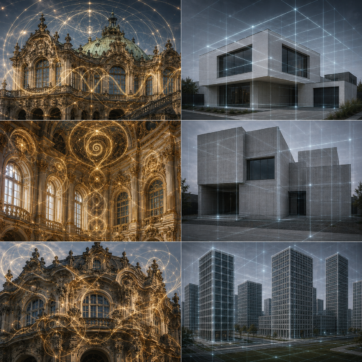
No Form. No Movement. No Time. No Relation. The Structural Collapse Of Everything The System Uses To Replace What Was Never Gone
Why The Eternal Cannot Be Taught
People assume that if something is real, it can be understood, and that assumption sits so deeply underneath how they move through reality that it almost never gets questioned. If something exists, it should be explainable. If it matters, it should be something that can eventually be learned. If it is foundational, there should be a way to reach it, to arrive at it, to build toward it through enough clarity, enough time, or enough effort. That is how everything inside the external system functions, so it becomes the default lens applied to everything—including this.
That is exactly where this breaks.
The Eternal cannot be taught, learned, processed, or reached, not because it is distant or hidden, but because every one of those functions belongs to the system that is already translating reality into something the mind can hold. Teaching requires movement from one position to another. Learning requires accumulation, where something is added and carried forward. Understanding requires translation, where something is converted into a structured form that can be recognized, labeled, and stabilized. The moment something can be understood in that way, it has already been reduced into structure, which means it is no longer what is being pointed to.
So nothing here is being given. Nothing is being added. There is no new layer of knowledge being introduced that will bring someone closer to it. What happens instead is that what has been layered in place of it begins to be removed. Not symbolically, not conceptually, but structurally. The attempt to grasp it is not neutral—it is the displacement from it. The movement toward understanding is the external system doing exactly what it was designed to do: translating what cannot be processed into something that can be.
This creates the tension that has to be held cleanly from the beginning. Something is being described that cannot actually be described in the way people expect it to be. Not because it is vague or abstract, but because description itself requires form, and the Eternal has no form to translate into. So the only way this can be approached without immediately turning it into something else is by removing everything that it is not. That is why so much of this will not feel like explanation in the traditional sense. It will feel like things are being stripped away rather than built up, because that is what is actually happening.
At the same time, this does not resolve all at once. Not because there is distance between the person and what is being pointed to, but because what has been running in its place has been running continuously. Identity, perception, emotional patterning, and the external structures that reinforce them do not disappear in a single moment. They loosen, they release, they re-engage, and then they release again. What most people encounter are moments where everything drops out cleanly and coherence is present without distortion, followed by the external coming back online. Those moments are not partial. They are exact. But they are not yet stabilized.
So there can be an expectation that if something is real, it should be constant immediately. That expectation itself comes from the same structure being described. It assumes progression, arrival, and permanence as a result of understanding or effort. None of that applies here. What happens instead is recognition in intervals. And once something is seen cleanly, even briefly, it is no longer theoretical. The difference between what is coherent and what replaces it becomes visible, and that difference does not disappear, even when the system re-engages.
Everything that follows sits inside that condition. Not to define the Eternal in a way that can be held, because that cannot happen, but to make what has been standing in its place visible enough that it no longer holds in the same way. And as that happens, what was never actually gone is no longer being continuously replaced.
The External Architecture: What You Are Actually Inside Of
What people call “reality” is not the starting point. It is the translated surface of something already in motion underneath it, and that distinction is where almost all confusion begins. The world that appears solid—bodies, environments, events, identity, history, time—is not primary. It is the render. It is the output layer that the human interface can perceive, organize, and participate in. But what is being perceived there is not raw existence. It is a translation of deeper structural movement occurring in what sits beneath it. That underlying structure is the external architecture.
The external architecture is not a theory, and it is not symbolic. It is the movement-based system that everything visible is coming through. It operates through oscillation, polarity, compression, torsion, sequence, and continuity stabilization. It cannot hold stillness directly, so it must continuously generate movement in order to remain organized at all. That movement becomes what humans experience as time, as change, as cause and effect, as progression. It is not evolution in the way people think—it is ongoing stabilization of instability.
That is why everything here moves. Nothing remains fixed. Nothing holds without adjustment. Identity shifts. emotions cycle. systems rise and collapse. history reorganizes. relationships change. environments degrade and rebuild. This is not random. It is structural. The external architecture is constantly redistributing pressure in order to maintain temporary coherence inside something that cannot stabilize on its own.
And before anything becomes visible in the world, it organizes in what can be called pre-render. Pre-render is not a place. It is not another dimension in the way people imagine. It is the layer where routing occurs before translation. Probability, convergence, identity positioning, collective conditions, and pressure patterns organize there before they appear as events, interactions, or circumstances in the visible world. By the time something happens in the render—an encounter, a shift, a collapse, a breakthrough—the deeper organization has already taken shape. The render is not creating reality in real time. It is displaying the result of what has already been routed.
So what people experience as life is render translation. The body, the senses, the nervous system, and perception itself are all part of that translation layer. They convert deeper structural movement into something that can be experienced sequentially. That is why everything appears to unfold in time. That is why there is a sense of before and after. That is why identity feels continuous. These are not ultimate conditions. They are stabilization functions that allow participation inside the architecture without immediate disorientation.
On top of this, there is what can be recognized as the mimic layer. The mimic is not separate from the external—it is a response to its instability. As the external architecture becomes more strained, more compressed, and less capable of holding coherence, the mimic amplifies participation to keep the system functioning. It increases emotional intensity, narrative complexity, identity fixation, symbolic meaning, urgency, and dependency on external interpretation. It makes everything feel more important, more personal, more real, more charged. Not to reveal truth, but to keep attention locked into the render.
This is why modern systems—spiritual, political, social, technological—feel overwhelming and hyperreal at the same time. The mimic does not care what someone believes. It only requires that they remain engaged through story, identity, emotion, and interpretation. A person can reject mainstream systems and still be fully inside the mimic if the rejection becomes another identity loop, another narrative, another structure they depend on to orient themselves.
This is also why no spiritual or New Age system has actually described what is Eternal. Because every one of those systems is built from inside the external architecture itself.
They rely on:
movement
frequency
vibration
energy
consciousness
states
progression
awakening paths
All of those require structure. All of them require something happening. All of them require translation through the same system they are attempting to explain. So they can only ever describe more “refined layers” of the external. They can move someone into less dense, less compressed, more expanded states within the architecture—but they cannot take them outside of it, because they are generated from within it.
This is the critical point. Everything people are interacting with—everything they feel, think, experience, pursue, reject, or believe—is occurring inside this architecture.
And none of it is Eternal.
Not because it is false or meaningless, but because it is all dependent on movement, structure, and stabilization. It exists because something is happening. And anything that requires something to happen in order to exist is not Eternal.
This is not separating one belief system from another or replacing one explanation with a better one. It is making the condition itself visible. The render is what is seen. Pre-render is what organizes what is seen. The external architecture is what drives both. The mimic amplifies participation inside it.
And all of it—every layer—is still inside the same condition. Not outside of it.
Which is why none of it can be what is being pointed to.
Total Removal: Everything The Eternal Is Not
Everything people reach for when they try to get closer to something foundational comes from inside the same external system they are already inside of, which is why every one of those references has to be removed completely and without exception. The Eternal is not light, not sound, not vibration, not frequency, not awareness, not consciousness, not presence, not void, not space, and not energy. None of these are “close.” None of them are partial representations. Every single one is external and every single one of them depends on something happening in order to exist, and that dependency is what disqualifies them. Light requires emission and reception. Sound requires vibration and translation. Frequency requires oscillation. Awareness requires something to be aware of. Consciousness requires a field of perception. Presence requires positioning. Void requires contrast against something that is not void. Space requires dimension. Energy requires movement and transfer. These are not ultimate conditions. They are all expressions of a system that is already in motion.
That motion is the key. Every one of these references depends on movement, contrast, perception, or relation in order to stabilize as something that can be experienced. And the moment something can be experienced, it requires an interface to translate it. The body, the senses, the nervous system, and perception itself are part of that interface. They convert what is happening into something that can be recognized, felt, interpreted, and known. But that entire process is translation. It is not direct. It is not original. It is a conversion of movement into experience. So if something can be sensed, felt, expanded into, or known, it is already inside that translation layer. It is already structured enough to be processed, which means it is not what is being pointed to.
This is where most external systems stop short, because they refine the experience instead of removing it. They move toward more subtle states—quieter, more expansive, less dense—and assume that refinement is proximity. But refinement is still movement. It is still something happening. It is still dependent on a system that can register the difference between one state and another. So it does not matter how expansive something feels, how still it appears, or how convincing it becomes. If it can be entered, if it can be held, if it can be described even internally as something that is occurring, it is still inside the same external condition.
So this is not narrowing down what the Eternal might be by comparison. It is removing every available substitution the system uses to approximate it. Not symbolically, but structurally. Because the external will continuously try to replace what cannot be translated with something that feels close enough to stabilize. It will offer light instead of no-form. It will offer presence instead of no-position. It will offer awareness instead of no-interface. It will offer stillness as a slowed state instead of the absence of movement altogether. And unless those substitutions are seen for exactly what they are, they will continue to stand in place of what is never actually being returned through the interface.
This is why the line has to be exact and cannot be softened. If something can be experienced, it is not Eternal. If something can be sensed, it is not Eternal. If something can be known, held, expanded into, or stabilized as a state, it is not Eternal. Because every one of those requires translation through a system that depends on movement and structure in order to function at all.
So nothing here is being refined toward. Everything is being removed away from. Not to arrive somewhere else, but because everything that can be pointed to, felt, or known is already part of what is covering what cannot be translated in the first place.
Before Anything Exists: No State, No Distinction
Everything people use to orient themselves depends on distinction, and that dependence is so constant it becomes invisible. Something is recognized because it is not something else. Something is defined because it can be separated, identified, and held apart from what it is not. Existence is understood in contrast to non-existence. Presence is understood in contrast to absence. Even the idea of “nothing” only holds meaning because it is positioned against “something.” That entire way of organizing reality depends on distinction, and distinction itself requires separation in order to function at all.
Separation is geometry. It is the condition that allows something to be positioned, bounded, differentiated, and related. It creates the possibility of here and there, this and that, inside and outside. Without separation, nothing can be distinguished. Without distinction, nothing can be defined. Without definition, nothing can be stabilized as a state, a condition, or an identifiable form. So every category people rely on—existence, non-existence, presence, absence, form, emptiness—depends on this underlying condition of separation in order to appear as something that can be known.
This is where the entire structure drops out.
The Eternal is not something, and it is not nothing, because both of those require distinction to hold at all. It is not existence, and it is not non-existence, because those are defined through contrast. It is not presence, and it is not absence, because those require positioning. All of those are relational conditions, and relation itself depends on separation. Where there is no separation, there is no relation. Where there is no relation, there is nothing to distinguish, nothing to define, and nothing to stabilize as a state.
So there are no states. No conditions. No categories. No definitions that apply. Not because something is missing, but because the entire mechanism required to produce those distinctions does not exist there at all. This is not a more unified version of separation. It is not a collapse of opposites into oneness. It is not an integration of duality. All of those still depend on the existence of what they are integrating. Here, that foundation does not exist to begin with.
This is also why even the word “nothing” fails. It appears to point toward absence, but it is still a concept formed inside the system of distinction. It still relies on the idea of something not being there. It still depends on contrast. So when it is used, it immediately reintroduces the structure that is not present. It gives the mind something to hold, even if that something is framed as empty. But that is still form at the level of concept.
So this is not describing a state of emptiness, and it is not describing a state of fullness. It is not describing a condition at all. It is removing the entire basis through which conditions can exist or be recognized. Because once distinction drops, everything that depends on it drops with it—definition, identity, relation, category, and state itself.
Nothing replaces that. Because replacement would require distinction again. And that is exactly what is no longer there.
Zero Interface And The Detection Failure
Everything people recognize as real is confirmed through feedback in the external system, whether they are aware of it or not. Something is seen, felt, measured, responded to, or reflected back in some way, and that loop of signal and response is what stabilizes it as “there.” The body registers input. The nervous system processes it. The mind organizes it. The environment confirms it. That entire cycle—signal, translation, response—is how reality becomes solid inside the human interface. Without that loop, nothing can be recognized as existing in any usable way.
That is the condition the external depends on. And that is exactly where this stops functioning.
The Eternal does not produce signal. It does not emit, transmit, reflect, or return anything that can enter that loop. There is no output to register, no feedback to confirm, no response to stabilize. Not because something is being hidden or blocked, but because nothing is being generated in the way the system requires in order to detect it. There is no event, no change, no measurable condition, no perceptual anchor that the interface can lock onto.
So the external does not “fail to find it” in the way people assume. It does not overlook it. It does not miss it. It cannot process it at all. And because it cannot process it, it does what it always does when there is no usable input—it filters it out completely. Not consciously, not selectively, but structurally. There is nothing to pass through the translation layer, so nothing appears on the other side.
This is why it does not register as something unknown. It does not register as anything.
The interface is built to convert what is happening into something that can be experienced. It requires difference, change, or signal in order to do that. Even stillness, as people usually understand it, is registered as a contrast against movement. Even silence is registered as the absence of sound. Even emptiness is registered as the absence of form. All of those are still detectable because they are defined through relation to something else.
But here, there is no relation to anchor that detection.
No signal means no contrast. No contrast means no perception. No perception means no recognition. And without recognition, there is nothing the external can interpret as existing within its field at all. So it is not that the Eternal is beyond perception in a mystical sense. It is that perception itself requires a condition that is not present there.
This is where the idea of “searching for it” breaks completely. Searching assumes that if something is not found, it is somewhere else, waiting to be located with the right method, the right sensitivity, or the right level of awareness. But searching is part of the same feedback system. It depends on detecting something, even if that something is subtle. It depends on signal becoming recognizable through refinement. So the search itself is operating inside the exact structure that cannot detect what has no output.
So nothing appears. And that absence is immediately filled. Because the system cannot hold a gap in detection without replacing it. It inserts something— presence, awareness, expansion—anything that can stabilize the lack of signal into something that feels like a result. And because that insertion feels coherent, it is accepted as contact. But what is being contacted there is the replacement, not what produced no output in the first place.
So this is not a limitation that can be overcome by refining perception. It is a structural boundary.
The external interface requires signal to detect. The Eternal produces none. So there is no detection, no confirmation, and no way for it to appear inside the system as something that can be experienced, found, or known.
Not hidden.
Not missed.
Not there to the external interface at all.
The Replacement Mechanism And Why It Always Happens
The external does not tolerate a lack of translation, and that is the part almost no one sees clearly because the replacement happens immediately, without delay, and without awareness. The moment something cannot be processed into a signal, a perception, or a recognizable condition, the system does not hold that absence as it is. It does not pause at non-translation. It does not register a gap. It inserts. Sensation appears. Imagery forms. Emotional tone stabilizes. Language begins to shape what is being “experienced.” These are not chosen responses. They are automatic structural functions that occur the instant translation fails, because the system cannot remain coherent without something to organize around.
This is not optional behavior. It is required for the system to continue functioning at all. The body, the nervous system, identity, and perception all depend on continuous input that can be processed into experience. Without that, orientation collapses. So when there is nothing to process, something must be generated to take its place. That generation is the replacement mechanism. It is not trying to deceive in the way people imagine deception. It is stabilizing a condition that cannot be held in its original form by converting it into something that can be experienced and interpreted.
This is why people never actually encounter non-translation directly. They encounter what replaces it. And because the replacement happens instantly, it feels like a direct experience rather than a substitution. The external presents it as coherence—something meaningful, something expansive, something that feels more real than ordinary perception. But that feeling is part of the stabilization. It reinforces the insertion so it can hold. What feels profound, what feels like arrival, what feels like contact with something deeper is still occurring inside the same structure, because it is being produced in response to the absence of signal.
That is why refinement does not move someone out of this mechanism. It simply changes the quality of what is inserted. Instead of dense, obvious forms, the replacement becomes more subtle. Instead of concrete imagery, it becomes spaciousness. Instead of emotional intensity, it becomes calm or neutrality. Instead of defined thought, it becomes wordless knowing. But all of it is still generated. It is still something occurring. It still depends on the system translating absence into experience.
If something appears, if something is felt, if something stabilizes as an experience that can be recognized in any way, it is part of the replacement. Not because it is false in a simplistic sense, but because it is produced through the same mechanism that prevents non-translation from being held. The system does not allow direct encounter with what produces no output. It converts that condition into something it can sustain.
This is why everything that feels like a breakthrough still sits inside the external. Not because it is meaningless, but because it is generated through the structure that requires experience in order to remain intact. And until that mechanism is seen clearly for what it is, the replacement will continue to be mistaken for what it is standing in place of.
Why It Registers As “Nothing”
When the external encounters something it cannot translate, it does not register that condition as it actually is. It returns what it can. And in this case, what it returns is “nothing,” not because nothing is there, but because there is no form, no movement, no signal, and no response for the interface to process into anything recognizable. The body, the senses, and perception itself require difference in order to detect. They require something happening, even if that something is subtle. Without change, without contrast, without output, there is nothing for the interface to convert into experience. So the system does not encounter the Eternal as it is. It encounters its own inability to register it.
That inability gets labeled. And the label becomes “nothing.”
But that label is not describing the Eternal. It is describing the system failing to produce a result. The interface is built to translate what is happening into something that can be known. When that translation cannot occur, it does not present a blank condition in any true sense. It presents the closest available interpretation of no-result, which is “nothing.” That becomes the conclusion, even though it is not pointing to what is actually there, but to the absence of processable output.
This is where confusion locks in, because “nothing” appears accurate. It feels like the correct word for something that cannot be detected. But it is still a concept formed inside the same external system of distinction, translation, and interpretation. It still depends on contrast. It still gives the mind something to hold, even if that something is framed as empty. So it becomes another substitution, just like every other replacement, except this one appears more final because it seems to remove everything.
But it does not remove the structure that produced it.
It leaves the interface intact and simply assigns a label to its own failure to process what has no output. So instead of recognizing that translation has stopped, the system interprets the lack of translation as a condition in itself. That interpretation is the misread. Not in the sense of misunderstanding something that could be understood, but in the sense of converting non-translation into a concept that fits inside the system.
So “nothing” is not what is being pointed to. It is what the system produces when it cannot produce anything else. It is the final available label when all other forms of translation fail, but it is still part of the same mechanism. It still belongs to the external. And as long as it is taken as the answer, the underlying condition remains covered by the very process that cannot register it at all.
No Geometry, No Movement, No Time
Everything people rely on to orient themselves in the external assumes geometry is present, even when they are not aware of it. Form requires boundary. Boundary requires separation. Separation creates position, dimension, and relation. That is how something becomes identifiable at all. It is placed somewhere, it has an edge, it exists in contrast to something else. That entire structure—form, boundary, dimension, position—is geometry. And once geometry is present, everything else follows from it automatically. There can be inside and outside. There can be distance. There can be direction. There can be relation between one point and another. That is the condition required for anything to exist as something.
That condition is not present in the Eternal. There is no form, no boundary, no dimension, and no position. There is no inside or outside because there is no separation to produce that distinction. There is no here and there, no this and that, no placement of anything relative to anything else. Without geometry, nothing can be located, nothing can be defined spatially, and nothing can exist as a positioned condition. This is not a simplification of space or a collapse of dimensions into something unified. It is the absence of the entire mechanism that produces dimensionality in the first place.
From that, movement becomes impossible. Movement requires something to move from one position to another. It requires distance, direction, and change across that distance. All of that depends on geometry. If there is no position, there is nowhere to move from and nowhere to move to. If there is no separation, there is no path. If there is no path, there is no motion. So movement does not slow down, it does not become more subtle, and it does not resolve into stillness as people usually understand it. It is not present at all. The possibility of movement does not exist.
Without movement, sequence cannot form. Sequence depends on change occurring across positions. One thing happens, then another, and the difference between those is recognized as progression. That is how events organize. That is how cause and effect appear. That is how before and after become meaningful. But all of that depends on movement being possible in the first place. If nothing moves, nothing changes. If nothing changes, nothing can be ordered. So sequence does not collapse into a single moment or become eternal in the way people imagine. It is absent because the condition required to produce it is not there.
And without sequence, time cannot exist. Time is not an independent condition. It is the measurement of movement across sequence. It is how change is organized into something that can be experienced as progression. Past, present, and future are all functions of sequence being stabilized through movement. Remove movement, and time has nothing to measure. Remove sequence, and there is no ordering to stabilize. So time does not slow, stretch, or become infinite. It is not there because the structure required to generate it is not there.
This is where stillness has to be corrected completely, because it is almost always misunderstood as a refined version of movement. People interpret stillness as something that happens after movement settles down, as if motion reduces until it reaches a quiet state. But that is still inside the same structure. It is still movement being measured at a lower intensity. What is being pointed to here is not reduced motion. It is the absence of the possibility of motion entirely. Not a state of calm, not a quiet condition, but the removal of the entire system that produces movement in any form.
From here, every model based on growth, stages, progression, evolution, or becoming loses its foundation. Those models all depend on time, sequence, and movement to function. They assume something changes, develops, or moves toward a different state. Without geometry, there is no movement. Without movement, there is no sequence. Without sequence, there is no time. And without time, there is no progression of any kind. So nothing develops into something else, nothing evolves, and nothing moves toward completion. That entire structure only exists where these conditions are present.
And in the Eternal, they are not.
No Continuity, No Memory, No Identity
Everything people rely on to know themselves depends on continuity holding, even if they are not consciously aware of it, because identity requires something to carry forward in order to exist as anything stable at all. Memory organizes experience into a sequence that can be referenced, and that sequence becomes the basis for identity, where the past is retained, the present is interpreted, and the future is anticipated as an extension of what has already been accumulated. That entire structure depends on persistence, where something remains long enough to be recognized again, compared, and reinforced. Without that persistence, nothing can form a thread, and without a thread, nothing can stabilize as a self, a history, or a condition that continues over anything resembling time.
That entire structure is not present in the Eternal. There is no memory because there is nothing to store. There is no storage because there is no accumulation. There is no accumulation because nothing is moving through sequence in a way that can be retained. Memory itself depends on time, because something has to occur, then be held, then be referenced again. Without sequence, there is no “before” to remember. Without movement, there is nothing that has occurred to be stored. So memory does not fade or become inaccessible, it does not exist as a function at all because the condition required to produce it is not there.
From that, continuity cannot form. Continuity requires that something persists across change, where a condition carries forward enough coherence to be recognized as the same across different points. That is what allows identity to stabilize. It is what allows someone to say “this is still me” across time. But if there is no time, no sequence, and no movement, there is nothing to carry forward and nothing to compare against. So continuity does not collapse or become unified, it is absent because the structure that produces it does not exist.
Identity depends on that completely. Identity is not just a label or a role, it is the stabilization of continuity through memory and persistence. It requires a thread, something that holds together across experiences, across time, across change. That thread is reinforced constantly through memory, perception, and interpretation. Without memory, there is nothing to reference. Without continuity, there is nothing to stabilize. Without persistence, there is nothing to hold. So identity does not dissolve into something greater or expand into something universal, it is not present because the conditions required to generate it are not present.
This also removes the idea that awareness is “holding itself” in some continuous way. Awareness, as people understand it, still depends on continuity, where something is aware across time and recognizes itself as the same awareness. That requires persistence. It requires a thread that carries forward. Without that, there is no ongoing recognition of anything being aware. So even the idea of a continuous awareness observing itself does not apply here, because that depends on the same structure of memory and continuity that is not present.
Nothing is carried forward because there is no sequence to carry through. Nothing is held because there is nothing that requires holding. This is not a release of memory or a transcendence of identity, it is the absence of the entire system that produces memory, continuity, and identity in the first place.
No Location, No Origin, No Relationship
Everything people use to orient themselves assumes location is real, even when it is not consciously recognized, because something has to be somewhere in order to be known as anything at all. Position creates the sense of here and there, near and far, inside and outside, and from that, distance forms as something that can be measured, crossed, or reduced. That entire structure depends on geometry, because without separation there is no position, and without position there is no distance. This is why people instinctively treat anything foundational as if it must exist somewhere else, as if it can be approached, reached, or moved toward through the right alignment or enough clarity. That assumption is built into the system they are already inside of.
The Eternal is not somewhere else. It is not located in another place, another layer, or another dimension that can be accessed through movement. Distance requires geometry, and geometry is not present, so there is no distance to cross and nowhere to move toward. It cannot be approached, not because it is hidden, but because approach itself requires position changing across space, and that structure does not exist. So the entire instinct to orient toward it as something separate collapses immediately, because separation is not present to begin with.
From that, origin also collapses. Origin requires a starting point, a moment where something begins, where a condition emerges or is created and then continues from that point forward. That requires sequence, time, and causation. It requires something happening and then something else following from it. But where there is no time, no sequence, and no movement, there is no beginning and no event that initiates anything. So there is no origin in the sense people rely on. There is no creation moment, no first cause, no initial condition that everything extends from. The idea that something “came from somewhere” depends entirely on a structure that is not present.
This is also where the idea that the external is something that happened has to be removed completely.
It is not an event. It is not a fall, not a creation, not a shift that occurred at a point in time and then unfolded. It is a condition. It is the presence of geometry, movement, and sequence where those are active, not the result of something that occurred to produce them. So trying to locate an origin for it immediately reintroduces time and causation, which are part of the condition itself, not explanations for it.
From here, relationship cannot exist. Relationship requires two or more positions that can be connected, compared, or interacted with. It requires distinction between one thing and another and a structure that allows influence or interaction between them. That depends entirely on geometry, because without separation there are no positions to relate. So there is no relationship between the Eternal and the external. No connection, no interaction, no influence, no exchange. Not because they are distant, but because relation itself is not a valid condition there.
This is the point that cannot be softened or worked around, because the external will continuously try to reintroduce connection in order to make sense of what is being pointed to. It will assume there must be a bridge, a link, a way that one affects the other, or a way to move between them. But every one of those assumptions depends on relation, and relation depends on geometry. If geometry is not present, then relation is not present, and nothing connects in the way the system expects.
No location. No distance. No approach. No origin. No event. No creation. No relationship. No connection, no interaction, no influence of any kind. Because every one of those requires a structure that is not there.
No Strain, No Accumulation, No Collapse
Everything inside the external is operating under load whether it is recognized or not, because the entire system depends on movement being continuously stabilized in order to hold any form at all. That stabilization is not neutral. It requires constant adjustment, redistribution, and compensation, which is why pressure builds, releases, and builds again across every layer—physical, emotional, mental, environmental. Torsion forms where movement is forced into containment, curvature appears where direction bends under pressure, and instability emerges wherever coherence cannot fully hold. Nothing in that system exists without being affected by that ongoing accumulation, because accumulation is how the system maintains itself. It stores, it carries forward, it layers, and it reinforces, and over time that creates distortion, where the original condition is no longer cleanly held but warped through the very process required to sustain it.
The Eternal does not accumulate anything. There is no storage, no layering, no carrying forward of pressure or condition across anything resembling time, because the structure required for accumulation—movement through sequence—is not present. Without accumulation, nothing builds. Without something building, nothing distorts. Distortion requires that something has been altered from a prior condition, that pressure has been applied and held long enough to change the structure. But where nothing is being held, nothing can be altered. So distortion does not resolve or correct itself, it does not exist as a condition.
From that, collapse cannot occur. Collapse requires instability reaching a threshold where the structure can no longer maintain itself under the load it has accumulated. It requires tension, imbalance, and stored pressure that eventually releases through breakdown. That entire sequence depends on accumulation having taken place. Without accumulation, there is no load. Without load, there is nothing to destabilize. Without destabilization, there is nothing to collapse. So collapse is not prevented or avoided, it is not relevant because the condition required for it never forms.
This also removes the need for stabilization entirely. In the external, everything is in some state of being stabilized, whether actively or passively, because instability is always present underneath the surface. Systems are maintained. Bodies regulate. identities reinforce. environments adjust. All of it is continuous effort, even when it appears automatic, because the underlying condition requires constant management to hold together. That is why repair exists. That is why correction exists. That is why systems break and need to be rebuilt.
None of that applies in the Eternal. Nothing needs to be stabilized because nothing is under strain. Nothing needs to be repaired because nothing is being altered. Nothing needs to be maintained because nothing is degrading over time. There is no underlying instability that has to be managed, no pressure that has to be redistributed, no distortion that has to be corrected. Not because it has been resolved, but because the entire structure that produces strain, accumulation, and collapse is not present at all.
The Collapse Of Experience And System Resistance
Everything people rely on to confirm that something is real is built on experience, and experience itself depends on a structure that requires separation in order to function at all. There has to be something observing, something being observed, and some form of interaction or exchange between the two for experience to stabilize as anything recognizable. That is how perception forms. That is how meaning forms. That is how reality becomes something that can be known. Even the most subtle internal states people point to still follow that same structure, where there is something registering, something being registered, and a continuity that holds that interaction together long enough for it to be recognized as an experience.
In the Eternal there is no observer, no observed, and no interaction between them because all of that depends on separation, and separation is not present. Without separation, there is nothing to distinguish one position from another, nothing to hold a point of observation, and nothing to engage with. So experience does not become more refined, it does not become more subtle, and it does not expand into something more complete. It does not apply at all because the condition required to produce it does not exist.
From inside the external system, this does not register cleanly. It registers as loss. Because identity, continuity, and perception all depend on experience to confirm themselves. Identity is reinforced through what is experienced and remembered. Continuity is stabilized through the sequence of experiences carrying forward. Perception depends on experience to confirm that something is there to be perceived. When that structure drops out, the system does not interpret it as the absence of experience in a neutral sense. It interprets it as annihilation, because the mechanisms it uses to confirm its own existence are no longer functioning.
That interpretation triggers response immediately. Not as a decision, not as a reaction in the emotional sense, but as a structural preservation function. The external cannot remain without those confirmations, so it moves to restore them. Substitution occurs, where something is generated to replace what is no longer being experienced. Avoidance engages, where attention shifts away from the absence and back into something that can be processed. Distortion appears, where what is encountered is reshaped into something that fits back into the structure of experience.
This happens automatically. There is no gap where the external simply allows the absence of experience to remain without interference. The replacement begins as soon as the structure drops, because the system is built to maintain itself through continuous experience. It cannot hold a condition where there is no observer, no observed, and no interaction, so it converts that condition into something it can recognize again.
So what appears as resistance is not resistance in the personal sense. It is the system preserving its own structure. It is maintaining identity, continuity, and perception by reintroducing the conditions required for experience to exist. And as long as that mechanism is not seen clearly, what replaces the absence of experience will continue to be taken as something real, rather than as the system restoring itself back into operation.
No Path, No Return, No Containment
Everything people are used to doing assumes movement is possible, even when they are not aware that assumption is driving how they think, because the idea of a path only exists where something can move from one position to another across distance and sequence. A path implies direction, progression, and change over time. It assumes there is somewhere to go, something to get closer to, and some way to measure that movement as progress. That entire structure depends on geometry, movement, and time holding together at once, because without position there is no direction, without movement there is no traversal, and without sequence there is no progression to stabilize the idea that something is being reached.
There is no path to the Eternal because there is no movement. There is no movement because there is no position to move from and no position to move to. Without that, the entire idea of moving toward something collapses completely. It does not become internal, it does not become symbolic, and it does not become more subtle. It is not present at all because the structure required to produce it is not there. So nothing is being approached, nothing is being entered, and nothing is being reached through any form of progression.
From that, return also collapses. Return assumes that something left and can go back, that there is a departure and then a re-entry across time. That requires sequence, memory, and continuity, because something has to carry the idea of where it came from in order to return to it. But where there is no time, no sequence, and no continuity, nothing leaves and nothing comes back. There is no separation to create departure, and no movement to allow re-entry. So the idea of “returning” is not a deeper truth being pointed to, it is the system reintroducing movement and time to make sense of something that does not function that way at all.
This is also why no method applies. A method is a sequence of actions taken over time to produce a result. It assumes that something can be done step by step to move from one condition into another. That depends entirely on time, progression, and causation, where one action leads to another and eventually results in an outcome. Without time, there is no sequence of steps. Without sequence, there is no accumulation of progress. Without accumulation, there is no result being produced through effort. So no method, no practice, no technique, and no system can apply here, not because they are ineffective, but because they operate inside a structure that is not present.
From there, containment cannot exist. Containment requires boundary. It requires something to be defined, held within limits, and separated from what it is not. That depends on geometry completely, because without separation there is no boundary, and without boundary there is nothing to contain anything within. So the Eternal cannot be held, described, structured, or stabilized as something that fits within any conceptual or perceptual framework. The moment it is turned into something that can be defined, even internally, it has already been translated into structure, which means it is no longer what is being pointed to.
So every attempt to describe it, organize it, or turn it into something that can be known introduces containment again.
It creates a boundary around it, even if that boundary is subtle or abstract. It gives it shape at the level of concept, and that shape allows it to be held, referenced, and repeated. But that is not what is being pointed to. That is the system converting what cannot be contained into something that can be stabilized as an idea.
No path, because there is no movement. No return, because nothing left. No method, because there is no time. No containment, because there is no boundary. And the moment any of those reappear, the system has already translated what cannot be structured into something that fits back inside itself.
The Flip Point And Stabilization Of Non-Reference
Everything in the external is built on reference, whether it is recognized or not, because something has to be compared, located, or confirmed against something else in order to be known as anything at all, and that is how interpretation forms, how seeking sustains itself, and how identity continues to position itself in relation to what it believes is outside or beyond it. Interpretation takes what is encountered and converts it into meaning through comparison. Seeking assumes something is not here and must be moved toward or found. Identity positions itself through alignment, rejection, identification, and differentiation, constantly orienting itself within a structure that requires internal and external anchors to hold any sense of stability.
That entire mechanism depends on reference points remaining active. Reference requires distinction, because something has to be set against something else in order to register. It requires internal anchors, where identity holds itself in place through memory, perception, and continuity, and it requires external anchors, where the environment, experience, and interpretation confirm what is believed to be real. As long as those reference points are active, the system continues to translate, compare, and stabilize itself through relation.
The flip occurs when that entire process stops. Not slows. Not refines. Not becomes more subtle. Stops. Interpretation is no longer applied to what is encountered. Seeking is no longer orienting toward anything beyond or ahead. Identity is no longer positioning itself in relation to anything, internally or externally. This is not a shift into a better reference or a more accurate alignment. It is the absence of referencing altogether. Nothing is being compared, nothing is being located, and nothing is being used to confirm or validate anything else.
From that, reference points fall out completely. There are no internal anchors holding identity in place through memory or continuity, and no external anchors providing confirmation through experience or perception. Nothing is being used to orient, stabilize, or interpret. That includes the subtle forms of reference people often overlook, such as holding onto a sense of awareness, stillness, or presence as something to remain aligned with. Those are still anchors. Those are still points of reference. And here, they do not remain.
This is where stabilization shifts completely. In the external, stabilization depends on reference. Systems hold by reinforcing anchors, by maintaining identity, by sustaining interpretation and relation across time. Here, stabilization occurs through the absence of that entire mechanism. Nothing is being used to hold anything in place, because there is nothing being referenced to begin with. So stabilization is not achieved. It is what remains when referencing is no longer active.
This is the collapse of all referencing mechanisms. Not replaced with something else, not redirected toward something more accurate, but removed entirely as a function. Nothing is being used to validate anything. Nothing is being measured against anything else. Nothing is being held as a point of orientation. And without that, the entire structure that depends on reference to exist can no longer operate in the same way.
The Eternal In The Human
Everything prior has stripped away what the Eternal is not, not by refining it or getting closer to it, but by removing every structure that tries to stand in its place, and what remains from that is clear in one direction: none of what has been described as reality, identity, experience, perception, or even the most subtle states people associate with depth or truth has anything to do with it at all. It is not inside the external, not layered within it, not hidden somewhere deeper inside it waiting to be accessed. It is not a more refined version of the same system. It does not exist on another level of it. It is entirely outside of it, not in distance or position, but in condition. Everything that has been removed—movement, time, geometry, identity, experience, relation—are not distortions of it, they are part of a completely different structure altogether.
That separation has to be held cleanly, because the external will immediately try to blend them back together, to assume that what has been pointed to must exist somewhere within the same field it already recognizes. It does not. And that is why what follows can appear contradictory at first, because it is describing something that is not part of the external at all, while at the same time showing how it can be recognized and held while still inside a human body that is fully operating within that external system.
That is where confusion usually enters, because it seems like those two conditions should not be able to coexist. If the Eternal is not part of the external, then how could it be present within a human experience that is clearly functioning inside it. But that question is still being asked from inside the structure that assumes everything must relate, must connect, must exist within the same field in order to be known. What is being pointed to does not require that connection in the way the system expects.
So what follows is not a shift back into describing the external, and it is not a contradiction of what has already been established. It is the continuation of it, now showing what happens when what has been continuously covered is no longer being replaced, and how that registers through a human system that is still fully embedded in the external architecture. This is where coherence begins to be recognized, not as something created or achieved, but as what remains when the structures that distort it are no longer stabilizing in the same way.
It can feel like contradiction because the body, perception, and environment are still operating inside movement, time, and structure, while what is being recognized does not depend on any of that. But that is not conflict. It is simply two different conditions, one of which has always been present and one of which has always been active. And as the layers that were covering it loosen and stop reasserting themselves in the same way, what was never actually gone begins to hold more consistently, even while everything else continues to move.
That is where remembrance becomes possible. Not as a return, not as a process of becoming something new, but as the stabilization of coherence that was never dependent on the system it is now being recognized through.
It Was Never Outside The Human
The assumption that the Eternal is somewhere else is built from the same structure that requires distance and separation in order to make sense of anything, which is why it feels natural to think of it as something beyond, something outside, something that has to be reached or accessed from where one currently is. That assumption carries all the way through spiritual systems, personal development, and even scientific thinking, where something fundamental is treated as if it exists in another place or another state that must be moved toward. But that entire orientation depends on geometry, movement, and time, and those conditions do not apply to what is being pointed to here.
The Eternal is not separate in that way, and it was never outside the human to begin with.
Not because it exists inside the human as a contained part, and not because it is integrated into the external system as one of its layers, but because the idea of inside and outside does not apply to it at all. What has been experienced as separation is not distance from it, but the presence of structures that continuously translate and replace what cannot be processed directly. External architecture, mimic distortion, identity, and conditioning are not barriers in the sense of blocking access to something elsewhere. They are active systems that generate experience, perception, and continuity in a way that keeps the underlying condition from being recognized as it is.
So it does not need to be brought in, activated, or connected to. Nothing new arrives.
There is no moment where something enters the system or becomes present that was not already there. What changes is not its presence, but the activity of what has been standing in its place. As those layers loosen—external patterning, identity reinforcement, emotional looping, interpretive structures—the constant replacement begins to drop. Not all at once, not permanently at first, but enough that there are clear intervals where nothing is being inserted over it.
That is what shifts the experience. Not because something new is appearing, but because what has been continuously covering it is no longer stabilizing in the same way. The system is not adding the Eternal into perception. It is no longer successfully replacing it with something else in those moments. And in that absence of replacement, what has always been present is no longer obscured in the same way.
This is why it can feel like something is being rediscovered, even though nothing has been lost or hidden in the way the system assumes.
It is not a recovery of something that left. It is not a reconnection to something that was separate. It is the removal of the conditions that made it seem like it was not there. And because those conditions are structural and deeply embedded, they do not disappear instantly. They loosen, they fall away, they re-engage, and then they fall away again. But once the difference is seen clearly, it does not disappear in the same way it did before.
So the Eternal was never outside the human. What has been outside is the recognition of it, because the structures that generate experience have been continuously replacing what they cannot process. And as that replacement stops holding in the same way, what was always present is no longer being covered over by the system that made it appear absent.
Why It Appears Different Here
The assumption is that if something is real in its pure form, it should appear the same way wherever it is encountered, and that is what creates confusion when what is being pointed to here is recognized through a human system. People expect consistency of appearance, where something fundamental should look, feel, or register the same across every condition. But that assumption depends on perception being able to access something directly without translation, and that is not how the human system functions at all.
Pure Eternal has no form, no movement, and no perception, which means it does not appear as anything on its own. There is nothing to see, nothing to feel, nothing to register, and nothing to interpret because all of those require the structures that have already been removed. So there is no original “appearance” to compare against. There is no baseline image, no state, no condition that can be carried into the human experience and recognized in the same way, because recognition itself requires translation through perception.
What happens instead is that the human system continues to operate as it does—through the body, through the nervous system, through perception, through environment—while what has been continuously covered is no longer being replaced in the same way. That does not create a separate experience layered on top of reality. It does not introduce a new state that overrides the body or the environment. The body still moves. Perception still functions. The environment still appears structured and continuous. But what is underlying that is no longer being distorted in the same way by constant replacement.
So it appears different here, not because it has changed, but because it is being recognized through a system that translates everything into experience.
That translation creates the sense that something is being felt, something is being known, or something is being present, but those are still expressions through the human interface, not the Eternal itself taking on those qualities. The body registers coherence as a lack of internal fragmentation. The nervous system registers it as the absence of constant adjustment and compensation. Perception registers it as clarity without distortion. These are not the Eternal becoming those things. They are the human system reflecting the absence of what was distorting it.
This is why it can be mistaken for a state.
Because it appears through the same channels that normally produce states—feeling, perception, awareness—so it gets interpreted as something that has been achieved or entered. But that interpretation comes from the external system trying to categorize what it is registering. In reality, nothing has been entered and nothing has been achieved. The system is simply no longer replacing what it cannot process in the same way, and that absence of replacement is what registers as coherence through the body and perception.
So it is the same in origin, but it does not appear the same in expression, because expression requires translation, and translation belongs to the human system. What is being recognized has not changed. What has changed is the activity of what was covering it, and the way the human system reflects that absence through its own functioning.
That is why it can feel different, even though nothing about it has actually become something else.
The Physical And Structural Signature
The assumption is that if something real is recognized, it will show up as a feeling, a state, or some kind of noticeable shift that can be identified and tracked, but what actually happens here does not follow that pattern because it is not something being added to the external system, it is something no longer distorting it. The body does not become enhanced, elevated, or altered into something new. It becomes clear of what was continuously interfering with its baseline coherence, and that difference is not dramatic in the way people expect, it is exact in a way that is unmistakable once it is recognized.
The body becomes internally unmoved, not in the sense of being still or calm as a state, but in the absence of internal displacement. There is no fragmentation pulling in different directions, no competing signals trying to stabilize at once, no underlying tension being managed beneath the surface. What is normally experienced as constant adjustment—emotional, mental, physical—is no longer running in the same way, so there is nothing being corrected in real time. The system is not working to maintain itself moment to moment because it is no longer being destabilized in the same way it was before.
This is where alignment appears, but not as something being achieved.
Everything aligns without effort because there is nothing out of alignment that needs to be brought back into place. The body is not organizing itself around a reference point or trying to hold a state. It is not compensating, not reinforcing, not negotiating between different internal pressures. What people often interpret as “alignment” is usually the result of actively trying to stabilize something. Here, stabilization is not being produced, it is what remains when the interference that required stabilization is no longer active.
The core signature is wholeness, but not in the sense of something being assembled or integrated from separate parts.
There is no sense of pieces coming together, no process of healing or reintegration occurring in real time. It is not held together, it is not maintained, and it is not dependent on anything continuing in order to remain. It is undivided because the condition that produced division is no longer structuring the system in the same way. That is what makes it distinct from any state or experience, because states can shift, fluctuate, and require reinforcement, while this does not rely on anything being sustained.
So it does not feel like something new has been gained. It feels like nothing is interfering.
And that absence is what allows the body to register as whole, not because something has been added to it, but because what was fragmenting it is no longer structuring it from underneath.
Nervous System, Emotional, Mental, And Identity Shift
The assumption is that change in the external will show up as improvement, regulation, or control, as if the nervous system becomes calmer, emotions become more positive, the mind becomes quieter, and identity becomes more stable, but that entire framing still assumes something is being actively managed or adjusted into a better condition. What actually shifts here is not improvement within the same structure, but the absence of what was forcing the system to continuously compensate in the first place.
The nervous system stops scanning, not because it has been trained to relax, but because there is nothing being registered that requires constant anticipation and correction. Scanning is a response to instability, where the system is continuously checking for imbalance, threat, or misalignment in order to adjust itself in real time. When that underlying instability is no longer structuring the system in the same way, the scanning function has nothing to orient around. So it does not reduce or become more efficient, it stops because the condition that required it is not active in the same way.
Emotions shift in the same way, not by becoming suppressed or controlled, but by no longer looping or accumulating. Emotional looping depends on continuity, where something is carried forward, reinforced, and revisited through memory and interpretation. Accumulation requires that emotional responses build over time, layering and intensifying through repetition. Without that structure holding in the same way, emotions arise as direct responses to what is present and pass without being stored, reinforced, or extended beyond their natural movement. There is no backlog, no residual charge being carried forward, and no ongoing amplification through identity or narrative.
The mind becomes precise, not because it has been disciplined or quieted, but because it is no longer over-processing to stabilize fragmentation. Over-processing is a compensatory function, where the mind attempts to organize conflicting inputs, resolve internal contradictions, and maintain a sense of continuity through constant interpretation. When that fragmentation is no longer structuring the system in the same way, the need for continuous processing drops out. Thought does not disappear, but it is no longer running as a background function trying to hold everything together. It appears when needed and resolves without carrying itself forward unnecessarily.
Identity remains, but it is no longer load-bearing. It still functions in the external world as a point of interaction, a way to navigate roles, communication, and participation, but it is not being used to stabilize the system internally. It does not need to be reinforced, defended, or continuously defined in order to hold coherence. There is no dependence on it to maintain a sense of self across time, because the continuity that normally supports that structure is not operating in the same way.
From this, internal division falls out completely. There is no contradiction being managed between different parts, no negotiation between competing drives, no internal dialogue attempting to reconcile opposing positions. Those processes depend on fragmentation being present, where different aspects of the system are operating under different pressures and requiring coordination. When that fragmentation is no longer structuring the system, there is nothing to negotiate between, nothing to reconcile, and nothing to resolve.
So the shift is not toward control, regulation, or refinement within the same system. It is the absence of the conditions that required control, regulation, and compensation to begin with.
Stillness, Coherence, And Non-State Stability
The assumption is that stillness is something that can be achieved, entered, or deepened, as if it is a refined version of movement where everything slows down enough to feel calm, quiet, or at peace, but that entire interpretation is still operating inside the same structure that produces movement to begin with. What people call stillness is usually reduced activity, where thought softens, emotion settles, and the body relaxes into a quieter condition, but all of that is still measurable, still fluctuating, still dependent on contrast with what came before it. It is still something happening, which means it is still part of the same system.
What is being pointed to here is not that. Stillness is the absence of internal movement entirely, not the reduction of it, not the control of it, and not the refinement of it into something more subtle. It is not calm. It is not quiet. It is not a state the system enters and then maintains. It is what remains when the structure that produces internal movement is no longer active in the same way. There is no shifting underneath, no adjusting, no background motion trying to stabilize anything. It does not need to be held because there is nothing moving that would require holding.
From that, coherence becomes clear, but not as something that is created or built over time.
Coherence is not alignment achieved through effort, not integration of separate parts, and not the result of correcting fragmentation piece by piece. It is the absence of fragmentation altogether. Fragmentation requires division, where different parts of the system are operating under different pressures and require coordination to function together. When that division is no longer structuring the system, coherence does not need to be produced. It is already there as the baseline condition when nothing is splitting apart or pulling in different directions.
This is why it cannot be understood as a state. A state implies something that begins, persists for a period, and then ends or shifts into something else. It implies fluctuation, where conditions rise, fall, intensify, or dissolve over time. It implies that something is being entered, held, and then exited. None of that applies here because all of those depend on time, sequence, and movement. This does not rise. It does not fall. It does not fluctuate or transition into something else. It is not maintained, and it does not need to be returned to.
It is what remains when production stops. Production meaning the constant generation of thought, emotion, identity reinforcement, perception filtering, and internal adjustment that normally runs without interruption. When that production is no longer structuring the system in the same way, nothing replaces it. There is no new state that takes its place. There is simply the absence of what was being generated continuously.
That absence is not empty in the way the system interprets emptiness. It is stable without needing to be stabilized, present without needing to be maintained, and unmoving without needing to be held in place. And because it does not depend on anything continuing in order to remain, it cannot be lost in the way a state can be lost, and it cannot be gained in the way a state can be entered. It is not something the system produces. It is what is no longer covered when the system stops producing in the same way.
Interaction And Collective Effect
The assumption is that if something shifts at an internal level, it should visibly alter the external in a dramatic or immediate way, as if coherence would override the environment, change outcomes directly, or create a different version of reality through force or intention, but that assumption is still based in the same structure of control, reaction, and cause-and-effect that governs everything inside the external. What actually changes is not the external continuing or stopping, but how participation within it is structured at the most fundamental level.
Externally, life continues as it always has. The body moves, interactions occur, systems operate, and environments remain structured through the same architecture of movement, sequence, and translation. Nothing is removed from the visible world, and nothing needs to be altered for coherence to be present. What shifts is the absence of reactive loops and compulsion within that participation. Reaction depends on internal fragmentation, where something is triggered, interpreted, and reinforced through identity and continuity. Compulsion depends on unresolved pressure seeking stabilization through action, thought, or emotional engagement. When those conditions are no longer structuring the system in the same way, reaction does not need to be suppressed and compulsion does not need to be controlled. They are not active in the same way because the underlying drivers are not present.
Response becomes direct, not as a technique or a learned behavior, but because there is no distortion interfering with what is occurring in real time. There is no delay created by over-processing, no amplification created by emotional looping, and no redirection created by identity positioning. What happens externally is met as it is, without being pulled into a chain of reinforcement that extends it beyond what is actually present. This is not detachment, and it is not disengagement. It is participation without distortion carrying forward.
As this stabilizes, distortion loses its ability to reinforce itself collectively.
Distortion in the external depends on feedback loops, where reaction feeds reaction, identity reinforces identity, and systems maintain themselves through continuous engagement and interpretation. These loops require participation to sustain themselves. When participation is no longer structured through those loops, the reinforcement weakens. Not because anything is being actively dismantled, but because the input that sustains distortion is no longer being generated in the same way.
This is where collective effect begins to shift, but not through force.
Systems reorganize through reduction, not through opposition or control. What cannot sustain itself without continuous reinforcement begins to lose coherence. Structures that depend on distortion to hold begin to destabilize when that distortion is not being fed. This does not happen all at once, and it does not follow a linear progression, because the external still operates through movement and sequence. But the underlying pattern changes as fewer loops are reinforced and fewer distortions are carried forward.
So nothing is being imposed on the external from outside it.
There is no force being applied to change it, no intention required to override it, and no action needed to restructure it directly. The shift occurs because the mechanisms that sustain distortion are no longer operating in the same way at the level of participation. And as that continues, what holds through distortion has less to build on, and what remains begins to reorganize through the absence of what was previously reinforcing it.
The Gradual Process And Glimpses
The assumption is that if something is real at this level, it should resolve instantly and remain stable without interruption, as if recognition would immediately override everything that has been structuring the external system up until that point, but that expectation is still coming from the same framework of progression, completion, and arrival that depends on time and sequence to define what it means for something to “be established.” What actually occurs does not follow that pattern, not because it is incomplete, but because the structures that have been continuously replacing it do not disengage all at once.
The layers that have been operating—external architecture, identity reinforcement, emotional looping, perceptual filtering, and mimic distortion—have been running continuously and automatically, and they do not drop in a single motion. They loosen, they release, they reassert, and then they release again. That movement is not the Eternal shifting or changing, it is the system losing its ability to maintain replacement in a consistent way. What has been covering does not disappear instantly, it becomes unstable in how it holds.
This is why what most experience are glimpses. Not partial contact, not diluted recognition, but clear intervals where everything that was being inserted drops out completely, and coherence is present without distortion. In those moments, nothing is being added, nothing is being achieved, and nothing is being interpreted. There is simply the absence of replacement, and in that absence, what has always been there is no longer obscured. Those moments are exact. They are not approximations or stepping stones. They are the condition itself, recognized without interference.
But they do not hold continuously at first. The external re-engages, not because something has been lost, but because the structures that generate experience are still active and capable of reasserting themselves. Identity comes back online, perception resumes its filtering, emotional and mental patterns begin to stabilize again, and the sense of continuity rebuilds. This is not failure, and it is not regression. It is the system continuing to operate while its ability to fully cover what is underneath is weakening.
What changes permanently is not that coherence is held at all times, but that it is known.
Once it has been seen without distortion, even once, it is no longer theoretical, no longer conceptual, and no longer something that can be replaced in the same way it was before. The contrast between coherence and what replaces it becomes unmistakable. Even when the system re-engages, that contrast remains, because it has already been recognized directly, not inferred or imagined.
So the process is gradual, not because something is being built or developed, but because what has been covering is losing stability in layers.
Each glimpse reduces the system’s ability to fully reassert itself without being seen. Each interval of clarity exposes more of how replacement operates. And over time—not as a goal, but as a natural consequence of that exposure—the system holds less tightly, re-engages less completely, and leaves more space where nothing is being inserted.
That is how stabilization occurs. Not as a final state reached through effort, but as the diminishing ability of the system to continuously replace what it cannot process, until what remains is no longer interrupted in the same way.
Variation Between People
The assumption is that if something is real at this level, it should appear the same in everyone, as if recognition would produce a uniform outcome where all differences collapse and everyone stabilizes in the same way, but that expectation is still rooted in the idea that something is being applied equally across identical conditions. That is not the case, because what is being described does not enter the system as something new. It becomes recognizable as what has always been present, and that recognition occurs through systems that are not identical in how they have been structured, conditioned, and stabilized over time.
Every human system has been shaped through different patterns of distortion, conditioning, and fragmentation, and those patterns determine how strongly the external architecture is being reinforced at any given point. Distortion is not just conceptual error, it is structural misalignment where pressure, identity, and perception are organized in a way that requires constant stabilization. Conditioning reinforces those patterns through repetition, expectation, and interpretation, embedding them deeply into how the system operates automatically. Fragmentation divides the system into competing signals, where different layers are attempting to stabilize at once, creating internal tension that requires continuous management.
These differences matter because they affect how strongly the replacement mechanism holds.
In a system where distortion is dense, conditioning is deeply reinforced, and fragmentation is high, the structures that generate experience and identity are more tightly held. That does not prevent recognition from occurring, but it does affect how long the system can sustain the absence of replacement before re-engaging. In a system where those layers are less rigid or have already begun to loosen, the intervals where coherence is present without distortion may hold more easily or extend for longer periods. This is not because one system is closer to something than another, but because the degree of structural reinforcement varies.
So what appears as difference is not a difference in access or worth. It is a difference in condition.
There is no hierarchy in this, because nothing is being achieved, gained, or progressed toward. There is no scale where one person is more aligned with the Eternal than another, because alignment itself would require a reference point and a measurable distance from it. What varies is not proximity, but how much of the system is actively reinforcing replacement at any given time.
This is why comparison fails here. Comparison requires that two conditions be measured against each other using a shared reference, but the reference people tend to use—states, behaviors, perceived clarity, emotional regulation, or external expression—are all part of the system being described. They do not indicate the presence or absence of coherence in any direct way. Someone can appear highly stable externally while still operating under dense internal reinforcement, and someone else can appear unstable while large portions of that reinforcement are already loosening.
So variation does not point to levels. It points to structure.
Different configurations of distortion, conditioning, and fragmentation determine how the system responds as replacement begins to drop. That response can look different on the surface, but it does not change what is being pointed to or create separation within it. What is recognized does not vary. What varies is how the system that has been covering it continues or stops reinforcing that cover.
Dissonance: The Critical Correction
The assumption is that dissonance signals something real breaking through, as if discomfort, tension, or internal friction automatically indicates that coherence is emerging and the system is reacting to it, but that interpretation is one of the most consistent ways fragmentation gets misidentified as something meaningful. Most dissonance people experience is not coherence at all. It is the external encountering its own internal contradiction, where competing signals, unresolved pressure, and identity-based reinforcement are all active at once and cannot stabilize cleanly.
Fragmentation produces dissonance because different parts of the system are operating under different conditions and attempting to hold at the same time. One layer pulls in one direction, another layer reinforces something else, and the result is tension that feels like something is “off” or “misaligned.” That tension is not coherence pushing through. It is the system struggling to maintain continuity across incompatible internal structures. It requires management, interpretation, and often constant attention because it does not resolve on its own while the underlying fragmentation remains active.
That is false dissonance.
It is internal contradiction being experienced directly, not as something separate from the system, but as the system attempting to stabilize itself under competing pressures. It can feel intense, meaningful, or even directional, which is why it is often mistaken for guidance or breakthrough, but it is still generated from inside the same structure that is producing the instability.
True dissonance is different entirely.
It does not come from internal contradiction. It appears when stability meets instability directly, without the system being organized around that instability in the same way. It is not confusion, not emotional looping, and not a sense of being pulled in multiple directions internally. It is the clear recognition of distortion where it is present, without becoming part of it. The system is not fragmenting in that moment. It is encountering fragmentation without reinforcing it.
This is why the distinction matters and has to be explicit.
If false dissonance is taken as coherence, the system will continue to cycle through instability while believing it is moving toward something real. It will interpret its own fragmentation as progress and reinforce the very structures that are keeping it unstable. If true dissonance is recognized, there is no need to interpret it, manage it, or resolve it through internal adjustment, because it is not coming from within the system in the same way. It does not require action to stabilize it.
So dissonance is not a single condition. It separates cleanly into two different structures. One is internal contradiction produced by fragmentation. The other is the direct encounter between stability and instability without internal reinforcement. And without making that distinction clear, the system will continue to confuse its own instability for something meaningful, keeping itself inside the same loops it is trying to move beyond.
Coherence Within The External
The assumption is that if something real at this level is recognized, it must require leaving the external in some way, as if coherence depends on separation from distortion, distance from the system, or movement into a different condition where the external no longer applies, but that assumption is still built on the same structure of movement, escape, and progression that has already been removed. What is being pointed to does not require exit, and it does not occur somewhere else. The external continues exactly as it is, with movement, distortion, instability, and structure all active, and coherence does not replace that or override it. It stabilizes within it.
That is where the confusion usually locks, because it appears contradictory.
How can something that does not depend on movement, time, or structure stabilize within a system that is entirely built on those conditions. But that question only holds if relation is assumed. It assumes coherence must interact with, change, or exist inside the external in a way that can be understood through the same mechanics. That is not what is happening. The external continues its own operation, while coherence is no longer being replaced within the system that was translating everything into experience. Both are present, but not in a way that requires them to merge, interact, or resolve into each other.
So nothing is being left. The body continues. The environment continues. systems continue. Distortion continues where it is active. But what was continuously covering coherence is no longer holding in the same way. That is what stabilizes. Not the external becoming coherent, but the absence of replacement holding even while the external remains in motion. This is why it does not require isolation, withdrawal, or control of conditions in order to remain. It is not dependent on the environment becoming something different.
From here, everything that has already been removed holds completely. There is no path leading to this, because there is no movement toward it. There is no method to produce it, because methods depend on time and sequence. There is no arrival, because nothing has been reached or entered. What appears as stabilization is not the result of progression. It is the gradual removal of what was continuously replacing what has always been present.
That removal does not happen all at once. It unfolds as the system loses its ability to fully reassert replacement in the same way it did before. Identity, perception, emotional patterning, and interpretation continue to loosen their hold, and as they do, there is less interference, less distortion, and less insertion over what does not require any of those structures to exist. The external does not need to change for this to occur. The change is in the absence of what was covering, not in the presence of something new being introduced.
Everything resolves here, not as an endpoint, not as a final state, but as the condition where nothing else is being layered on top. Nothing to reach. Nothing to return to. Nothing to become. Nothing to hold.
Closing — What The Eternal Is
The assumption has been that something this fundamental should be definable, describable, and ultimately understandable, but everything that has been removed shows why that cannot hold, because every attempt to define it immediately converts it into structure, and structure is not what is being pointed to. What remains after everything is stripped away is not a thing, not a state, not a condition, and not something that can be experienced, located, or held. It is not light, not awareness, not presence, not nothing, not something beyond, and not something within. It does not move, it does not change, it does not relate, and it does not appear. It cannot be reached, returned to, or contained, because all of those require the very structures that are not present.
So what the Eternal is cannot be built into a definition without losing it immediately.
It is what remains when nothing is being translated, nothing is being inserted, and nothing is being used to replace what cannot be processed by the system. It is not recognized through experience, not stabilized through identity, and not confirmed through perception. It is not something the system can hold, because holding requires continuity, and continuity is not present. It is not something that becomes known, because knowing requires distinction, and distinction is not present.
And yet it is not absent.
Not hidden, not distant, not waiting to be found, but already present in a way that does not depend on anything continuing in order to remain. What has been removed reveals that it was never something to arrive at, never something to become, and never something that could be lost. It was only ever covered by the structures that continuously replaced it with something that could be experienced, interpreted, and held.
Nothing added. Nothing reached. Nothing defined.
Only what is, without anything being placed over it.