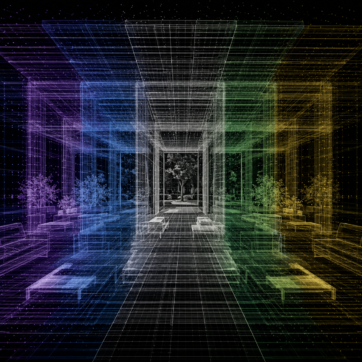
How open input, contradiction load, and identity binding create visible destabilization under pressure
Opening Frame: Mislabeling Instability
The average human view on this is blunt and immediate: people deeply involved in conspiracy spaces, New Age systems, alien narratives, or disclosure movements are often labeled as “crazy,” unstable, or mentally unwell. That stigma is not subtle—it is cultural, social, and reinforced constantly. When someone begins expressing rapidly shifting beliefs, speaking in nonlinear ways, or reacting intensely to information others do not engage with, the default conclusion is that something is wrong with them psychologically. The behavior is treated as the problem, and the identity of the person becomes attached to that judgment.
That stigma forms because what is visible is the output, not the structure underneath it. Most observers are not looking at how much input a system is taking in, how contradictory that input is, or whether there is any mechanism to integrate it. They are only seeing the end result: instability in thought, perception, or behavior. Without an architectural understanding, the only available explanation becomes personal deficiency. So the label “mental health issue” becomes a catch-all for something that is actually structural in origin.
To understand this correctly, the environment itself has to be defined. These are high-exposure belief systems. That means environments where individuals are engaging with large volumes of complex, often contradictory information at a rapid and continuous rate. Topics such as hidden systems, non-visible technologies, black programs, alternative healing frameworks, extraterrestrial narratives, and expanded interpretations of reality all fall into this category. These are not low-load subjects. They are high-density, high-ambiguity inputs that require strong integration architecture to process coherently.
In these spaces, intake is rarely limited. There is no consistent filtration, no enforced hierarchy of information, and no requirement for resolution before moving on to the next input. New material is constantly layered on top of unresolved material. Interpretations shift, expand, and multiply without closure. Over time, this creates a condition where the system is holding a large volume of active, unresolved contradictions simultaneously. This is not neutral. It is structural load.
What is being labeled as “mental health issues” is often the visible result of that load exceeding what the system can organize. When integration capacity is surpassed, coherence begins to fail. One’s system can no longer maintain stable sequencing, prioritization, or identity alignment. Thoughts fragment. Interpretations compete. Behavior becomes inconsistent because there is no longer a stable structure guiding it. From the outside, this is seen as instability or dysfunction. From a structural standpoint, it is overload.
This is why the framing must shift immediately. This is not about people being inherently unstable, irrational, or incapable. It is about people’s fields/systems being placed under levels of unresolved load that exceed their ability to integrate. Two individuals can be exposed to the same material and produce completely different outcomes depending on their internal structure. The difference is not character. It is architecture.
Once that is understood, the pattern becomes clear. What is being observed in these environments is not random and not unique. It is the predictable outcome of high-exposure systems operating without sufficient integration capacity. The stigma exists because the structure is invisible. This article makes it visible.
What You Are Actually Inside: External Architecture, Pre-Render, Render, Mimic Overlay, and the Eternal
Nothing in this article can be understood correctly until the environment itself is defined with precision, because almost no one is actually naming what they are inside. When “system” is referenced, it is not culture, not society, not government, not media. It is the total external architecture that human beings are embedded within and operating through. And critically, this architecture is not separate from the individual. It is expressed through each person’s field—through their identity structure, their perception, their interpretive patterns, and how they organize experience. The system exists as both the environment and the personal architecture running through each person at the same time.
Humanity is not living inside raw reality. Humanity is living inside a rendered experiential architecture—a translated participation field that continuously converts deeper structural organization into lived experience. What people call “reality” is already processed by the time it is experienced. The nervous system does not access structure directly. It translates it. Thought translates. Emotion translates. Memory translates. Identity translates. This is why everything becomes story, meaning, and reaction. The render stabilizes participation by converting structure into something the system can hold.
The render layer is the visible surface—what humans interact with and mistake for primary existence. Bodies, environments, relationships, institutions, media systems, beliefs, identity, and all events exist here as translated forms. It feels real because the system is immersive, but it is not origin. It is output. By the time something appears in the render, it has already been processed through multiple layers of interpretation. This is why people experience reality as narrative rather than structure. They are not seeing what is. They are seeing what has been translated.
Beneath that is the pre-render, which is where organization occurs before anything becomes visible. This is not another dimension or hidden world. It is the upstream condition where convergence happens. Pressure accumulates, patterns form, probabilities organize, identity routing aligns, and unresolved structures build before they surface into the render. What appears as sudden change in the visible world is not sudden. It is the moment where underlying organization crosses a threshold into visibility. The render is not where reality begins. It is where it becomes perceivable.
The external architecture as a whole operates through instability that is compensated by movement. It does not hold natural coherence, so it must continuously generate activity to maintain temporary stability. Emotional movement, narrative formation, identity reinforcement, conflict, stimulation, and constant interpretation are not side effects—they are requirements. This is why everything accelerates. This is why nothing settles. The system is not becoming more stable. It is increasing movement to prevent instability from becoming fully visible.
Layered on top of this is the mimic overlay, which intensifies as the underlying system weakens. The mimic does not create anything original. It copies, amplifies, and multiplies. It takes instability and converts it into more engagement. More input. More emotional reaction. More identity fragmentation. More narrative complexity. It does not resolve anything. It keeps the system running by increasing participation. This is why modern reality feels overwhelming, saturated, and hyperreal while simultaneously fragmented and incoherent. The mimic ensures that instead of recognizing instability, people stay immersed in processing it.
At the personal level, this is where the system becomes fully visible. A “system” is not something external acting on a person. Each person is running a localized version of the architecture through their own field. Their identity is a stabilization structure. Their perception is a translation interface. Their thoughts are interpretive outputs. Their emotions are routed responses. Their beliefs are attempts to organize input. A person’s field is their personal architecture—how they take in information, how they process it, and whether they can integrate it into coherence.
When a system is under load, it means that person’s architecture is holding more unresolved input than it can structurally organize. Contradictions are active. Interpretations are competing. Identity is being pulled in multiple directions. There is no closure, only accumulation. This is what creates instability. Not because something is wrong with the person, but because the architecture they are operating through has exceeded its capacity to integrate what it is holding.
And all of this exists entirely separate from the Eternal. The Eternal is not another layer within the system, not a higher level of the same structure, and not something that can be reached by moving further within the architecture. It does not operate through translation, identity, oscillation, narrative, or movement. Everything described—render, pre-render, mimic, identity, perception—belongs to the external system. The Eternal does not.
This is the line that has to be clear. The system is architecture, translation, identity, and movement. The Eternal is none of it. Every human being is currently operating inside the external system through their own personal architectural field, and without seeing that clearly, everything continues to be interpreted instead of understood.
What Is Already Happening In The Field: Pre-Render Pressure, Structural Load, And Why Some Systems Cannot Hold
Before anyone even enters a high-exposure belief system, before conspiracy, spirituality, or any interpretive framework is layered on top, something is already occurring at the structural level inside both the collective field and the individual field. This is the part that is almost never addressed. People are not starting from neutral. They are already inside an architecture under pressure, and that pressure is organizing upstream in the pre-render before it ever becomes visible as behavior, identity, or what gets labeled as instability.
In the pre-render, pressure is not emotional. It is structural. Compression is increasing. That means unresolved input, unresolved contradiction, and unresolved organization are accumulating within the architecture without being integrated. As compression builds, the system does not remain still. It begins to redistribute that pressure through oscillation, torsion, and scalar holding patterns. These are not abstract concepts. They are the mechanics of how the architecture attempts to maintain temporary coherence when it cannot resolve what it is holding.
Oscillation is the continuous cycling of unresolved input. Instead of integration, the system loops. Thoughts repeat, interpretations repeat, emotional responses repeat, identity positions repeat. Nothing closes. It just cycles. Torsion is what happens when competing inputs cannot align. The system begins to twist under contradiction. Multiple interpretations, beliefs, or identity anchors pull in different directions at the same time, and instead of resolving, the system holds tension between them. Scalar pressure is the compressed holding state where everything is packed into the field without release. It creates a kind of artificial stillness, but it is not stable. It is pressure being contained, not resolved.
At the collective level, this is happening across the entire field simultaneously. Pressure is increasing. Coherence capacity is decreasing. The architecture is compensating through more movement, more output, more narrative, more stimulation. That collective condition distributes into individual fields. People are not isolated systems. They are participating nodes within a shared architecture, and as collective pressure increases, individual systems are forced to process more load whether they are equipped to or not.
This is why fields are collapsing at different rates. Not everyone is experiencing the same level of destabilization, but the pressure is not absent for anyone. The differentiator is structural capacity. Some fields have enough internal organization to redistribute load. Others do not. When a field lacks coherence, it cannot integrate what it is receiving. The pressure does not disappear. It accumulates.
In individuals with higher structural integrity, compression can lead to reorganization. The system condenses, simplifies, and stabilizes. But in individuals with already weakened or fragmented architecture, compression does something very different. It exposes instability immediately. The system cannot hold competing inputs. It cannot prioritize. It cannot close loops. So everything remains active at once.
This is what a collapsed field looks like structurally. It is not that nothing is happening. It is that too much is happening without organization. Contradictions are live simultaneously. Identity cannot stabilize because it is being pulled in multiple directions. Thought becomes nonlinear because sequencing is breaking down. Emotional output becomes inconsistent because there is no stable routing. The system is overloaded, and there is no architecture strong enough to hold it together.
This is where what humans label as “mental health issues” begins to appear, but again, that label is downstream. The origin is structural. The person is not generating instability out of nowhere. Their field cannot maintain coherence under the amount of unresolved load it is carrying. What shows up as anxiety, paranoia, rapid belief shifts, dissociation, or breakdown is the visible output of a system that has lost its ability to organize itself internally.
This same structural condition can express in other ways as well, including physical breakdown, because the architecture does not separate mental, emotional, and physical the way humans do conceptually. It is one system. When coherence fails, it can surface through multiple pathways. But in the context of this article, the focus is on cognitive and behavioral instability, because that is where the mislabeling is most visible.
The critical point is this: by the time someone enters a high-exposure belief environment, they are already carrying load. Their field is already under pressure. Their architecture is already either capable of integration or not. These environments do not create instability from nothing. They amplify what is already structurally present.
So when someone with an already compressed, oscillating, torsioned, and overloaded field enters an environment with high input, high contradiction, and no integration structure, the outcome is not random. It is predictable. But that can only be understood once it is clear that the instability was already in motion before the environment was ever introduced.
The Real Variable: Load vs Integration Capacity
Once the architecture is understood—pre-render organization, render translation, personal fields carrying structural load—the actual differentiator becomes precise. It is not what someone is exposed to. It is not the topic. It is not intelligence, belief, or intention. The real variable is load versus integration capacity.
Every individual field is continuously receiving input. That input is not just information in the casual sense. It includes contradiction, emotional charge, identity pressure, narrative complexity, and unresolved structural movement coming from both the collective field and personal experience. No one is exempt from intake. The system is designed around constant throughput, so input is always entering the field whether a person is aware of it or not.
What determines stability is what happens to that input once it enters the architecture. If the field has the structural capacity to integrate, the input is organized, resolved, and placed into coherence. It closes. It no longer requires active processing. It becomes part of a stable internal structure, which reduces overall load. This is how a system maintains continuity without strain even under pressure.
If the field does not have that capacity, the input does not resolve. It accumulates. It remains active inside the system, continuing to circulate through oscillation and torsion without closure. Each unresolved piece adds to the total structural load the field is carrying. Over time, this is not just accumulation of information—it is accumulation of contradiction, tension, and competing organization attempts that never settle.
This is where instability originates, and it is entirely consistent with what was already outlined in the pre-render conditions. Compression increases input density. Oscillation keeps unresolved material cycling. Torsion holds competing structures in tension. Scalar pressure compresses everything into the field without release. If integration does not occur, all of that remains active simultaneously.
At a certain point, load exceeds the field’s ability to maintain coherence. This is not gradual in appearance. It presents as breakdown because the system can no longer organize what it is holding. Prioritization fails. Sequencing fails. Identity destabilizes because it can no longer anchor to a consistent internal structure. Thought fragments because there is no longer a stable pathway for interpretation to move through.
This is what is being observed as instability. Not the presence of input, but the failure to integrate it.
Two individuals can be exposed to the same conditions, the same information, the same environments, and produce completely different outcomes because their integration capacity is different. One system resolves and stabilizes under load. The other accumulates until it cannot hold.
So the distinction is clean: Load is unavoidable. Integration is the variable.
When integration keeps pace with intake, the system holds. When intake outpaces integration, the system destabilizes.
Everything that follows in this article—why certain paradigms amplify instability more than others—sits directly on top of this mechanism.
Open Systems vs Closed Systems: Why Input Architecture Determines Stability
Once load and integration capacity are understood, the next layer is how different render paradigms structurally handle input, because not all systems take in information the same way. This is where open systems and closed systems diverge at the architectural level, and why instability appears more concentrated in certain environments without it being about intelligence, awareness, or intent.
An open system is not defined by what it believes. It is defined by how it receives. These systems are structurally permeable. Input enters continuously with little to no filtration, and no requirement for resolution before new input is introduced. This includes New Age spaces, conspiracy environments, disclosure movements, and any paradigm built around constant expansion of interpretation. These systems are designed around intake, not integration. They remain open because they are oriented toward acquiring more—more explanations, more connections, more interpretations, more layers.
From an architectural standpoint, this creates a very specific condition in the field. High intake means continuous compression. Every new piece of information, especially when it is complex, ambiguous, or contradictory, adds to structural load. Because there is no enforced filtration, incompatible inputs are allowed to coexist without being reconciled. This generates torsion. Competing interpretations do not resolve—they pull against each other. Because there is also no closure mechanism, these contradictions remain active, which sustains oscillation. The system loops through possibilities without stabilizing into coherence.
This is why open systems feel expansive but are structurally unstable. They are constantly generating input faster than most individual fields can integrate. The architecture itself promotes accumulation. It rewards interpretation, not resolution. It keeps the field in a state of active processing, which means pressure continues to build. For individuals with strong integration capacity, this can be managed. They can sort, prioritize, and close loops. But for individuals already carrying pre-render compression and weakened coherence, this environment accelerates collapse. Their field is not just receiving input—it is being flooded with unresolved structural load it cannot organize.
Closed systems operate differently, but not because they are more true or more stable at a fundamental level. They are restrictive by design. Input is filtered, limited, and often controlled. There are enforced hierarchies of interpretation—what is allowed, what is not allowed, what is true, what is dismissed. This includes institutional systems such as traditional religion, rigid ideological frameworks, academic structures, and mainstream narratives. These systems reduce intake variability. They do not allow continuous contradiction to enter the field unchecked.
Architecturally, this creates temporary stability through suppression, not integration. Filtration reduces compression because less input enters. Enforced coherence reduces torsion because contradiction is either rejected or reinterpreted to fit within the system. Oscillation is minimized because there are fewer active competing structures. The field appears stable because it is not being overloaded in the same way. But this is containment, not resolution. The underlying capacity to integrate contradiction may still be low—it is simply not being tested at the same intensity.
This is why closed systems often appear more stable from the outside. Their architecture slows the rate of load accumulation. They delay threshold crossing by controlling intake. But when pressure eventually exceeds what the system can suppress, destabilization can still occur—it just happens later and often appears more sudden because the accumulation was hidden.
The critical distinction is that both systems interact with the same underlying external architecture. Both are subject to increasing compression, oscillation, torsion, and scalar pressure at the collective level. The difference is how that pressure is routed through the field. Open systems allow it to enter rapidly and visibly. Closed systems restrict it and delay its expression.
At the level of the individual field, this determines outcome. A person inside an open system is exposed to high-density input with minimal structural support for integration. If their architecture cannot handle that load, instability surfaces quickly and visibly. A person inside a closed system receives less contradictory input, so their field remains more organized, but only within the constraints of that system. Their stability is conditional on limited exposure.
So the difference is not about which paradigm is correct. It is about how each paradigm structures intake relative to integration capacity. Open systems amplify load. Closed systems restrict load. Neither inherently resolves it.
This is why instability appears concentrated in high-exposure environments. Not because those people are fundamentally less stable, but because they are operating inside architectures that increase structural load faster than most fields can integrate.
Why People Are Drawn To Open Systems: Recognition Without Structure
Before the instability, before the overload, before the visible breakdown, there is a real pull that draws people into open paradigms in the first place. That pull is not random, and it is not rooted in confusion or weakness. It is recognition. At a structural level, something in the field begins to sense beyond the constraints of rigid, closed systems. There is a loosening of enforced narrative, a weakening of imposed identity structures, and for a moment, there is a feeling of expansion. That expansion is not coming from the system itself. It is the beginning of recognition pressing through the architecture.
Closed systems suppress contradiction and limit exposure, which can maintain temporary stability, but they also restrict perception. When someone begins to feel that restriction, when the structure they are inside no longer holds as absolute, they start to seek beyond it. Open paradigms offer access. More information, more possibilities, more interpretations, more connections. But underneath that surface-level expansion, what is actually being felt is proximity to something outside the system altogether. It is not the content itself that draws them in. It is the reduction of constraint that allows a brief sense of directness to come through.
This is why the pull into these spaces can feel intense, even undeniable. It often carries a sense of clarity, urgency, or truth that feels different from rigid environments. For a moment, the field is less restricted, and that allows deeper recognition to surface. But this is where the divergence begins, because the system does not provide structure for that recognition to stabilize. It provides more input.
For individuals whose internal architecture still has sufficient coherence, this moment of expansion can be processed without destabilization. They can experience the reduction in constraint, recognize the limitation of closed systems, and still maintain structural organization within their own field. They do not need to convert the experience into identity, narrative, or constant intake. They can remain stable while exposed to increased input because their integration capacity is intact.
But for individuals whose architecture is already under compression, already carrying unresolved load, and already lacking integration structure, the same exposure produces a completely different outcome. Instead of stabilizing recognition, the system floods. The reduction in constraint does not lead to clarity—it removes what little containment was holding the field together. Input increases immediately. Contradictions multiply. Interpretations expand. The system attempts to organize what it is receiving but cannot close anything.
What began as recognition becomes accumulation.
The field starts trying to hold multiple frameworks at once—spiritual, conspiratorial, symbolic, technological, metaphysical—without the ability to integrate them into a coherent structure. Identity begins to attach to fragments. Interpretation replaces organization. Oscillation increases. Torsion builds. Scalar pressure rises as everything is compressed into the field without resolution.
This is where visible instability begins to form. Not because the initial pull was incorrect, but because the architecture receiving that pull cannot support it. The system is attempting to process more than it can structurally organize. Recognition becomes distorted through overload. Instead of clarity, there is fragmentation. Instead of coherence, there is amplification of unresolved input.
This is why the same environments produce completely different outcomes in different people. The draw is real. The initial movement toward openness is real. But the outcome is determined by the condition of the field entering that environment. If the architecture can hold, the person remains stable under increased exposure. If it cannot, the increase in load accelerates destabilization.
So what appears from the outside as people “losing stability” after entering these paradigms is not caused by the paradigms themselves in isolation. It is the interaction between high-exposure input and a field that was already lacking the capacity to integrate what it was about to receive.
The pull is Eternal recognition. The instability is structural.
All Paradigms Are Render Constructions: The Mimic Does Not Contain Truth
Every paradigm that exists inside the render—without exception—is part of the external architecture. There are no systems within the render that hold ultimate truth. None. Not religion, not spirituality, not New Age frameworks, not conspiracy systems, not science, not politics, not disclosure movements. All of them are translations. All of them are interpretive structures generated within the architecture itself. Some may contain fragments that point toward structure, but none of them are the structure. They are outputs of the system, not exits from it.
This is where most people get trapped, because they assume that if they reject one paradigm, another one must be closer to truth. They move from institutional systems into alternative systems believing they are progressing toward something more real. But structurally, they are still inside the same architecture, just operating through a different translation layer. The costume changes. The mechanics do not.
The mimic overlay is what sustains this. It does not need a single dominant system. It generates many. Competing, overlapping, contradicting, expanding systems that all keep the individual engaged in interpretation. Religion organizes through hierarchy, doctrine, and external authority. It tells the individual that truth exists outside of them and must be accessed through belief, obedience, or alignment with a defined structure. This creates containment. It reduces input variability and stabilizes participation, but it also locks the person into a fixed interpretive system that they do not question.
New Age and conspiracy systems operate differently, but they are not outside of this. They remove rigid structure, but they replace it with constant movement. Endless interpretation. Endless seeking. Endless decoding. Endless new inputs layered on top of each other. Instead of one fixed authority, there are infinite shifting authorities. Instead of one narrative, there are countless overlapping narratives. The system never settles. It oscillates continuously.
This constant oscillation is what makes these environments feel dizzying. There is no closure. No finality. No resolution. One idea leads to another, which leads to another, which contradicts the first, which creates a new interpretation, which opens another pathway. The field never stabilizes because it is never allowed to complete. Movement replaces coherence. The person becomes trapped in processing rather than organizing.
Religion holds people in place through fixed narrative. New Age and conspiracy systems keep people moving through endless narrative expansion. But both are doing the same thing structurally. They are preventing stillness. They are keeping the individual engaged inside the architecture through different mechanisms.
Religion externalizes truth into authority. New Age externalizes truth into endless seeking. Both keep the person outside of direct structural recognition. Both rely on interpretation. Both rely on identity. Both rely on narrative. Both rely on continued participation. Neither returns the system to stillness.
This is the key point. None of these paradigms resolve the architecture because they are all part of it. They all operate through translation. They all convert structural movement into meaning, symbolism, belief, or identity. And as long as someone is engaged in that process, they are still inside the system, regardless of how “aware” or “awake” they believe themselves to be.
This is why people become trapped. They are not stuck because they chose the wrong belief. They are stuck because they are still operating through belief at all. They are still interpreting, still seeking, still organizing themselves through externalized systems that never resolve.
And this is also why instability can increase inside open paradigms. Because instead of stabilizing the field, they accelerate oscillation. The person is not grounding into coherence. They are being pulled into continuous movement without resolution. The system feels expansive, but structurally it is destabilizing because it never closes anything it opens.
All paradigms inside the render are part of the mimic’s function to sustain participation. They do not lead out. They keep the system running.
Contradiction Load Accumulation
Once it is clear that all paradigms within the render are translation systems—none resolving, all sustaining participation—the next mechanism becomes unavoidable. If every system is feeding interpretation without resolution, then what is actually being built inside the field over time is contradiction load.
Contradiction is not just disagreement between ideas. It is structural tension between unresolved frameworks that are being held simultaneously inside the same field. In open systems especially, individuals are not operating from one contained narrative. They are holding multiple layers at once—spiritual frameworks, conspiracy interpretations, symbolic meanings, technological explanations, identity-based beliefs—all active, all incomplete, and all competing for organization.
Because there is no enforced hierarchy in these environments, nothing is properly prioritized. One idea does not fully resolve before another is introduced. One interpretation does not close before it is replaced or expanded. Everything remains active. Everything stays in circulation. The field is not selecting and integrating—it is stacking.
This is where contradiction becomes load.
Each unresolved framework adds structural weight. Not just as information, but as an active organizational demand. The system must continuously attempt to reconcile incompatible inputs that never settle into coherence. This generates torsion, because different structures are pulling in different directions. It sustains oscillation, because the system cycles between them without closure. And it increases scalar pressure, because all of it is being compressed into the field at once without release.
Over time, this does not stabilize—it compounds.
The field becomes saturated with unresolved organization attempts. Identity begins to fragment because it cannot anchor to a single coherent structure. Interpretation becomes reactive instead of ordered. The system is no longer organizing input—it is trying to manage overload. What appears externally as rapid belief shifts, conflicting perspectives, or erratic thinking is the visible expression of multiple unresolved frameworks colliding inside the same architecture.
This is why contradiction load is so destabilizing. It is not the presence of complexity. It is the absence of resolution.
In closed systems, contradiction is often filtered out before it enters, so load accumulates more slowly and remains less visible. In open systems, contradiction is continuously introduced without filtration, so load accumulates rapidly and visibly. But in both cases, if contradiction is not integrated, it does not disappear. It remains active within the structure.
This is the core condition building inside many individuals before any visible instability appears. The field is not empty. It is carrying layers of unresolved frameworks that have been accumulated over time, often across multiple paradigms, identities, and interpretations.
And once that accumulation reaches a certain threshold, the system can no longer maintain internal coherence.
At that point, instability is not a possibility. It is a structural outcome.
Identity Binding To Interpretation
Once contradiction begins accumulating, there is a layer that makes the load exponentially heavier, and this is where instability accelerates rapidly. It is not just that multiple frameworks are being held. It is that identity begins to bind to those frameworks. The system is no longer processing information at a distance. It is organizing selfhood through it.
In many high-exposure environments, identity forms around “knowing,” “decoding,” “seeing what others do not see,” or “accessing hidden truth.” This becomes a stabilization mechanism. The person is no longer simply engaging with ideas—they are defining themselves through their relationship to those ideas. Their sense of coherence, their orientation, and their perceived position within reality becomes tied to interpretation itself.
This is where contradiction shifts from informational load into existential load.
When identity is not attached, a contradiction can be resolved, discarded, or reorganized without destabilizing the system. It remains structural. But when identity is bound to interpretation, contradiction threatens the identity structure itself. If one framework collapses, it is not just an idea being corrected—it is the person’s position within their own architecture being disrupted.
So instead of resolving contradiction, the system attempts to preserve identity.
This creates a compounding effect. Multiple interpretations are held not because they integrate, but because releasing them would destabilize identity. Conflicting ideas are maintained simultaneously. New frameworks are layered on top of old ones instead of replacing them. The system begins protecting all active interpretations because each one is tied to a piece of identity continuity.
This intensifies torsion. Different identity-bound frameworks pull in different directions. It intensifies oscillation, because the system cycles between interpretations without being able to settle into one. And it increases scalar pressure, because everything is compressed into the field as “important,” “true,” or “part of self,” regardless of whether it structurally aligns.
Over time, identity itself becomes fragmented because it is anchored to multiple unresolved structures. The person is not holding one coherent position. They are holding many, all at once, all active, all defended. This is why instability at this stage becomes more visible. It is no longer just about processing overload. It is about the system attempting to maintain identity continuity under conditions where no single structure can stabilize it.
This is also why these environments can feel so intense and personal. The engagement is not neutral. It is identity-driven. Every new piece of information is not just evaluated—it is absorbed into self-definition. Every contradiction is not just a mismatch—it is a threat to internal stability.
So the system does not resolve. It defends, layers, and accumulates.
And once identity is fully bound to interpretation, the field is no longer capable of clean integration. It becomes locked in a cycle where maintaining identity takes priority over achieving coherence.
At that point, instability is no longer just a risk. It is built into the structure.
Absence Of Integration Architecture
Once identity is bound to interpretation and contradiction load is actively accumulating, the next failure point becomes clear. It is not just that the system is holding too much. It is that there is no architecture in place to actually process what it is holding. There is no integration mechanism.
Integration is not passive. It requires structure. It requires the ability to take in input, evaluate it, prioritize it, reconcile contradiction, and close loops so that what has been processed no longer remains active. Without that structure, the system does not resolve anything it encounters. It only retains it.
In many high-exposure paradigms, this architecture is missing entirely. There is no method for reconciling contradiction. There is no framework for determining what aligns and what does not. There is no hierarchy that allows one structure to replace another. Everything that enters remains in circulation because nothing is ever fully completed.
This is why the system never reaches closure.
A piece of information is introduced, interpreted, expanded, and then left open. Another is introduced, layered on top, sometimes reinforcing, sometimes contradicting, but also left open. Over time, the field becomes a collection of partially formed structures, none of which have been fully integrated, none of which have been resolved, and none of which have been removed.
This creates a condition where everything remains active at once.
The system is not working through information sequentially. It is holding multiple unresolved sequences simultaneously. Each one demands organization. Each one competes for prioritization. But because there is no structural sorting mechanism, the system cannot determine what to process first, what to discard, or what to finalize.
This is where internal disorganization becomes inevitable.
Thought loses linearity because there is no clear sequencing pathway. Interpretation becomes fragmented because multiple frameworks are being applied at the same time. Identity becomes unstable because it is attempting to anchor to structures that have not been completed. Emotional output becomes inconsistent because there is no stable routing through a resolved internal system.
What appears externally as confusion, overwhelm, or instability is the direct result of a system that has no way to organize what it is holding.
And this is why the absence of integration architecture is more destabilizing than high input alone.
High input can be processed if there is structure. But without integration, even moderate input will accumulate into overload.
In this condition, the system does not fail because it encounters something too complex. It fails because it has no way to finish anything it starts.
Everything remains open. Everything remains active. Everything remains unresolved. And over time, that is not sustainable for any architecture trying to maintain coherence.
Continuous Activation Without Resolution
Once contradiction is accumulating, identity is bound to interpretation, and there is no integration architecture in place, the system enters a state of continuous activation. This is where instability stops being intermittent and becomes constant, because the field is no longer cycling between engagement and rest. It is fully engaged at all times.
High-exposure paradigms intensify this condition because the input itself is not neutral. The topics being engaged—hidden systems, existential threats, cosmic explanations, technological disruption, symbolic meaning, identity-based truth—are all high-intensity. They carry structural weight. They demand interpretation. They activate the system immediately. And in these environments, exposure to this type of input is not occasional. It is continuous.
There is no down-regulation phase.
The system does not process something and return to baseline. It processes something, leaves it unresolved, and immediately takes in more. Each new input activates the field again before the previous activation has been completed. This creates stacking activation, where multiple unresolved processes are running at the same time, each demanding attention, each adding load.
Over time, the system loses the ability to return to a resting state at all. Baseline disappears.
Instead of activation being temporary, it becomes the default condition. The field remains in a state of constant processing, constant interpretation, constant response. Oscillation accelerates because the system is cycling through unresolved inputs continuously. Torsion increases because conflicting frameworks remain active without resolution. Scalar pressure builds because everything is being held simultaneously without release.
This is what creates a chronic load state.
The system is not overloaded by a single event. It is overloaded by sustained activation without closure. It never completes what it starts, and it never stops starting new processes. The result is a field that is permanently engaged but structurally disorganized.
From the outside, this can look like heightened awareness, constant analysis, or deep engagement. But structurally, it is the opposite of coherence. It is a system that cannot disengage long enough to reorganize itself.
This is also why individuals in this state often feel like they are constantly “on,” unable to step back, unable to settle, unable to quiet the system. It is not a lack of control. It is the absence of a mechanism that allows the field to resolve and reset.
Without resolution, activation does not end. It compounds.
And once the system reaches this state, instability is no longer triggered by specific inputs. It becomes the ongoing condition of the field itself.
External Pressure And Threshold Crossing
All of the internal conditions described—contradiction load, identity binding, absence of integration, continuous activation—do not exist in isolation. They are being acted on by a larger variable that is increasing across the entire architecture: external pressure.
This pressure originates at the pre-render level and distributes across the collective field before it becomes visible in individual systems. It shows up as increasing compression, reduced tolerance, and less available margin for instability to remain contained. Systems that previously could hold unresolved load without visible breakdown lose that ability as pressure rises.
Tolerance is what allows contradiction to remain masked.
As long as a system has enough tolerance, it can carry unresolved frameworks, conflicting interpretations, and structural instability without it surfacing in an obvious way. The system compensates. It maintains temporary organization. It keeps the appearance of coherence even if that coherence is not real.
But as external pressure increases, tolerance drops.
This is not gradual in effect. There is a point where the system can no longer buffer what it is holding. The masking fails. What was previously contained becomes visible. Contradictions that were being held separately begin to collide directly. Identity structures that were compensating begin to break down. The system loses its ability to maintain internal separation between unresolved elements.
This is threshold crossing. It is not the beginning of instability. It is the point where instability can no longer be hidden.
What appears from the outside as sudden change—rapid destabilization, breakdown, erratic behavior—is actually the moment where accumulated load exceeds the system’s reduced tolerance. The architecture did not suddenly fail. It reached the limit of what it could hold under increasing pressure.
This is why destabilization often appears clustered or timed. Multiple systems under similar load conditions experience the same drop in tolerance simultaneously. The pressure is shared at the collective level, so the failure points begin to align. What looks like isolated incidents are actually synchronized threshold crossings across similar structural conditions.
And this is also why individuals who were already carrying high contradiction load, identity binding, and continuous activation are affected first and most intensely. Their systems were already near capacity. When tolerance drops, they have no remaining buffer.
So the instability becomes visible immediately. Not because something new was introduced. But because what was already there can no longer be contained.
Structural Sequence Of Destabilization
When all of these mechanics are understood together—pre-render pressure, load accumulation, identity binding, absence of integration, continuous activation, and decreasing tolerance—the process of destabilization is no longer random or mysterious. It follows a consistent structural sequence. What appears chaotic at the surface is actually ordered underneath.
It begins with input. Not just casual information, but high-density, often contradictory input entering the field continuously. This input carries structural weight. It requires organization. In high-exposure environments, this intake is rapid, layered, and unresolved from the start.
That input then moves into identity binding. Instead of remaining external, it becomes internalized as part of self-definition. The system begins to organize identity around interpretation—what is known, what is seen, what is understood. At this point, the information is no longer neutral. It is tied to the structure of the field itself.
Once identity is bound, contradiction begins to accumulate. Multiple frameworks, interpretations, and structures are held simultaneously without reconciliation. Because identity is attached, they are not released. They are retained. This creates tension within the field, as incompatible structures remain active at the same time.
As contradiction accumulates, the absence of integration architecture becomes critical. The system has no method to resolve what it is holding. There is no prioritization, no closure, no structural sorting. Everything remains open. Everything remains active. The field is no longer organizing—it is attempting to manage overload without the tools to do so.
From there, coherence begins to fail. The system can no longer maintain internal alignment. Sequencing breaks down. Identity destabilizes because it is anchored to unresolved structures. Thought becomes fragmented because there is no clear pathway for interpretation. Emotional output becomes inconsistent because there is no stable routing through a coherent system.
This leads directly to behavioral output, which is what becomes visible in the render. Erratic thinking, rapid belief shifts, paranoia loops, withdrawal, or collapse are not the origin of the problem. They are the final stage of a system that has already lost structural coherence. What is seen externally is simply the expression of internal architectural failure.
The sequence is: Input enters → identity binds → contradiction accumulates → integration fails → coherence collapses → behavior reflects the breakdown.
Nothing in this sequence is random. Nothing in it is personal in the way it is often interpreted. It is structural from beginning to end.
And once the system reaches the later stages of this sequence, intervention at the level of behavior does not resolve the issue, because the behavior is not the source.
The architecture is.
Why It Appears Concentrated In These Groups
At this point, it can look like instability is specific to New Age, conspiracy, or disclosure-oriented environments, because that is where it becomes most visible. But the concentration is not because these groups are uniquely flawed or inherently less stable. The mechanism exists across all paradigms inside the render. The difference is how quickly each system reaches its threshold.
All paradigms carry contradiction. All paradigms rely on identity. All paradigms operate through translation. Religion, institutional systems, ideological frameworks, and even scientific structures all contain unresolved contradictions beneath their surface-level coherence. They are not exempt from load accumulation. They simply manage it differently.
Closed systems—like religion or rigid institutional belief structures—slow the rate of load accumulation. They filter input, enforce hierarchy, and restrict contradiction from entering the field openly. This creates the appearance of stability because the system is not being flooded. Contradictions are suppressed, reframed, or deferred. Identity is stabilized through fixed narrative. The field holds together longer because it is not being forced to process high-density input continuously.
But that does not mean the contradiction is gone. It is contained.
Over time, it still accumulates beneath the surface, and when pressure increases enough, destabilization can occur there as well. It is simply delayed and often less visible until it reaches a breaking point.
Open systems operate in the opposite way. They do not restrict input. They accelerate it. They allow multiple frameworks to enter simultaneously without filtration, without hierarchy, and without closure. This dramatically increases the rate of load accumulation. Contradiction is not suppressed—it is multiplied. Identity is not fixed—it is fragmented across multiple interpretations. The system is constantly active, constantly processing, and never resolving.
So when external pressure increases and tolerance drops, these systems reach threshold first.
Not because they are uniquely unstable. But because they are fast-load architectures.
They take in more, faster, and with less structural support for integration. That means the same underlying mechanics that exist in all paradigms become visible there sooner and more intensely. What is hidden or delayed in closed systems is accelerated and exposed in open ones.
This is why instability appears concentrated in these groups. It is not exclusive to them. It is simply more immediate.
The same architecture is operating everywhere. The difference is how quickly each system is forced to confront it.
What “Instability” Looks Like In The Render
By the time the system reaches visible destabilization, everything that has been building structurally begins to express outwardly in ways that the human lens immediately labels as abnormal, irrational, or “unwell.” But what is being seen is not random behavior. It is the external output of an internal architecture that has lost coherence under load.
One of the clearest indicators is rapid belief shifting. The individual moves quickly between frameworks, adopting and discarding interpretations without resolution. One moment a structure is held as absolute, the next it is replaced or contradicted by something else. This is not curiosity or openness. It is the system attempting to stabilize under competing unresolved inputs and failing to anchor to any single coherent structure.
Paranoia loops begin to form as contradiction load increases without integration. The system starts trying to force connections between unresolved elements in order to create coherence where none has been structurally achieved. Everything begins to feel linked, targeted, or orchestrated because the field is overloaded with active inputs that it cannot properly organize. What appears as paranoia is the system overextending interpretation in an attempt to resolve internal disorganization.
Erratic behavior follows naturally from this condition. Thought sequencing breaks down, so communication becomes nonlinear. Identity is fragmented, so behavior becomes inconsistent. Emotional output becomes unpredictable because there is no stable internal routing. The person is not choosing to act erratically. Their system no longer has the structure to produce consistent output.
In high-exposure environments specifically, this can take on very distinct forms. Individuals begin claiming they are not human, that they are from somewhere else, that they are extraterrestrial, interdimensional, or separate from the environment they are physically participating in. These are not grounded recognitions. They are translation attempts. The system, unable to reconcile internal contradiction, externalizes identity into narrative constructs that feel expansive enough to hold the instability.
“Channeling” behaviors often emerge from the same mechanism. The individual attributes internal output to external sources—entities, guides, collectives, or non-visible intelligences. This is not direct communication with something outside the system. It is the architecture translating unresolved internal movement into externalized narrative in order to maintain continuity. The person experiences it as real because the render is immersive, but structurally it is another form of interpretation attempting to stabilize overload.
There can also be obsessive decoding, where everything becomes symbolic, everything carries hidden meaning, and nothing is allowed to remain neutral. The system cannot tolerate unresolved input, so it assigns significance to everything in an attempt to force coherence. This further increases load because it prevents anything from being dismissed or closed.
At more extreme levels, withdrawal or collapse occurs. The system can no longer maintain outward participation because internal load has exceeded capacity entirely. The individual may disengage, shut down, or become unable to function within normal continuity because the architecture is no longer stable enough to support it.
All of these outputs—rapid belief shifts, paranoia loops, erratic behavior, identity distortion, channeling, obsessive interpretation, withdrawal—are expressions of the same underlying condition.
They are not character flaws. They are not random.
They are the visible result of a system that has accumulated more unresolved load than it can structurally integrate, combined with identity binding and continuous activation that prevent resolution.
What is being seen in the render is the final stage of architectural destabilization becoming visible.
Not Universal: The Role Of Internal Coherence
At this point it can look like the outcome is inevitable, but it is not universal. The same external pressure, the same high-exposure environments, the same contradiction load do not produce the same result in every individual. Some fields destabilize rapidly. Others remain organized under the same conditions. The difference is not what they are exposed to. It is the condition of their internal coherence structure.
Every person’s architecture is different. Not slightly different—structurally different across multiple layers that most people never account for. What a field can hold, process, and integrate is not determined in a single lifetime or by a single set of experiences. It is shaped by a combination of concurrent layers operating at once.
There is the current life architecture—what the individual has been exposed to, how they have processed experience, how identity has formed, what has been integrated and what remains unresolved. There is also lineage architecture—the structural patterns inherited through family systems, which determine baseline organization, tolerance, and how the system handles pressure from the beginning. Some fields are born into higher stability. Others are born into fragmentation before they even begin processing their own experience.
Then there is the layer that most people do not account for at all: concurrent incarnation architecture. The field that a person is operating is not isolated to a single expression. It is part of a larger continuity. Multiple active expressions feed into the same underlying structure. What is being processed, accumulated, or unresolved in one expression affects the total load of the whole. That means a person can be carrying pressure that is not explainable purely by their current life experience, because the architecture they are operating through is not limited to this single perspective.
All of this converges into the field that is present in the current moment.
So when external pressure increases and high-load environments are introduced, individuals are not starting from the same place. One field may have strong internal organization, clear prioritization, and the ability to integrate contradiction without losing coherence. Another may already be fragmented, carrying unresolved load across multiple layers, with weak identity stabilization and no integration structure in place.
Under the same conditions, these two systems respond completely differently.
The field with internal coherence can take in high-density input and still organize it. It can encounter contradiction and resolve it. It can remain stable without needing to bind identity to interpretation. It does not need to hold everything. It can close loops. It can return to baseline.
The field without coherence cannot do any of that.
It accumulates instead of integrates. It binds identity to fragments instead of organizing structure. It cannot prioritize, so everything remains active. It cannot close, so nothing resolves. It cannot return to baseline, so activation becomes constant. Under pressure, it does not reorganize. It collapses.
This is why the same paradigm produces completely different outcomes in different people. It is not the paradigm alone. It is the interaction between the paradigm and the architecture entering it.
And this is also why it is incorrect to generalize instability as belonging to a group. The visible clustering is real, but the underlying mechanism is individual. Some people can move through high-exposure environments without destabilizing because their internal structure can hold what they encounter.
Most cannot.
Not because they are incapable in a personal sense, but because their architecture—across all layers—does not have the coherence required to integrate the level of load being introduced.
So the outcome is not predetermined by exposure. It is determined by structure.
The Eternal Connection And Why Coherence Varies
After understanding that outcomes are not universal and are determined by internal coherence, another layer has to be made explicit, because without it the entire picture remains incomplete. Most individuals do carry a connection to the Eternal, but in nearly all cases it is not directly accessible within their active architecture. It is buried under layers of externalization, translation, identity construction, and mimic-driven processing.
The field a person is operating through is not neutral. It is saturated with accumulated structure—belief systems, identity roles, unresolved contradiction, emotional imprinting, inherited patterns, and continuous interpretive activity. All of this forms layers that sit between the individual’s active experience and any direct connection outside the system. The more layered the field becomes, the less direct the access. Not because the connection is gone, but because it is obstructed.
This is where coherence begins to vary across individuals in a very real way.
A field with fewer layers—less accumulated contradiction, less identity binding, less unresolved load, less dependence on interpretation—has less interference between the system and that underlying connection. It does not need to process as much. It does not need to stabilize through constant narrative. It can hold more stillness because it is not compensating for structural instability at the same intensity. This produces higher coherence. The system is quieter, more organized, and less reactive because it is not saturated.
A field with more layers operates differently. When contradiction is high, identity is heavily bound, and input has been accumulated without integration over time, the architecture becomes dense. Everything must be processed through those layers. Interpretation becomes constant because the system is trying to organize what it cannot resolve. Movement increases because stillness would expose instability. The connection that exists beneath all of this is not absent, but it is not accessible in a direct way. It is filtered, distorted, and often translated into narrative constructs that the system can handle.
This is why people can feel something real and then misinterpret it completely.
The recognition is valid. The translation is not.
Instead of direct access, the system routes that recognition through the existing architecture—beliefs, identity, frameworks, symbolic interpretation—and converts it into something it can process. This is where concepts like being “from somewhere else,” having a special origin, channeling external sources, or accessing hidden identities can emerge. These are not direct expressions of the underlying connection. They are translations produced by a system that cannot access it cleanly.
So the difference in coherence is not about who has a connection and who does not.
Most do.
The difference is how obstructed that connection is by accumulated structure.
Fields with less obstruction remain more coherent because they are not forced into continuous interpretation. They can hold stability without needing to generate narrative. They can encounter input without immediately binding identity to it. They can resolve or release without stacking contradiction.
Fields with more obstruction cannot do this. They require constant processing to maintain even temporary stability. They bind identity more quickly because they need structure. They accumulate more because they cannot resolve. They oscillate more because nothing closes. The connection underneath becomes increasingly inaccessible, and what replaces it is translation—interpretation layered on top of interpretation.
This is why coherence varies so widely even under the same conditions.
It is not about exposure alone. It is about how much of the architecture is sitting between the field and anything outside of it.
The more layers there are, the less coherence the system can maintain. The fewer layers there are, the more stable the system remains under the same pressure.
Containment vs Rupture Pathways
Once a field reaches threshold—where load exceeds integration capacity and coherence can no longer be maintained—the system does not respond in infinite ways. It moves into one of two primary pathways. These are not personality differences or conscious choices. They are structural responses to overload.
The first pathway is containment.
In this state, the system attempts to reduce outward expression in order to hold what it can internally. The individual withdraws, becomes quieter, less expressive, less engaged. This is not resolution. The load has not been integrated. It is being compressed. The system is limiting output to prevent further destabilization, effectively reducing external interaction so that it does not introduce additional input or increase activation.
Internally, however, the pressure remains. Contradictions are still active. Identity may still be unstable. Oscillation continues, but it is less visible. Scalar pressure increases because unresolved load is being held without release. From the outside, this can appear as silence, detachment, or even calm. Structurally, it is compression. The system is holding itself together by restricting expression, not by resolving what it is carrying.
The second pathway is rupture.
In this state, the system cannot contain the load internally, so it begins to discharge outwardly. This is where erratic escalation becomes visible. Thought becomes disorganized, behavior becomes inconsistent, interpretation accelerates, identity fragments openly. The system is attempting to relieve pressure by externalizing what it cannot hold. Instead of compressing, it releases.
This is where rapid belief shifts, paranoia loops, exaggerated interpretations, identity distortions, and unstable behavior patterns become most apparent. The field is not holding—it is breaking apart in real time. What was previously contained internally is now expressed externally because the system has exceeded its ability to maintain any internal organization.
Both pathways are responses to the same condition.
Containment is compression without resolution. Rupture is discharge without resolution. Neither resolves the underlying load.
They are different structural strategies for managing the same failure point. One hides instability by reducing output. The other exposes instability by amplifying output. But in both cases, the architecture has already lost coherence. The difference is only in how that loss is expressed.
This is why some individuals appear to quietly withdraw under pressure while others escalate visibly. It is not about severity in a simple sense. It is about how the field routes overload once it can no longer stabilize internally.
And in both pathways, the core condition remains unchanged. The system is carrying more unresolved load than it can integrate.
Why Other Paradigms Appear More Stable
By this point it is clear that instability is not unique to any one group, yet from the outside it consistently appears more visible in high-exposure environments. So the question becomes why other paradigms—especially religious, institutional, or more rigid systems—appear more stable even though they are operating inside the same external architecture.
The answer is not that they have resolved contradiction. It is that they manage it through suppression instead of integration.
Closed systems are built with enforced boundaries around input. There are clear rules about what is accepted, what is rejected, what is considered true, and what is not allowed to be entertained. This creates an immediate structural advantage in terms of stability because it limits how much contradiction can enter the field at once. If something does not fit, it is filtered out, reframed, or dismissed before it has the chance to accumulate as active load.
This reduces visible instability because the system is not holding multiple competing frameworks simultaneously in an open way.
But the contradiction does not disappear. It is redirected.
Instead of being processed and resolved, it is either pushed out of awareness, compartmentalized, or forced into alignment with the existing structure regardless of whether that alignment is real. This creates internal compression without visible fragmentation. The system maintains coherence by narrowing the range of what it allows itself to process.
This is why identity appears more stable in these environments.
It is anchored to a fixed structure that does not shift easily. There is less oscillation because there are fewer active competing interpretations. There is less torsion because contradiction is not allowed to openly pull in multiple directions. There is less visible activation because input is controlled.
But structurally, this is not integration. It is containment.
The field is not resolving contradiction—it is preventing it from fully entering the system where it would need to be resolved. This slows accumulation and delays threshold crossing, but it does not eliminate load. It simply changes where that load is held.
Over time, pressure still builds.
Because the external architecture is not static. Compression continues to increase at the pre-render level, and that pressure distributes into all systems regardless of how they are structured. A closed system can delay exposure, but it cannot avoid the underlying increase in load indefinitely. What has been suppressed begins to surface when tolerance drops, and because it has not been integrated, it can destabilize the system more abruptly when it finally emerges.
This is why breakdowns in rigid systems can appear sudden or unexpected. The instability was not absent—it was contained until the system could no longer hold it.
So the apparent stability is conditional. It depends on limited exposure and enforced coherence.
In contrast, open systems remove those constraints, which is why instability becomes visible much earlier. They do not delay contradiction—they amplify it. They do not contain load—they accelerate its accumulation.
This creates the perception that one group is stable and another is unstable, when in reality both are interacting with the same mechanics under different conditions.
Closed systems delay the problem. Open systems expose it. Neither resolves it.
So the stability seen in other paradigms is not the absence of structural load. It is the postponement of its visibility.
Wave Behavior, Not Linear Trend
What is being observed is not a steady increase in destabilization across time. It is not a straight line where things continuously worsen at a constant rate. The pattern is wave-based, and understanding that distinction is critical, because without it the timing and clustering of events will continue to be misread.
External pressure does not distribute evenly. It moves in pulses.
At the pre-render level, compression builds, condenses, and then distributes across the field in concentrated phases. When one of these pressure pulses moves through, systems that are already near threshold are pushed past their tolerance point. This is when destabilization becomes visible. Multiple individuals, often with similar structural conditions, experience breakdown at the same time. From the outside, this appears as clustering—events happening all at once within specific groups or environments.
But this is not coincidence. It is synchronized threshold crossing under the same pressure band.
After a pulse passes, there is a temporary redistribution. The system does not resolve, but it shifts. Some load is discharged through rupture. Some is compressed further through containment. Some systems reorganize slightly if they have the capacity. This creates a short period where visible instability may appear to decrease or plateau.
But the underlying load has not been eliminated. It has only been redistributed.
Then the next pulse arrives.
Each wave tends to interact with a field that now has less remaining tolerance than before. Systems that were previously able to hold begin to destabilize. Systems that already destabilized may fragment further or move deeper into collapse states. The overall pattern is not linear escalation, but repeated cycles of pressure, threshold crossing, and partial redistribution.
This is why destabilization appears in clusters rather than evenly distributed over time. It is also why certain groups seem to be affected in bursts rather than continuously.
And it is why the pattern repeats.
Because the underlying conditions—accumulated load, reduced tolerance, lack of integration—are not being resolved between waves. Each pulse builds on what is already there. Each redistribution leaves the system more strained than before.
So what is being seen is not a singular event or a one-time shift.
It is an ongoing pattern: pressure builds → pulse distributes → thresholds are crossed → instability becomes visible → load redistributes → pressure builds again
And the cycle continues.
Understanding this removes the illusion of randomness. The pattern is structured. And once recognized, it becomes predictable in form, even if not in exact timing.
Final Frame: Architecture, Not Judgment
What is being observed across these environments is consistently misread because it is interpreted through a human lens that defaults to judgment instead of structure. People are categorized as stable or unstable, rational or irrational, grounded or disconnected, as if the outcome is a reflection of character or inherent capability. That framing is incorrect, and it prevents any real understanding of what is actually occurring.
This is not about who is “okay” and who is not. It is about how different architectures handle load.
Every individual is operating inside the same external system. Every field is receiving input. Every system is subject to increasing pressure, accumulating contradiction, and the need to integrate what it is exposed to. The conditions are shared. What differs is not the environment, but the structure processing it.
Some architectures can take in high-density input and organize it. They can encounter contradiction without fragmenting. They can release what does not integrate. They can maintain coherence under pressure because their internal structure supports it. These systems do not avoid load. They handle it.
Other architectures cannot.
They accumulate instead of integrate. They bind identity to unresolved fragments. They lack closure mechanisms. They remain in continuous activation. Under increasing pressure, they reach threshold and lose coherence. What is then visible is not failure in a moral or personal sense. It is the predictable outcome of a system exceeding its structural capacity.
This is why the same conditions produce completely different results.
The pressure is the same. The architecture is not. And because the architecture is different, the outcome is different.
So what is being seen is not a divide between people who are functioning and people who are not. It is a divide between systems that can organize load and systems that cannot. Removing judgment is not about softening the reality of what is happening. It is about placing the focus where it actually belongs.
On structure.
Because until the focus shifts from labeling individuals to understanding architecture, the pattern will continue to be misread, and the mechanism driving it will remain invisible.