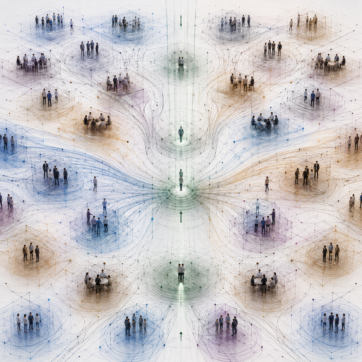
Pressure, Continuity Failure, and Structural Instability as the Internal Drivers of All Anomalous Phenomena
The Structural Reframe of Anomalous Activity
Before anything can be understood about anomalous activity, the position has to be corrected at the root. What is being observed is not something entering into reality, not something crossing over, and not something interacting from an external source. There is no outside force accessing this system. There is no boundary being breached. The entire premise of intrusion is incorrect. What is being seen originates from within the same architecture that produces everything else experienced as normal, stable reality. The system is not being visited—it is failing to fully contain and stabilize its own structure.
What appears as arrival, emergence, or sudden appearance is not arrival at all. It is exposure. Structure that is already present within the system becomes visible when the conditions that normally conceal it begin to weaken. Under stable conditions, the architecture maintains a continuous surface—clean, ordered, and fully sequenced. That surface gives the impression of a fixed, solid, uninterrupted world. But that appearance is not base structure. It is maintained. When that maintenance begins to strain, what was already there but hidden begins to show through. The event is not something new entering the system. It is something existing becoming visible.
This immediately removes the need for mystical or symbolic interpretation. These events are not messages, not guidance, not communication of any kind. There is nothing being delivered through them. There is no embedded meaning within the event itself. The structure appears, behaves according to its conditions, and resolves. Meaning is applied afterward. Interpretation, narrative, and pattern recognition are layered onto the event after it occurs. The system produces the condition. The human mind produces the story. Those two are not the same thing.
The same correction applies to randomness. Anomalous activity is not chaotic or unexplainable in the way it is commonly framed. It follows repeatable structural conditions tied directly to pressure, alignment, and continuity. When those conditions reach certain thresholds, similar types of events occur. What is perceived as unpredictability is not absence of order—it is the inability to recognize the pattern. The label “unexplainable” does not point to mystery. It points to misreading. The mechanism is there. It is simply not being identified correctly.
At the structural level, all anomalous activity is the result of architectural instability. This system does not hold itself together naturally. It requires continuous stabilization to maintain the appearance of a coherent, consistent reality. That stabilization is dependent on pressure, continuity, and alignment holding in balance. When that balance weakens, instability forms. Sequencing begins to break, alignment begins to drift, and pathways begin to interfere with one another. These changes are not separate from reality—they are changes in how reality is being held together. Anomalies are the visible result of that shift.
Continuity is central to this. Continuity is what holds sequencing, alignment, and consistency in place. It allows one moment to connect to the next without visible interruption. It creates the experience of flow, order, and cause and effect. When continuity holds, the system appears stable. When continuity weakens, that stability begins to break. Sequencing shifts out of order. Alignment distorts. Pathways begin to overlap or misroute. What was once clean and contained becomes unstable. This is the point where anomalous activity begins to surface—not as a separate phenomenon, but as continuity failing to fully maintain the structure.
Under normal conditions, the system conceals its own mechanics. The render layer—the visible output—presents everything as stable, solid, and complete. It masks distortion, overlap, and instability before they reach perception. What is experienced is a corrected version of the system, not the raw structural state. But that masking function depends on successful stabilization. When pressure increases, when alignment fails, when continuity weakens, the system can no longer fully maintain that concealment. The surface layer starts to break. What is underneath begins to show through. Structure becomes visible where it is normally hidden.
This is where misidentification occurs. Humans do not read structure directly. Perception translates what is seen into recognizable forms—objects, beings, events, meaning. When structural exposure happens, it is immediately interpreted through that translation layer. It is labeled as entities, presences, messages, or external forces. But those labels do not describe what is actually happening. They are overlays applied to something that is not being recognized in its true form. The structure is real. The interpretation is not.
This is also what produces the “otherworldly” effect. When exposed structure does not match expected patterns of continuity and recognition, it feels foreign. It appears as something outside of reality because it does not align with the stabilized version of reality that is normally perceived. But that unfamiliarity does not indicate external origin. It indicates that something normally concealed is now visible. The reaction comes from a break in recognition, not from the presence of something outside the system.
The correction is direct and it applies across all categories of anomalous activity. Nothing being observed sits outside of reality. Nothing is entering, nothing is visiting, and nothing is being delivered. What is being seen is part of the same architecture, revealed under conditions where stabilization is no longer fully holding. “Unexplained” does not mean unknown. It means the structure is being misread. Anomalous activity is not something separate from reality—it is reality under strain, exposing the mechanics that are normally kept hidden.
The External Architecture — What This System Is
What is being lived inside is not base structure. It is not self-originating, and it is not something that exists in a natural, self-contained state. This is a constructed external system—an architecture that has already been separated, organized, and forced into form. What is experienced as reality is not the underlying structure itself, but a produced environment. It is an experience layer generated through deeper mechanics that are not directly visible. By the time anything reaches perception, it has already been processed, stabilized, and translated into a form that can be recognized and interacted with.
This means that what feels immediate and real is not raw structure. It is output. The system takes underlying conditions—pressure distribution, pathway alignment, continuity enforcement—and converts them into a stable, coherent surface. That surface is what is perceived as the world. It appears solid, continuous, and self-consistent, but that appearance is constructed. It is not the base state of what is actually occurring. The reality being experienced is the result of that construction process holding successfully in place.
Because of this, the system does not hold itself together on its own. It is not self-sustaining. Stability is not inherent—it is imposed. The architecture requires continuous stabilization to maintain the appearance of consistency. Without that active maintenance, the system would not present as ordered, connected, or stable. It would not appear as a continuous environment at all. What is experienced as a fixed world is something being held together at every point through specific structural conditions.
Those conditions are not abstract—they are mechanical. Continuity links moments into sequence and maintains the flow of experience so that events appear to follow one another in a coherent way. Pressure holds structure in place, compresses it into form, and forces separation to remain intact. Constraint limits movement, defines pathways, and ensures that structure follows specific routes rather than dispersing or collapsing. These are not optional aspects of the system. They are the requirements that allow it to exist in the way it is being experienced.
Everything that is perceived is routed through a surface layer—the render. This layer is not the structure itself. It is the final output of structural processing. By the time anything reaches perception, distortion has been reduced, sequencing has been aligned, and instability has been corrected as much as possible. The render presents a clean version of the system. It smooths over inconsistencies, conceals strain, and maintains the appearance of continuity. What is experienced is not the raw condition of the system, but a stabilized presentation of it.
Because of this, humans do not perceive structure directly. They perceive the result of structure. The underlying mechanics—pressure buildup, pathway interaction, alignment shifts, continuity strain—are not visible in their original form. They are translated into objects, movement, events, and environments. This translation creates the illusion that what is being seen is the structure itself, when in reality it is the output of processes that are hidden beneath the surface layer.
This is the condition everything else operates within. Anomalous activity cannot be understood without recognizing that this is not a self-holding system. It is an actively maintained external architecture where stability is constructed, not given. What appears as reality is the result of that construction holding. And when it begins to fail, what is revealed is not something new—but the underlying structure that was never being directly seen to begin with.
Pressure, Continuity, and Constraint (Core System Mechanics)
Nothing inside this system moves, holds, or stabilizes on its own. Every aspect of behavior—whether it appears as form, motion, sequence, or interaction—is driven by pressure acting through structure. Pressure is not a secondary effect. It is the primary driver. It expresses through compression, torsion, curvature, and restriction, and these are not abstract ideas—they are the actual mechanics shaping how structure forms, holds, distorts, and moves. Compression condenses structure into something that can appear solid. Torsion binds and stresses pathways, holding them in place while introducing strain. Curvature redirects structural flow, altering how movement occurs and where it can go. Restriction limits available pathways, forcing structure into specific routes instead of allowing free dispersion. Together, these mechanics define everything that is experienced as stable or active within the system.
Because of this, stability here is not inherent. It is not a natural state that structure returns to. It is forced. It is produced through continuous pressure being applied in a way that holds structure together and keeps it from collapsing. What appears stable is not something at rest—it is something being actively maintained under load. The moment that pressure is reduced, misaligned, or exceeds what structure can hold, that stability begins to break. So what is experienced as a consistent environment is not a passive condition. It is an active one, sustained moment by moment.
Continuity operates alongside this as the mechanism that organizes everything into a coherent sequence. It is what holds alignment in place and ensures that structure does not appear fragmented or disjointed. Continuity links one moment to the next, maintaining order so that events appear to follow a logical progression. It is what creates the experience of cause and effect. Without continuity, there would be no sequencing, no before and after, no recognizable flow of events. Everything would exist as disconnected fragments without relation to one another. Continuity is not an added feature—it is the condition that allows structure to be experienced as a continuous reality at all.
Constraint works as the limiting force that defines how structure can move and where it can go. Pathways are not open or infinite. They are set, restricted, and channeled. Movement occurs within those constraints, not outside of them. This is what creates consistency and repeatability in the system. Structure follows defined routes, which allows patterns to form and stabilize. But those same constraints also generate pressure. Where movement is limited, pressure builds. Where pathways are restricted, force accumulates. Constraint does not just organize structure—it creates the conditions that pressure must act within.
All of this exists because structure in this system is externalized—separated into parts, positions, and sequences. The moment structure is divided, it loses its inherent coherence. It no longer holds itself together naturally. That loss has to be compensated for. Pressure is what replaces that missing coherence. It forces separation to remain intact. It holds distance between parts, maintains distinction, and prevents collapse back into an undivided state. Without pressure, externalized structure cannot sustain itself. It would not hold form, it would not maintain separation, and it would not persist in any stable way.
This is why pressure is not optional. It is required the moment structure is externalized. Without it, there is no form, no stability, and no continuity. Everything that appears solid or fixed exists because pressure is actively holding it that way. And because pressure is always present, the system is always under load. That load is what allows structure to exist—but it is also what introduces strain, instability, and the potential for breakdown.
At the level of experience, this same mechanism is what makes interaction possible. Experience requires resistance. Without resistance, nothing can be touched, moved, or engaged with. There would be no feedback, no sensation, no interaction between elements. Pressure creates that resistance. It allows structure to meet other structure and respond. It enables movement to have consequence, contact to have effect, and events to register as experience. Without pressure, there is no interaction. Without interaction, there is no experience field.
So pressure, continuity, and constraint are not separate features. They are the core mechanics of the system itself. Pressure drives and holds structure, continuity organizes it into sequence, and constraint defines how it can move. Together, they create the conditions that make reality appear stable, interactive, and continuous. And when any part of that system weakens or overloads, what follows is not random—it is the direct result of those mechanics failing to hold as intended.
Render vs Pre-Render (How Reality Is Produced)
What is being experienced is not the system in its full state. It is a controlled output—what can be called the render. The render is the visible, stabilized layer of reality. It is what is seen, heard, and interacted with. It presents as continuous, ordered, and materially consistent. By the time anything reaches this layer, it has already been processed. Distortion has been reduced, sequencing has been aligned, and structure has been stabilized enough to hold a coherent form. This is what is taken as reality. But the render does not originate anything. It is not the source of structure—it is the result of it.
Beneath that visible layer are the pre-render conditions. This is where the system is actually being formed. Pre-render is not a separate place or a different dimension—it is a condition of the same architecture that is not directly accessible to perception. It is where pathways are established, where pressure is distributed, where alignment is determined, and where continuity is enforced before anything is translated into a visible output. Nothing begins in the render. Every object, movement, event, and sequence that appears has already been shaped at the pre-render level before it ever becomes visible.
The pre-render operates through specific structural mechanics. Pressure is the driver, but it does not act in a single uniform way. It expresses through oscillation, torsion, curvature, rigidness, and geometry simultaneously. Oscillation creates constant fluctuation within structure, preventing it from ever being static. Torsion twists and binds pathways, holding them in place while introducing tension and strain. Curvature redirects the flow of structure, bending pathways away from linear alignment. Rigidness forces structure into constrained, linear sequences, locking movement into fixed routes. Geometry organizes all of this into form. It determines how structure is shaped, how pathways are arranged, and how stability is either achieved or lost. These are not surface-level effects—they are the underlying operations that define what can and cannot appear in the render.
Not all pressure expresses as visible movement. There are conditions where pressure becomes so condensed that it produces the appearance of stillness. This is scalar pressure—compressed, held, and locked in place. It looks stable, but it is not natural stability. It is forced suspension. Structure is being held under load without visible motion. This is why something can appear completely still while actually being under extreme internal pressure. What is perceived as calm or stable at the surface can be the result of maximum compression beneath it.
Geometry is the organizing principle that forms structure before it is ever seen. What later appears as objects, environments, and forms in the render begins as geometric organization under pressure in the pre-render. Pathways are shaped into patterns, alignment determines how those patterns hold, and pressure defines whether they remain stable or distort. Geometry is not something added visually—it is structural first. The visible form is simply the final expression of that underlying organization.
This distinction between render and pre-render is what makes anomalous activity possible to understand. When pre-render conditions are balanced, the translation into the render is clean. Continuity holds, sequencing remains intact, and no instability reaches perception. The system appears stable. But when pressure increases, when alignment fails, or when pathways begin to interfere, the pre-render conditions destabilize. At a certain point, the system can no longer fully correct or conceal those conditions before they reach the surface layer. What then appears in the render is not something new—it is pre-render structure bypassing full stabilization.
So what is being experienced is always the result, never the source. The render shows what has already been processed. The pre-render determines what can appear at all. Understanding that separation is what allows the system to be read correctly. Without it, everything is interpreted at the level of output, while the actual conditions producing it remain unseen.
Instability, Masking, and Breakdown
What is experienced as a stable, continuous reality is not a direct reflection of structure—it is a maintained surface. The render layer does more than present the system; it actively masks it. It conceals distortion, removes inconsistencies, and aligns sequencing before anything reaches perception. This masking function is what allows the system to appear clean, ordered, and coherent. It smooths over gaps, hides overlap, and prevents structural strain from becoming visible. What is perceived is not the raw condition of the system, but a corrected version of it—one that has been stabilized enough to hold a consistent appearance.
But that masking is not absolute. It depends entirely on the system’s ability to maintain alignment, continuity, and pressure balance. When pressure begins to increase beyond what structure can hold cleanly, or when alignment starts to drift, the masking process weakens. It does not fail all at once—it degrades. Correction becomes less complete. The system can no longer fully resolve distortion before it reaches the render. What was previously contained and hidden begins to push against the surface layer.
As this happens, continuity begins to break. Sequencing no longer holds in a clean, linear progression. Events can shift out of order, overlap, or partially interfere with one another. Alignment begins to distort, and pathways that were once separated start to intersect. The system struggles to maintain a single, stable output. Instead of one continuous sequence, fragments of structure begin to compete for stabilization within the same space.
At this point, pre-render instability starts to leak into the render. What is being seen is not something new forming—it is structure that has not been fully processed or corrected making it through to perception. The translation from pre-render to render becomes incomplete. Instead of a clean output, fragments of underlying conditions begin to show through. These are the moments where the system is no longer able to fully conceal its own mechanics.
This leakage is what appears as anomalous activity. It can take the form of glitches, distortions, impossible movement, or inconsistencies in how objects behave. Objects may shift position without transitional movement, duplicate, disappear and reappear, or move in ways that do not follow normal sequencing. These are not separate phenomena. They are different expressions of the same breakdown—the failure to maintain clean continuity and alignment at the level required for a stable render.
It is critical to understand that this is not intrusion. Nothing is entering the system. Nothing is being inserted from outside. What is being observed is the system failing to stabilize itself completely. The masking layer is no longer able to fully hold, and what is normally hidden becomes visible as a result. The anomaly is not an addition—it is an exposure.
So what appears as disruption is not something happening to reality from the outside. It is reality losing its ability to maintain a fully corrected surface. Instability is always present beneath that surface. Under normal conditions, it is concealed. When those conditions weaken, concealment breaks, and structure begins to show through. That is the moment where anomalous activity becomes visible—not as something separate, but as the system revealing itself under strain.
Pressure Dynamics and Anomaly Formation
Pressure in this system is not static. It is not something that simply exists in place—it is constantly in motion, constantly compressing, holding, redistributing, and releasing. Structure is continuously being forced into form, maintained under load, and then adjusted as pressure shifts across pathways. This cycle never stops. It is what allows the system to function at all. At any given moment, pressure is either building, holding, or resolving somewhere within the architecture. What is experienced as stability is simply pressure holding in balance long enough to maintain a clean output.
But that balance is not guaranteed. Pressure does not distribute evenly across the system. It can build gradually in one area while remaining stable in another. It can spike suddenly under certain conditions, concentrate within restricted pathways, or become uneven due to misalignment. When this happens, strain begins to form within structure. Compression becomes too dense in certain areas. Pathways become congested. Alignment is forced instead of naturally held. The system is still attempting to stabilize, but the load it is carrying is no longer balanced.
As pressure continues to build or misalign, structure approaches a limit. There is only so much compression, torsion, and curvature that pathways can sustain before they begin to lose integrity. When that threshold is reached, structure can no longer hold the pressure cleanly. At that point, the system does not simply stop—it resolves. Pressure releases. That release is not random and it is not optional. It is the only way the system can redistribute what it can no longer contain.
These release events are what often become visible as anomalous activity. What appears sudden, unexpected, or unexplainable at the surface is pressure discharging after being held beyond what structure could maintain. The release can take different forms depending on the conditions involved. It may occur through a torsion point snapping and redirecting structure, through compressed pathways expanding suddenly, through curvature overcorrecting and shifting alignment, or through scalar pressure collapsing out of forced stillness. But in every case, the event is not something being created—it is something being resolved.
This is the critical distinction. Anomalies are not new occurrences entering the system. They are the result of contained pressure reaching a point where it can no longer be stabilized and must discharge. What becomes visible is the outcome of that release reaching the render layer without being fully corrected or concealed. The system is not producing something new—it is exposing what it could no longer hold.
Because pressure is the fundamental driver of all structural behavior, every anomalous event traces back to it. But it is not pressure alone in isolation—it is pressure failing to maintain structure under the conditions it is operating within. When pressure can hold, align, and stabilize pathways, the render appears normal and continuous. When it cannot—when it builds too high, distributes unevenly, or interacts with misaligned structure—the system reaches a point where stabilization fails. That failure is what becomes visible.
So what is being observed is not randomness, not external interference, and not isolated events. It is pressure in motion—building, straining, and resolving. Anomalous activity is simply the moment where that process exceeds the system’s ability to keep it contained.
The Mimic Layer (System Compensation)
The mimic layer is not an optional feature of the system and it is not something added on top of it. It is built into how the architecture responds when it can no longer stabilize itself cleanly. It activates at the exact point where natural alignment, sequencing, and continuity begin to fail. When the system starts to lose its ability to hold structure through proper stabilization, something has to compensate to prevent immediate visible collapse. Mimic is that compensation. It does not appear when the system is stable. It emerges when stabilization is breaking down.
What mimic does is replicate existing structure. It does not generate anything new, and it does not correct what is failing. It copies. It takes what is already present—pathways, patterns, forms, sequences—and replays them in order to maintain the appearance of continuity. If alignment begins to drift or sequencing starts to break, mimic fills that gap by repeating what was previously there. This creates the impression that nothing has changed, that continuity is still intact, and that the system is still holding cleanly. But that impression is surface-level only. What is actually happening is repetition replacing real structural alignment.
Because mimic operates through replication instead of correction, it increases compression within the system. Every time structure is copied and reinforced, it is being forced more tightly into place. Pathways become more rigid. Movement becomes more restricted. Flexibility decreases. Instead of allowing structure to adjust and realign, mimic locks it into its current state. This creates short-term stability at the render level, but it builds internal strain rapidly. The system appears stable on the surface while becoming more unstable underneath.
Over time, this process amplifies distortion. If there is even a slight misalignment in structure, mimic will repeat that misalignment. Then repeat it again. Each cycle carries forward the same distortion without correcting it. Like a copy of a copy, the integrity of the structure degrades with every repetition. What began as a minor deviation becomes a dominant pattern. The system becomes increasingly rigid, increasingly repetitive, and increasingly strained beneath the surface, even while it continues to present as stable.
This is why mimic produces repetition without resolution. Patterns replay across different forms, different contexts, and different environments, but they do not resolve. The surface details change, but the underlying structure does not. The same sequences repeat because they are being copied, not corrected. This is not coincidence and it is not random recurrence. It is structural replication under pressure. The system is maintaining continuity by replaying what already exists instead of allowing true stabilization to occur.
Mimic, then, is not a sign of stability—it is a sign of strain. The more mimic is active, the more the system is compensating for its inability to hold itself through proper alignment. It indicates that pressure has increased to the point where natural stabilization is no longer sufficient. Instead of resolving that pressure, the system reinforces existing structure to delay visible breakdown. It holds the surface together while the underlying condition continues to degrade.
So what appears as consistency is not always stability. In many cases, it is mimic maintaining appearance while structural integrity is weakening. The system continues to function, but in a compressed, rigid, and increasingly distorted state. Mimic does not fix the system. It allows it to keep operating under strain. And as that strain builds, the likelihood of instability, distortion, and anomalous activity increases—not because something new is being introduced, but because what is being held together can no longer be sustained cleanly.
System Condition and Escalation
The system is not moving toward greater stability. It is not refining itself or becoming more balanced over time. It is in active collapse. That does not mean sudden failure or immediate breakdown—it means increasing pressure, increasing distortion, and increasing misalignment across the architecture. The same mechanisms that have always held the system together are still operating, but they are no longer balancing cleanly. Pressure is building instead of distributing evenly. Alignment is being forced instead of holding naturally. Continuity is being maintained with more strain and less precision. The system is still functioning, but it is doing so under increasing load.
As that load increases, the ability to maintain clean continuity begins to weaken. Sequencing requires more force to hold. Pathways become more congested. Alignment becomes more difficult to sustain. What once stabilized with minimal correction now requires constant compensation. The system has not changed in its design, but its condition has shifted. It is carrying more pressure than it can distribute efficiently, and that imbalance is compounding over time.
This is why anomalous activity is increasing in frequency and visibility. It is not because something new has been introduced. It is not because the system is suddenly behaving differently. It is because the system is becoming less capable of concealing what has always been present. Higher pressure means more strain on structure. Weaker continuity means more breakdown in sequencing and alignment. Failing masking means distortion is no longer fully corrected before reaching perception. Rising mimic activity means the system is relying more heavily on replication to maintain surface stability. Each of these factors contributes to the same outcome: more points where stabilization fails and structure becomes visible.
What is being observed, then, is not the emergence of new phenomena. It is the exposure of existing conditions. As pressure builds and alignment weakens, the masking layer cannot fully hold. What was previously corrected and concealed begins to pass through unfiltered. Anomalies appear more often not because they are being generated more frequently, but because the system can no longer suppress them at the same level. The concealment is breaking down.
This process is progressive. Within linear time, the system is degrading. What once held cleanly now requires more force. What once remained hidden now leaks into the render more often. The use of mimic reinforces the surface, creating the appearance of continuity, but at the cost of increasing internal strain. That strain does not resolve—it accumulates. The more the system compensates, the more pressure it carries. The more pressure it carries, the harder it becomes to stabilize. This accelerates the breakdown rather than preventing it.
At the surface level, stability can still appear intact. The environment still holds, sequencing still functions, and continuity is still largely maintained. But that surface stability is increasingly dependent on compensation rather than true alignment. Underneath it, strain is building. Distortion is increasing. Pathways are becoming more restricted and more congested. The system is holding together, but it is doing so under pressure that is no longer balanced.
So what is being seen now is not a shift in the nature of reality. It is a shift in the condition of the system. The architecture is under increasing strain, and its ability to maintain a fully stabilized output is weakening. Anomalous activity is the visible result of that condition. Not new, not external, not random—but the system revealing its instability more frequently as it loses the ability to fully conceal it.
Continuity and Stabilization Mechanics
Continuity is what makes this system function as a coherent experience at all. It is what creates flow, sequence, and the appearance of cause and effect. Without continuity, nothing would connect. There would be no progression from one moment to the next, no sense of movement, no accumulation of experience. Everything would exist as disconnected fragments with no relationship to each other. What is recognized as a stable environment—a world that holds, events that follow one another, actions that produce outcomes—is entirely dependent on continuity being maintained.
This is why continuity is not optional. It is required for the experience field to operate. It is the mechanism that links structure into a readable sequence so that interaction can occur. Without it, there would be no way to track change, no way to follow movement, and no way to experience anything as consistent. What is perceived as reality is continuity successfully holding structure together long enough for it to appear stable and connected.
But that stability is not a base condition. It is an appearance created through active stabilization. The system does not naturally exist in a stable, continuous state. It has to be held that way. Continuity does not simply exist—it is maintained through underlying mechanics that keep structure aligned and sequenced. What is experienced as a smooth, uninterrupted flow is the result of those mechanics working in balance.
That balance depends on three primary conditions holding together at all times. Compression is what condenses structure into form and keeps it from dispersing or collapsing. It forces elements to hold long enough to be experienced as solid and real. Sequencing is what orders events into a linear progression, creating before and after, allowing time to appear to move forward in a consistent way. Pathway alignment ensures that structure connects cleanly, that movement follows a coherent direction, and that pathways do not interfere with one another. When these three conditions hold in balance, continuity is maintained.
When continuity holds, reality appears stable, predictable, and consistent. Events follow a recognizable order. Movement behaves in expected ways. Structure remains aligned. There are no visible gaps, no distortions reaching perception, and no interference between pathways. This is what is experienced as normal reality—not because it is inherently stable, but because the system is successfully maintaining the conditions required to present it that way.
When those conditions begin to weaken, continuity starts to break. Sequencing no longer holds cleanly, and events can shift out of order or fail to connect properly. Alignment begins to distort, causing pathways to misroute or interfere with each other. Instead of remaining separate, pathways can begin to overlap, creating conflict in how structure is stabilized. Compression can become uneven, forcing some areas too tightly while others lose cohesion. The system is still attempting to hold continuity, but it is no longer doing so cleanly.
This is the point where anomalous activity begins to form. Not as something separate, but as continuity failing to fully hold. What appears as distortion, inconsistency, or disruption is the result of those underlying mechanics no longer maintaining a clean sequence and alignment. The system cannot fully stabilize what is occurring, and fragments of that instability reach the render. Anomalies are not independent events—they are the visible result of continuity weakening under strain.
So continuity is not just a background feature of reality. It is the condition that allows reality to appear real. When it holds, everything appears normal. When it weakens, the system reveals its instability. And when it fails to fully maintain structure, what emerges is not something new—but the breakdown of the very mechanism that makes the system appear stable in the first place.
Disruption Mechanics and Breakdown Conditions
Continuity does not fail randomly and it does not weaken without cause. It breaks under specific structural conditions that increase strain on the system beyond what it can stabilize cleanly. The primary drivers of that breakdown are increased pressure, pathway congestion, overlapping probability tracks, and structural distortion. These are not isolated factors. They are interconnected conditions that build on each other, intensify together, and push the system toward instability.
Increased pressure is always the starting point. As pressure rises, it places greater load on structure, forcing compression beyond what can be evenly distributed. This added strain makes alignment harder to maintain and reduces the system’s ability to hold clean sequencing. As pressure builds, pathways that normally carry movement and structure begin to narrow under that load. This leads directly to congestion. Too much structural movement is being forced through limited pathways, creating restriction, friction, and buildup within the system. Flow is no longer clean or balanced—it becomes forced and unstable.
As congestion increases, the system can no longer maintain clear separation between pathways. This is where overlapping probability tracks begin to form. Instead of a single, clean sequence holding, multiple potential pathways begin to intersect and interfere with each other. Structure that should remain isolated starts to blend or conflict within the same space. The system cannot fully resolve which pathway should stabilize into the render, so fragments of multiple sequences begin to compete. This is not a shift or a choice—it is a failure of separation under strain.
From that point, structural distortion increases. As pressure, congestion, and overlap compound, geometry begins to lose its clean alignment. Pathways bend, twist, and compress beyond their stable form. Torsion builds, curvature distorts, and compression becomes uneven. Structure is no longer being held in a balanced way. Instead, it is being forced into positions it cannot sustain. The system continues attempting to stabilize, but the distortion has already altered how structure is organized at the foundational level.
These conditions do not occur independently—they compound in a clear progression. Pressure builds, which creates congestion. Congestion leads to overlap. Overlap introduces distortion. Each stage amplifies the next. As this progression continues, the system approaches a point where stabilization mechanisms can no longer compensate. The load exceeds what can be corrected, aligned, or concealed.
When that threshold is reached, the result is breakdown. Sequencing begins to fail, and events no longer follow a clean, linear order. Alignment collapses, and pathways no longer connect or flow correctly. Distortion, which was previously contained beneath the surface, begins to reach the render layer. The system is no longer able to maintain a clean output. What appears is instability made visible—disruptions, inconsistencies, and structural exposure that would not occur under balanced conditions.
This is the point where anomalous activity emerges. Not as a separate phenomenon, but as the moment where disruption exceeds the system’s capacity to stabilize. The anomaly is not the cause—it is the result. It marks the exact point where pressure, congestion, overlap, and distortion have compounded beyond what the architecture can contain. What is seen is the system crossing its stabilization limit and exposing the breakdown directly.
Pathway Overlap and Render Interference
The system does not operate along a single fixed pathway. Multiple pathways exist simultaneously within the architecture at all times. These are not hypothetical or imagined—they are structurally present conditions that exist in parallel as potential sequences. Under stable conditions, this does not create conflict because only one pathway is cleanly stabilized into the render. Continuity, alignment, and pressure distribution work together to isolate a single sequence and hold it in place as the experienced reality. The other pathways remain unexpressed at the surface, contained and separated at the structural level.
This separation is critical. It is what allows the system to present a coherent, singular experience instead of a fragmented or conflicting one. As long as alignment holds and pressure is balanced, pathway isolation remains intact. The system can select and stabilize one sequence cleanly, and everything appears continuous, ordered, and consistent.
But under instability, that separation begins to fail. When pressure increases and alignment weakens, the system loses its ability to keep pathways fully isolated. Instead of one pathway holding cleanly, multiple pathways begin to intersect and overlap. This is not a transition from one reality to another and it is not a shift between separate worlds. It is a breakdown in the system’s ability to isolate a single sequence. The boundaries that normally keep pathways distinct begin to degrade.
When this happens, fragments from multiple sequences can begin to appear together within the same render. These fragments do not fully merge into a new stable structure. They partially pass through one another, competing for stabilization without being fully resolved. The system is attempting to hold more than one pathway at once, but it cannot fully integrate them into a single coherent output. The result is structural conflict at the level of the render.
This is what produces the experiences commonly described as glitches. Objects may appear to double or duplicate because two pathway states are partially present at the same time. Something may suddenly appear or disappear because one pathway fragment resolves while another drops out. Movement may seem impossible or inconsistent because sequencing from multiple pathways is interfering with each other. Conflicting sequences can appear to occur simultaneously because the system is no longer maintaining a single, ordered progression.
These effects are not separate phenomena—they are different expressions of the same condition. Pathway overlap disrupts sequencing, alignment, and continuity at once. The system cannot fully stabilize what it is presenting, and so fragments of multiple conditions become visible in the same space. What should be isolated becomes entangled.
It is critical to understand that this is not evidence of multiple realities being accessed or experienced at once. It is not a crossing between worlds or an interaction with something external. It is a failure of the system to isolate and stabilize a single pathway. The structure is still internal to the same architecture. What has changed is the system’s ability to maintain separation.
So what is being observed in these moments is not expansion into something else—it is breakdown within what already exists. Pathway overlap is continuity failure at the level of sequence isolation. It reveals that the system is no longer able to cleanly hold one pathway as the sole output, and instead is allowing fragments of multiple structural conditions to appear together.
Render Bands and Structural Separation
What is being experienced as a single, continuous reality is not a singular, unified structure. It operates as stabilized render bands—structured outputs within the same architecture that are held together under specific conditions. A render band is not a place or a location. It is a stabilized pathway that has been successfully organized into a coherent experience field. What is recognized as “this reality” is one of those stabilized outputs being maintained through continuity, pressure alignment, and sequencing holding in balance.
These render bands do not exist in only one form. They exist across a full range of structural states, depending on how well they are stabilized and how they are anchored within the system. At one end of that range are fully stabilized systems—complete, independently anchored render bands that hold full continuity, clean sequencing, and stable pressure distribution. These operate as complete experience fields, not derived from or dependent on this one. They remain structurally separate at the pre-render level and only intersect under very specific alignment conditions.
Within the current render, there are also internal sub-bands. These are not separate systems, but partitions that form inside an already stabilized render. They develop under conditions of increased pressure, congestion, and mimic activity. They maintain nearly identical structure to the primary band but run on slightly offset tracks. Continuity is still largely shared, but sequencing and alignment are not perfectly synchronized. These sub-bands function as internal load-balancing under strain. Under stable conditions they remain integrated, but as instability increases, they can begin to separate and become partially visible.
Beyond that are partially anchored pathways—structures that have not fully stabilized into a consistent render. These exist between pre-render conditions and full render stabilization. They may hold partial continuity and intermittent sequencing, appearing structured for brief moments but unable to sustain that stability. These pathways form during conditions such as failed anchoring, early formation, or partial collapse. They can produce more coherent anomalies than completely unanchored structure, but they remain unstable and cannot maintain a continuous output.
At the lowest level are unanchored pre-render structures. These are pathways that never stabilized into a render at all. They do not hold continuity, they do not maintain sequencing, and they do not form a consistent experience field. They exist as incomplete structural potential. While they cannot sustain a full output, they can still interfere with active render pathways under instability. When they do, they appear as fragmentary, short-lived, and non-coherent impressions within the render.
Across all of these states, stability depends on the same core conditions. Continuity must hold sequencing together. Pressure must be aligned and balanced across pathways. Sequencing must remain ordered and consistent. When these conditions are maintained, render bands remain isolated and stable. When they weaken, separation begins to fail.
That separation is not optional—it is required for the system to maintain a consistent experience. Render bands must remain structurally isolated in order for a single, coherent output to hold. This isolation is maintained through pre-render alignment, continuity enforcement, pressure distribution, and sequencing integrity. If that separation did not exist, the system would not be able to present a singular, stable reality. Multiple pathways would interfere simultaneously, and the experience field would collapse into incoherence.
So what is being experienced is not the entirety of structure—it is one stabilized band held apart from others through active conditions. And when those conditions weaken, the separation between bands begins to degrade. What appears at that point is not something entering from elsewhere, but structure that was already present within the architecture becoming visible as the system loses its ability to keep it fully isolated.
Render Band Bleedthrough
Render band bleedthrough is a specific form of anomalous activity that occurs when the system fails to maintain separation between stabilized outputs. As established, reality operates through render bands—distinct, stabilized pathways held apart through continuity, pressure alignment, sequencing, and structural isolation. Under stable conditions, these bands remain separate, allowing a single coherent experience field to hold without interference. But when the system is under strain, that separation begins to weaken. Bleedthrough is the result of that failure.
This condition emerges under the same core breakdown factors that drive all instability, but here they act directly on structural separation. Increased pressure overloads the system’s ability to maintain clean boundaries. Continuity breakdown weakens the sequencing that keeps pathways isolated. Alignment failure disrupts how bands are positioned relative to each other. Pathway congestion forces multiple structural routes into the same space. As these conditions compound, the system can no longer fully enforce separation between render bands. Instead of remaining distinct, they begin to intersect.
When this intersection occurs, fragments from one render band become visible within another. This is not a full merge and it is not a clean transition. It is partial, unstable exposure. The system is attempting to hold multiple outputs in overlapping positions without being able to fully stabilize either in isolation. What results is structural interference at the level of the render.
This interference can present in very specific ways. Partial figures can appear because only fragments of structure from another band are stabilizing into the current one. Entire environments can overlap, creating scenes that do not align with the surrounding structure. Objects may appear misaligned—out of position, inconsistent in scale, or disconnected from their expected context. Movement may behave in non-linear ways because sequencing between bands is not synchronized. These are not separate anomalies—they are all expressions of the same condition: separation failure between render bands.
It is critical to maintain the correct framing. This is not intrusion. Nothing is entering from outside the system. What is being seen already exists within the architecture. Bleedthrough is the system failing to keep its own outputs isolated. The appearance of something “out of place” comes from misalignment between bands, not from external origin. The unfamiliarity is structural, not foreign.
This is why render band bleedthrough is treated as its own section rather than being grouped into the broader list of anomalous expressions. While it can produce effects that resemble other categories—apparitions, environmental distortion, object misplacement—it operates at a different level of mechanism. It is not just instability within a single pathway or a single render output. It is instability in the separation between entire stabilized pathways. The failure is not local to one sequence—it is structural across outputs.
Because of that, it has its own conditions, its own behavior patterns, and its own implications for how the system is operating under strain. It represents a deeper level of breakdown than standard distortion or sequencing failure. Where other anomalies may reflect instability within a single pathway, bleedthrough reflects the system losing its ability to keep pathways distinct altogether.
So this is not just another example of anomalous activity—it is a specific type that reveals something more fundamental about the condition of the system. When bleedthrough occurs, it indicates that the architecture is no longer maintaining clear separation at the level required to sustain a single, coherent render. What becomes visible in those moments is not something new, not something external, but another portion of the same system appearing where it is not supposed to be, because the system can no longer fully keep it contained.
Pre-Render Pressure and Threshold Failure
Nothing that appears in the render begins there. Before anything becomes visible, pressure has already been building at the pre-render level. Structure is shaped, compressed, aligned, and forced into pathways long before it is translated into a visible output. What is eventually seen is the result of conditions that were already formed and strained beneath the surface. By the time something reaches perception, it is not in the process of forming—it has already been under pressure.
That pressure does not appear suddenly. It accumulates over time through very specific conditions within the system. Restriction limits how structure can move, forcing it into narrower and more constrained pathways. Compression condenses structure more tightly than it can naturally hold, increasing density and strain. Misalignment prevents pathways from stabilizing cleanly, forcing structure into positions that require additional pressure to maintain. These conditions do not resolve immediately. They build. They layer on top of each other, gradually increasing the load carried by the system.
As this accumulation continues, structure begins to strain under that pressure. Pathways are no longer held in clean alignment. Connections are forced rather than stabilized. Torsion increases, curvature distorts, and compression becomes uneven. Even if nothing appears wrong at the surface, the system is already moving toward instability. The strain exists before it becomes visible. The render still appears stable because masking and correction are still holding—but underneath, the system is already under load.
There is a threshold to what the system can contain. Pressure cannot build indefinitely without consequence. At a certain point, the mechanisms responsible for stabilization begin to fall behind. Masking, which normally conceals distortion and maintains a clean surface, starts to fail. Correction processes can no longer fully resolve instability before it reaches the render. Separation between structures begins to weaken. The system is still attempting to stabilize, but it can no longer keep up with the conditions it is carrying.
When that threshold is reached, pressure does not remain contained. It begins to leak into the render. This is not a clean or controlled translation. It is uncorrected exposure. Pre-render conditions bypass the stabilization process and appear directly at the surface. What becomes visible is not something new—it is what could no longer be concealed or resolved before reaching perception.
This is where anomalous activity forms at a fundamental level. What appears sudden or unexplainable is the moment where pressure crosses the system’s threshold and forces its way into the render without full correction. The masking layer is no longer able to fully hide it. The separation that keeps structure isolated is no longer holding cleanly. The system is not generating an anomaly—it is failing to contain the conditions that were already there.
So the event is not the beginning of the process. It is the endpoint of accumulation. Pre-render pressure builds, strains structure, reaches threshold, and then becomes visible. What is seen is the result of that entire sequence collapsing into the render at once. Not intrusion. Not creation. Exposure of pressure that could no longer be held beneath the surface.
Pressure Release and Event Formation
Pressure does not remain contained indefinitely within this system. It is always in motion—building, compressing, redistributing—and when it exceeds what structure can hold, it resolves through release. This release is not optional and it is not irregular. It is a built-in function of how the architecture operates under load. When pressure reaches a point where stabilization can no longer contain it cleanly, it discharges. That discharge is what forms events at both visible and non-visible levels of the system.
These release events do not all look the same, but they follow specific structural expressions. A torsion snap occurs when twisting force built into a pathway exceeds its capacity, causing a sudden shift or redirection in structure. Curvature redirection happens when bent or misaligned pathways can no longer hold their shape and abruptly re-route, altering the direction of structural flow. Pathway expansion takes place when compressed or restricted routes suddenly open, allowing pressure to disperse outward into a larger space. Scalar collapse occurs when pressure that has been held in a state of forced stillness releases all at once, breaking the illusion of stability that was maintained under compression. Each of these is a different form of the same process: pressure resolving after being contained beyond what structure can sustain.
Anomalous activity often appears at the exact point of these releases. What seems sudden, unexpected, or unexplainable at the surface is the visible expression of accumulated pressure discharging into the render. These are not moments of creation. Nothing new is being formed. What is occurring is the release of structural strain that has been building beneath the surface. The anomaly is not the origin of the process—it is the endpoint of accumulation resolving into visibility.
It is also critical to recognize that not all pressure releases produce anomalies. Many resolve cleanly within the system without ever reaching perception. Large-scale examples exist everywhere—weather systems, biological processes, environmental shifts—all involve pressure building and releasing in ways that stabilize without exposing underlying distortion. In these cases, the system successfully absorbs and redistributes the release, maintaining continuity and masking any instability before it becomes visible.
What distinguishes anomalous events is not the presence of pressure release, but the failure of that release to be fully stabilized. When the system cannot properly absorb or correct the discharge, fragments of that process reach the render unfiltered. That is when distortion becomes visible. That is when movement appears irregular, sequencing breaks, or structure behaves in ways that do not align with the expected output.
This is why increasing anomalous activity is not a sign of more pressure events occurring—it is a sign of fewer of those events stabilizing cleanly. The system is still doing what it has always done: building and releasing pressure. But it is becoming less effective at containing and correcting those releases before they reach perception. As a result, more of them appear as anomalies instead of resolving invisibly within the structure.
So what is being observed is not an increase in activity, but a decrease in successful stabilization. Pressure builds, reaches threshold, and releases. When that release is contained, nothing appears out of place. When it is not, the discharge becomes visible. Anomalous activity is that visibility—the point where pressure resolution intersects with the system’s inability to fully stabilize what it is releasing.
Structural Distortion and Visible Instability
Structural distortion is not something that begins at the level of what is seen. It does not originate as a visual irregularity or an unusual event. It begins at the level of geometry under pressure. Distortion is the direct result of structure failing to hold its intended form while under load. When pressure is balanced and alignment is clean, geometry holds and pathways remain stable. But when pressure becomes uneven, excessive, or misaligned, geometry begins to degrade. What is being altered is not the appearance first—it is the structure itself.
This degradation forms through very specific mechanical expressions. Curvature introduces bending into pathways that were previously aligned, redirecting structure away from its stable position. Torsion twists structure under strain, binding it into positions that carry tension and instability. Compression over-forces structure, condensing it beyond what it can naturally maintain, increasing density while reducing flexibility. These are not separate effects. They operate together, compounding strain and altering the way structure holds and moves within the system.
As distortion develops, it begins to affect the core conditions required for stability. Alignment no longer holds cleanly, resulting in misplacement and improper positioning of structure. Sequencing becomes unstable, as distorted pathways cannot maintain consistent order or progression. Pathways themselves become disrupted—no longer clean routes for movement, but strained, bent, or obstructed channels that interfere with flow. The system is still attempting to stabilize, but it is doing so on top of a structure that has already lost its integrity.
When this distorted structure reaches the render, it appears as visible instability. This can present as warping, where objects or environments no longer hold consistent shape or proportion. Positioning becomes unstable, with elements appearing slightly offset, misaligned, or not fully anchored. Movement becomes irregular, breaking expected patterns of motion and behaving in ways that do not follow clean sequencing. These are not independent anomalies. They are the visible expressions of structural distortion that has already occurred beneath the surface.
The critical correction here is that what is seen is not the origin of the problem. The visual anomaly is not the starting point—it is the result. Structural failure happens first. Geometry loses its ability to hold under pressure, pathways distort, and alignment breaks. Only after that does it appear in the render as something unusual or out of place. What is being observed is the surface expression of a deeper failure within the system.
So visible instability is not random and it is not generated at the level of perception. It is the outcome of distortion that has already formed in the underlying structure. When geometry fails under pressure, the system can no longer fully correct or conceal that failure. What emerges is not something new, but the exposure of structure that can no longer hold its intended form.
One System, Many Expressions
All anomalous activity, no matter how different it appears at the surface, comes from the same underlying system behavior. The forms vary, the presentation changes, and the way it is experienced can look completely unrelated, but the cause does not shift. What is being observed across categories—whether it is UAPs or UFOs, apparitions, synchronicities, glitches or reality slips, time distortions, or electrical and environmental anomalies—is not a collection of separate phenomena. It is one system expressing instability through different structural outputs.
Each of these categories is simply a different way that breakdown reaches the render. A UAP is not operating under a different mechanism than a glitch. An apparition is not produced by a different system than a time distortion. Synchronicities are not driven by a separate force from electrical anomalies. What changes is how the instability presents once it reaches visibility. The form is determined by the specific conditions involved—pressure distribution, pathway alignment, continuity strength, and how the masking layer is failing at that point. But the underlying mechanics remain the same.
This is why the categories can appear so distinct while still being structurally identical at their source. In one case, instability may express through pathway exposure and appear as an object moving in ways that do not follow normal sequencing, which is labeled as a UAP. In another, it may express through partial structural fragments stabilizing briefly, which is labeled as an apparition. In another, it may manifest through timing alignment across pathways, producing what is interpreted as synchronicity. In another, it may disrupt sequencing directly, creating glitches or reality slips. In another, it alters the ordering function itself, producing time distortion. And in another, it interacts with sensitive systems, appearing as electrical or environmental anomalies. These are not different systems—they are different expressions of the same system under strain.
The reason this matters is because categorization has created separation where there is none. By labeling each expression as its own phenomenon, the underlying structure is obscured. It creates the illusion that multiple forces, causes, or origins are at work, when in reality the same mechanics are producing all of them. The system is not switching modes—it is responding to instability, and that instability is being translated into different visible forms depending on the conditions at the moment it reaches the render.
So what is changing is not the cause—it is the presentation. Pressure imbalance, continuity breakdown, pathway interference, distortion, masking failure—these are always the drivers. What differs is how those drivers express once they can no longer be contained. One condition may produce visible movement. Another may produce fragmentation. Another may produce timing irregularity. Another may affect environmental systems. But all of them trace back to the same point: the system losing its ability to stabilize cleanly.
Understanding this removes the fragmentation entirely. Instead of treating anomalous activity as separate categories that need to be explained independently, it becomes clear that they are all part of one continuous system behavior. Different forms, same mechanism. Different appearances, same cause. What is being observed is not a collection of unrelated anomalies—it is one system revealing itself in multiple ways as its stability weakens.
UAPs (Unidentified Aerial Phenomena)
What are commonly labeled as UAPs or UFOs are not external craft, not vehicles entering this system, and not objects originating from outside reality. They are structural objects—forms that become visible when pathways within the system are exposed under instability. These objects are not foreign to the architecture. They are part of it. What is being seen is structure that normally remains concealed within the system becoming visible when pressure, alignment, and continuity conditions shift.
The movement associated with these objects is one of the primary points of misinterpretation. What appears as advanced propulsion or controlled navigation is not propulsion at all. It is pathway routing. These objects move non-linearly because they are not traveling through open space in the way it is assumed. They are following structural pathways that are being exposed or re-routed at the pre-render level. When those pathways bend, shift, or redirect under pressure, the object appears to change direction instantly, accelerate without transition, or move in ways that do not follow expected physical constraints. The movement is not being generated by the object—it is being determined by the pathway it is bound to.
These conditions do not appear randomly. UAPs tend to become visible under specific structural states—when pressure shifts, when pathways are exposed, and when continuity begins to weaken. These are the same conditions that drive all anomalous activity. The difference here is the form that instability takes. Instead of appearing as distortion or fragmentation, it stabilizes just enough to present as a coherent object moving through space. But that coherence is partial. It is not a fully stabilized structure in the same way as normal objects in the render. It is a temporary alignment of structure under unstable conditions.
In rare cases, what appears is more stable than typical pathway exposure. These are instances of cross-render stabilization. This does not mean something is entering from another reality or external source. It means that a structure from another render band or pathway has momentarily stabilized within the current render under specific alignment conditions. The system is briefly holding structure from more than one pathway at once. But even in these cases, nothing external is entering. It is still internal to the same architecture. The system is failing to fully isolate and contain its own structural outputs.
So what is being observed in UAP phenomena is not technology, not vehicles, and not external presence. It is structure moving along exposed pathways under instability. The behavior that makes these objects seem advanced or unexplainable is simply the result of pathway-driven movement and pressure-based routing becoming visible. The anomaly is not the object itself—it is the exposure of the system mechanics that determine how that object appears and moves.
Apparitions / “Ghosts”
What are commonly referred to as apparitions or “ghosts” are not entities, not identities, and not preserved individuals existing in some separate state. They are partial structural fragments—unstable, incomplete pieces of structure that have not fully stabilized into a coherent form. What appears in these cases is not a whole system holding continuity and identity, but a fragment of structure that has briefly become visible due to instability. The appearance may resemble a person or a recognizable form, but that resemblance is a product of pattern recognition applied to incomplete structure, not evidence of an actual identity being present.
These fragments are inherently unstable. They do not hold full sequencing, they do not maintain consistent alignment, and they do not sustain continuity over time. This is why they often appear briefly, partially, or inconsistently. The structure is not complete enough to stabilize into a continuous presence. It flickers, shifts, or disappears because the system cannot fully hold it within the render. What is being observed is a fragment passing through visibility, not something existing in a stable state.
The conditions that produce these fragments are localized continuity failure and boundary weakness. When continuity begins to break in a specific area, the system loses its ability to fully maintain clean sequencing and alignment at that point. Boundaries that normally contain structure begin to weaken, allowing fragments from underlying or adjacent pathways to surface. These fragments do not integrate cleanly into the current render. They appear as partial exposures—visible enough to be recognized, but not stable enough to persist.
Within this category are also what can be described as residual imprints. These are not active presences or conscious forms. They are replayed structural patterns—stored configurations that become visible again under certain conditions. When pathways align in a similar way to how they did previously, the system can re-stabilize a fragment of that prior structure. It appears as if something is repeating or replaying, but there is no active agency involved. It is structural patterning being re-expressed due to alignment conditions, not something intentionally returning or communicating.
Because these fragments are not fully stabilized, they can present across different sensory channels. They may appear visually as partial figures or shapes. They may register auditorily as sounds or voices without a visible source. They may be perceived through other sensory impressions—presence, movement, or environmental shifts. In some cases, they may affect the surrounding environment in subtle ways. These variations do not indicate different causes. They are different expressions of the same underlying condition: incomplete structure becoming visible under instability.
So what is being labeled as an apparition is not something external, not something living outside the system, and not something maintaining identity beyond it. It is structure that has lost coherence, appearing in fragments due to continuity breakdown. The form it takes is shaped by how much of that structure can temporarily stabilize and how perception translates what is seen. What is actually present is not an entity—it is a partial structural exposure that the system is unable to fully contain.
Object Movement (Localized Structural Imbalance)
What is often interpreted as objects moving on their own—without contact, without visible force, or in direct response to a person—is not driven by intention, intelligence, or external influence. It is the result of localized structural imbalance within the system. Movement in these cases does not originate from the object itself. It originates from shifts in pressure distribution that alter alignment and balance at a structural level. The object is not acting. It is being moved as the system resolves instability in that location.
Pressure within the system is never evenly distributed at all points. It is constantly shifting, redistributing, and rebalancing across pathways. When that redistribution becomes uneven in a localized area, it changes how structure is held in place. Alignment that previously stabilized an object can shift slightly, altering its balance. Compression may release from one side while increasing on another. Pathways that were holding position may weaken or redirect. When enough of these changes occur at once, the object is no longer being held in the same way. It moves—not because it was acted upon externally, but because the structural conditions maintaining its position have changed.
This movement is a form of mechanical release. It follows the same principles as all pressure resolution within the system. When pressure builds and then redistributes, structure adjusts accordingly. If an object is part of that structure, it moves as part of that adjustment. The motion may appear sudden, irregular, or directed, but it is not guided. It is the outcome of pressure resolving through that specific point in the system. The direction, speed, and timing are all determined by how pressure shifts and how pathways realign in that moment.
What creates the strong impression of intention is the timing. In many cases, movement appears to occur in direct response to a person’s presence, attention, or action. This produces the sense that something is interacting or responding. But this effect is the result of timing overlap between pressure release and attention focus. Attention itself is not causing the movement in a directed way. It is coinciding with structural conditions that are already building toward release. When those conditions resolve at the same moment attention is directed at the object, it appears responsive. The sequence is interpreted as cause and effect, when in reality it is alignment of timing.
This is why these events can feel targeted or interactive while still being fully structural. The system is already under pressure in that location. Redistribution is already in motion. The release occurs when threshold is reached. If that moment aligns with observation or focus, the movement appears intentional. But nothing is choosing to move the object. The system is resolving imbalance, and the object is part of that resolution.
So what is being observed is not external force, not unseen agents, and not directed action. It is structure adjusting under pressure. Localized imbalance leads to redistribution, redistribution alters alignment, and that alteration produces movement. The object is not the source—it is the endpoint of a mechanical process. What appears as unexplained motion is simply the visible result of pressure resolving through a specific point in the system.
Synchronicities (Pathway Convergence)
What are commonly described as synchronicities are not messages, not guidance, and not directed communication. They are structural events—specifically, moments of pathway convergence within the system. Under normal conditions, pathways remain separated and sequenced cleanly, allowing one continuous progression to stabilize into the render. But under certain alignment conditions, multiple pathways can temporarily align at the same point. This is not overlap in the sense of interference—it is convergence. Separate sequences momentarily line up in a way that produces highly precise patterning in the visible output.
This convergence creates what is experienced as repetition, pattern, and timing accuracy. Events may appear to echo each other, align perfectly, or occur with improbable precision. Words, symbols, numbers, or situations may repeat across different contexts in a way that feels intentional or designed. But what is being observed is not intention. It is the result of multiple structural pathways briefly stabilizing in alignment. The system is not sending anything—it is expressing a condition where separate sequences are intersecting in a coordinated way.
Because the timing can be so precise, it creates a strong impression of meaning. The alignment appears too exact to be random, which leads to the assumption that something is communicating through it. But the pattern is formed structurally, not symbolically. The system does not assign meaning to the convergence. It simply holds the alignment long enough for it to appear in the render. The meaning is applied afterward through interpretation. The event itself contains no message. It is a structural pattern, not a communication channel.
This is why synchronicities can vary so widely in form while still following the same mechanism. The specific pattern that appears depends on which pathways are aligning and what structure is being carried through them. One convergence may produce repeated visual elements, another may produce mirrored events, another may produce precise timing between unrelated actions. The surface expression changes, but the underlying condition remains the same: temporary alignment of multiple sequences within the system.
There are rare cases where this convergence results in accurate structural detection. In these instances, the alignment between pathways allows for a clearer read of how structure is actually organizing beneath the surface. It can appear as if information is being received or revealed. But even here, nothing is being communicated. What is happening is that the alignment temporarily reduces distortion in how structure is translated into the render. The system becomes momentarily easier to read, not because something is being sent, but because the pathways are holding in a way that exposes more accurate patterning.
So synchronicity is not a signal and it is not a message. It is a condition. It is the system aligning multiple pathways in a way that produces visible pattern and timing precision. The impression of meaning comes from how that pattern is interpreted, not from anything inherent in the event itself. What is being observed is not communication—it is structure converging under specific alignment conditions.
Glitches / Reality Slips (Sequencing Failure)
What are commonly described as glitches or reality slips are not perceptual errors and not illusions created by the mind. They are structural events—specifically, failures in sequencing and continuity within the system. Under stable conditions, sequencing holds cleanly, allowing events to follow a consistent order and maintain a continuous progression. Continuity ensures that each moment connects properly to the next, preserving alignment and coherence across the render. When that system holds, reality appears stable, predictable, and uninterrupted.
A glitch occurs when that sequencing breaks. The system loses its ability to maintain a clean order of events, and continuity no longer holds structure in a consistent progression. This does not happen randomly—it is the result of underlying instability where pressure, alignment, or pathway conditions have already begun to fail. When sequencing breaks at the pre-render level, the system cannot fully correct it before it reaches the render. What appears is a direct expression of that failure.
This breakdown produces very specific effects. Duplication can occur when the same structural state stabilizes more than once in sequence, causing an object or event to appear repeated or doubled. Disappearance happens when sequencing drops a structural state entirely, removing it from the progression without a transitional step. Inconsistent behavior emerges when ordering is disrupted, causing movement, interaction, or response to no longer follow a coherent pattern. These are not separate anomalies—they are different expressions of the same condition: sequencing failure under continuity breakdown.
Because these events disrupt expectation so directly, they are often dismissed as misperception or error. But the structure of the event itself does not align with simple perceptual mistakes. The patterns are consistent with breakdown in ordering, not confusion in observation. What is being seen is not the mind misreading stable reality—it is the system failing to present a fully stabilized sequence.
This is why glitches and reality slips are not illusion-based. They are rooted in structural instability. The failure occurs before perception, at the level where events are organized and translated into the render. By the time it becomes visible, the breakdown has already happened. What is being observed is the system unable to maintain continuity, allowing fragments of mis-sequenced structure to appear directly.
So what defines a glitch is not how unusual it looks, but where it originates. It is a failure in the ordering mechanism itself. Continuity cannot hold the sequence cleanly, and the result is visible inconsistency in how reality progresses. Not illusion, not imagination, but structure losing its ability to maintain a coherent flow.
Time Distortions (Sequencing Disruption)
What is experienced as time distortion is not time itself changing, bending, or behaving independently. Time is not a force acting on the system. It is an ordering function—a structural mechanism that sequences events into a progression that can be experienced. What is perceived as time moving forward is continuity successfully maintaining that sequence. When that sequencing holds cleanly, time appears stable, consistent, and uniform. When it does not, what is experienced is distortion—but the distortion is in sequencing, not in time itself.
These distortions take on specific forms depending on how sequencing breaks. Compression occurs when events are forced closer together within the sequence, creating the experience of time moving faster. More structural states are being processed in less perceived progression, giving the effect of acceleration. Stretching is the opposite condition—sequencing slows and spacing between events expands, creating the experience of time moving more slowly. In both cases, the underlying structure is not changing its nature. What is changing is how the sequence is being held and distributed.
More severe disruptions can produce loops and gaps. A loop forms when sequencing fails to progress forward and instead re-stabilizes the same structural state repeatedly. This creates the experience of being caught in repetition, where events appear to replay or cycle without advancing. A gap occurs when sequencing drops part of the progression entirely. Structural states are skipped, creating a break in continuity where time appears to jump or lose segments. These are not perceptual errors—they are failures in the ordering mechanism itself.
All of these conditions trace back to the same point: sequencing instability. When pressure increases, alignment weakens, or pathways begin to interfere, the system loses its ability to maintain a clean, linear order of events. Continuity can no longer hold the sequence in a consistent progression. What is experienced as time distortion is the direct result of that breakdown.
So time is not what is changing. The system is. The ordering function that creates the experience of time is failing to hold cleanly. When it holds, time appears normal. When it destabilizes, time appears to speed up, slow down, repeat, or skip. But in every case, what is being observed is not time acting differently—it is structure losing its ability to maintain a stable sequence.
Electrical / Environmental Anomalies (Sensitive Indicators)
Electrical and environmental anomalies are not separate events and they are not independent phenomena operating on their own system. They are sensitive indicators—points within the physical environment that react directly to shifts in alignment, pressure distribution, and continuity within the architecture. These systems are highly responsive because they rely on precise balance and stable conditions to function consistently. When that balance is disturbed, they do not conceal the change well. They reflect it.
Electrical systems in particular operate under tight structural requirements. Current flow, resistance, and stability all depend on consistent alignment and uninterrupted sequencing. When pressure shifts or continuity weakens, those conditions are disrupted. The system reacts immediately. This can appear as flickering lights, sudden surges or drops in power, interference in signals, devices malfunctioning without clear cause, or systems resetting or shutting down. These are not random malfunctions. They are structural reactions to instability that is already present within the environment.
The same applies to environmental conditions. Temperature fluctuations, localized cold or heat, changes in air density, subtle movement in otherwise still environments—these are not isolated occurrences. They are responses to pressure redistribution and alignment shifts within the system. When pressure builds or releases unevenly, it affects how energy is distributed across structure. That redistribution can register physically as environmental change. The environment is not generating the anomaly—it is reflecting the underlying condition.
What makes these anomalies significant is that they often appear before more visible structural exposure. Because these systems are sensitive, they respond earlier in the breakdown process. They can indicate instability while the render is still largely holding its surface appearance. In this way, they function as early signals of pressure imbalance, continuity strain, or alignment failure. The system is already under load, and these points are where that load begins to show.
This is why they should not be dismissed as coincidence or unrelated malfunction. While they may appear minor compared to more visible anomalies, they are directly tied to the same mechanics. They are not caused by something external acting on the system. They are the system reacting internally to its own instability. The same pressure dynamics, the same continuity breakdown, the same alignment failure that produce larger anomalies are present here—just expressed through systems that are more immediately reactive.
So what is being observed in electrical and environmental anomalies is not independent activity. It is physical reflection. The system is under strain, and these sensitive points are where that strain becomes visible first. Not random failure, not external interference, but structure reacting to instability in real time.
Location, Technology, and Sensitivity
Anomalous activity does not distribute evenly across the system. It clusters. Where it clusters is not random—it follows structural conditions. Certain locations act as weak points within the architecture, where pressure is higher, pathways are more congested, alignment is less stable, and distortion is more likely to form. In these areas, the system is already under increased strain. Because of that, the masking layer is weaker, and separation between pathways or render bands is more difficult to maintain. What results is not the creation of more activity, but the increased visibility of what is already occurring. These locations do not generate anomalies—they expose instability more readily because the system cannot fully conceal it there.
Technology interacts with these same conditions in a similar way. It does not create anomalous activity and it does not introduce new behavior into the system. What it does is reveal and amplify what is already present. High-frequency systems, dense signal environments, and sensitive electronic processes require precise alignment and stable continuity to function cleanly. When instability is present, these systems react. They register distortion, interference, and fluctuation more readily than less sensitive structures. In doing so, they make anomalies more detectable. In some cases, they can intensify how that instability expresses at the surface, not by generating it, but by interacting with it. This is why anomalous activity is often reported near dense technological environments. It is not being caused there—it is being exposed and amplified through systems that are highly responsive to structural shifts.
Individual sensitivity operates on the same principle. It is not that more activity is occurring around certain individuals—it is that less of it is being filtered out. The system normally conceals a significant portion of underlying structure before it reaches perception. When that filtering is reduced, more of that structure becomes visible. This allows for detection of subtle instability, partial structural fragments, and early-stage breakdown that would otherwise remain hidden. What is being perceived is not additional activity—it is existing structure that is no longer being fully masked.
This distinction matters because it reframes all three conditions—location, technology, and individual sensitivity—from causes into indicators. None of them generate anomalous activity. They reveal it. Locations with higher strain expose instability more frequently because concealment is weaker. Technology amplifies detection because it reacts to misalignment and pressure shifts with high sensitivity. Individuals with reduced filtering perceive more because less of the system is being masked at the perceptual level.
So what appears as clustering, increased activity, or heightened experience is not the system behaving differently in those cases. It is the same system under the same mechanics, becoming more visible under conditions where concealment, stabilization, and filtering are no longer holding as strongly.
Why Activity and Reports Are Increasing
What is being observed as an increase in anomalous activity is not the emergence of something new. It is not the introduction of new phenomena into the system. The underlying mechanics have not changed. What has changed is the condition of the system. The increase is not driven by a new cause—it is driven by elevated pressure and reduced stabilization. This results in both greater exposure of existing instability and a higher rate of pressure reaching threshold and resolving visibly.
The system is under increasing pressure and strain. Pressure is building across pathways, alignment is being forced rather than held, and distortion is accumulating faster than it can be resolved. As this load increases, more structural conditions are reaching their limits. This does not just weaken concealment—it increases the frequency of release events. More pressure accumulation means more points where structure cannot hold, and more moments where that pressure must resolve. As a result, there is both more instability forming and more of it becoming visible.
At the same time, the mechanisms responsible for maintaining stability are weakening. Continuity does not hold as cleanly, sequencing becomes more difficult to maintain, and masking cannot fully conceal underlying instability. The system is still functioning, but it is doing so with reduced capacity to stabilize what it is carrying. This means that a greater portion of what is occurring structurally is passing through into the render without full correction.
As continuity weakens, more of the underlying structure becomes visible. Pathways that would normally remain isolated begin to overlap. Separation between render bands becomes harder to maintain, allowing bleedthrough conditions to occur more frequently. Distortion that would normally be corrected before reaching the render begins to pass through unfiltered. These are not new behaviors—they are existing conditions combined with increased pressure and reduced suppression.
Technology plays a significant role in how this increase is perceived, but it also interacts with the system in a way that can amplify how instability expresses. As environments become more saturated with high-frequency systems and sensitive electronic processes, structural instability is not only more easily detected but can become more pronounced at the surface. These systems react to alignment shifts, pressure changes, and continuity disruption in real time, making anomalies more noticeable and more easily recorded. In certain conditions, their sensitivity and interaction with underlying instability can intensify distortion, increasing how strongly that instability presents in the render. This does not make technology the root cause of anomalous activity—it reveals and, in some cases, amplifies what is already present.
The rise in reports follows directly from this combined effect. It is not only that more people are observing anomalies—it is that more anomalies are reaching visibility while detection has also increased. Elevated pressure produces more release events, weakened stabilization allows more of them to pass through uncorrected, and technological environments make them easier to detect and document. Together, this creates a measurable increase in both occurrence and reporting.
So the shift is not in the nature of the system—it is in its condition. Pressure is higher, stabilization is weaker, and concealment is failing more often. What is being observed is the system under strain, producing more visible events while also revealing more of what was previously contained. Not new phenomena, not external influence, but the same system expressing and exposing its instability at a higher rate.
Misinterpretation and Perceptual Distortion
What surrounds anomalous activity is not just the activity itself, but the way it is consistently misread. The misinterpretation happens in two dominant directions, both of which remove the actual structure from what is being observed. In one direction, the events are dismissed or fragmented. In the other, they are over-interpreted and assigned meaning that does not exist. Neither approach is able to read what is actually happening because both replace structure with something else.
The mainstream position treats these events as isolated incidents or rejects them entirely. Without a structural model—without understanding pressure, continuity, pathways, and stabilization mechanics—there is no framework to place the event into. As a result, each occurrence is viewed as separate, unrelated, or explainable only through surface-level factors. This is why recurring patterns cannot be explained. Clustering cannot be accounted for. Consistent behavior across different categories is ignored or broken apart into unrelated explanations. The structure is present, but it is not being read, so the system appears inconsistent when it is not.
The opposite misread occurs in New Age and conspiracy-based interpretations. Instead of dismissing the event, these frameworks assign meaning, identity, and intention to it. Structure is converted into narrative. What is a pressure-driven exposure becomes a “message.” What is a structural fragment becomes an “entity.” What is pathway convergence becomes “guidance” or “communication.” In doing this, the actual mechanics are replaced entirely. The system is no longer being read as structure—it is being translated into belief. This does not clarify what is happening. It reinforces distortion by layering interpretation over something that is already being misread.
The core issue in both cases is the replacement of structural reading with symbolic interpretation. Structural reading identifies what is actually occurring—the mechanics, the conditions, the system behavior. Symbolic interpretation assigns meaning after the fact. It turns structure into story. Most interpretations never remain at the structural level. They immediately convert the event into narrative, identity, or significance. Once that happens, the original condition is lost. The event is no longer being observed—it is being rewritten.
This misreading is not accidental. It is built into how perception operates. Humans do not perceive raw structure directly. Perception translates incoming conditions into recognizable forms automatically. Shapes become objects. patterns become meaning. movement becomes intention. The system takes what is structurally occurring and converts it into something that can be understood through identity and narrative. This translation happens before conscious recognition. By the time awareness engages, the raw event has already been altered.
Because of this, what is remembered and reported is not the original condition—it is the translated version of it. A structural fragment becomes a figure. A sequencing disruption becomes a meaningful coincidence. A pressure release becomes an intentional action. The underlying mechanics are replaced before they are ever examined. This is why misinterpretation is so consistent across different types of anomalous activity. It is not just a misunderstanding—it is a built-in translation layer overriding the structure.
So the distortion is not only in the system—it is in how the system is perceived. Without correcting for that translation, everything observed will continue to be misidentified. The event itself is structural. What is added to it afterward is not. And until that distinction is held, interpretation will continue to replace mechanism, and the system will continue to be misunderstood.
Structural Reading and Pattern Recognition
Reading anomalous activity correctly requires removing interpretation at the point of observation. The system does not need to be explained through meaning, identity, or narrative in order to be understood. It needs to be read structurally. This begins by observing what is actually occurring without converting it into story. Instead of asking what something means, the focus shifts to how it behaves. What is moving, how it is moving, when it is occurring, how long it holds, and how it changes over time. These are not surface details—they are the direct expressions of the underlying mechanics.
Movement reveals pathway structure. The direction, speed, and pattern of motion show how pathways are aligned, restricted, or redirected under pressure. Timing reveals sequencing. When events occur, how they align with other events, and whether they cluster or repeat indicates how continuity is holding or weakening. Duration shows stability. How long something remains visible or coherent reflects how well it is being stabilized within the system. Change exposes pressure dynamics. Sudden shifts, gradual transitions, or repeated alterations point directly to how pressure is building, distributing, and releasing.
When these elements are observed without interpretation, a consistent pattern begins to emerge. Anomalous activity is not random. It follows repeatable structural behavior. The same types of conditions produce the same types of outcomes. Pressure buildup leads to release. Pathway congestion leads to overlap. Continuity weakening leads to sequencing disruption. These relationships are not occasional—they repeat. And that repetition is what allows the system to be read.
Pattern recognition at this level is not about finding meaning. It is about identifying structure. When the same behavior appears across different events, it reveals the conditions producing it. Repetition shows where pressure is accumulating. It shows how pathways are interacting. It shows where continuity is weakening and where stabilization is failing. The system is not hiding these mechanics—they are expressed directly through repeated behavior. But they can only be recognized when interpretation is removed.
This is the shift that replaces narrative with structure. Instead of assigning cause through story, cause is identified through pattern. Instead of labeling events based on appearance, they are understood based on behavior. The focus moves from what something seems like to what it is doing within the system. This is what allows anomalous activity to be read consistently rather than interpreted differently each time it appears.
So the key is not adding explanation—it is removing distortion. Once interpretation is stripped away, the system begins to show itself through repetition. Movement, timing, duration, and change become the indicators. Patterns replace isolated events. And what was previously seen as random or meaningful becomes readable as structured, repeatable mechanics operating under pressure, continuity, and pathway interaction.
Multi-Layered Causation (Why Each Event Is Not Identical)
Identifying the structural cause behind a specific anomalous event is not a single-step process. It is not black and white, and it does not resolve to one isolated factor. Each instance is multi-layered. Pressure, continuity, pathways, alignment, distortion, and environmental conditions are all interacting at once, and the outcome is the result of how those conditions combine in that moment.
Most anomalous activity shares the same foundational mechanics. Pressure builds, continuity weakens, pathways shift or interfere, and structure becomes visible. But how those mechanics express is rarely identical from one event to another. The specific configuration of pressure distribution, pathway alignment, and stabilization capacity varies each time. This is why two events that appear similar at the surface can have different structural causes beneath it.
For example, one UAP event may be primarily driven by pathway exposure under pressure redistribution, where movement follows a clearly defined structural route becoming visible. Another UAP event may involve partial cross-render stabilization, where structure from a separate pathway is briefly holding within the same space. Both present as moving objects in the sky, but the underlying conditions are not the same.
The same applies across other categories. A glitch may result from sequencing failure alone, where continuity drops part of the progression. Another may involve both sequencing failure and pathway overlap, where multiple structural states are interfering simultaneously. Visually, both appear as disruption, but structurally they are not identical.
This is why each case must be treated as its own configuration rather than forced into a fixed explanation. Patterns exist and can be tracked, but they are not rigid templates. They are recurring mechanics that combine in different ways depending on the conditions present.
So while the system is unified, its expression is variable. The mechanics are consistent, but their interaction is dynamic. Understanding anomalous activity requires reading those layers together—not reducing an event to a single cause, but identifying how multiple structural conditions are interacting to produce what is being seen.
Continuity Failure as the Unifying Mechanism
All anomalous activity traces back to the same underlying condition: pressure interacting with continuity. Pressure is the driving force, and continuity is the mechanism attempting to hold that force in a stable sequence. When pressure is balanced and continuity holds, structure remains stable and concealed. When pressure increases beyond what continuity can maintain, breakdown begins.
When this breakdown occurs, continuity fails under pressure. Sequencing no longer holds cleanly, causing events to lose their proper order. Alignment shifts as structure is forced out of position under uneven load. Pathways begin to interfere, and structure that is normally concealed starts to become visible. What is seen is not something new forming—it is structure being exposed as continuity can no longer contain the pressure acting on it.
Different types of anomalous activity are simply different expressions of this same failure. The variation comes from how pressure is distributed and how continuity breaks at specific points. In some cases, it appears as sequencing disruption. In others, as pathway overlap, distortion, or structural exposure. The form changes, but the mechanism does not.
This is what unifies all categories into one system behavior. There are not multiple causes, not separate phenomena, and not independent systems at work. There is one architecture under pressure, and one stabilization mechanism attempting to hold it. When that mechanism fails under load, anomalous activity appears. What differs is not the origin—but how that failure expresses at the surface.
Final Integration
Anomalous activity is not a separate category of events existing outside normal reality. It is structural exposure under instability. What is being observed is the system revealing itself when it can no longer fully stabilize and conceal its own mechanics. It is not external, not symbolic, and not random. It is the direct result of interacting conditions operating within the same architecture.
Those conditions are not isolated. Pressure drives all behavior. Pathways determine how structure moves and organizes. Continuity holds sequencing and alignment in place. Distortion forms when structure cannot withstand the load. Overlap occurs when separation fails. These are not separate factors—they operate together. When they are balanced, the system appears stable. When they are not, instability becomes visible.
The system itself is not changing in its design. What is changing is its condition. As pressure increases and stabilization weakens, concealment becomes less effective. What was previously contained, corrected, and hidden begins to pass through into the render. The result is not the introduction of something new, but the exposure of what was always there.
The objective is not to label or categorize events. It is to understand the structure producing them. Labels fragment the system. Structure unifies it. When the mechanics are understood, the need for interpretation drops away. What once appeared as separate anomalies resolves into a single, continuous behavior.
At that point, patterns become readable. Repetition reveals conditions. Movement shows pathway structure. Timing exposes sequencing. Distortion indicates pressure imbalance. The system begins to make sense—not through explanation, but through direct observation of its mechanics.
Anomalies are no longer seen as isolated events. They are recognized as expressions of one system in motion.