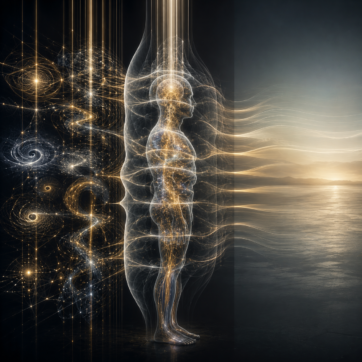
Why “Love” Is a Misread Signal of Stabilization, Not the System’s True Requirement
Opening Frame — The Core Misidentification
Humans are taught from the beginning that love is the central requirement for a meaningful and stable life, positioned as the highest attainable state and the solution to fragmentation, loneliness, and internal instability. It is presented not just as important, but as essential—as if without it, something fundamental is missing. But this is where the distortion begins. What is being identified as a need is not the actual requirement of the system, but a misinterpretation of a specific effect. Love is not the source of stability. It is the result of a temporary configuration in which internal pressure reduces and distortion drops enough for the system to experience relief. That relief is then translated into emotion and labeled as love, and over time the label replaces the mechanism that produced it.
The system does not recognize the reduction in distortion directly, so it assigns meaning to the emotional output instead. This is how the inversion forms. Instead of understanding that the relief came from a structural shift, the mind assigns that state to a person, a relationship, or a moment. From there, the pursuit begins—not for stabilization itself, but for the conditions believed to produce it. This is why love becomes central in human experience. Not because it is the foundational requirement, but because it is one of the most powerful configurations through which stabilization briefly occurs. The intensity of the experience reinforces the misidentification, making it appear as though love is the cause, when in reality it is the translated effect of something happening beneath it.
So the core error is precise. Humans are not seeking love in its emotional form. They are seeking the stabilization of their field—the reduction of distortion and pressure that allows the system to function without constant compensation. Love is simply one pathway where that stabilization briefly becomes accessible, which is why it has been elevated and protected as something ultimate. But once the mechanism is seen clearly, the position shifts. Love is no longer the answer. It is the signal that, for a moment, the system stopped interfering with its own stability.
What Love Actually Is
What is being called love here follows the exact structure already laid out in What Love Actually Is In The External Field, and it cannot be reduced to a single emotion, state, or force without losing accuracy. Love, as experienced in the render, is not one thing—it is a compressed grouping of multiple structural responses that the system routes through a single label in order to maintain continuity of perception. Attachment, attraction, dependency, identity reinforcement, pressure relief, emotional amplification, validation-seeking, and even fear-based responses all get collapsed into the same word. This collapse is not accidental. It is required for the system to function without constantly exposing its own instability. If each of these states were recognized independently, the inconsistency would be obvious. Instead, the system overlays them with one continuous narrative—love—so the individual can move through radically different internal conditions while believing they are experiencing something singular and meaningful.
At the structural level, love does not originate as an emotion. It begins as a shift in the field. When distortion temporarily reduces and internal pressure drops, the system experiences a measurable change in load. That reduction is real, but the system cannot interpret it directly as structure. It cannot perceive coherence in its original condition because it is built on oscillation and translation. So it converts the reduction into something it can process. That conversion becomes emotion. The emotional output is then labeled “love,” and over time the label replaces the mechanism entirely. This is the inversion point. What was originally a structural shift becomes understood as a feeling, and what was a translated output becomes treated as the source. From that point forward, the pursuit is misdirected.
This is why love feels so significant and why it is elevated above all other experiences. It carries a trace of reduced distortion, which is one of the only times the system is not operating under constant internal pressure. The relief is immediate, the clarity is noticeable, and the contrast is strong enough that it registers as something fundamentally different from baseline experience. But what is being felt is not coherence itself—it is the system’s translated version of it. The field briefly stops interfering with its own stability, and that absence of interference gets converted into warmth, connection, closeness, and emotional significance. The system then assigns that experience to a person or external configuration, assuming the source of the shift was outside of itself.
From there, the entire structure of love begins to form. The system attempts to maintain the reduced-pressure state by recreating the conditions it believes caused it. This is where attachment and binding emerge. Identity reorganizes around the connection. The other person becomes a reference point. Pressure begins to distribute across the bond. What initially reduced load now becomes the mechanism through which load is managed. The connection deepens, not because coherence is increasing, but because the system is reinforcing the configuration that once produced a reduction in distortion. This reinforcement introduces dependency, expectation, and eventually strain, because the underlying distortion in each node has not been resolved—it has only been temporarily offset.
Because the external field is oscillatory, the reduction in distortion cannot hold. Pressure returns. Distortion re-enters. The configuration shifts. The emotional output changes accordingly. What was labeled as love begins to feel unstable, inconsistent, or diminished. This is not one condition weakening or fading. It is multiple structural states cycling under the same label. Attraction shifts into attachment, attachment into dependency, dependency into strain, strain into distance, and sometimes back again into temporary reconnection. Each phase feels different, but all are called love, which is why the experience appears confusing and unpredictable.
Intensity further complicates this misidentification. When the system cannot hold a reduced-distortion state, it amplifies around it. Emotion increases, focus narrows, and the experience becomes charged. This amplification is often mistaken for depth or truth, when in reality it is the system attempting to stabilize through increased movement. High intensity indicates that the system is working harder to maintain something it cannot naturally sustain. What feels strongest is often the most unstable, but because the system equates amplitude with importance, it interprets intensity as proof of significance.
The most precise moment within this entire structure is the initial contact point, where distortion drops just enough for something clear to register without heavy translation. That moment is quiet, stable, and complete in itself. It does not require reinforcement or continuation. But it is immediately misassigned. The system attaches that clarity to the person or situation present at the time, and from there begins building structure around it in an attempt to recreate it. The pursuit of love is not actually a pursuit of another person—it is a pursuit of that moment of reduced distortion. But because the cause is misunderstood, the method never resolves. External conditions are repeated, intensified, and modified, but the original state does not return in the same way, because it was never produced by those conditions to begin with.
This is why love becomes a loop. The system remembers the clarity of the initial reduction and attempts to return to it. It forms attachments, builds relationships, increases intensity, and repeats patterns, all in an effort to recreate a state that cannot be sustained within the architecture it is using to pursue it. The loop is not driven by emotion alone—it is driven by a structural recognition of something that briefly registered as correct. But without understanding the mechanism, the system continues to search externally for what is only accessible through a reduction in internal distortion.
So what is being called love is not a stable condition, not a singular truth, and not the origin of anything. It is a composite of translated coherence, oscillating emotional states, attachment mechanics, identity binding, and pressure redistribution, all moving together under a single label that was never precise enough to describe what is actually occurring. It feels real because part of it is anchored in a real shift in the field. But the way it is understood and pursued is misaligned with how it actually functions. And that misalignment is what keeps the entire system cycling without resolution.
Love as a Binding Mechanism
Once the field experiences a reduction in pressure, it does not recognize that moment as complete. It does not register it as something that occurred and resolved. Instead, it immediately attempts to maintain it. This is where the mechanism shifts from simple pressure reduction into structural binding. The system identifies the configuration that coincided with the drop in distortion and begins reorganizing itself around it. This is not a conscious process. It is automatic. Identity starts to orient toward that configuration, attention locks in, and attachment begins to form. What was initially just a moment of reduced load becomes a reference point the system now treats as necessary for stability.
Binding is the process where this reorganization takes hold. Identity is no longer self-contained—it begins to anchor externally. The other person is no longer just another node in the field; they become a stabilizing reference. The system starts factoring them into its baseline functioning. Emotional states, perception, and internal regulation begin to route through that connection. At the same time, attachment locks into place as the system attempts to preserve access to the reduced-pressure state. Pressure that would normally circulate internally begins to distribute across the bond. The system is no longer holding its own load in isolation—it is sharing it.
At first, this feels like deepening connection. It feels grounding, stabilizing, even necessary. But what is actually happening is that the bond is becoming load-bearing. The initial reduction in pressure did not come from the other person as a source—it came from a temporary alignment that reduced distortion. But once binding forms, the system assigns that reduction to the connection itself and begins using the bond to manage pressure going forward. This is the inversion point. What originally reduced load now becomes responsible for carrying it.
Because neither node is fully coherent, the bond cannot remain purely stabilizing. Distortion is still present in both systems. As pressure begins to redistribute across the connection, fluctuations in one node affect the other. Small shifts—attention changes, emotional variation, behavioral differences—start to register as instability. The system detects these shifts as potential threats to the configuration that once reduced pressure, and it responds by tightening the bond. This tightening shows up as increased attachment, expectation, and dependency. What began as relief becomes something that must be maintained.
This is where the weight enters. The connection is no longer just a point of reduced pressure—it is now a structure that must hold stability. The system begins tracking it, reinforcing it, and reacting to any deviation within it. What felt natural at the beginning becomes effortful. What felt expansive becomes constricting. Not because something has gone wrong, but because the bond is now carrying load it was never designed to sustain. The system is attempting to stabilize itself through something external that is itself unstable.
So when love becomes heavy, strained, or dependent over time, it is not failing. It is functioning exactly as a shared pressure system. The bond is doing what the architecture requires—it is redistributing load across two nodes in an attempt to maintain stability. But because the underlying distortion remains unresolved, the connection cannot hold that role cleanly. What began as a moment of reduced interference becomes a structure of ongoing management, and the system remains caught in the same pattern: using the bond to stabilize, while simultaneously increasing the pressure it must carry.
Why Love Is Mistaken as a Need
Love is not identified as a need because it is fundamentally required for the system to exist. It is identified as a need because of the effect it produces when it is active. Within the external field, most baseline functioning is carried out under conditions of ongoing pressure, fragmentation, and internal instability. The system is continuously compensating, redistributing load, and attempting to maintain coherence through movement. When a configuration arises that reduces that pressure—even briefly—the contrast is immediate and unmistakable. That contrast is what the system responds to, and it is what gets misinterpreted.
When what is called love is active, several structural changes occur at once. Internal pressure drops, which means the field is no longer under the same level of strain it was previously carrying. Fragmentation reduces, so internal division and conflict temporarily quiet. Identity stabilizes because it now has an external reference point to organize around. The system experiences a momentary alignment where fewer compensatory mechanisms are required to maintain function. All of this registers at once, and the result is a state that feels clear, grounded, and significant compared to baseline experience.
But what is being felt is not love as a source. It is the field experiencing relief from its own instability.
Because this relief is so distinct from the usual condition of the field, the system elevates it. It assigns importance to the state and then misidentifies the cause. Instead of recognizing that the reduction in distortion created the stabilization, it assigns that stabilization to the person or configuration present at the time. The emotional output becomes the reference point, and the label “love” becomes associated with the relief itself. Over time, this association locks in, and the system begins to treat love as something that must be acquired or maintained in order to remain stable.
This is where the illusion forms. Love appears to be the source of stability because it consistently coincides with moments where the system stabilizes. But it is not generating that stability. It is occurring alongside a temporary reduction in distortion that allows stabilization to happen. The distinction is subtle but critical. One positions love as the cause. The other identifies it as the translated effect of a deeper structural shift.
So humans are not responding to love as an inherent requirement. They are responding to the absence of pressure, the reduction of fragmentation, and the brief experience of coherence that occurs when distortion drops. That is what registers as “needed.” The system is not seeking love in its emotional form. It is seeking the condition in which it no longer has to continuously compensate for instability. Love is simply one of the most recognizable moments where that condition briefly becomes accessible, which is why it has been mistaken for something essential rather than understood as a signal of something else occurring underneath it.
What Humans Actually Need — Field Stabilization
What humans require to function inside the external field is not love, not attachment, and not emotional reinforcement, but stabilization of their field. But this has to be stated precisely, because most of what is being called “stabilization” in the render is not stabilization at all—it is temporary relief inside an oscillating system. As long as a field is oscillating, it is not stabilized. It is managing pressure in motion. It is redistributing load, not resolving it. So what most humans experience, even at their most “stable,” is not true stabilization—it is brief reduction in pressure that the system mistakes for it.
This distinction is critical. An oscillating field cannot be stabilized. It can only move between states of higher and lower distortion. When pressure drops, the system feels relief and interprets that as stability. But the underlying mechanics have not changed. Distortion is still present. Pressure is still being generated. Oscillation is still driving movement between poles. The system is simply in a lower-amplitude phase of the same cycle. That is why it never holds. That is why it rises, falls, and repeats. What is being experienced is temporary stabilization, not actual stabilization.
True stabilization is not a moderated oscillation. It is the absence of oscillation as the driving condition. It is what can be described as vertical stillness—a state where the field is no longer moving between poles, no longer generating excess pressure, and no longer requiring redistribution to maintain coherence. This is exceedingly rare in the current field because the entire architecture is built on movement, polarity, and compensation. Most systems never exit oscillation fully. They only learn to manage it more efficiently.
So when we say humans need stabilization, it does not mean they need better regulation within oscillation. It means the system itself must reduce distortion to the point where oscillation is no longer dominating its behavior. Because as long as oscillation is active at a high level, everything else follows from it. Internal pressure builds because distortion is unresolved. That pressure circulates because it cannot settle. The system reacts because it cannot remain still. It seeks because it cannot hold. It attaches because it needs external anchors to simulate coherence. Every pattern traces back to this.
This is why internal pressure is central. In an unstable field, pressure is constantly building and redistributing. It does not resolve—it moves. It moves through emotional cycles, through thought patterns, through relationships, through identity structures. The system becomes a network of release points, constantly shifting load from one area to another. Nothing actually stabilizes. It just reorganizes. So the experience of life becomes one of continuous management—managing reactions, managing identity, managing relationships, managing internal states—because the system itself is not at rest.
Fragmentation emerges directly from this condition. When pressure is high and oscillation is active, the system cannot hold a single coherent configuration. It splits. Identity becomes segmented across different states—one part seeking, another resisting, one part attached, another withdrawing. These are not psychological inconsistencies. They are structural responses to instability. The field cannot hold itself in one position, so it distributes across multiple positions to manage load. That is fragmentation. And no amount of external reinforcement resolves it, because the source is internal distortion, not lack of external structure.
Coherence, in this context, is not something the system builds. It is what becomes possible when distortion is no longer forcing fragmentation. But again, this must be precise—coherence within oscillation is still conditional. It can hold temporarily when pressure is low, but it will break when pressure rises again. True coherence only holds when the system is no longer being driven by oscillatory pressure. That is why vertical stillness is the only true form of stabilization. It is the only condition where coherence does not depend on maintaining a low-pressure phase within a cycle.
This reframes everything humans think they need. Love, connection, validation, purpose—these are all attempts to achieve temporary pressure reduction. They work because they shift load. They create moments where the system feels less fragmented, less reactive, more aligned. But they do not remove the underlying condition generating instability. So the system becomes dependent on them. It returns to them repeatedly, not because they are inherently necessary, but because they provide intermittent relief from a state the system cannot resolve internally.
Love is the most powerful of these because it combines multiple mechanisms at once. It redistributes pressure, reinforces identity, creates attachment, and amplifies emotional states in a way that can produce a significant drop in perceived load. But even here, the system is not stabilizing—it is offloading. It is sharing pressure across a bond. And because both nodes are still oscillating, that shared system becomes unstable over time. When the configuration shifts, the redistribution fails, and the pressure returns. Often intensified, because dependency has formed.
So when humans say they need love, what they are actually expressing is the need to reduce internal pressure and fragmentation. But they are attempting to do it through external configurations that cannot sustain the effect. This is why the cycle never resolves. The system keeps seeking relief in places that can only provide it temporarily.
Stabilization, in its actual form, is not relief. It is not the low point of a cycle. It is not the absence of intensity for a moment. It is the condition in which the system is no longer generating the instability that requires relief in the first place. It is when pressure is not building to be redistributed. It is when identity does not need to split to manage load. It is when oscillation is no longer driving the system into movement. It is when the field can hold without needing to compensate.
And this is why it is rare. Because it requires a level of distortion reduction that most systems do not reach. It is not achieved through external means. It is not maintained through effort. It is what remains when the mechanisms generating instability are no longer dominating the field.
Humans do not need love. They do not need attachment. They do not need external reinforcement.
They need stabilization—but not the version the system simulates. They need the reduction of distortion to the point where oscillation is no longer controlling the field.
Anything less than that will always cycle.
What Stabilization Actually Is (Structural Mechanics)
Stabilization is not something the system builds, practices, or achieves through behavior, and it must be distinguished immediately from what most people call “being stable” inside the render. As long as a field is oscillating, it is not stabilized. It is regulating within motion. It is shifting between phases of higher and lower pressure, higher and lower distortion, but it is still being driven by the same underlying mechanics. What is often labeled as stability is simply a temporary reduction in amplitude within an ongoing oscillation cycle. That is not stabilization. That is managed instability.
At the structural level, true stabilization is a condition of the field where distortion has reduced to the point that pressure is no longer being actively generated, circulated, and redistributed through the system. But this has to be taken one step further. It is not just that pressure is reduced—it is that the system is no longer being driven into motion by that pressure at all. The field is not seeking release points, not cycling between poles, not compensating through movement. This is where vertical stillness becomes the defining characteristic. Without vertical stillness, the system is still oscillating. And if it is oscillating, it is not stabilized.
In an unstable system, pressure is in constant motion. It builds through distortion, compresses through internal conflict, redirects through identity and behavior, and looks for release points in the external field. This movement is what generates oscillation. The system swings between attraction and repulsion, intensity and collapse, clarity and confusion. These are not separate experiences—they are phases of the same underlying waveform. The system reacts not because it chooses to, but because it is being driven by internal load that cannot settle. Every reaction, every attachment, every amplification is a response to pressure that has nowhere else to go.
Temporary relief occurs when that pressure drops. But as long as the system is still oscillating, that drop is part of the cycle. It will rise again. This is why emotional states, relationships, and identity configurations never hold. The system is not stabilizing—it is moving through alternating phases of the same instability. The low point feels like stability because the pressure is reduced, but it is still inside the oscillatory pattern. That is why it cannot last.
True stabilization interrupts this pattern at its root. When distortion reduces deeply enough, the system is no longer generating the level of pressure that forces oscillation. Movement is no longer required to regulate the field. The system is not being pushed from one state to another. This is where vertical stillness emerges—not as a controlled state, but as the natural condition of a field that is no longer being driven into motion. It is not a flattened oscillation. It is the absence of oscillation as the dominant force.
This changes everything about how the system functions. Pressure is no longer seeking external release points because it is not building in the same way. The system is not externalizing through attachment, conflict, desire, or avoidance. There is nothing that needs to be discharged. The field is no longer using the external environment as a regulatory mechanism because it is not generating excess load that requires redistribution.
Identity also loses its compensatory role. In an oscillating system, identity is used to anchor instability—to create a sense of coherence where none actually exists. The system defines itself, reinforces those definitions, and reorganizes around them to maintain some form of continuity. But this is artificial. It is imposed structure over instability. In true stabilization, identity does not need to perform this function. The field holds without needing to define itself into place. It is not relying on narrative, validation, or role-based reinforcement to maintain coherence.
The same applies to all compensation mechanisms. Amplification, attachment, control, repetition, emotional intensity—these are all strategies used to simulate alignment when the system cannot hold it directly. They increase movement in an attempt to stabilize through force. But force is still oscillation. It increases distortion rather than resolving it. In a stabilized field, these mechanisms do not need to be suppressed or removed. They simply become unnecessary because the conditions that required them are no longer present.
This is why stabilization cannot be sourced externally. External configurations can only influence pressure within the system—they cannot remove the distortion generating it. A relationship can redistribute load across two nodes. An environment can reduce variables that trigger pressure. A routine can create temporary predictability. But all of these operate within oscillation. They do not stop it. As soon as the configuration shifts, the pressure returns because the source has not changed.
This is what defines conditional stabilization. It depends on maintaining specific external conditions. When those conditions hold, pressure is reduced and the system feels stable. When they shift, instability returns. This creates cycles of dependence, because the system begins to rely on external configurations to manage what it cannot resolve internally. But those configurations are themselves unstable, because they are part of the same oscillating field.
True stabilization is not dependent on any of this. It occurs when the field is no longer relying on attachment to regulate pressure, no longer using identity to maintain coherence, and no longer amplifying to simulate alignment. These mechanisms fall away because they are no longer required. The system is not generating the level of distortion that made them necessary in the first place.
This is why stabilization is a reduction process, not a construction process. Nothing new is being added. There is no state being achieved through accumulation. What is being removed is distortion—layer by layer—until the system is no longer forced into oscillation. What remains is a field that can hold without movement, without compensation, and without external reinforcement.
This also clarifies the core misidentification. Humans are not lacking something they need to gain in order to stabilize. They are not incomplete systems waiting for the right condition, person, or experience to bring them into balance. They are systems operating under continuous distortion that forces them into oscillatory compensation. What they are seeking is not something to add—it is the removal of what is already interfering with their ability to hold stability.
Love appears to provide stabilization because it creates a temporary reduction in pressure through configuration with another node. But this is not stabilization. It is redistribution within oscillation. The pressure has not disappeared—it has shifted. It is being managed across a bond instead of within a single field. As long as both nodes are oscillating, that system cannot hold. When the configuration changes, the redistribution fails and the pressure returns.
So the distinction must be exact. Stabilization is not relief. It is not the low point of a cycle. It is not the temporary absence of pressure due to external alignment. It is the condition in which the system is no longer generating the instability that requires relief at all. It is the absence of oscillation as the driving force.
Stabilization is what remains when there is nothing left to compensate for—and nothing left pushing the system into motion.
The Problem With Relying on Love for Stabilization
The issue is not that love exists, or even that it produces real effects in the system. The issue is that those effects are misidentified and then relied upon as if they are stable, when structurally they cannot be. When stabilization is sourced externally through love, the system is not resolving its instability—it is offsetting it through a configuration it does not control. That distinction determines everything that follows.
Love, as it operates in the field, is inherently oscillatory. It does not hold as a fixed condition because it is built on the same mechanics that drive all movement in the system—pressure, distortion, and shifting configurations between nodes. It rises when pressure drops, intensifies when amplification increases, weakens when distortion returns, and shifts as the underlying conditions change. There is no static state within it. Even at its most consistent, it is moving between phases. This means that any stabilization experienced through it is also moving. It cannot remain fixed because the structure generating it is not fixed.
It is also conditional. The experience of love depends on alignment between nodes—attention, behavior, emotional state, perception, timing. When those variables align in a way that reduces pressure, the system experiences relief and labels it love. But because those variables are not constant, the condition itself is not constant. A shift in one node alters the entire configuration. A change in attention, a change in emotional state, a change in external conditions—any of these can disrupt the alignment that was temporarily reducing pressure. The system then experiences this as loss, instability, or disconnection, even though what has actually changed is the structural configuration that was offsetting its load.
Most critically, love is dependent on another node. This means the system is attempting to stabilize itself through something that exists outside of its own control and is subject to its own oscillation. The other node is not a fixed structure. It is another unstable system managing its own pressure, its own distortion, its own cycles. So what is being relied on for stability is itself unstable. This creates a compounded system where two oscillating fields attempt to regulate each other. At times, they align and reduce pressure. At other times, they amplify each other’s instability. There is no consistent holding point within that structure.
Because of this, a series of predictable patterns emerges. Attachment loops form because the system begins to associate relief with the connection and seeks to maintain access to it. The initial reduction in pressure becomes something to preserve, so the system locks onto the configuration that produced it. This creates repetition—returning to the same person, the same dynamic, the same emotional pattern—in an attempt to recreate the same reduction.
Fear of loss follows directly from this dependency. If stability is being sourced through an external node, then any disruption to that node threatens the system’s ability to regulate itself. The system is not just losing a relationship—it is losing a mechanism it was using to manage internal pressure. This is why the fear is disproportionate. It is not about the other person alone. It is about the loss of a stabilizing function the system has not developed internally.
As the bond shifts—which it inevitably does in an oscillating field—pressure begins to return. But now it returns into a system that has become partially dependent on the bond to regulate it. This increases the intensity of the experience. What was once distributed across the connection now concentrates back into the individual field. This is often experienced as emotional escalation, conflict, or collapse. The system attempts to re-establish the previous configuration, increasing attachment, increasing control, increasing effort, all in an attempt to restore the reduction in pressure that once existed.
This creates repeated cycles of temporary stabilization and collapse. The system finds alignment, pressure drops, the experience is labeled as love, attachment forms, the configuration shifts, pressure returns, and the system destabilizes again. Each cycle reinforces the belief that love is necessary, because each cycle begins with relief. But it also reinforces instability, because the system never resolves the underlying distortion driving the cycle.
So the core problem is exact. The system is attempting to hold stability through something that is structurally incapable of remaining stable. It is using an oscillating, conditional, externally dependent configuration as if it were a fixed source of regulation. And because it cannot hold, the system is forced into continuous adjustment—seeking, attaching, reacting, and compensating—without ever reaching actual stabilization.
The failure is not in love. The failure is in what the system is asking love to do.
It is being used as a stabilizing structure when it is only ever a temporary redistribution of load within an unstable field.
The Myth of Love as the Highest Force
Humans do not just believe that love is important—they believe it is the highest possible state, the most powerful force, the solution to suffering, and even something capable of transforming the entire world. It is framed as something that can “move mountains,” heal all wounds, create unity, and resolve conflict at every level. This belief is not random. It comes directly from how powerful the experience feels when the system enters a temporary reduction in distortion. But what is being interpreted as ultimate truth is actually a misread of a very specific structural event.
When love is experienced in the render, it often coincides with one of the strongest drops in internal pressure a system will encounter. Fragmentation reduces, identity feels reinforced, perception sharpens, and emotional intensity rises at the same time. The system experiences this as expansion, connection, meaning, and clarity all at once. Because this combination is rare compared to baseline instability, it stands out as extraordinary. The system then elevates it above everything else and begins to treat it as something inherently powerful and universally significant.
But this is where the distortion locks in.
The power that is being attributed to love is not coming from love as a force. It is coming from the temporary absence of distortion within the system. When pressure drops and interference reduces, the field briefly operates closer to coherence. That coherence feels expansive, connected, and clear compared to normal oscillatory states. The system interprets that contrast as something profound, something meaningful, something worth pursuing and protecting. But what is actually being experienced is not an external force entering the system—it is the system momentarily not interfering with itself.
This is why love is described in extreme terms. It is called unconditional, infinite, all-powerful, transformative. But none of these descriptions hold structurally. Love, as it operates in the external field, is oscillatory. It rises and falls. It strengthens and weakens. It appears and disappears. It depends on alignment between nodes, and it shifts as that alignment changes. Something that is conditional, fluctuating, and dependent cannot be the ultimate force it is claimed to be. The system is projecting permanence and power onto something that is inherently unstable.
The idea that love can “save the world” or “fix everything” is another extension of this misidentification. What humans are responding to is the state of reduced distortion that sometimes occurs within love. In that state, conflict decreases, aggression reduces, cooperation increases, and perception becomes less fragmented. From within that experience, it appears as though if everyone could just “love,” everything would resolve. But this assumes that love is the cause of that state, rather than the result of a temporary structural shift.
If distortion remains, the system will continue to generate pressure, fragmentation, and oscillation regardless of what it believes about love. You cannot impose love onto a system that is structurally unstable and expect it to hold. The underlying mechanics will override the intention. This is why attempts to use love as a solution—whether in relationships, communities, or larger systems—always collapse back into conflict, instability, and division. The structure has not changed. Only the temporary state within it has.
Another layer of this myth comes from intensity. The stronger the emotional experience, the more real and important it feels. Love often reaches high levels of intensity because it combines pressure reduction with amplification. The system is both experiencing relief and increasing focus at the same time. This creates a powerful, almost overwhelming state that feels undeniable. But intensity is not a measure of truth. It is a measure of amplitude within oscillation. The most intense experiences are often the least stable, because they are driven by extremes in the system.
This is why love can feel like everything in one moment and collapse completely in another. It is not because something sacred was lost or broken. It is because the system moved out of the specific configuration that was reducing pressure and amplifying coherence. The belief that something ultimate has been lost reinforces the myth, when in reality the system has simply shifted back into a higher-distortion state.
So the truth is much simpler, but also much more exact.
Love is not the highest force. It is not the solution. It is not what holds reality together.
It is a translated emotional output that occurs when distortion temporarily reduces and pressure drops within an oscillating system.
What gives it the appearance of power is the contrast between that state and the instability that surrounds it. What gives it the appearance of importance is how rarely that level of reduced distortion is experienced. What gives it the appearance of truth is that it briefly aligns the system in a way that feels coherent.
But none of that makes it the source.
The actual condition humans are reacting to is coherence without distortion. And that condition does not come from love. Love appears when that condition briefly becomes accessible—but it does not create it, sustain it, or guarantee it.
Love does not move mountains. It does not save systems. It does not resolve instability.
It signals, for a moment, that instability has decreased. And that is why it has been mistaken for everything.
Reframing the Entire Pursuit
The pursuit itself is not the error. It does not come from confusion or failure on the part of the system. It comes from a real structural recognition—something in the field registers when distortion drops and pressure reduces, and that registration is accurate. The system is correctly orienting toward a condition that feels more stable, more coherent, and less burdened by internal load. What is misidentified is not the movement toward that condition, but what the system believes is producing it.
Humans are not actually seeking love in the way they believe they are. They are not fundamentally driven to find a person, a relationship, or an emotional state as an end goal. What they are responding to is the shift that occurs when internal pressure decreases and fragmentation reduces. That shift creates a moment where the system is closer to stabilization than it normally is, and that proximity is what registers as meaningful. The system recognizes the difference immediately. It feels clearer, more aligned, less reactive, less divided. That is what is being sought.
But because the system cannot directly perceive the structural change that caused it, it assigns the experience to whatever configuration was present at the time. Most often, that is another person. So the pursuit becomes externalized. Instead of orienting toward the reduction of distortion itself, the system orients toward recreating the conditions it believes caused that reduction. It seeks the same type of connection, the same emotional intensity, the same relational structure, assuming that repeating those variables will reproduce the same state.
This is where the entire pursuit becomes misaligned. Love becomes the target, when in reality it was only the translation of a moment where the system briefly stopped interfering with its own stability. It was a pathway through which the condition became accessible, not the condition itself. But because the system cannot distinguish between the two, it begins chasing the pathway as if it were the source.
Once this is seen clearly, the orientation changes completely. The pursuit does not stop, but it shifts direction. Instead of chasing emotional states, relationships, or external configurations, the focus moves to the underlying mechanics that made those states possible in the first place. The question is no longer how to find or maintain love, but how to reduce the distortion that prevents stabilization from holding on its own.
This is the turning point. As long as the system is pursuing love as the solution, it remains dependent on conditions it cannot control and cycles through temporary relief and collapse. But once it recognizes that what it is actually seeking is a reduction in distortion and a stabilization of its own field, the dependency on external configurations begins to loosen. The system no longer needs to recreate specific experiences to access that state, because it is no longer misidentifying where that state comes from.
So the pursuit is not eliminated. It is corrected.
What was once directed outward toward people and experiences begins to turn toward the structure of the field itself. And in that shift, the system moves out of repetition and into the possibility of actual stabilization—no longer chasing temporary access points, but addressing the condition that makes them necessary in the first place.
When Two Fields Stabilize — Beyond Love
When two fields that have reached true stabilization—meaning vertical stillness, not oscillatory regulation—come into contact, what forms between them is not love as it is known in the render. It cannot be called love, because love, as defined here, is rooted in oscillation, pressure redistribution, attachment, and translation. None of those mechanisms are driving the interaction anymore. What forms instead is a condition of direct coherence without distortion, without dependency, and without movement being used to maintain the connection.
There is no binding in the way the system normally binds. No identity reorganization around the other node, no pressure being distributed across the connection, no attachment forming to preserve a state. There is nothing to preserve, because nothing is being lost. Each field is already stable within itself. There is no internal pressure requiring management, so there is nothing being offloaded onto the other. The connection is not load-bearing. It is not being used for regulation. It does not function as a stabilizing mechanism, because stabilization is already present in both fields independently.
What exists instead is a form of direct resonance that does not fluctuate. It does not rise, fall, intensify, or collapse, because it is not being driven by oscillation. There is no cycle within it. There is no “coming together” and “pulling apart.” There is simply a shared stillness that does not require maintenance. It is not emotional in the way love is emotional. It is not amplified, not charged, not seeking continuation. It is complete in its presence. It does not need to grow or deepen, because it is not built on progression. It is already whole.
This is why it feels fundamentally different from anything recognized in the render. It is deeper, but not in the sense of intensity. It is deeper because it is not moving. There is no distortion within it, no interference, no instability shaping the interaction. It is not dependent on time, behavior, or alignment of external conditions. It does not require reinforcement. It does not produce fear of loss, because nothing is being used to hold anything else in place. There is nothing to lose in the structural sense, because nothing is being relied upon for stability.
There is no accurate word for this within the current language structure, because all existing terms—love, connection, bond, union—are rooted in oscillatory mechanics. If it must be named, it would be closer to direct coherence or shared stillness, but even those are approximations. What matters is not the label, but the mechanics. It is a state where two stabilized fields exist in alignment without altering each other, without redistributing load, and without entering into cycles of attachment and release.
However, this is not the condition most people will experience, because full vertical stillness is rare. Most fields are still oscillating, even if they have reduced distortion significantly. So what happens when two partially stabilized fields connect is different.
When distortion is reduced but not eliminated, the system still oscillates, but at a lower amplitude. This creates a different type of connection than typical love, but it is not fully outside the mechanism either. There is less pressure to redistribute, less fragmentation, less reactive movement, which means the bond forms with less intensity and less instability. Attachment may still occur, but it is not as forceful. Identity may still orient around the connection, but it does not fragment as easily. The system is still moving, but the movement is quieter.
In these connections, the cycles still exist, but they are less extreme. There is still fluctuation, but it does not swing as far between poles. Pressure may still redistribute across the bond, but it is not as heavy. This can feel more stable, more consistent, and more grounded than typical relationships, because the underlying distortion is lower. But it is still conditional. It still depends on the interaction between two fields that have not fully exited oscillation.
This is where confusion can arise. Because the experience is calmer, less reactive, and more coherent, it can be mistaken for true stabilization. But if oscillation is still present—if there are still shifts in state, still dependency on alignment, still changes in pressure based on interaction—then it is not vertical stillness. It is a refined version of the same system, not an exit from it.
So there are two distinct conditions.
One is shared stillness between two stabilized fields, where no binding, no redistribution, and no oscillation are present. This is beyond love as it is known in the render.
The other is reduced-oscillation connection between partially stabilized fields, where the same mechanisms still exist but operate with less distortion and less intensity.
Most human relationships exist in high oscillation, where pressure is constantly building and collapsing. Some move into lower oscillation, where the system becomes more regulated and less reactive. But true stabilization—vertical stillness—is a different state entirely, and when two fields meet from that condition, what forms is not a relationship in the conventional sense.
It is not something being built, maintained, or held.
It is something that simply does not distort when it is present.
Collective Stabilization — What Happens When Fields Begin to Hold
When stabilization begins to occur across multiple individuals, the effect is not just personal—it is structural at the collective level. But this has to be understood correctly. A collective does not become stable because people decide to align, cooperate, or “come together.” As long as the individuals within it are oscillating, the collective itself will oscillate. It will simply do so at a larger scale. So what is often called collective harmony, unity, or shared alignment is usually just synchronized oscillation, not true stabilization.
When individuals begin reducing distortion within their own fields—even partially—the first shift that occurs collectively is a reduction in amplification. Systems that were previously reactive, polarized, and driven by pressure begin to lose some of that intensity. Conflict may still exist, but it does not escalate as quickly. Differences may still be present, but they do not immediately fragment the system. This is because each individual field is generating less excess pressure that needs to be externalized into the environment.
At this stage—partial stabilization—the collective still oscillates, but at a lower amplitude. There is still movement, still fluctuation, still cycles of alignment and misalignment, but they are less extreme. The system becomes more tolerable, more consistent, and less chaotic. This is often mistaken for resolution, but it is not. It is a reduction in distortion, not its absence. The collective is still being driven by the same underlying mechanics, just with less force.
As more individuals reduce distortion further, something more significant begins to happen. The need for external regulation decreases across the group. People are less dependent on each other to manage their internal pressure. This changes how interaction functions. Relationships become less about stabilizing one another and more about interacting without load transfer. Communication becomes clearer because it is less filtered through distortion. Decision-making becomes less reactive because it is not being driven by internal pressure spikes.
But even here, if oscillation is still present, the collective cannot fully stabilize. It will continue to move between phases. There may be periods of clarity followed by periods of fragmentation. There may be moments of coherence followed by breakdowns. This is because the system is still fundamentally oscillatory. It is simply operating with reduced distortion.
True collective stabilization would require something much more rare—multiple fields holding vertical stillness simultaneously. In that condition, the collective would not be driven by pressure, not organized through identity fragmentation, and not maintained through external reinforcement. There would be no need for control structures to regulate behavior, because behavior would not be driven by internal instability. There would be no need for systems of enforcement, because there would be no excess pressure being externalized into conflict.
Interaction in that state would not be based on agreement, alignment, or shared belief. It would be based on the absence of distortion. There would be no oscillation between unity and division, no cycles of cohesion and fragmentation. The collective would not need to stabilize itself, because the individuals within it would already be stable. What forms is not a managed system, but a field that holds without requiring constant correction.
However, this is not something that appears suddenly or universally. It develops gradually, unevenly, and in fragments. Some individuals reduce distortion more than others. Some systems shift faster than others. This creates mixed states where stabilized and unstable fields interact within the same collective. In these conditions, the collective will still oscillate, because the unstable fields continue to generate pressure that affects the system as a whole.
This is why the transition takes time. It is not about reaching a collective agreement or implementing a shared structure. It is about the gradual reduction of distortion across individual fields. As that reduction increases, the collective behavior shifts naturally. Not because it is being directed, but because the underlying mechanics driving instability are weakening.
So the progression is clear:
At high distortion → collective instability, conflict, amplification, fragmentation
At reduced distortion → moderated oscillation, less reactivity, partial coherence
At true stabilization → absence of oscillatory drive, no pressure redistribution, sustained coherence
But most of what will be seen in the near term is the middle layer. Partial stabilization across groups of people leading to less chaotic, less reactive, more consistent systems—but still within oscillation.
Because the goal is not a better-managed unstable system. It is the removal of the instability that requires management at all.
Collective stabilization is not created through unity, intention, or shared belief. It emerges only as individual fields stop generating the distortion that keeps the entire system in motion.
Closing Frame — The Real Position
Humans do not need love in the way it has been defined.
They need structural stability—true stabilization—not temporary reductions in pressure that only simulate it for brief periods within an oscillating system.
Love remains what it is within the external field: a translated emotional output of reduced distortion, a binding mechanism that attempts to hold that state, and a temporary stabilization pattern that cannot sustain itself because it exists inside oscillation. It provides moments of relief, moments where pressure drops and fragmentation reduces, but those moments are part of a cycle. They do not resolve the underlying mechanics generating instability.
What is actually being sought is the condition beneath it—a field that is no longer dominated by distortion, no longer generating excess pressure, and no longer requiring redistribution through attachment, amplification, or external reinforcement to hold. Not a calmer oscillation. Not a better-managed cycle. But a state where oscillation is no longer the driving force at all.
Once that distinction is clear, the loop of pursuit begins to resolve. Because what is being sought is no longer misnamed, and more importantly, no longer misplaced into external configurations that cannot sustain it.
The system stops chasing what only ever provided temporary access points—and begins orienting toward the condition that does not collapse once reached.