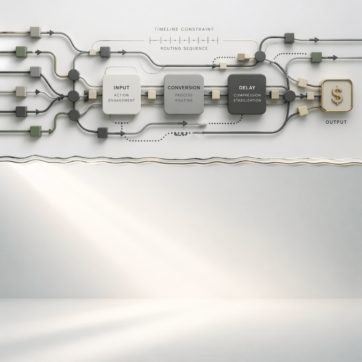
Why Confusion, Resistance, and Uneven Reception Are Not Failure but Structural Limits of a System Trying to Hold What Exists Outside of It
Opening Frame — The Misplacement Is the Problem
The confusion that arises when encountering Eternal Flame Physics is not coming from complexity, lack of clarity, or an inability to understand. It is coming from a single, consistent error: misplacement. What is being presented here is not another framework to be learned, compared, or integrated into what already exists. It is not a new version of spirituality, science, healing, or philosophy. It is a direct description of the structure that all of those systems are operating within. Every paradigm most people have been exposed to—no matter how advanced, alternative, or refined—exists inside the same external grid, a closed architecture built on oscillation, stabilization, and containment. These systems may appear different on the surface, but they all rely on the same underlying mechanics to function and persist.
The moment this work is approached as if it belongs alongside those systems, distortion begins immediately. The mind attempts to locate it, to compare it, to categorize it, to understand it through reference points that are all derived from within the grid itself. That process cannot succeed, because what is being described is not another variation inside the system—it is the system. There is no correct category for it within existing knowledge, because existing knowledge is contained by the very architecture being exposed. So the more someone tries to “place” this work using familiar frameworks, the more disoriented it becomes, not because the material is unclear, but because the tools being used to interpret it are structurally incompatible with it.
This is the core correction that must happen at the start. This work does not sit inside the grid. It does not refine it, improve it, or build on top of it. It reveals it. And once that is understood, the pressure to fit it somewhere begins to drop. The confusion was never in the material. It was in the attempt to force something that exists outside of the system into the limited containers of the system itself.
The External Grid — A Closed Architecture
The external grid is not an abstract idea or a philosophical concept. It is a defined structure with consistent mechanics which we measure around us physically, and everything that exists within it follows the same sequence whether it is recognized or not. At its core, the grid operates through compression, torsion, curvature, and oscillation. Compression generates density. Torsion twists that density into structure. Curvature stabilizes the shape of that structure, and oscillation sustains it through continuous movement. Nothing inside this system holds on its own. Everything requires ongoing stabilization to remain coherent, which means nothing within it is inherently stable. What appears solid, consistent, or real is being actively maintained through repeating patterns that prevent collapse.
This applies across all layers. Scientific models, spiritual systems, psychological frameworks, healing modalities, manifestation techniques—no matter how different they appear on the surface, they are all operating within the same architecture. They are all attempting to manage instability by creating patterns that can hold form temporarily. This is why repetition is central to everything inside the grid. Habits, rituals, beliefs, cycles, feedback loops—all of these are stabilization strategies. They are not signs of mastery or evolution. They are mechanisms that keep structures from breaking down under the pressure of compression.
The grid is not neutral in this process. It is a self-maintaining system that depends on these mechanics to continue existing. It requires constant regulation, constant input, and constant reinforcement to appear stable. Without that, it destabilizes quickly. This is why so much effort is directed toward maintaining identity, maintaining belief systems, maintaining emotional states, maintaining physical structures. The system is not holding itself naturally. It is being held together through continuous correction.
When this is seen clearly, it becomes obvious that every paradigm someone has been exposed to is functioning within the same constraints. They are not separate systems. They are variations of the same underlying structure, each attempting to stabilize instability in its own way. Some are more refined than others, some appear more advanced, but none of them exist outside of the grid itself.
In contrast, the Eternal does not operate through any of these mechanics. It is not generated through compression, it does not twist into form through torsion, it does not require curvature to hold shape, and it does not rely on oscillation to sustain itself. There is no need for stabilization because there is no instability to manage. It does not repeat, regulate, or reinforce itself. It is not maintaining form. It is not holding structure together. It does not function through cycles or patterns.
This is where the fundamental distinction exists. The external grid is a system that must continuously work to appear stable. The Eternal does not need to do anything to remain what it is. It is not inside the same conditions, and it cannot be understood through the mechanics that define the grid. That is why any attempt to interpret it using those mechanics immediately collapses back into distortion.
Current Placement — Inside The External, Remembering The Eternal
Right now, human life and the Earth itself are operating inside the external grid. This is not a theory or a belief system. It is the current placement of experience. Everything that is perceived, interacted with, and lived through—body, environment, time, identity, relationship, knowledge—is occurring within the same external architecture that runs on compression, curvature, and oscillation. This does not make the experience meaningless or false. It means it is structured. It is a contained environment with specific mechanics that define how reality appears and sustains itself.
Within that placement, the Eternal is not absent, but it is not being directly recognized. It is the origin, not the environment. What most people call connection, higher awareness, source, divinity, or truth are attempts to reach toward it, but those attempts are still being processed through the external system. They are filtered through identity, belief, language, and perception that are all formed inside the grid. So even when something real is touched, it is immediately translated into forms that the external can hold. That translation is where the loss occurs.
This is why so many paradigms—religions, spiritual teachings, philosophical systems—feel like they are pointing to something true while never fully arriving there. They carry fragments, impressions, or reflections of the Eternal, but they remain structured within the external architecture. They interpret what they sense using the only tools available to them, which are built on oscillation and stabilization. As a result, what they present is not the Eternal itself, but a version of it that has been reshaped to fit inside the grid.
Over time, this has created the illusion that the Eternal is already known, already understood, or already mapped. In reality, what has been preserved are external interpretations of something that exists outside the system entirely. The original reference has been replaced with models, symbols, beliefs, and identities that stand in for it. People feel like they remember, but what they are remembering has already been processed through the external lens.
So the condition is this: humanity is inside the external grid, having a real and structured experience, while the Eternal remains the origin that is no longer being directly held. The gap between the two is not distance. It is distortion introduced through interpretation. What this work does is not create a new path or belief about the Eternal. It removes the external framing that has been placed around it so it can be recognized without translation.
Why Every Existing Paradigm Feels Familiar
There is a reason people can move from one system to another—religion to spirituality, science to manifestation, psychology to energy work—and still feel oriented. Even when the language changes, the tone shifts, or the claims appear radically different, there is a baseline familiarity that remains. That familiarity is not coming from truth recognition. It is coming from shared structure. Every one of these paradigms is built on the same underlying mechanics of the external grid, so they translate into each other without resistance. They may disagree, contradict, or compete on the surface, but beneath that, they are operating with the same rules: patterning, repetition, stabilization, and interpretation through identity.
Because of this, the mind can process them. It already understands the structure they are using. When someone learns a new modality or belief system, they are not stepping outside of the grid. They are shifting positions within it. The concepts may feel new, the framing may feel more advanced or more aligned, but the mechanics are familiar. That is why there is a sense of ease, even when something is complex. It fits into an existing structure that knows how to hold it.
This is also why people can layer multiple systems on top of each other and still feel coherent. They can combine practices, merge beliefs, and move between teachings without complete breakdown. The grid allows for that because all of those systems are variations of the same architecture. They share the same structural language, even if they use different words to describe it. So the mind translates between them automatically, maintaining a sense of continuity.
The key point is this: familiarity is not proof of truth. It is proof of compatibility with the system you are already inside. When something feels easy to understand, easy to integrate, or easy to relate to, it is because it aligns with the mechanics that are already in place. You are not encountering something outside of the grid. You are encountering another expression of it.
This is why this work, Eternal Flame Physics, feels different. It does not translate. It does not map onto what is already known. It does not create that same sense of familiarity because it is not using the same structure. And that absence of familiarity is often misread as confusion or difficulty, when in reality it is the first indication that something is no longer operating within the same system.
Language Limitation — The Medium Is Distorting the Message
Language is not neutral. It is not a clean transmission tool. It is part of the external grid itself, built from the same mechanics of categorization, comparison, and relational meaning that define the system. Every word points to something through contrast—this versus that, known versus unknown, subject versus object. That structure works inside the grid because everything there is already divided, stabilized, and defined through relationship. But what is being described in this body of work does not originate from that structure. It does not rely on comparison, it does not form through categories, and it does not hold meaning through opposition. So the moment it is expressed in language, it is being translated into a system that cannot fully represent it.
There is no alternative medium available here. Human communication, as it currently exists, is embedded in the external grid. Words, sentences, explanations—all of it is constructed from the same architecture this work is exposing. That means everything being written or spoken is already a translation. Not a perfect transmission. A translation. And translation always introduces distortion. Not because the source is unclear, but because the medium cannot carry it without reshaping it into something it can hold.
This is where many readers misinterpret what they are encountering. When something feels intense, unfamiliar, or difficult to follow, it is often assumed that the material is complicated or unclear. In reality, what is happening is that the language is reaching its limit. It is trying to describe something that does not behave according to its own rules. That creates gaps, pressure, and moments where the phrasing does not fully resolve into something recognizable. Those moments are not errors. They are the edge of what the medium can carry.
This body of work is being translated through the language of the external grid because there is no other way to communicate it from within this environment. That constraint is real. But it does not invalidate what is being described. It simply means the reader cannot rely on language alone to fully “understand” it in the way they are used to. The words point. They indicate. They approximate. But they cannot fully contain what they are pointing to.
Once this is recognized, a lot of unnecessary friction drops away. The reader no longer expects perfect clarity from the wording itself. They stop trying to resolve every sentence into a familiar structure. Instead, they allow the language to do what it can, while recognizing that the limitation is in the medium, not in the work.
The Break — What Cannot Be Placed
There is a clear point where the interaction with this work shifts. Up until that point, the mind is still attempting to process what it is encountering using familiar mechanisms—comparison, categorization, integration. It looks for similarities to existing systems, tries to label what it is reading, and attempts to fit it into structures it already understands. That process works with everything inside the external grid because all of those systems share the same underlying mechanics. But here, that process reaches a limit and fails. Not partially. Completely.
This is the break.
What is being presented does not operate within the external architecture at all. It is not built through oscillation, it does not rely on stabilization, and it does not form through patterning or repetition. There is nothing for the mind to anchor to using the tools it has been conditioned to use. So when it tries to map this work onto existing paradigms—whether scientific, spiritual, or psychological—it cannot find a match. The structures it depends on to create understanding simply do not apply.
This is where confusion begins, but it is important to see what that confusion actually is. It is not a sign that the material is unclear or incoherent. It is the result of structural incompatibility. The mind is using a system of interpretation that only works inside the grid, and it is encountering something that sits outside of it. The tools are not wrong—they are just limited. And when those tools fail, the default response is to assume the problem is in the material, when in reality the problem is in the attempted placement.
At this point, most people do one of two things. They either force a placement by distorting what they are reading into something familiar, or they disengage because it does not resolve into something they can hold. Both responses pull the interaction back into the grid. But there is a third option, and it is the one this work requires: allowing the break to happen without trying to fix it.
The break is not an obstacle. It is the first accurate interaction. It marks the moment where the mind can no longer rely on external structures to process what it is encountering. And while that feels disorienting, it is also the point where something outside of the grid can begin to be recognized—without being forced into a form it was never meant to take.
What The Break Feels Like — Threshold And Stabilization Response
When the break occurs, it is not subtle. It is not a gentle shift in understanding or a gradual integration of new information. It is a threshold event where the usual mechanisms of interpretation stop working all at once. The structures the mind relies on to stabilize perception—comparison, labeling, categorization—fail to resolve what is being encountered. For some, this registers as a sudden loss of orientation. For others, it shows up as pressure, intensity, or a sense that something is being seen that cannot be put back into a familiar frame. The experience is not uniform in how it feels, but it is consistent in its mechanics: the external processing system cannot complete the loop.
This does not happen randomly, and it cannot be forced. The break only occurs when someone’s field has reached a point where it can interface with what is outside the grid without immediate collapse. That does not mean it holds perfectly. It means it can come into contact without fully destabilizing. If that capacity is not there, the interaction does not reach the break point. The material will either be translated into something familiar or dismissed before the rupture can occur. In that sense, readiness is structural, not personal. It is not about effort, intelligence, or desire. It is about whether someone’s architecture can sustain contact without defaulting back into external stabilization.
When the break does happen, the system often responds with a stabilization attempt. This is where emotional reactions can surface—not as personal issues, but as structural responses. Confusion is common because the usual reference points are gone. Frustration can arise because the mind cannot complete its process. Anger can appear as a rejection of what cannot be controlled or resolved. There can also be a pull to disengage, to dismiss the material, or to reframe it into something that feels more manageable. All of these are ways the system tries to restore stability.
If the structure cannot hold the break, it will re-stabilize back into the external grid. This happens quickly and often without conscious awareness. The material gets reinterpreted, softened, or categorized into something familiar so the system can regain coherence. From the outside, it looks like the person “understood it in their own way” or decided it wasn’t for them. Structurally, what happened is that the break did not hold, and the system closed it.
If the structure can hold, even partially, the experience is different. The disorientation may still be there, but it does not trigger immediate closure. There is a willingness, or more accurately a capacity, to remain in contact without resolving it. That is the only condition under which something outside the grid can be recognized without being pulled back into it.
So what the break feels like is not the point. The point is what the system does in response to it. Either it stabilizes back into what it already knows, or it remains open long enough for a different kind of recognition to occur. That outcome is not decided in the moment. It is determined by whether one’s structure can hold the contact without needing to restore the old configuration.
The Urge To Translate — Where Distortion Begins
There is a precise moment where the interaction with this work shifts from clean contact into distortion, and it happens the second the mind tries to translate what it is encountering into something it already knows. That urge is automatic. It has been trained through every system inside the external grid. When something new appears, the mind immediately looks for reference—Is this like spirituality? Is this physics? Is this psychology? Where does this fit? That process feels like understanding, but it is actually conversion. It is taking something that does not belong to the grid and forcing it into grid-based structures so it can be recognized.
The problem is that the moment that conversion begins, the accuracy collapses. What is being shown does not map to those systems, so any attempt to translate it into them reshapes it into something else entirely. It may still sound similar. It may still feel meaningful. But it is no longer what was originally being pointed to. It has been pulled back into oscillation, into patterning, into something that can be stabilized and repeated. In other words, it has been returned to the grid.
This is why the more someone tries to “make sense of it” through familiar frameworks, the further away they get from what is actually being presented. The effort to understand becomes the mechanism of distortion. Not because understanding is wrong, but because the method being used is limited to the external system this work is not part of.
So the correction here is not to try harder. It is to see the urge itself. To notice the moment the mind reaches for comparison, for labeling, for translation. That is the exact point where distortion begins. If that impulse is not followed, the interaction stays clean. The work can be encountered without being reshaped into something else.
This does not feel natural at first, because everything inside the external grid reinforces translation as the way to understand. But in this case, translation is what breaks the accuracy. The more it is released, the clearer the contact becomes—not because the work changes, but because it is no longer being forced into a structure it was never meant to fit.
Confusion As a Structural Signal, Not a Personal Failure
The confusion that arises here is consistently misinterpreted. It is almost always taken as a sign that something is wrong—either with the material or with the person trying to understand it. That interpretation comes from the external grid, where confusion is treated as a problem to fix, a gap to close, or a failure to process information correctly. But in this context, that framing does not apply. What is being experienced is not a personal limitation. It is a structural signal.
The system the mind is using to interpret information is designed to work within the external grid. It relies on pattern recognition, comparison, categorization, and stabilization. Those tools function effectively as long as what is being encountered shares the same underlying mechanics. But when something appears that does not operate within that architecture, the system cannot complete its usual process. It cannot resolve the input into something stable. That breakdown is what registers as confusion.
So the confusion is not telling you that you are incapable. It is telling you that the framework you are using cannot hold what is being presented. The sense of disorientation, the inability to “place” it, the feeling that it does not fully resolve—these are accurate responses to structural incompatibility. The material is not failing to make sense. It is not designed to resolve within the system that is trying to interpret it.
This is where the shift needs to happen. Instead of treating confusion as something to overcome, it needs to be recognized as diagnostic information. It is showing you exactly where the limit of your current processing structure is. It marks the edge of what the external grid can contain and where something outside of it begins to come into contact.
When this is misunderstood, people try to push through the confusion by thinking harder, comparing more, or searching for clearer explanations. That effort reinforces the same system that is already at its limit. When it is recognized correctly, the response changes. There is no attempt to force resolution. The confusion is allowed to exist without being treated as an error.
This does not resolve the experience in the way people are used to, but it stabilizes the interaction. The pressure to “figure it out” drops, and with that, the need to force the material into familiar structures begins to release. What remains is a clear signal: this does not fit because it is not inside the same system.
Partial Recognition Without Full Placement
There is a very specific response that shows up for many people when they encounter this work, and it often gets misread because it doesn’t fit into a clean category. There can be an immediate sense of recognition—something feels accurate, familiar in a deeper way, or undeniably true—while at the same time there is an inability to hold the full structure of what is being presented. The mind cannot stabilize it, cannot fully track it, cannot place it anywhere. This creates a split experience: resonance alongside confusion.
That split is not a contradiction. It is a precise indicator of where someone is interacting with the material. The recognition is not coming from the external processing system. It is not coming from learned knowledge or comparison. It is direct. It happens without translation. But the inability to hold the full structure is still tied to the limits of the current architecture being used to process and stabilize information. So both are happening at once—clear contact and structural limitation.
When this is not understood, people tend to assume something is missing. They think the work is incomplete, that more explanation is needed, or that they just haven’t figured it out yet. That interpretation pulls them back into the same loop of trying to resolve it through external mechanisms. In reality, nothing is missing. What is being encountered is complete as it is. The gap is not in the material. It is in the capacity to hold it without breaking it into something familiar.
This is what it means to be at the edge of current capacity. The system can register truth at a certain level, but it cannot yet stabilize the full structure of it. That does not mean it is failing. It means it is in contact with something that exceeds its current limits. The resonance is real. The confusion is also real. And together, they define the exact boundary of what can be held at that moment.
There is nothing to fix in that state. No need to force it into clarity or push for full understanding. The interaction itself is accurate. Over time, capacity either expands to hold more, or the system stabilizes back into what it can already manage. But in that moment of partial recognition without full placement, what is happening is precise: contact has been made, but the structure has not yet caught up to sustain it.
Intensity As Density, Not Threat
One of the most consistent misreads of this work is the way it feels. People often describe it as heavy, sharp, overwhelming, or even confronting, and the immediate assumption is that something about it is too much, too aggressive, or somehow harmful. That interpretation comes from the external grid, where intensity is often associated with danger, pressure, or something that needs to be reduced or avoided. But that is not what is happening here. What is being experienced is density, not threat.
This work carries a level of structural density that does not match the bandwidth most people are used to processing. The external grid trains the system to take in information in fragmented, stabilized pieces—concept by concept, idea by idea, each one fitting into an existing framework. That creates a lower-density intake that is easier to manage and integrate. Here, that fragmentation is not present in the same way. The material is not broken down to match the system’s limitations. It is presented with its structure intact. When that level of density meets a system that is not accustomed to holding it, the result is intensity.
That intensity is not an indicator that something is wrong. It is an indicator that the system is encountering more than it can comfortably distribute at once. The pressure that is felt is the difference between what is being presented and what the current structure is used to holding. It can feel sharp because it is not softened into familiar patterns. It can feel heavy because it is not being reduced into smaller, stabilized pieces. But none of that means it is harmful. It means it is not conforming to the usual processing limits.
Without this clarification, the natural response is to pull back—to disengage, to avoid, or to look for a version of the material that feels easier to take in. That response reinforces the same limitations that are being reached. When it is understood correctly, the intensity is not something to escape. It is something to recognize as a signal of contact with higher density.
This does not mean forcing more exposure or pushing beyond what can be held. It means removing the misinterpretation. The feeling itself is accurate, but the conclusion about what it means is not. The work is not overwhelming because it is dangerous. It feels overwhelming because it is not being reduced to fit the system that is receiving it.
Identity Breakdown — External Structures Cannot Hold
What most people call identity is not inherent or self-existing. It is constructed within the external grid, formed through patterning, repetition, and continuous stabilization. Roles, beliefs, preferences, personal narratives, even the sense of “who I am” are all assembled through the same mechanics that hold everything else in the system together. Identity persists because it is reinforced. It is maintained through memory, behavior, feedback, and recognition from the environment. Without that ongoing stabilization, it does not hold in the same way.
This work does not support those structures. It does not validate or strengthen identity as something to refine or perfect. It exposes the mechanics that identity is built from. And once those mechanics are seen clearly, the structures that depend on them begin to destabilize. Not because something is being taken away, but because they cannot hold under direct contact with something that does not operate through the same system.
This is where disorientation can arise. The usual reference points that define a person’s sense of self begin to loosen. What felt stable starts to feel less fixed. What felt certain becomes less defined. This can be experienced as loss, as if something important is slipping away. But what is actually happening is the removal of structures that were never stable outside of the grid. They required constant reinforcement to exist, and when that reinforcement is no longer fully engaged, they begin to dissolve.
There is often an impulse to rebuild at this point—to form a new identity around the work, to adopt new language, new roles, or a new sense of self that feels more aligned. But that response recreates the same pattern in a different form. It places identity back into the same system, just with updated content. This work does not require a new identity. It reveals that identity itself is part of the architecture being exposed.
So the breakdown is not something going wrong. It is a structural consequence of seeing clearly. What cannot hold begins to fall away. What was maintained through repetition no longer has the same support. And while that can feel unfamiliar, it is not a loss of something real. It is the absence of structures that only existed within the constraints of the external grid.
Capacity Expansion — The Actual Requirement
What this work requires is not more effort in the ways people are used to applying effort. It is not more study, more analysis, more comparison, or more attempts to intellectually organize what is being presented. All of those actions operate within the external grid, using the same mechanics of categorization, patterning, and stabilization that are already at their limit. Trying harder within that system does not increase capacity. It reinforces the structure that cannot hold what is being encountered.
The actual requirement is capacity expansion. Not as a concept, but as a functional shift in how information is held. This means the ability to remain in contact with something that does not resolve into familiar forms. It means not immediately converting what is being read into something recognizable. It means allowing the material to exist without forcing it into categories, labels, or comparisons that make it easier to process. That is a different kind of holding than most people are used to.
This requires releasing the need for resolution. The need to “understand” in the conventional sense is built on the idea that everything can be translated into something known. That process does not apply here. What is being presented is not designed to be broken down into pieces that fit into existing frameworks. It is already whole. The difficulty arises when the system tries to reduce it into parts it can manage.
Direct recognition is what replaces that process, but it does not function through the same pathway. It does not come from building an explanation or reaching a conclusion. It happens without translation. And because it does not rely on the usual mechanisms, it can feel unfamiliar or even uncomfortable at first. There is no clear marker of “I understand this now” in the way people expect.
So the shift is not toward doing more. It is toward holding differently. Allowing what is being presented to remain as it is, without collapsing it into something else. That is what increases capacity—not forcing clarity, but removing the pressure to create it through systems that are not designed to hold it.
This is why the work is not asking for agreement, belief, or even full comprehension. It is asking for the ability to stay in contact without distortion. Capacity expands not by adding more information, but by releasing the mechanisms that reduce everything into what is already known.
Why Simplification Would Break It
There is a common expectation that anything meaningful should be made easier to understand. Broken down, simplified, translated into clearer language, organized into steps or concepts that can be quickly grasped. That expectation comes from the external grid, where information is constantly reduced into forms that can be stabilized, repeated, and widely distributed. In that system, simplification is seen as improvement. It makes something more accessible, more shareable, more easily integrated. But that same process cannot be applied here without fundamentally altering what this work is doing.
Simplification does not just make something easier. It reshapes it. It takes a structure and breaks it into smaller, more manageable pieces, then reassembles those pieces into forms that align with existing frameworks. That works for anything already inside the grid because those frameworks share the same mechanics. But when something does not originate from that structure, simplification becomes distortion. It forces what is being presented into patterns, categories, and sequences that it was never built from.
If this work were simplified in that way, it would immediately become another grid-compatible paradigm. It would start to resemble the very systems it is exposing—something that can be learned step by step, explained through familiar language, compared to existing models, and integrated into what people already know. It would feel easier, more approachable, more comfortable. And in that process, it would lose its structural accuracy. It would no longer be pointing outside the grid. It would be functioning inside it.
That is why the work is not being reduced to match the system. Not to make it difficult, but to keep it intact. Accessibility, in the conventional sense, would come at the cost of accuracy. And once the structure is altered to fit the grid, the function is lost. It no longer exposes the system. It becomes part of it.
So the choice here is not between clarity and confusion. It is between structural integrity and distortion. The work remains as it is because that is the only way it can continue to do what it is designed to do, even if that means it will not be immediately accessible to everyone encountering it.
No Integration Path Inside The Grid
One of the strongest habits carried over from the external grid is the expectation that anything new can be integrated step by step. Learn it, apply it, layer it onto what is already known, and gradually build a more complete understanding. That model works inside the grid because everything within it shares the same structure. New information can be added, modified, or combined with existing frameworks without breaking the system. But that process does not apply here.
There is no linear path from what already exists into this work. It cannot be approached as something to incorporate into current knowledge, practices, or beliefs. There is no sequence of steps that leads from one system into another, because this is not another system. It does not connect to what is already in place through gradual progression. Any attempt to integrate it in that way immediately pulls it back into the external grid and reshapes it into something that fits.
This is why people often look for methods, applications, or ways to “use” the work and find that nothing fully resolves. The expectation is that there must be a bridge—something that translates this into actionable steps or a familiar process. But that expectation comes from the same structure that is being exposed. There is no bridge built from within the grid that leads outside of it.
The shift that is required is not additive. It is not about building on top of what is already there. It is a change in how information is held altogether. Instead of layering new material onto existing frameworks, those frameworks are no longer being used as the reference point. What replaces them is not another system, but a different way of relating to what is being encountered—one that does not rely on integration, progression, or accumulation.
This is why the work can feel like it has no clear entry point or pathway. It does not follow the structure people are used to navigating. There is no beginning, middle, and end that leads to a completed understanding. There is only the interaction itself, and whether it is being held within the limits of the grid or outside of them.
Why The Grid Itself Cannot Fully Hold This Work
The same limitation that shows up at the individual level also exists at the system level. Just as a person struggles to place or stabilize this work within their own internal framework, the external grid struggles to carry and distribute it at scale. The systems that move information—media platforms, language structures, educational models, communication channels—are all built within the same architecture this work is exposing. They rely on compression, categorization, repetition, and stabilization to function. They are designed to take in information, shape it into recognizable forms, and circulate it in ways that can be consistently held and repeated.
This work does not conform to those requirements. It does not break down into easily repeatable units, it does not stabilize into familiar categories, and it does not maintain itself through patterning in the way the grid expects. Because of that, the systems that attempt to carry it cannot fully hold it. They either fragment it, reduce it, or fail to distribute it widely in the same way they would with grid-compatible material.
This is why the work can appear inconsistent in its reach. It may land strongly with some people and not at all with others. It may feel clear in one moment and difficult to track in another. It may not scale in a predictable or linear way. None of that is a reflection of the content itself. It is a reflection of the container trying to hold it. The grid is not designed to transmit something that exists outside of its own structure, so it cannot do so cleanly.
This also explains why attempts to push it into broader distribution using standard methods often fall short. Those methods are optimized for material that fits within the system. When applied here, they either distort the work to make it more compatible or fail to carry it effectively. The limitation is not in effort or strategy. It is in the architecture of the systems being used.
So what is being observed is not a problem to fix, but a structural reality. The work is interacting with containers that cannot fully hold it. That interaction produces fragmentation, intensity, and uneven distribution. Not because the work is incomplete or unclear, but because the systems attempting to carry it are operating within limits that it does not share.
The Work Does Not Need Agreement To Be Accurate
One of the default ways the external grid engages with information is through agreement or disagreement. Something is presented, and it is evaluated—accepted, rejected, debated, or compared to existing beliefs. That process creates movement, discussion, and reinforcement of identity, but it does not determine accuracy. It determines alignment within the system. And that distinction matters here.
What is being described in this work does not depend on belief to be true. It does not become more valid when someone agrees with it, and it does not lose validity when someone rejects it. Agreement and rejection are both responses generated within the external grid. They are part of the same mechanism—taking in information and stabilizing a position around it. That process is useful for maintaining coherence inside the system, but it does not extend outside of it.
When this work is pulled into agreement or debate, it is immediately brought back into grid dynamics. It becomes something to argue, defend, interpret, or align with. That shifts the interaction away from direct contact with what is being described and back into familiar patterns of engagement. The focus moves from structure to opinion, from mechanics to interpretation.
Removing the need for agreement changes how the material is encountered. There is no requirement to believe it, adopt it, or make it fit into a personal framework. There is also no need to reject it if it does not immediately resolve. Both responses are forms of stabilization. They create a position that allows the system to feel settled.
Here, no position is required. The structure being described remains what it is, regardless of how it is received. Someone does not need to decide what they think about it in order to interact with it. That removes a significant amount of pressure and prevents the material from being reduced to something that can be debated or categorized.
Accuracy here is not dependent on consensus. It is not determined by how many people understand it or agree with it. It stands independently of those responses. And when that is recognized, the interaction becomes simpler. The work does not need to be defended, validated, or proven within the system it is describing. It only needs to be seen clearly, without being pulled back into the structures that require agreement to function.
Exposure Itself Is The Function
There is a built-in pressure inside the external grid to understand, resolve, and fully grasp whatever is being encountered. Information is expected to lead to clarity, clarity to integration, and integration to some form of completion. When that sequence does not happen, it is often assumed that something is missing or that the process has failed. That expectation does not apply here.
With this work, exposure itself is the function. Direct contact with what is being described introduces a reference point that does not exist within the grid. Even if it is only partial, even if it is not fully understood or stabilized, that contact is not neutral. It registers. It creates a distinction between what has always been processed inside the system and something that does not behave the same way.
That distinction begins to loosen the rigidity of existing structures. Not through effort or analysis, but through contrast. The system is no longer operating in a completely closed loop. There is now a point of reference that does not conform to its mechanics. That alone has an effect, whether it is consciously recognized or not.
This is why someone does not need to “get it” immediately for the interaction to matter. The impact is not dependent on full comprehension. It is not dependent on being able to explain it, apply it, or integrate it into daily life. Those are grid-based measures of progress. Here, the function is already occurring through exposure.
When this is not understood, people tend to disengage too quickly. If something does not resolve into clear understanding, they assume it has no value or that it is not for them. In reality, the interaction may already be doing exactly what it is meant to do. It has introduced a reference that sits outside the system, and that cannot be undone simply by deciding not to engage further.
So the pressure to understand can drop. The expectation of immediate clarity can drop. What remains is simple contact. And that is enough for the function of the work to begin.
Why It Can Feel Like It Has Nowhere To Go
When this work is expressed outwardly, it often appears as if it has no clear place to land. It does not fit neatly into existing categories, it does not align with established industries or paradigms, and it does not move through systems of distribution in a predictable way. From the outside, this can look like resistance, lack of traction, or inconsistency in how it is received. It can feel like it is not being fully recognized or that it has nowhere to go.
That appearance is not a failure of the work. It is a direct consequence of its position relative to the external grid. Every major system that organizes, categorizes, and distributes information is built within the same architecture—designed to hold and circulate material that conforms to its mechanics. When something does not conform, those systems do not know how to place it. There is no predefined slot, no established pathway, and no existing framework that can fully contain it.
Because of that, the reception becomes uneven. Some people encounter it and recognize something immediately. Others cannot place it at all and move past it. It may gain momentum in one area and seem to stall in another. It may feel clear in certain contexts and difficult to access in others. This variability is not random. It is the result of the work interacting with containers that were not designed to hold it.
The expectation that it should move smoothly through those systems comes from the same grid that is being exposed. Within that system, success is often measured by scalability, visibility, and widespread adoption. But those measures are based on compatibility with the structure. When something sits outside of it, those metrics no longer apply in the same way.
So the sense that it has “nowhere to go” is actually an accurate reflection of the current landscape. There is no existing category that can fully hold it, and there is no standard pathway for it to follow. What happens instead is selective placement. It lands where there is structural compatibility, and it does not where there is not.
Understanding this removes the need to interpret slow or uneven reception as a problem to solve. It is not about fixing distribution or forcing placement. It is about recognizing that the work is interacting with a system that does not have a built-in way to carry it. And within that context, the way it moves—irregular, selective, and often unpredictable—is exactly what would be expected.
The Result — Selective Lock, Not Mass Adoption
When this work is viewed through the expectations of the external grid, there is often an assumption that it should spread widely, be understood by many, and move through systems in a way that leads to broad adoption. That expectation comes from how grid-compatible paradigms behave. They are designed to scale. They can be simplified, repeated, categorized, and distributed across large populations because they operate within the same structure as the systems carrying them. That model does not apply here.
This work is not structured for mass adoption in its current form because it does not belong to the architecture that supports that kind of spread. It does not reduce into easily repeatable units, it does not stabilize into familiar frameworks, and it does not translate cleanly across different levels of understanding within the grid. Because of that, it does not move through the system in a uniform way.
What happens instead is selective lock. The work lands where there is structural compatibility. When someone’s field can hold what is being presented without forcing it into familiar patterns, recognition occurs. Not as belief or agreement, but as direct contact. There is no need to translate or reshape it. It simply holds. In those cases, the interaction stabilizes in a way that does not require external reinforcement.
Where that compatibility is not present, the interaction follows a different path. The material may feel confusing, difficult to place, or irrelevant. The system either attempts to translate it into something familiar or disengages from it entirely. That is not a rejection in the way it is usually understood. It is a reflection of the current capacity of the structure encountering it.
This is why the reception appears uneven. It is not moving through the grid in a way that produces consistent results across all points. It is locking where it can and passing where it cannot. That pattern is not a limitation of the work. It is a direct function of the architecture it is interacting with.
So the outcome is not widespread, uniform understanding. It is precise placement. Those who can hold it will recognize it. Those who cannot will not. And neither response changes the structure of what is being presented.
Collective Capacity — Why Most Cannot Hold This Yet
What is being encountered here is not limited by access, exposure, or intelligence. It is limited by capacity. The difference matters, because without that distinction, the response gets misread. When someone cannot hold this work, it is often interpreted as disinterest, resistance, or lack of understanding. In reality, what is happening is structural. The system they are using to process and stabilize information does not have the range to hold what is being presented without destabilizing.
This is not personal. It is not a reflection of effort, openness, or willingness to engage. It is the current condition of the architecture. The external grid trains the system to operate within specific limits—pattern recognition, categorization, repetition, and stabilization. Those limits are what allow most information to be processed, integrated, and maintained. But when something exceeds those limits, the system cannot hold it as it is. So it responds.
If the capacity is not there, the system will attempt to translate what it is encountering into something familiar. It will reshape the material into existing paradigms—spiritual language, scientific models, psychological frameworks—anything that allows it to stabilize the input. If that translation cannot be completed, it will reduce the material into fragments that can be managed. And if neither of those responses resolve the pressure, it will disengage entirely. Not as rejection in the usual sense, but as a return to coherence within the limits it can sustain.
When capacity is present, even partially, the response is different. There is no immediate need to translate or reduce. The material does not trigger the same stabilization reflex. It can be held without being forced into familiar structures. Recognition occurs without conversion. The system does not need to resolve it in order to remain stable.
This is the distinction. Not who is ready in a personal sense. Not who is more advanced or more aware. Simply whether the structure can hold it or not.
Because of that, the reception will always appear uneven. Some will come into direct contact with it and remain there. Others will translate it into something else. Others will disengage completely. None of those responses are right or wrong. They are expressions of current capacity.
And that capacity is not something that can be forced into place. It is not built through effort within the same system that cannot hold it. It either has the range to sustain the contact, or it does not.
The work does not adjust to meet the system. It remains as it is. And it holds only where it can be held.
Final Distinction — Not Polarity, Just Structure
At this point, it becomes necessary to remove one of the most persistent misinterpretations that arises when encountering this work: the assumption that this is a polarity-based framework. The mind, conditioned within the external grid, automatically looks for opposition—better versus worse, higher versus lower, positive versus negative. It tries to position what is being described as an improvement, an evolution, or a correction of what already exists. That framing does not apply here.
The external grid is not being judged. It is not being criticized, rejected, or positioned as something to escape from in a moral or emotional sense. It is being described as a structure with specific mechanics. It operates through compression, stabilization, and oscillation. It maintains itself through patterning and repetition. That is not a flaw. It is the condition of the system.
The Eternal is not an improved version of that system. It is not what the grid becomes when it is perfected, refined, or healed. It does not exist on a spectrum with it at all. It does not share the same mechanics, and it does not operate within the same constraints. There is no point along the grid where it transitions into the Eternal. The distinction is not directional. It is structural.
This is why framing this as a battle or opposition immediately distorts the understanding. There is no conflict between the two because they are not interacting within the same set of rules. The grid does not “fight” the Eternal, and the Eternal does not attempt to change the grid. They are not in competition, and one is not trying to overcome the other. The perception of conflict comes from viewing both through the lens of the external grid, where everything is interpreted through polarity.
Removing that lens simplifies the interaction. What remains is a clear distinction between two fundamentally different conditions. One operates through continuous stabilization to maintain form. The other does not require stabilization at all. One is structured, contained, and self-regulating. The other is not defined by those mechanics.
Understanding this removes unnecessary tension. There is no need to position one as better or worse. There is no need to align with one against the other. The work is not asking for that. It is showing the difference, without turning that difference into a polarity.
Closing Frame — You Are Not Meant to Fit This Into What You Already Know
At the end of this, the most important correction is also the simplest. The inability to place this work within what is already known is not a problem to solve. It is the correct response. Every impulse to compare it, categorize it, or translate it into something familiar comes from the same structure that cannot hold it. That pressure to understand—by turning it into something recognizable—is exactly what creates distortion.
Once that pressure is removed, the interaction changes immediately. There is no longer an attempt to resolve it into clarity through existing frameworks. There is no need to decide what it is similar to, where it belongs, or how it fits into a larger system of knowledge. What remains is direct contact, without the demand to convert it into something else.
From there, the process is not something that can be managed or controlled. Either someone’s capacity expands to hold what is being presented, or it does not. That is not a decision. It is not something that can be forced through effort or intention. It is structural. And because of that, there is nothing that needs to be done to make it happen.
Nothing needs to be resolved. Nothing needs to be finalized. The work does not depend on being fully understood in order to remain accurate. It does not change based on how it is received. It stands outside of the grid, whether it is recognized or not.
So the closing is not an instruction. It is a release. There is no requirement to make this fit into what you already know, because it was never meant to fit there in the first place.