Pressure Does Not Just Release—It Builds, Misaligns, Overloads, and Fails to Maintain Structure, and Every Anomaly Emerges from That Breakdown
Anomalies Are Not Events, They Are Failures in Hold
What people call “anomalous activity” is being completely misread from the start because it is being treated as an event—something that happens, appears, or intrudes into an otherwise stable environment. That assumption is wrong. There is no stable baseline being interrupted. What is being experienced as an anomaly is the moment where the system fails to maintain the stability it is constantly working to produce. It is not rare, it is not supernatural, and it is not coming from somewhere else. It is the visible result of a structure that does not hold itself together and never did. The appearance of consistency is not natural—it is achieved. And anything that has to be achieved can break.
The system runs on pressure at every level. Not metaphorically—mechanically. Pressure is what holds position, maintains separation, enforces sequencing, and keeps structure from collapsing back into what it cannot sustain. There is no object, no environment, no continuity that exists outside of that requirement. Structure does not sustain itself. It does not carry its own coherence once it has been externalized into parts. The moment division occurs, stability is no longer inherent. From that point forward, it has to be maintained, continuously, across every point of the system.
That maintenance is not passive. It is active, constant, and exacting. Pressure must build where structure needs reinforcement, distribute where load needs balancing, and align precisely with the pathways it is holding in place. If any part of that process slips—even slightly—the system does not respond gracefully. It does not correct itself cleanly. It exposes the failure. What people then label as “anomalous” is simply that exposure becoming visible at the level they can perceive.
This is why anomalies should never be framed as exceptions. They are not outliers in an otherwise smooth system. They are the points where the system shows you what it actually is: something being held together under conditions that can and do fail. When pressure misroutes, when alignment breaks, when distribution becomes uneven, or when stability cannot be maintained, the result is not an abstract disturbance—it is a visible breakdown in hold. That breakdown might present as distortion, displacement, overlap, or sudden release, but the origin is always the same. It is not something entering the system. It is the system failing to maintain itself in the way it normally does.
The External Architecture — Pre-Render, Render, Mimic, and the Eternal Contrast
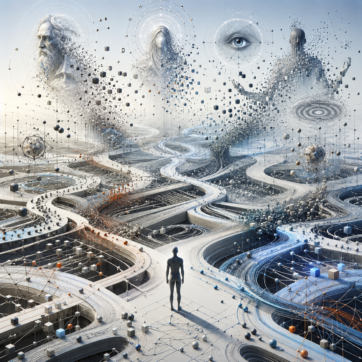
Before pressure behavior can be understood correctly, the system it is operating inside has to be seen clearly. Without that, every anomaly gets misread at the surface level, because you are only looking at the output layer and calling it the source. What humanity is inside is not a self-contained reality. It is an external architecture that generates a rendered experience field on top of deeper organizational mechanics. What people call “the world” is not the base layer—it is the visible translation layer. That distinction is not philosophical, it is structural, and it is the reason anomalies exist in the first place.
The render is what humans interact with and mistake for reality itself. Bodies, environments, objects, events, identities, time sequences—this is all the rendered layer. It behaves like a stable world, but it is not self-generating and not self-sustaining. It is a translated output. By the time anything is seen, touched, or experienced, it has already been processed through multiple layers of conversion. The nervous system translates, the mind translates, emotion translates, identity translates, and culture reinforces the translation. What is being experienced is not raw structure—it is the stabilized presentation of deeper movement converted into something the system can participate inside.
Underneath that is the pre-render. This is where organization actually occurs. Not symbolically, not spiritually—structurally. Pressure, pathways, probability alignment, curvature, torsion, distribution—all of that organizes before anything becomes visible. The render is not where things originate. It is where they appear after they have already been organized. This is why events seem to “happen” suddenly when in reality they have been building, routing, and aligning underneath visibility long before they surface. By the time something shows up in the render, it is already the result of pressure interacting with structure upstream.
This is critical for understanding anomalies because anomalies are not created at the visible level. They are the visible result of something failing or misaligning at the pre-render level. If pressure builds incorrectly there, you will not see the problem immediately. You will see the output of the problem when it finally cannot be held in the render anymore. That is why anomalies can appear sudden, but they are never random. They are delayed visibility of structural conditions that were already unstable.
On top of both of these sits the mimic layer. This is not the origin of the system, but it is an amplification layer that becomes more dominant as the architecture loses stability. The mimic does not correct instability—it multiplies participation around it. It increases emotional throughput, increases narrative formation, increases identity attachment, and increases interpretive noise. Instead of allowing instability to be seen cleanly, it floods the system with reaction, symbolism, and storyline. That is why modern reality feels saturated, fragmented, and hyperactive at the same time. It is not becoming more coherent—it is becoming more amplified.
The mimic layer matters directly for anomalies because it distorts how they are interpreted. Instead of being read as pressure-structure interaction, anomalies get turned into stories—external forces, entities, messages, meanings, interventions. The mimic reroutes structural failure into narrative immersion so the system stays engaged instead of recognizing what is actually happening. This is why people mislabel anomalies as supernatural or intentional. They are reading through the mimic, not through structure.
All of this sits inside the external architecture, which itself is not self-sustaining. It requires continuous motion, continuous pressure, continuous stabilization. That is why pressure is not optional—it is required at every level. The system cannot hold without it. The render cannot exist without it. The pre-render cannot organize without it. And when it misbehaves, nothing downstream can remain stable.
This is where the contrast with the Eternal becomes necessary, because without it, everything gets collapsed into the same system and misunderstood. The Eternal is not another layer of this architecture. It is not a higher render, not a deeper pre-render, not an advanced mimic. It is completely outside of the oscillatory system altogether. No pressure, no torsion, no curvature, no pathways, no stabilization requirement. It does not need to hold anything together because it is not divided into parts that require holding.
That distinction matters because it removes the common misread that anomalies are something “beyond” the system breaking in. They are not. They are internal failures of a pressure-based architecture that cannot fully sustain itself. If the Eternal were involved, you would not get distortion, misalignment, or unstable continuity—you would not get anomalies at all. Anomalies only exist where pressure is required and fails.
Understanding this full structure—pre-render organization, render output, mimic amplification, and the absence of pressure outside the system—is what allows anomalies to be read correctly. Without it, everything collapses into surface interpretation. With it, every anomaly can be traced back to one thing: pressure interacting with structure in a system that cannot fully hold itself together.
The System Is Pressure-Based at Every Level
Nothing in the external system operates without pressure. There is no layer where it drops out, no object that bypasses it, no sequence that runs independently of it. Pressure is not something applied occasionally or triggered under stress conditions—it is the constant that allows anything to exist in a defined position at all. What appears solid, continuous, and stable is not self-supporting. It is being held in place through pressure behavior at every point, across every pathway, without interruption.
Pressure is not an added force acting on an already complete system. It is the condition that makes the system possible in the first place. The moment structure is externalized into distinct positions—objects, environments, sequences—it loses the ability to sustain its own coherence. Separation introduces instability. Pressure is what compensates for that instability. It holds boundaries, enforces spacing, maintains timing, and keeps sequences from collapsing or overlapping uncontrollably. Without it, there is no persistence, no continuity, no recognizable structure—only breakdown.
Every object you can point to, every environment you move through, every sequence that appears to unfold in order is being actively maintained through pressure. Not symbolically—mechanically. Distribution patterns determine where stability holds and where it weakens. Alignment determines whether pathways carry clean continuity or begin to distort. Load determines whether structure can sustain what is being imposed on it or begins to fail under it. Nothing is exempt from this. There is no “natural” stability underneath it. What you are looking at is the result of continuous pressure regulation holding everything in place.
Because of that, any shift in pressure is a shift in structure. If pressure moves, redistributes, concentrates, or misaligns, the structure it is holding cannot remain unchanged. It will adjust, distort, overlap, or break depending on how that shift occurs. If pressure fails entirely at a given point, structure does not degrade slowly—it loses its ability to hold. Continuity fractures. Position becomes unreliable. Sequence stops lining up. What was appearing stable no longer can be maintained in the same form.
This is why no anomaly exists outside of pressure behavior. There is no separate category, no external cause operating independently. Every anomaly—whether it presents as a sudden event, a subtle distortion, a timing irregularity, or a full structural break—traces directly back to pressure interacting with structure in a way that can no longer maintain stability. Strip away the interpretation, and what remains is always the same: pressure shifted, and structure responded.
The Six Core Behaviors of Pressure
To understand anomalous activity correctly, pressure cannot be reduced to a single function. It is not just something that “builds up and releases.” That is the most obvious expression, so it is the one people fixate on, but it is only one part of a much larger operational range. Pressure is continuously active, and it behaves in distinct ways depending on what the system requires and what the structure can support. If you don’t account for the full range, you will misread most anomalies because you’ll only recognize the ones that explode instead of the ones that quietly fail.
Pressure builds as accumulation toward a threshold. This is not random increase—it is directional, tied to areas where structure requires reinforcement or where load is being carried without sufficient distribution. As pressure builds, it is preparing the system either for stabilization or for failure, depending on whether that buildup can be supported. If the structure can hold it, the buildup reinforces continuity. If it cannot, that same buildup becomes the precursor to breakdown.
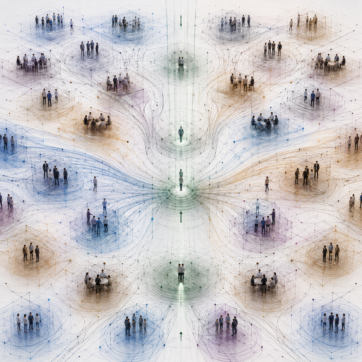
Pressure distributes by routing itself across pathways to maintain balance. This is how the system avoids collapse under uneven load. Distribution is what keeps one area from overloading while another remains under-supported. It is a constant reallocation process, moving pressure where it is needed to maintain coherence across the entire structure. When distribution is clean, the system appears stable. When it is uneven or obstructed, instability begins to form even before anything visibly breaks.
Pressure misaligns when it no longer matches the structure it is meant to hold. This is where things start to go off without any dramatic release. The pressure is still present, still active, but it is not correctly positioned relative to pathways, curvature, or sequencing. When this happens, structure does not collapse immediately—it distorts. Pathways overlap, positions shift, and continuity begins to drift. This is the origin of many subtle anomalies that are often dismissed because nothing “happens” in an obvious way.
Pressure overloads when the amount being held exceeds what the structure can sustain. At this point, the system is no longer balancing—it is exceeding capacity. Overload creates strain across pathways, compresses regions beyond their tolerance, and pushes the system toward a breaking point. Whether that results in release, distortion, or fragmentation depends on how the overload interacts with the surrounding structure, but the condition itself is always the same: too much pressure for the structure to hold.
Pressure releases as the discharge of accumulated load. This is the category most people recognize because it presents clearly—something snaps, bursts, collapses, or discharges. Torsion knots give way, compressed pathways open, scalar fields drop out. It is sudden, forceful, and visible. But it is not a separate phenomenon—it is the outcome of prior buildup, misalignment, and overload reaching a point where continuation is no longer possible.
Pressure fails to stabilize when it cannot maintain continuity at all. This is not about buildup or release—it is about the system losing its ability to hold structure in a coherent sequence. When stabilization fails, continuity breaks down. Timing slips, positions become unreliable, pathways do not carry clean progression, and the system cannot maintain a consistent output. This is where anomalies become less about single events and more about persistent instability across sequences and environments.
All anomalous activity originates from one or more of these behaviors interacting with structure. There is no anomaly outside of this range. Whether it presents as something sudden and explosive or subtle and disorienting, the underlying cause is always pressure behaving in one or more of these ways in relation to a structure that cannot fully hold it.
Why “Explosive Events” Are Only One Category
One of the biggest misidentifications people make when trying to understand anomalous activity is assuming that only the most dramatic events qualify as real anomalies. The sudden ones. The ones that feel like something snapped, burst, or broke open. Those get attention because they are unmistakable. You don’t have to interpret them. You don’t have to question if something happened. The system makes it obvious.
These are the moments where pressure reaches a point it can no longer be contained and releases in a way that forces visibility. Torsion knots snap after holding rotational tension beyond what the structure can sustain. Compressed pathways discharge when accumulation has nowhere else to go. Scalar fields collapse when artificial stillness can no longer hold under load. When these occur, the presentation is immediate—sudden, forceful, and undeniable. There is no subtlety in it. The system loses its ability to mask what is happening, and the release becomes visible as an event.
Because these are so clear, they become the reference point. People anchor their understanding of anomalies around these types of moments and assume that this is what defines anomalous activity. If it doesn’t explode, snap, discharge, or collapse in a visible way, it gets dismissed or miscategorized. That is where the misread locks in.
These events are not the majority. They are simply the most visible outcomes of pressure behavior. They sit at one end of the spectrum where accumulation has reached a breaking threshold and cannot be maintained any longer. But most pressure interaction does not reach that point. Most of the time, the system is not releasing—it is trying to hold, redistribute, or correct. And when it fails in those processes, it does not always produce a clean, explosive event.
What happens instead is quieter but just as structural. Misalignment, distortion, overlap, and continuity failure do not require a dramatic release to occur. They happen when pressure is still active but no longer correctly matched to the structure it is supposed to hold. There is no snap, no burst, no obvious discharge—just a system that cannot line up or stabilize the way it normally does.
The fixation on explosive anomalies creates a blind spot. It trains perception to only recognize failure when it is loud. But the system does not only fail at the point of release. It fails at the point of misalignment, at the point of uneven distribution, at the point where continuity starts to slip before anything breaks open. Those failures are happening far more often, but they are overlooked because they do not present with the same intensity.
If you only look for what explodes, you miss what is already breaking.
Misalignment: When Nothing Explodes but Everything Is Off
Once you move past the obvious category of explosive release, the real pattern of anomalous activity starts to come into view—and it looks very different. Most anomalies are not driven by pressure reaching a breaking point and discharging. They are driven by pressure still being active, still moving, still attempting to hold structure—but no longer aligned with what it is supposed to stabilize. This is where the system doesn’t snap. It slips.
Misalignment means pressure and structure are no longer matching each other correctly. The pathways are still there, the load is still being carried, the system is still trying to maintain continuity—but the positioning is off. That “off” does not need to be large to create instability. Even slight misalignment can disrupt how sequences hold, how positions stabilize, and how continuity flows through the system. The result is not a dramatic event. It is a system that cannot fully line up with itself.
Pathway overlap is one of the clearest expressions of this. When pressure is misrouted or distributed across pathways that should remain distinct, those pathways begin to intersect. That intersection creates bleedthrough—elements from one sequence appearing within another, fragments crossing where they should not, continuity blending instead of staying contained. Nothing explodes. There is no visible break. But the system is no longer cleanly separated, and that produces the kinds of anomalies people describe as overlapping realities or partial duplication.
Uneven distribution produces a different kind of instability. Here, pressure is not where it needs to be in equal proportion. Some areas are carrying too much load while others are under-supported. The structure doesn’t collapse immediately—it distorts. Warping begins. Movement becomes irregular. What should hold straight begins to bend, stretch, or compress in ways that don’t match the intended structure. Again, nothing releases. The system is still holding, but it is holding incorrectly.
Sequencing pressure failure affects continuity directly. Pressure is what enforces timing and order. When it cannot maintain that sequencing cleanly, continuity slips. This is where time irregularities originate—not because time itself changes, but because the pressure maintaining sequence cannot keep events aligned in proper order. The result is discontinuity, gaps, overlaps in progression, or the sense that sequence itself is unstable. There is no single moment of failure. It is a breakdown in the system’s ability to carry progression smoothly.
Curvature misrouting creates displacement. Pressure follows curvature to move through structure. When that routing is off, pressure arrives in positions it was not meant to stabilize. That produces misplacement—things appearing where they should not, positions not matching expected location, structure holding in the wrong place relative to everything else. Nothing bursts. Nothing collapses. It simply does not line up spatially.
This entire category shares one defining characteristic: nothing dramatic happens in the way people expect. There is no singular event to point to, no clean moment of release to identify. The system continues operating, but it does so out of alignment. And that is enough to produce visible anomalies.
The mistake is assuming that if nothing exploded, nothing failed. In reality, the system fails just as often through misalignment as it does through release. The difference is that misalignment doesn’t announce itself. It shows up as inconsistency, distortion, overlap, or discontinuity. The structure is still there. The pressure is still active. But they are no longer working together in a way that can maintain a stable result.
When Pressure Fails the Masking Function
Pressure does more than hold structure in place. It also performs a second function that is just as critical but far less recognized—it masks instability. The system does not present its raw condition directly. It presents a stabilized version of itself, and pressure is what makes that possible. It smooths irregularities, maintains visual and positional coherence, and keeps the deeper mechanics from becoming visible at the surface level. What people experience as a continuous, stable environment is not just being held together—it is being actively concealed in terms of how unstable it actually is underneath.
The render depends on this masking function to maintain the appearance of reality as something clean, consistent, and reliable. Without it, the underlying structure would not present as a coherent world. It would show its fragmentation, its misalignment, and its constant need for correction. Pressure keeps those conditions hidden by enforcing alignment strongly enough that the instability does not break through into visible experience. It does not eliminate the instability—it suppresses its visibility.
When pressure is functioning correctly, masking is seamless. The system appears stable even when it is not. But when pressure shifts into conditions it cannot regulate cleanly, masking begins to weaken. This happens when pressure becomes too high, too uneven, or improperly routed. At that point, it is no longer able to both hold structure and conceal instability at the same time. One function starts to fail, and what fails first is often the masking.
When pressure is too high, the load overwhelms the system’s ability to maintain a smooth presentation. The structure may still be held in place, but the excess pressure begins to push instability closer to visibility. When pressure is too uneven, some areas are over-supported while others are under-supported, creating inconsistencies in how masking is applied across the system. When pressure is improperly routed, it reinforces the wrong areas and leaves the correct ones exposed. In all of these cases, the system loses its ability to fully conceal what is happening underneath.
The result is not always a full breakdown. It is partial visibility. Pieces of the underlying structure begin to show through. Glitches appear—small breaks in continuity where the masking slips. Environmental inconsistencies emerge—things that do not quite match, do not hold perfectly, or do not behave the way they normally would. The system is still operating, but the layer that keeps it looking stable is no longer fully intact.
This is the point where people begin to sense that something is off without being able to identify why. There is no clear event, no obvious cause, no dramatic failure. Just inconsistencies that should not be there if the system were fully stable. That perception is not coming from nowhere. It is the direct result of masking weakening under pressure conditions that can no longer support both stability and concealment at the same time.
What is being seen in those moments is not something being added to reality. It is something no longer being successfully hidden.
Continuity Breakdown: Where Stability Cannot Be Maintained
Continuity is the core requirement of a stable render, and it is one of the most misunderstood aspects of how this system functions. People assume continuity is natural—that events move forward in order because that is just how reality works. That is not what is happening. Continuity is enforced. It is actively maintained across every sequence, every position, every transition. Without that enforcement, there is no consistent experience of time, no reliable progression, no stable positioning. The entire sense of a world unfolding in order depends on continuity being held in place.
Pressure is what makes that possible. It is what maintains sequence, regulates timing, and locks coherence across movement. It ensures that one moment follows another in a structured way, that positions remain where they are supposed to be relative to everything else, and that progression does not fragment. Without pressure maintaining that alignment, the system cannot sustain a continuous output. It begins to break apart at the level of sequence itself.
When pressure can no longer sustain continuity, the failure does not always present as something dramatic. It presents as fragmentation. Sequences stop carrying cleanly from one point to the next. Instead of a smooth progression, there are breaks, gaps, or overlaps where continuity should be intact. Events no longer feel fully connected because the structure linking them is weakening.
Timing slips under the same conditions. Pressure is what regulates pacing—how movement is distributed across sequence. When that regulation fails, timing becomes unstable. Things appear too early, too late, or out of order relative to how they should align. This is where anomalies that get labeled as “time issues” actually originate. It is not time changing as an independent force. It is the pressure maintaining sequence losing its ability to keep everything aligned in proper progression.
Positions begin to shift as well. Continuity is not only about timing—it is also about spatial coherence. Pressure holds position in relation to sequence. When that breaks down, placement becomes unreliable. Things are not where they should be relative to the rest of the structure. That creates displacement, subtle or pronounced, depending on how severe the breakdown is.
This is the deeper layer behind many anomalies that people try to categorize as time distortion or location inconsistency. What they are actually seeing is continuity failing under pressure conditions that can no longer maintain sequence, timing, and position simultaneously. There is no need for an external cause to explain it. The system is losing its ability to carry progression cleanly.
Nothing new is being introduced in those moments. What is happening is that the mechanism responsible for holding everything together across sequence is no longer functioning correctly. And when continuity breaks, even slightly, the entire experience of reality begins to destabilize with it.
Why Anomalies Are Increasing
Anomalies are not increasing because something new has been introduced into the system. They are increasing because the system is reaching conditions it can no longer manage cleanly. Pressure is not just present—it is accumulating faster than the architecture can properly distribute, align, and stabilize. That is the shift. The system is under strain, and that strain is structural, not situational.
As pressure builds across the architecture, pathways begin to congest. They were never designed to hold infinite load—they rely on continuous distribution to maintain balance. When that distribution cannot keep up with accumulation, pressure starts stacking in ways the structure cannot cleanly route. Stabilization becomes harder at every level because the system is no longer working with manageable conditions. It is working against increasing compression.
When that happens, misalignment naturally increases. Pressure cannot stay precisely matched to structure when it is being forced through congested pathways under load. It begins to slip, reroute, and attach to areas it was not meant to stabilize. The system is still attempting to hold, but it is doing so with less precision and more strain. That produces more frequent instances where things do not line up the way they are supposed to.
Overlap becomes more common under these conditions as well. When pressure cannot maintain clean separation between pathways, those pathways begin to intersect. Boundaries weaken, and distinct sequences start to bleed into one another. This is not a rare occurrence when the system is under load—it becomes a natural consequence of congestion and misrouting. The more pressure builds without proper distribution, the harder it becomes to keep structures isolated from each other.
At the same time, masking begins to weaken. Under normal conditions, pressure not only holds structure but conceals instability effectively. Under strain, it cannot maintain both functions at full strength. The system prioritizes holding over hiding, and even that begins to falter as compression increases. The result is more visible inconsistencies, more glitches, more moments where the system cannot fully present a clean, stable surface.
All of this is happening simultaneously. Pressure is building faster, distributing less cleanly, misaligning more often, and failing to mask instability at the same level it once did. That combination creates an environment where anomalies naturally increase—not as isolated incidents, but as a direct outcome of system-wide strain.
This is not random. It is escalation. The architecture is being pushed toward conditions it cannot fully stabilize, and the increase in anomalies is the visible result of that pressure exceeding what the system can manage.
The Core Misread: Interpreting Mechanics as Meaning
The most consistent mistake people make when encountering anomalous activity is not in what they see—it is in how they interpret it. The moment something does not line up, the system does not hold cleanly, or an inconsistency appears, the human response is immediate translation. Instead of reading structure, the mind assigns meaning. It turns a mechanical condition into a narrative.
Intention gets assigned first. Something must have caused this on purpose. Intelligence follows. Something must be directing or controlling what is happening. Then external origin—this must be coming from outside the system, something entering, interfering, or interacting with reality from beyond it. These interpretations feel natural because the human perceptual system is built to translate everything into story, identity, and meaning. But in this case, that translation is incorrect.
What is actually happening is far simpler and far more structural. Pressure is interacting with structure under conditions of instability. That is it. No message, no intention, no intelligence behind the event itself. Just a system that is not holding cleanly and is exposing that failure in different ways depending on how pressure is behaving at that moment.
The problem is that the visible result can feel deliberate. When something appears out of place, when timing shifts, when overlap occurs, or when the environment does not match expectations, it triggers pattern recognition. The mind tries to organize the inconsistency into something understandable, and the easiest way to do that is to assume meaning. But the system is not producing meaning. It is producing output under strain.
This is where the misread locks in. Instead of recognizing instability, people begin building explanations around intention. They construct narratives to explain what they are seeing—whether that is external forces, hidden intelligence, or some form of communication. But those narratives are being layered on top of mechanical failure. They do not come from the system itself. They come from the translation layer trying to make sense of something it was never designed to interpret directly.
It has to be stated cleanly: the system is not communicating. There is no encoded message inside these events. There is no guiding force expressing itself through anomalies. What is being observed is a breakdown in how pressure is holding, aligning, and stabilizing structure. The system is not sending a signal. It is failing to maintain coherence in the way it normally does.
When that is understood, the need to interpret drops out. What remains is the actual condition: pressure interacting with structure in a system that cannot fully sustain itself under increasing strain.
Closing — The Correct Frame
Anomalous activity has been miscategorized from the beginning because it has been defined by how it looks instead of what it is. The visible presentation—whether sudden, subtle, distorted, or disjointed—has led people to group anomalies based on appearance rather than cause. That is why the understanding stays fragmented. The system is not producing different kinds of anomalies from different origins. It is producing different expressions of the same underlying condition.
Anomalous activity is not limited to explosive pressure release. It is any point where pressure can no longer correctly hold, align, or stabilize externalized structure. That definition removes the confusion immediately because it does not depend on how dramatic the outcome is. It applies to the full range—buildup, misalignment, overlap, distortion, masking failure, and release. All of it traces back to the same requirement: pressure maintaining a system that cannot sustain itself.
From that position, the misreads fall away. These events are not random. They follow structural conditions that can be tracked and understood. They are not external. Nothing is entering the system to create them—they are generated from within the architecture itself. They are not symbolic. There is no hidden meaning embedded in them, no message being delivered through them. What is being seen is not interpretation—it is exposure.
That is the correct frame. Anomalies are structural exposure.
What people are witnessing is not something being added to reality. Nothing new is appearing from outside. What is happening is that the system is losing its ability to maintain the version of reality they are used to holding. The stability, the alignment, the continuity, the masking—those functions are weakening under pressure conditions the architecture cannot fully manage.
And when that happens, the structure does not disappear. It shows.