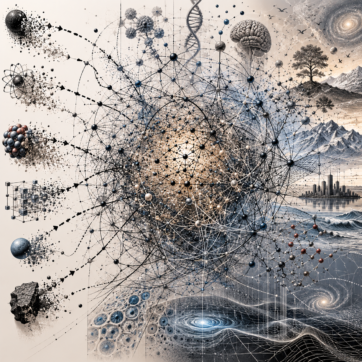
Building a Different Model of Investigative Journalism Through Present-Day Intervention and Architectural Research
The False Assumption About Journalism
Journalism has been reduced to a function that was never meant to be its endpoint. A story occurs, information is gathered, sources are contacted, records are pulled, a narrative is constructed, and the findings are published. Once the article is released, the cycle is considered complete. Report → publish → move on. This sequence has become so normalized that it is rarely questioned. It is treated as the full scope of the profession, rather than a narrow slice of what investigative work is actually capable of doing.
Within this model, exposure is often mistaken for resolution. A story breaks, the public reacts, institutions issue statements, and for a brief moment there is the appearance of accountability. But in most cases, the system that produced the event remains structurally intact. The same pressures, the same decision-making pathways, the same internal protections, the same patterns of behavior continue operating beneath the surface. The event is acknowledged, but the mechanism that generated it is left untouched.
This is where the assumption breaks down. Reporting is not intervention. Documentation is not disruption. Visibility is not correction. A system does not reorganize simply because it has been seen. It reorganizes when pressure is applied while it is still active, when exposure occurs at a point where response is still required, when the structure cannot simply absorb the information and continue forward unchanged.
When journalism functions only as documentation, it becomes part of the same cycle it is attempting to reveal. It records the outcome after it has already occurred, translates it into narrative, distributes it through media channels, and then yields to the next event. The system continues producing similar outputs, and each output is treated as a separate story rather than evidence of an ongoing structural condition.
Elumenate Media was not built on that assumption. The work begins from a different position entirely: that exposure without disruption changes nothing. If the structure remains intact, the pattern remains intact. If the pattern remains intact, the outcome will repeat. The objective is not simply to report what has already happened, but to identify when and where a system is still active, expose it at the point where it can still be influenced, and apply pressure before the event becomes a fixed historical record.
The Disposable News Cycle
The modern news environment is built on constant movement. Headlines do not settle—they rotate. One story replaces another before the previous one has even been fully understood. Information is pushed forward at speed, not depth. The emphasis is not on resolution, but on continuation of the cycle itself.
This creates a condition where attention is continuously redirected rather than sustained. A story captures focus for a brief window, generates reaction, circulates across platforms, and then is displaced by the next event demanding visibility. The underlying issue does not resolve within that timeframe. It is simply moved out of view. Public awareness shifts, but the structure that produced the event remains in place, continuing to operate without sustained pressure.
Investigations, under this model, are compressed into moments. A complex system is reduced to a headline. A pattern unfolding over years is presented as a single incident. A structural failure is framed as an isolated occurrence. Even when follow-up reporting exists, it is often disconnected from the original investigation, treated as a separate update rather than part of an ongoing process that requires continuous examination.
This fragmentation prevents continuity. Without continuity, patterns remain unrecognized. Without pattern recognition, systems remain protected. The same institutional behaviors reappear across different contexts, and each instance is treated as new rather than as part of an existing structure that has not been interrupted.
The result is not just incomplete understanding—it is structural reinforcement. When coverage disappears, pressure disappears. When pressure disappears, systems stabilize. What appears to be exposure becomes absorption. The event enters the record, but the mechanism that generated it continues forward without disruption.
The cycle sustains itself by keeping attention in motion. Elumenate operates by doing the opposite—holding attention in place long enough to see what is actually there, tracking the system beyond the headline, and continuing the investigation until the structure itself becomes visible.
The Illusion of Isolated Events
Most events are presented as singular incidents. A scandal breaks. A failure is exposed. A conflict emerges. The reporting focuses on the immediate circumstances—the people involved, the timeline, the evidence, the outcome. It is framed as something that happened in a specific place, at a specific time, involving a specific group of individuals.
But that framing is incomplete.
What appears as an isolated event is often the visible output of a repeating structure. The same types of institutional failures appear across entirely different industries. The same breakdowns in accountability emerge in government, corporate systems, healthcare, education, media, and local communities. The same patterns of suppression, misdirection, protection, and delayed response reoccur with different names attached to them.
These are not coincidences. They are not anomalies. They are patterned outputs.
When viewed through a narrow lens, each event looks separate. When viewed structurally, the similarities become unavoidable. The sequence may vary slightly, the language may change, the scale may differ, but the mechanics underneath remain consistent. A system produces an outcome, absorbs the exposure, stabilizes, and continues until the next iteration surfaces.
Traditional journalism rarely connects these points. Stories are assigned to categories, locations, and beats. Coverage is segmented by industry, by geography, by topic. A corporate issue is treated differently from a government issue. A local story is separated from a national one. A past event is disconnected from a present one. This segmentation reinforces the illusion that events are independent, when in reality they are often expressions of the same underlying structure operating in different environments.
Without connecting these events, the pattern remains hidden. Without recognizing the pattern, the system remains intact. Each new incident is treated as unexpected, even though the conditions that produced it have already been observed repeatedly.
Elumenate operates from the opposite position. Every event is examined not only for what it is, but for what it reflects. The question is not simply, “What happened here?” but “Where else is this happening, and what is generating it?” When those connections are made, the illusion of isolated events collapses, and what remains is the structure that has been producing them all along.
What Traditional Investigation Misses
Traditional investigation is built around reconstruction. It gathers the timeline, identifies the actors, verifies the evidence, and assembles a coherent sequence of events. This process is necessary. Without it, there is no record, no accountability, no foundation to stand on. But in most cases, the investigation stops there.
The focus remains on what can be documented: who did what, when it happened, what evidence exists, and how the event unfolded. The outcome is a completed narrative—something that explains the incident clearly enough to be understood, published, and absorbed into the public record. The structure is considered “covered” once the sequence is known.
But that level of investigation only operates at the surface.
It reconstructs the event without identifying the conditions that produced it. It explains what happened without examining why the same type of event continues to appear across different systems. It isolates the incident rather than tracking the pattern. Once the story is complete, the investigation closes, even though the mechanism that generated the event remains active and capable of producing the same outcome again.
A corruption case is explained, but the structural conditions that allow corruption to repeat are not mapped. A failure is documented, but the recurring pathway that leads to that failure across institutions is not followed. A system is exposed, but not tracked across other environments where it may be operating in slightly altered forms. Each investigation stands alone, even when it is clearly part of something larger.
Without tracking recurrence, there is no interruption of pattern. Without identifying what produces the event, the event will repeat. Traditional investigation reveals the instance. It rarely follows the structure.
The Missing Layer
At the center of investigative work, there is a divide that is almost never acknowledged.
On one side is the question journalism has always asked: What happened?
On the other side is the question that is rarely pursued: What generated it?
Most investigation ends once the first question is answered. The event is reconstructed, the sequence is understood, the responsible parties are identified, and the story is considered complete. But that completion is only partial. It explains the instance without identifying the mechanism that produced it.
This is where the missing layer exists.
Beneath every visible event, there are structural mechanics at work—patterns of pressure, pathways of decision-making, repeated configurations that shape how systems behave. These mechanics do not appear directly in the narrative of the event. They are not always recorded in documents or captured in interviews. But they are what allow similar outcomes to emerge again and again across different environments.
What appears on the surface as a single incident is often part of a series of recurring outputs. The details shift. The people change. The setting evolves. But the underlying structure produces variations of the same result. A failure repeats under new conditions. A breakdown reappears in a different institution. A pattern resurfaces where it was not expected, but should have been recognized.
From this position, events are no longer viewed as isolated or random. They are understood as outputs—produced by underlying configurations that continue operating whether they are recognized or not.
Without identifying those configurations, investigation remains incomplete. It documents what was produced, but not what produced it. It captures the outcome, but not the mechanism. It explains the event, but leaves the pattern intact.
The missing layer is the shift from observing events to reading the structure that generates them. Once that layer is included, the investigation no longer ends with what happened—it extends into why it continues to happen, and where it will appear next if nothing interrupts it.
Eternal Flame Physics
Human perception is not a direct read of reality. It is a translation system.
What is experienced in the moment is not the structure itself, but a converted version of it—filtered through sensation, interpretation, identity, emotion, memory, and narrative construction. The system compresses, substitutes, and sequences what is present into something the human interface can process. By the time something is consciously recognized, it has already been translated.
This has consequences.
Memory is not fixed because it is not a recording. It is a reconstruction. Each time an event is recalled, it is reassembled through the current state of the system—current beliefs, current identity, current emotional condition, current context. Narrative is not neutral. It is built, adjusted, reinforced, and stabilized over time. What is remembered is not the original structure, but the translated version that has been repeatedly processed.
Journalism operating only within this translated layer is working with outputs that have already been altered. It relies on memory, testimony, documentation, and recorded sequence—all of which are necessary, but all of which exist downstream from the original structure that generated the event. The further away from the moment of occurrence, the more layers of translation accumulate.
This is where Eternal Flame Physics® enters directly.
It does not begin with narrative. It does not begin with interpretation. It does not begin with identity or emotional framing. It focuses on the structural mechanics that exist prior to translation—before the event becomes memory, before it becomes story, before it becomes history.
The work tracks pre-event structure: the conditions in place before an outcome occurs. It examines pattern generation: how specific configurations repeatedly produce similar outputs. It follows systemic recurrence: how those outputs reappear across different systems, environments, and timeframes. And it reads the underlying architecture: the organization beneath perception that continues operating regardless of whether it is recognized.
From this position, events are not treated as isolated or interpretive experiences. They are read as produced outputs of a structure that can be observed, tracked, and, when engaged at the correct point, interrupted.
Without this layer, investigation remains confined to what has already been translated.
With it, the work extends to what is actually generating what people later attempt to describe.
Why History Breaks Down
History is not a clean record of reality. It is a layered reconstruction built from what remains after an event has already passed through multiple stages of translation.
At the moment something occurs, the structure is active. Conditions are in motion. Decisions are being made. Pressure is being applied. That is the only point at which the system can be directly observed in its full configuration. From that moment forward, the original structure begins to move out of reach.
Memory shifts first. It does not store events as fixed records. It reassembles them. Each recall passes through the current state of the individual—current identity, current understanding, current emotional context. Over time, memory becomes less of a direct reference and more of a stabilized interpretation that feels consistent, but is no longer structurally exact.
Records begin to fragment. Some are never created. Some are incomplete. Some are altered. Some are lost. Documentation captures portions of an event, not the full structure. What remains accessible later is only a partial trace of what was originally present.
Institutions rewrite. Official accounts are produced. Language is adjusted. Responsibility is reframed. Over time, these versions stabilize into accepted narratives. Once stabilized, they are rarely questioned at the structural level. They become the reference point, regardless of how closely they reflect the original conditions.
As this process continues, reconstruction replaces observation. Investigators are no longer reading an active system. They are assembling fragments—memory, records, narratives, reports—into a version of what likely occurred. That reconstruction may be accurate in parts, but it is inherently removed from the original structure that generated the event.
The further from the event, the more translation layers accumulate.
Each layer adds distance.
Each layer reduces structural clarity.
What began as a directly observable configuration becomes a translated, interpreted, stabilized version of itself. The event is still there, but it is no longer being read at the level it originally existed.
This does not make historical investigation meaningless. It defines its limitation.
Elumenate recognizes that limitation and operates accordingly. Wherever possible, the work focuses on systems while they are still active—before memory stabilizes, before records fragment, before narratives lock, and before reconstruction replaces direct observation.
Present-Day Is the Only Clean Access Point
There is only one point at which a system can be read without distortion: while it is still active.
When a structure is operating in real time, nothing has fully stabilized yet. The conditions are visible as they are, not as they will later be remembered. Evidence is not yet reduced to fragments—it is still forming, still being created, still accessible in its original state. Records are being generated in sequence rather than reconstructed after the fact. The people involved are still in position, still making decisions, still responding to pressure. The system has not yet had time to absorb exposure and reorganize itself into a controlled narrative.
This is the only point where direct observation is possible.
Once the system moves into the past, translation begins. Memory shifts, records fragment, narratives form, and reconstruction replaces what was once directly observable. But in the present, the structure is still open. It can still be read in motion. It can still be engaged at the level where it is actually producing outcomes.
This is also the only point where pressure has real effect.
When a system is active, it is responsive. Exposure is not just information—it becomes force. It can compel response, disrupt internal pathways, surface additional evidence, and bring forward individuals who would not have spoken otherwise. The system cannot simply absorb the information without consequence because it is still in the process of operating.
This is where interruption is possible. This is where exposure has impact beyond awareness. This is where trajectory can still shift before it stabilizes into history.
Once that window closes, the structure becomes something to reconstruct rather than something to influence. Elumenate operates within that window.
Journalism as Intervention
Journalism, as it is commonly practiced, is positioned as an observer. It documents, records, verifies, and publishes. It looks backward at events that have already occurred or stabilizes them into a narrative once they have reached a level of visibility. In that form, it functions as a historical layer—something that describes what has already taken place.
That is not the role being defined here.
Journalism, when operating inside an active system, is not passive. It is not neutral in effect. It is not separate from the structure it is examining. The moment information is introduced into a live system—accurate, verifiable, publicly accessible information—it alters the conditions within that system. It introduces pressure. It forces pathways to respond that would otherwise remain concealed.
This is the difference between documentation and intervention.
Historical reconstruction looks at a structure after it has already stabilized. Intervention occurs while the structure is still in motion. It does not wait for the system to resolve on its own. It engages it while it is still producing outcomes.
Real-time exposure has force because it enters the system before it has closed.
It can force response from individuals and institutions that would otherwise remain silent. It can preserve evidence that might later be altered, removed, or lost. It can trigger additional witnesses to come forward once they recognize that what they observed is not isolated. It can destabilize structures that rely on obscurity, fragmentation, or delayed visibility to maintain control.
This is not theoretical. It is mechanical.
A system that is operating depends on controlled flow—of information, of perception, of access, of narrative. When that flow is disrupted at the right point, the system is no longer able to operate in the same contained way. It must respond, adapt, or expose more of itself in the process.
Journalism, in this position, is no longer simply describing the system. It is interacting with it.
It becomes a point of pressure inside a live structure. And when that pressure is applied before the system stabilizes into history, the outcome is no longer fixed.
Who Actually Makes This Possible
None of this work exists without the people who step forward.
Every investigation, every exposure, every disruption of a system begins with someone who decides to introduce information that was not meant to be seen. That person is often labeled in limited ways—“survivor,” “whistleblower,” “witness”—but those labels do not fully capture the role being performed. The common factor is not identity. It is action.
They are the point at which hidden information enters the visible field. They are the point where a closed system is forced open. They are the ones who introduce disruption into structures designed to contain, redirect, or suppress what they know.
This applies across every type of investigation. A survivor speaking about abuse within an institution. An employee exposing internal misconduct. A professional revealing regulatory failure. A community member documenting environmental harm. A source providing records that contradict an official narrative. Different positions, same function: introducing information that alters the system.
That action carries consequence.
Financial risk appears immediately. Employment can be threatened or lost. Income becomes unstable. Opportunities narrow. In many cases, the ability to sustain basic living conditions becomes uncertain.
Social risk follows. Relationships shift. Isolation increases. Communities that once felt stable can turn hostile or distant. The act of coming forward can separate someone from the very networks they relied on.
Professional risk compounds the impact. Reputations are challenged. Credibility is questioned. Future employment becomes more difficult. Entire career paths can be altered by a single decision to speak.
Legal risk sits alongside all of it. Threats of litigation, actual legal action, and prolonged legal processes create additional pressure—financially, emotionally, and structurally. Even when someone is acting in the public interest, the systems being exposed often have far greater resources to respond.
This is the cost of introducing disruptive information into an active system. It is not abstract. It is not symbolic. It is structural.
Without these individuals, there is no investigation. Without the information they carry, the system remains closed. Without the disruption they initiate, the structure continues operating without resistance.
They are not secondary to the work. They are what makes the work possible.
Why Most People Don’t Come Forward
The absence of information is often misread as the absence of truth.
It is not.
In most cases, what appears as silence is not a lack of evidence, a lack of experience, or a lack of credibility. It is the result of structural consequence. People do not remain silent because nothing happened. They remain silent because of what happens to them if they speak.
The moment someone introduces disruptive information into an active system, the system responds. Not always visibly at first, but structurally. Pressure is redirected back toward the individual. Stability is threatened. What looks like a simple decision to “come forward” is, in reality, an entry point into a cascade of consequences that most people can already anticipate before they ever act.
The risks are immediate and concrete.
Employment can be lost or quietly removed. Income becomes unstable. Financial pressure builds quickly, often without warning. At the same time, social structures begin to shift. Relationships change. Support systems weaken. Isolation increases, sometimes subtly, sometimes all at once.
Retaliation does not always appear as a single event. It can take the form of credibility attacks, reputational damage, professional exclusion, delayed opportunities, or continuous low-level resistance that compounds over time. The individual becomes the point of pressure, while the system redistributes itself around the disruption.
Instability follows.
Housing, healthcare, career trajectory, and long-term security can all be affected by a single decision to speak. For individuals supporting families, the calculation becomes even more complex. The cost is not carried alone.
This is why most people do not come forward. Not because they lack information. Not because they lack courage. Because the structure they are stepping into is designed to make that decision costly.
The phrase “just speak out” ignores this entirely. It reduces a structural reality to a personal choice, as if the only variable is willingness. In reality, the system itself creates the barrier. It ensures that coming forward is not just an act of disclosure, but an act that carries measurable consequence.
Understanding this is not optional. It is foundational.
Without it, the absence of voices is misinterpreted, and the systems that depend on that silence remain protected.
The Elumenate Voices Fund
The Elumenate Voices Fund is not an add-on, and it is not positioned as charity. It is not branding, and it is not designed to become another institutional structure that feeds itself. It exists because investigative work, when done in real time, creates consequence—and without addressing that consequence directly, the system remains self-protective.
Every time someone introduces disruptive information into an active system, that system responds. Exposure does not occur in isolation. It alters conditions. It creates pressure. And that pressure does not stay contained within the institution being examined—it is redirected toward the individual who made the information visible.
The function of the fund is direct.
It stabilizes individuals after disruption. It allows continuation after exposure. It reduces the suppression that occurs when consequence becomes too costly to sustain. Without that stabilization, many disclosures never occur, not because the information does not exist, but because the structural cost of introducing it is too high.
This is not theoretical. It is mechanical.
If coming forward leads to immediate financial instability, loss of work, or sustained pressure without support, the system reinforces silence. If that consequence is reduced, the system loses part of its ability to suppress information before it surfaces.
The fund exists to operate at that exact point.
Its core principle is simple and non-negotiable: resources go directly to the people they are intended to support. There is no extraction layer built into its design. It is not structured to generate executive income, administrative expansion, or internal overhead that diverts purpose away from function. The intention is to keep it clean—transparent, direct, and structurally aligned with the reason it exists.
The Elumenate Voices Fund is not separate from the investigative work. It completes it.
Journalism exposes the system while it is active. The fund supports the individual who made that exposure possible. Without both, the structure remains unbalanced. With both, the conditions shift.
What Elumenate Actually Is
Elumenate is not confined to a single category. It is not just journalism, and it is not just research. Attempting to define it as one or the other immediately limits what it is built to do.
At the visible level, Elumenate operates as investigative exposure. It enters active systems, follows evidence, tracks decisions, documents what is unfolding, and brings forward information while it still has force. This is the layer people recognize first—the reporting, the investigations, the records, the interviews, the documentation of real-world events as they are happening.
But that layer alone is not sufficient.
Beneath it, there is a second operation running in parallel: structural analysis. This is where the work shifts from describing events to reading the mechanics that produce them. Instead of stopping at what is visible, it examines the underlying architecture—how patterns form, how they repeat, how systems maintain themselves, and how similar outcomes continue to emerge across different environments.
These are not separate functions. They are interdependent. One reveals what is happening. The other explains why it continues to happen.
Without exposure, the system remains hidden. Without structural analysis, the system remains misunderstood. When both operate together, the investigation does not end at the event—it extends into the structure that produced it and the conditions that allow it to persist.
That is what Elumenate actually is.
A dual system operating at both levels simultaneously—inside the visible world and beneath it—so that what is exposed can also be understood, and what is understood can be acted on before it repeats.
Final Position
Most media is built to report outcomes. An event occurs, it is documented, distributed, and absorbed into the public record. The focus remains on what has already happened, and once that outcome is recorded, attention shifts forward to the next event entering the cycle.
Most research operates differently, but with a similar limitation. It steps back from individual events and attempts to identify patterns, theories, and recurring ideas. It analyzes, interprets, and explains—but often at a distance from the active systems where those patterns are still producing real-world consequences.
Elumenate does not separate these two functions.
It tracks active systems while they are still operating, not after they have settled into history. It identifies recurring structures across institutions, industries, and environments, not as abstract concepts, but as mechanisms that are currently producing outcomes. It intervenes while those systems are live—while evidence is still forming, while pressure can still be applied, while response is still possible.
And it recognizes that none of this happens without the individuals who introduce information into those systems. The work does not stop at exposure. It extends to supporting those who make that exposure possible, reducing the structural cost that would otherwise prevent it from occurring at all.
This is not a variation of existing media. It is a different position entirely.
Closing
This work is not built around truth as an abstract concept, and it is not built around awareness as an end goal. Information alone does not alter a system. Recognition alone does not interrupt a pattern. Both can exist while the structure continues operating exactly as it did before.
The focus is different.
It is on interrupting active systems while they are still in motion—before they stabilize, before they absorb exposure, before they reorganize into something that can no longer be directly influenced. It is on preserving real-time evidence while it is still forming, before it fragments, before it is altered, before it disappears into partial record and reconstructed memory.
And it is on enabling structural correction before patterns lock.
Once a pattern stabilizes into history, it becomes something to study, debate, and reconstruct. While it is still active, it can be engaged. It can be disrupted. It can be forced to respond. The trajectory is not yet fixed.
That is the window this work operates within. Not to observe after the fact, but to act while it is still possible.