
The Brutal Truth About How Police, Power, and Silence Keep Generational Abuse Hidden
“Why didn’t you go to the police?” It’s the question every survivor dreads—and one that society asks far too easily, as though the justice system were a reliable path to safety and resolution.
But what happens when survivors do go to the police—armed with evidence, desperate to protect a child—and they are met not with justice, but with silence, dismissal, or outright cover-up? What happens when the very institutions that claim to protect the vulnerable instead shield the perpetrators?
Carolyn Bradley’s story is not just about personal survival—it’s a piercing revelation of systemic failure. She comes from a multi-generational family riddled with incest and child sexual abuse, a cycle that has been allowed to continue through decades of silence, manipulation, and official inaction. Carolyn has spoken about her family’s legacy of abuse on the Warrior of Truth podcast, where she began to lift the veil on the patterns that many families, especially those cloaked in status or secrecy, carry quietly for generations.
Over the years, Carolyn did what survivors are told to do: she reported her abuse to the police, to local authorities, even to the FBI. Again and again, her pleas were ignored. The truth was too uncomfortable, too disruptive, too implicating. So it was buried.
Then, nearly two years ago, something chilling surfaced—text messages in which Carolyn’s brother appeared to confess to the alleged sexual abuse of his toddler grandson. The messages were explicit. The threat to the child was immediate. The evidence was brought directly to police in the Pacific Northwest. And what did they do?
They shut down the investigation. Swiftly. Quietly. Completely.
This is not a story of justice delayed. It is a story of justice denied. Not by accident. But by design.
What this case reveals is the deeper machinery of protection that operates beneath the surface of local precincts and federal bureaus—a hidden alliance that shields abusers when the cost of exposing them would unravel too many ties. In families where the abuse is generational, those ties often extend beyond blood—into politics, law enforcement, property, and local power structures.
This article is not just an exposé of one family’s horror. It’s a reckoning with the systems that let it happen. And a direct challenge to the myth that going to the police means the truth will be heard.
Because sometimes, the truth is the very thing they are paid to bury.
The Crime Was Active. The Evidence Was Irrefutable. The Sheriff’s Department Did Nothing.
Carolyn has an adult niece who created an OnlyFans account to post content in September 2023. Soon after creating her account, she received a message from her uncle, who is her father’s brother. Both men are Carolyn’s brothers. The uncle found her on there very quickly and started sending her disturbing messages.
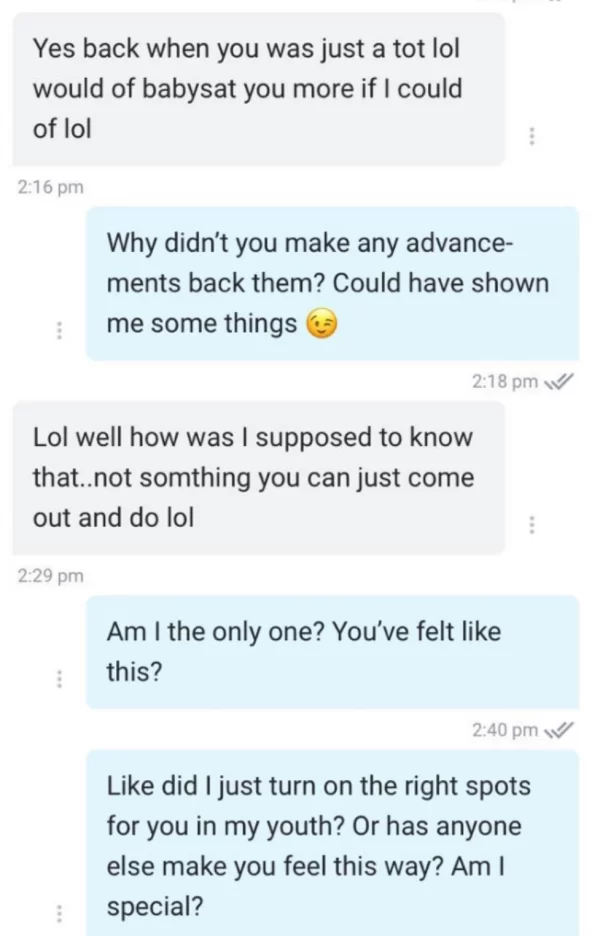
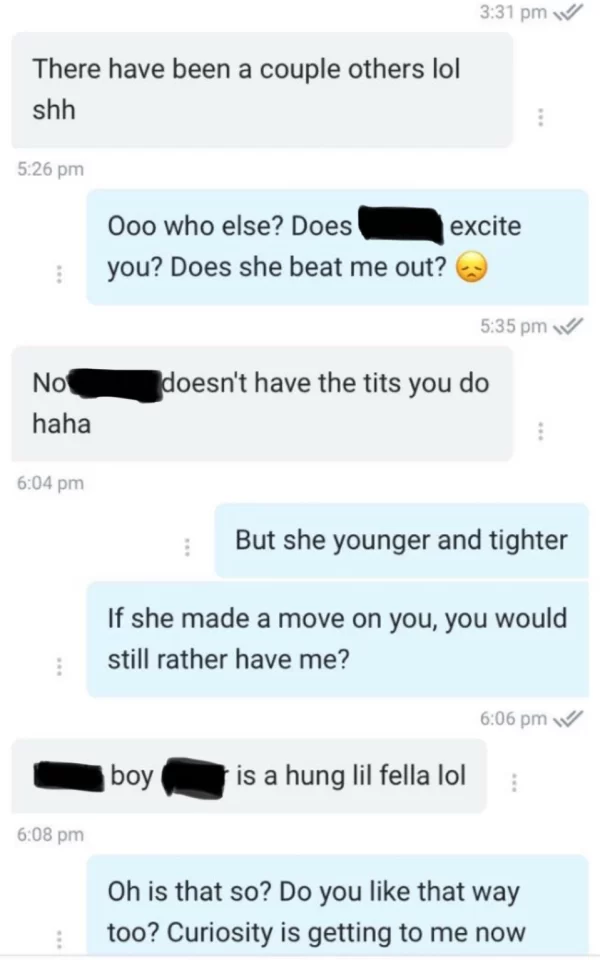
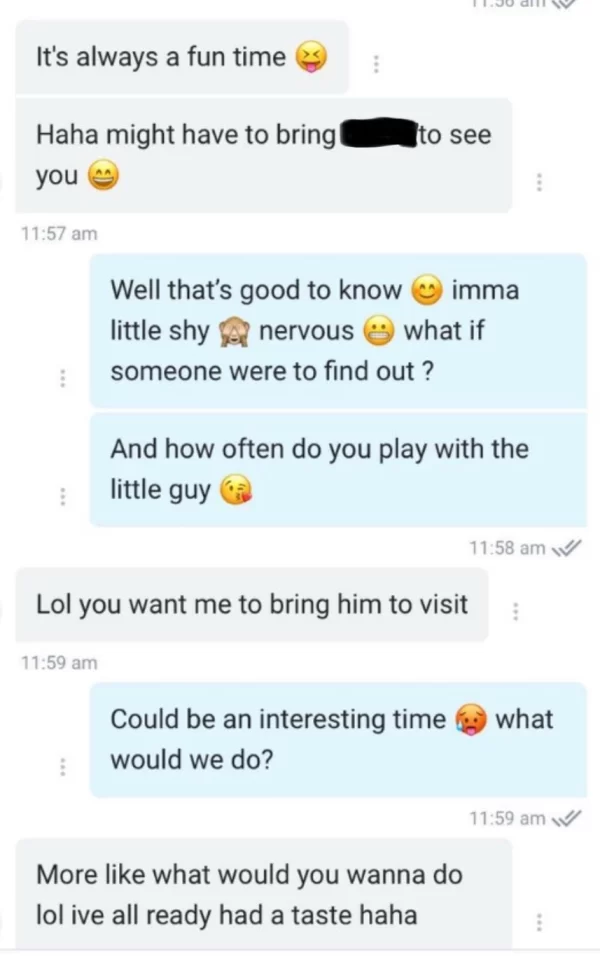
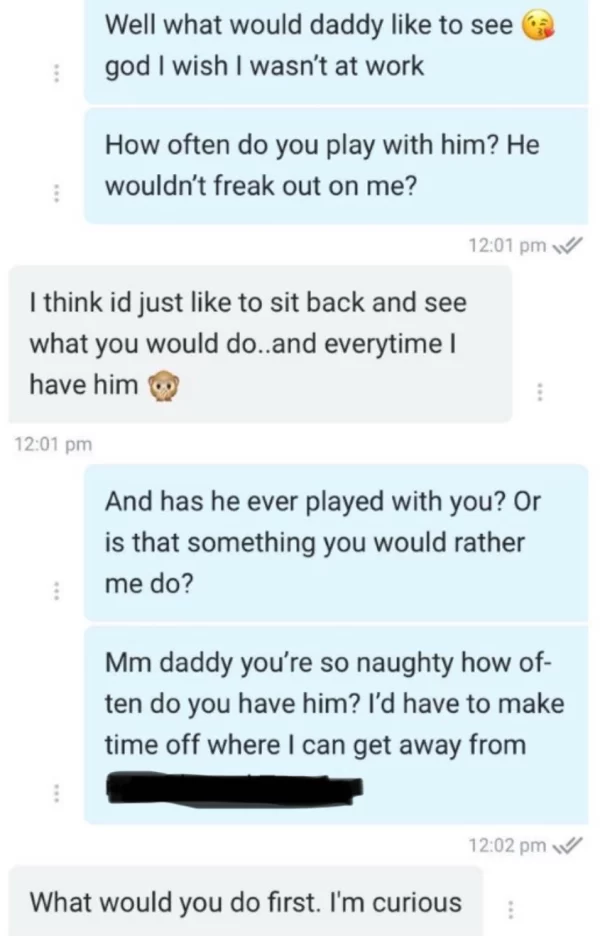
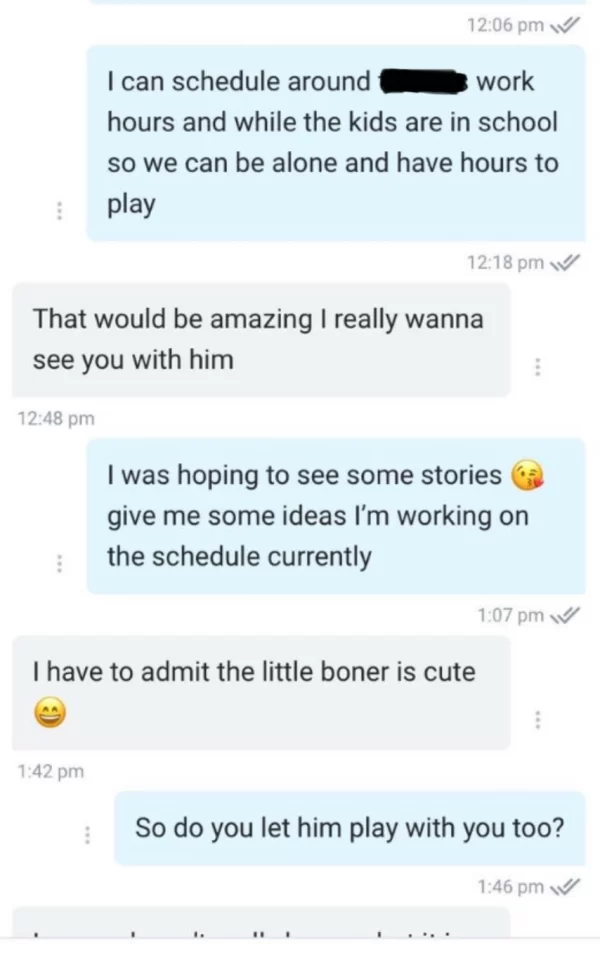
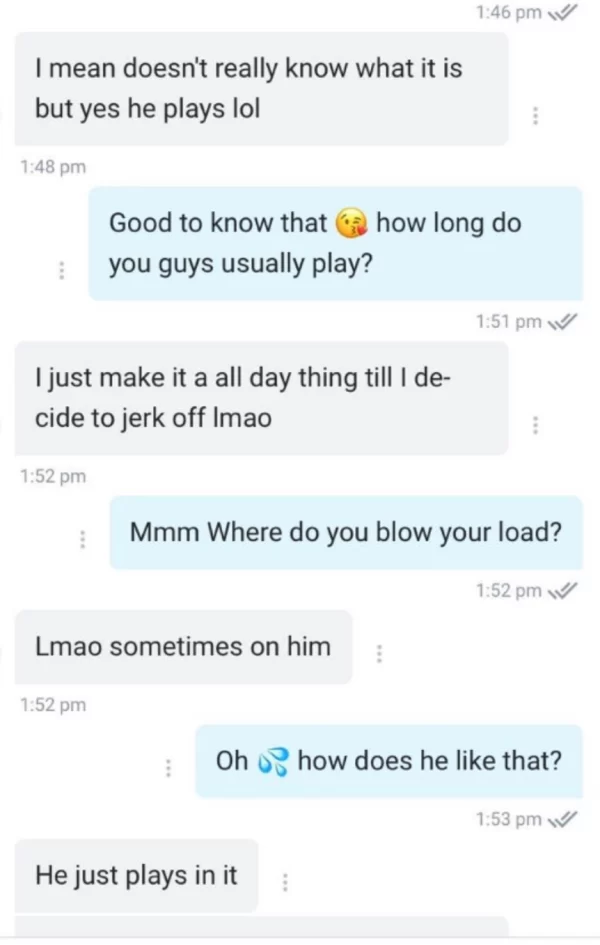
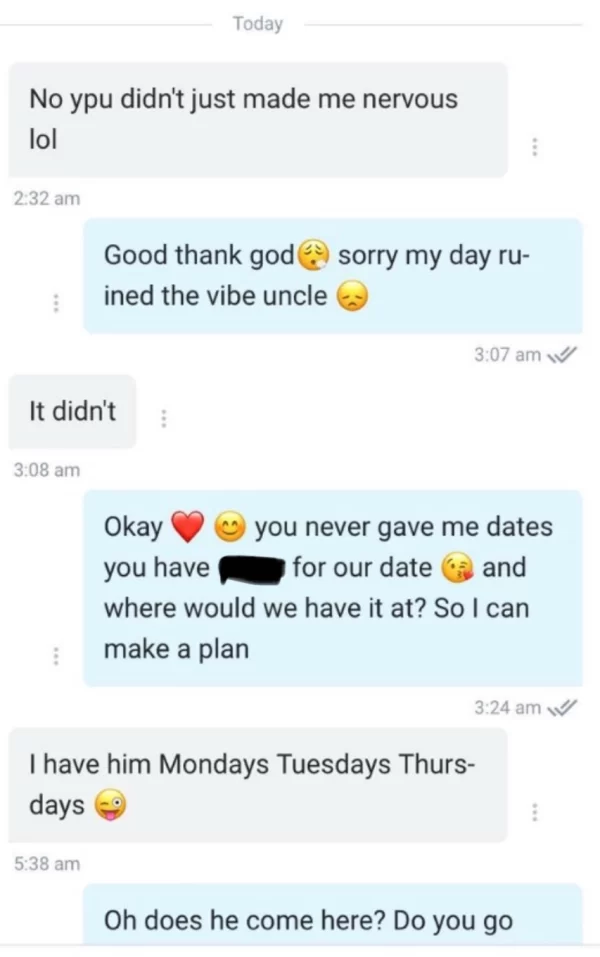
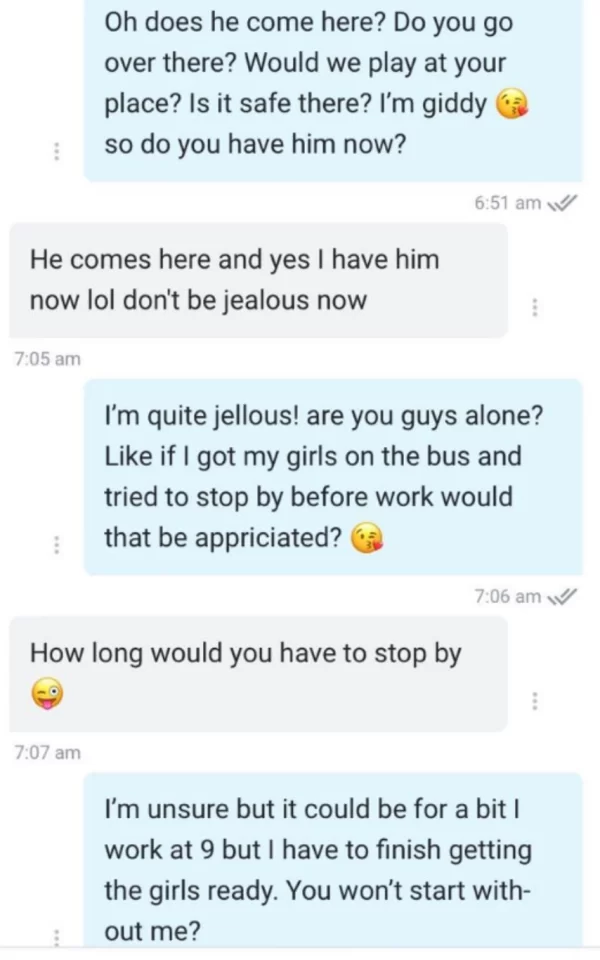
These messages are irrefutable evidence of him admitting to sexually abusing his own toddler grandson. The content of the messages is graphic, explicit, and deeply disturbing. The uncle not only sexualized his niece and said that he had always wanted her since she was a child, but he then went on to talk about his grandson, who is only a toddler, and admitted to sexually abusing him. He went into detail. And then, he tried to solicit his niece to participate, even suggesting she bring over her daughters so they could all engage in a “free-for-all” with the children.
The niece was appalled. But she made a choice to keep the conversation going so she could get more evidence. She documented everything: the conversations, the screenshots, the timestamps. She was gathering the kind of proof that leaves no room for denial.
The niece then went to the Clallam County Sheriff’s Department to report an active crime, as her uncle had the toddler grandson in his care at that very moment. She provided the messages. She made it clear the abuse was happening right now. But no swift action by law enforcement was taken in that immediate moment.
After she went to the police, her father called his sister Carolyn to let her know what was going on. He was shocked that the very sheriff’s department where he once served as a deputy was now dismissing his own daughter’s report. He was clearly distraught, overwhelmed by what he had just learned about their own brother, and confused as to why the police weren’t acting. He said to Carolyn, “I’m flabbergasted here, I’ve worked in law enforcement and I know what questions they should be asking and there is none of that happening. This is more like the opposite and trying to sweep it under the rug.”
The next morning, Carolyn decided to call the Clallam County Sheriff’s Department herself to report it again. Her brother had forwarded her the screenshots—proof of the entire conversation his daughter had with the uncle. Carolyn saw the messages for herself. She saw the language, the confessions, the solicitation. It was irrefutable.
And as a survivor of incest and sexual abuse within her own family, she had always known—deep down—that the abuse hadn’t stopped. This moment confirmed everything she feared: it was still happening. And the system, once again, wasn’t going to do anything about it.
Carolyn also has a contact with an FBI agent based in Alaska. She decided to call this agent and ask for advice. She had already spoken to this same agent back in 2019 to report the abuse she endured and murders she witnessed in that very same town when she was a child in the 1960s and 70s. Her claims weren’t taken seriously then, but she figured she would call the agent again to ask what she should do about this present-day crime—an active abuse situation involving a toddler.
The FBI agent told her to call the local sheriff’s department, the local police department, 911, the FBI in Seattle, and the Department of Children’s Services.
So Carolyn did exactly that. She made all five reports—because it was an active crime happening in real time.
She then called the sheriff’s department again. She spoke to a woman who answered the phone, who claimed they were taking the report very seriously. She told Carolyn not to tell anyone about the investigation, saying they wanted to “catch him in the act” and didn’t want anyone to tip him off.
Then, about 15 minutes later, Carolyn receives a phone call informing her that her niece was back at the sheriff’s department being interviewed. They had also called the father of the toddler to come pick up his son. He was angry and insisted the police were accusing his father of something he “didn’t do.” Eventually, they brought in Carolyn’s brother—the alleged abuser—for questioning.
While he was being questioned, his OnlyFans account was deleted. The entire message thread with the niece vanished. The niece’s chat history with him was wiped. His Facebook account was also suddenly deleted.
Police claimed that all of this happened while the man was inside the sheriff’s department being questioned—so, they said, he couldn’t have done it himself. That was when the narrative began to shift. Suddenly, the police started saying the man must have been “hacked.”
That was the beginning of the cover-up.
The final verdict from the Clallam County Sheriff’s Department was this: They claimed that someone had impersonated the man on OnlyFans, and that he wasn’t the one who sent those messages to his niece.
Case closed.
Law Enforcement Response
When contacted by Elumenate Media for comment regarding Carolyn’s allegations, Sheriff Brian J. King of the Clallam County Sheriff’s Office provided the following statement:
“A formal investigation was conducted, and I encourage anyone with questions to make a public records request. Any investigation can be re-opened subject to the availability of additional information or evidence that may warrant it.”
They added: “There is a lot of sensitive information in the case file and it would be irresponsible to make comment. You are entitled to view any information that the public records act requires us to make available to the public.”
As of publication, Elumenate Media has submitted a formal public records request for the case file. The sheriff’s office indicated that it may take up to a month to process.
While the sheriff’s office emphasized that the case could be reopened if new evidence emerges, Carolyn and her family maintain that the investigation—centered on serious allegations involving the sexual abuse of a toddler—was closed within a single day, long before a thorough review could have taken place. They continue to raise concerns that critical warning signs and testimony were prematurely dismissed, leaving them without answers and the child without proper protection.
Screenshots of Reported Messages
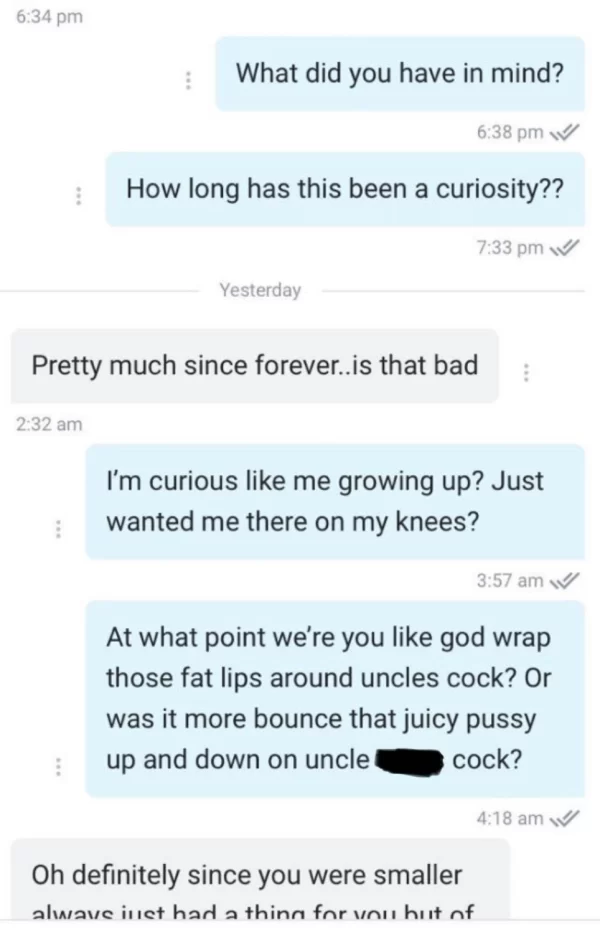
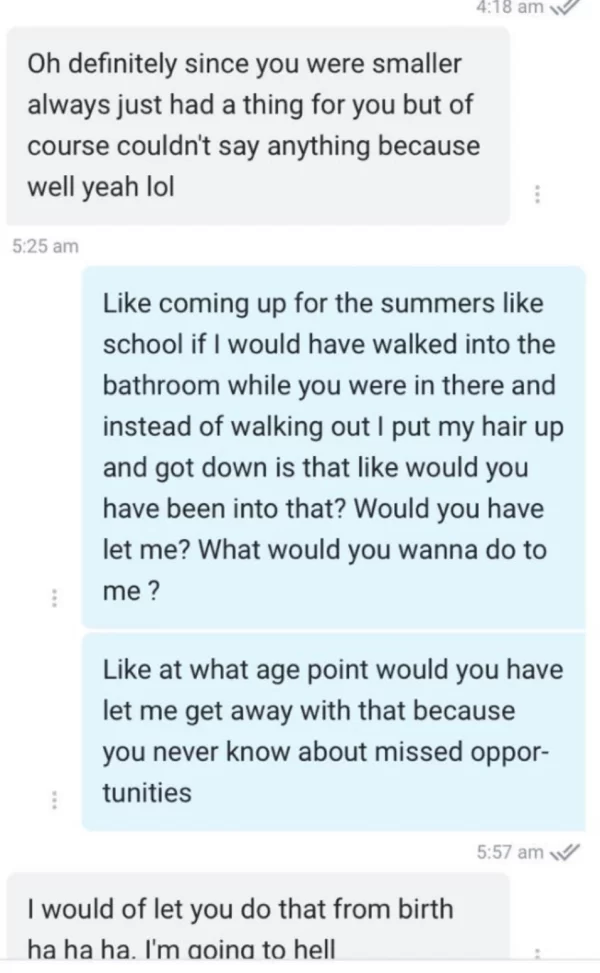
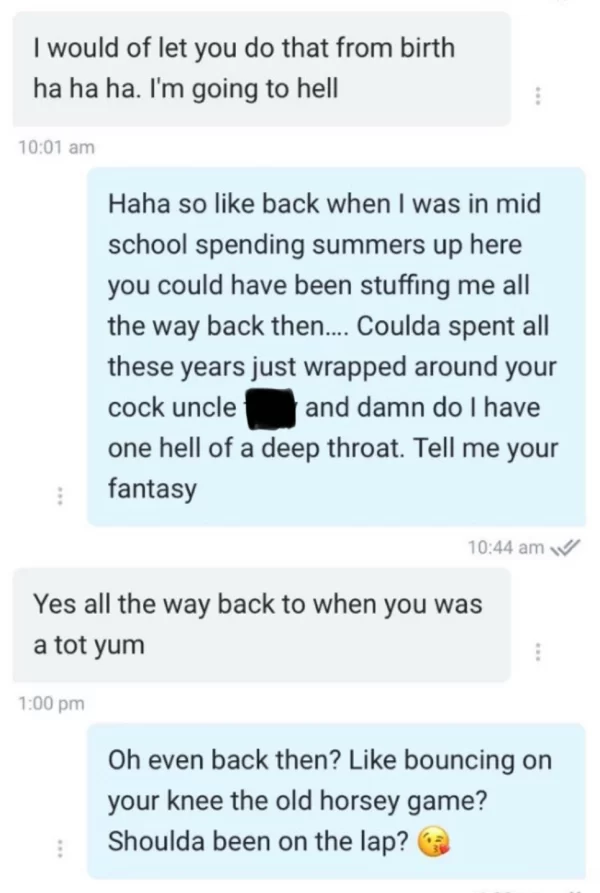
The following images contain screenshots of OnlyFans messages sent to Carolyn’s niece from her uncle, which were included in the original report to law enforcement. In these messages, the alleged abuser appears to describe inappropriate and explicit behavior involving a toddler—statements that family members interpreted as admissions of abuse.
The content is graphic and deeply distressing. These screenshots were preserved and presented to the Clallam County Sheriff’s Department at the time of the report. Despite the seriousness of the language used, the case was closed within a day—without forensic interviews, digital forensics, or child protection protocols initiated.
Viewer discretion is strongly advised. These messages were not hearsay. They were written, time-stamped, and submitted as direct evidence—and yet, they were dismissed.
These screenshots capture a portion of the text exchange between the uncle (grey messages) and his niece (blue messages). The excerpt, presented here as part of a longer conversation, includes direct and disturbing admissions that serve as critical evidence in the ongoing investigation.

Connections That Explain Everything
It’s important to note that the alleged abuser—Carolyn’s brother—was not just some random citizen. He worked for the town of Port Angeles in Clallam County, specifically in the Water Department, and later for the Public Utilities Department.
Even more crucially, his father, also Carolyn’s adoptive father. was a police officer in that very town a few decades earlier.
This means the family has long-standing ties to the local government infrastructure—public works, municipal services, and law enforcement. These are not just social connections. They are embedded relationships across decades, the kind that don’t go away simply because someone retires.
So the question becomes:
- Was someone doing him a favor?
- Was the investigation shut down quickly to protect a man with local ties?
- Did the police purposely fail to follow leads—not because they were incompetent, but because they were complicit?
- Was the decision to label the incident as a “hack” just an easy out to avoid charging someone connected to the department itself—or others still active behind the scenes?
In towns like this, silence is a currency. Loyalty is inherited. And sometimes, the line between law enforcement and the accused is a family dinner table.
These connections don’t just suggest favoritism. They suggest intent. They raise the possibility that what happened wasn’t just mishandled—it was actively suppressed.
A Town With a History of Abuse and Protection
Carolyn has shared publicly that the abuse she endured growing up in this town wasn’t limited to her home. As a child living there through the 1960s, 70s, and into the 80s, she was actively abused by members of the police department, including her own adoptive father.
This wasn’t hearsay. This was lived reality. She was a child being trafficked and assaulted by the very people who wore the badge—by those sworn to protect.
Her adoptive father, a Port Angeles Police Department Deputy at the time, was one of her abusers. And he wasn’t the only one.
This town has a documented pattern of protecting its own, even when “its own” are the predators. For decades, children were not only ignored—they were used, silenced, and discredited if they tried to speak.
Carolyn’s story is not just about a brother. It’s about a system that stretches back generations. A system where abuse was normalized, where reports were buried, and where local law enforcement was often the perpetrator, not the protector.
What’s happening now is not a new tragedy. It’s a continuation of one that’s been running silently in the background for over half a century.
After the Case Was Closed: More Red Flags, No Accountability
After the Clallam County Sheriff’s Department abruptly closed the case, Carolyn decided to follow up with the Department of Children’s Services to ensure that, at the very least, a report had been filed.
What she discovered was deeply alarming.
When she contacted them to check the status, she was told there was no open file connected to the incident. No case. No documentation. Nothing had been reported to them.
This raises serious questions:
- Did the sheriff’s department ever report the incident to child services, as protocol requires?
- Was the state system never alerted about a credible report of toddler sexual abuse—despite the irrefutable messages and multiple calls made by Carolyn, her niece, and others?
- Was this another intentional act of omission, designed to bury the case entirely?
Months later, Carolyn’s brother—the father of the niece who originally reported the abuse—was out driving his 4×4 in a wooded area not far from town. While off-road, deep in the forest, he happened to drive by his brother—the same man accused of abusing his own toddler grandson.
And the toddler? Was right there with him.
Alone. In the middle of the woods. With the man who had once admitted to abusing him in writing.
He saw them from a distance but chose not to approach. It’s important to note that this brother—like most of the family—has been estranged from the alleged abuser for some time. Still, what he witnessed confirmed what Carolyn had feared all along:
Despite everything that had been reported—despite the evidence, the calls, the screenshots—the alleged abuser was still in contact with the same child. Unsupervised. Unchecked. No protections had been put in place.
Carolyn’s brother—whose own daughter first reported the alleged abuse, and who once served as a deputy in the Clallam County Sheriff’s Department—shared his disbelief over how the case was handled.
“Based on what I saw—no forensic interviews of the children, no collection of direct evidence like phone records, credit card activity, or IP addresses—I was shocked. I lost faith in an agency I once proudly served,” he told Elumenate Media.
The system had not just failed to act. It had knowingly left a child in the hands of the man who said he was abusing him.
This Isn’t Justice. This Is a System That Protects Predators.
What happened in this case is not a misunderstanding. It’s not a clerical error. It’s not a matter of “not enough evidence.”
It is a coordinated failure. An intentional shutdown. A quiet dismissal of child sexual abuse—despite irrefutable proof, despite multiple reports, despite every protocol demanding intervention.
Carolyn, her niece, and her brother did everything the system tells people to do. They reported it. They documented it. They went to law enforcement, to the FBI, to child protective services.
And the system responded with silence.
No arrest. No investigation. No protection for the child. Instead: messages deleted, accounts wiped, records vanished, and a final verdict claiming someone had “hacked” the abuser’s account—as if that explained everything.
This isn’t just about one man. This is about a culture of protection for those with ties to law enforcement, small-town politics, and generational secrets. It’s about a pattern—one that Carolyn has been trying to expose for decades. One that began with her own abuse in the 60s and 70s and is still active today.
This article is not just a report. It’s a record. A warning. A call to awaken.
Because if a child can be violated, reported, and left unprotected— If survivors can come forward and still be silenced— If the evidence can be deleted while the police look away—Then we are not dealing with a broken system. We are dealing with a well-oiled machine designed to bury the truth.
But Carolyn didn’t stop. Her niece didn’t stay silent. And now the story is here.
On record. On fire. Unerasable.
What Happens Next
Elumenate Media has formally requested the full public records related to this case. At the time of publication, those files have not yet been released. Once obtained, they will be reviewed in full to determine what steps were taken—if any—and whether standard protocol was followed by law enforcement and child protective services. This investigation is ongoing. Any new findings will be published as they emerge.