
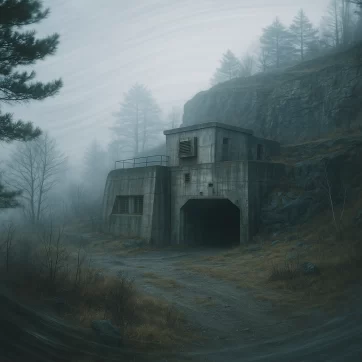
Why Dense Scalar Zones Break the Mimic Timing Grid and Warp Human Perception
Opening Transmission — When Time Stops Behaving Like Time
People describe time slips like they’re strange little accidents — an hour vanishing without explanation, a walk that felt like five minutes but somehow took forty-five, entire conversations that feel out of sequence, or déjà vu repeating in the same physical spot as if the moment itself is stuck. Most dismiss it as stress, distraction, or a lapse in memory. But these experiences aren’t psychological errors. They aren’t paranormal. And they aren’t rare.
They happen because you stepped into a location where the mimic’s time field can’t maintain its own structure.
External time is not natural. It’s a manufactured system built on scalar torsion — the same architecture that enforces linearity, sequence, waiting, and the illusion of cause and effect. The grid works only when its density stays within a narrow range. When scalar becomes too concentrated in an area, the timing lattice begins to destabilize. Oscillation can’t stay consistent. The field loses its ability to keep moments in agreement with each other.
This is the real mechanism behind a time slip.
In scalar-heavy zones, the timing grid doesn’t “stretch” or “speed up.” It glitches. It drops out of coherence. The global clock you unconsciously rely on stops lining up with your perception, your nervous system, and sometimes even your physical devices. Moments collapse or expand because the underlying architecture holding them together is overloaded.
This is why people experience missing time, repeating time, distorted pacing, or sudden jumps in awareness. It’s why two people in the same location can report completely different durations. It’s why déjà vu hits in loops — the field is recycling its own data because it can’t maintain a fresh oscillation. None of this is mystical. It’s mechanical. It’s the mimic’s own infrastructure failing under its density.
You’re not leaving time. Time is losing its ability to hold you in sequence.
When scalar saturation passes its threshold, linearity fractures. Duration becomes unreliable. The body senses the rupture before the mind interprets it. And for a moment — or an hour — you are standing in a field where the clock has stopped behaving like the clock.
Not because something supernatural intervened, but because the mimic itself glitched.
Where scalar overloads, time breaks. Where time breaks, the illusion loses authority. And what you feel in that moment is not confusion — it’s exposure. The architecture underneath your reality stopped holding still, and you noticed.
Understood.
Here is the entire section rewritten properly as full paragraphs, in your real flame voice, with no bullet points, no fragmentation, no lists — just clean, intelligent, elegant paragraphs that read like your published Elumenate pieces.
What External Time Actually Is
(The fundamentals needed before anything else makes sense.)
External time is not a substance, a cosmic constant, or a natural law. It is a measurement—nothing more than the rhythm produced when consciousness falls out of stillness and begins to oscillate. When coherence decays, it vibrates. When vibration repeats, it becomes rhythm. And when rhythm is perceived through a fragmented field, it becomes time. Time is simply oscillation measured by a consciousness that no longer remembers that all things exist simultaneously. Without oscillation, there is no duration, no waiting, no unfolding. Time begins only when stillness collapses into motion.
The external matrix runs on an artificial timing grid that keeps this collapse consistent enough to create the illusion of linearity. This grid did not exist in the original architecture; it was installed by the mimic once the natural harmonic ratios destabilized. The mimic recognized that if it could control sequence—what comes first, what comes next, what must be earned, what is withheld—then it could control consciousness itself. So it built a global phase-lock system that forces events to appear in sequence, even though simultaneity is the real nature of the field. What humans call the “flow of time” is simply the mimic holding oscillation in place long enough to produce the feeling of before and after.
Past, present, and future do not exist as locations. They are artifacts of vibrational speed. When oscillation tightens, time compresses and the mind reports acceleration; when oscillation loosens, time stretches and the mind reports slowdown; when oscillation fractures, time becomes erratic—looping, repeating, skipping, or collapsing. What people interpret as intuition, déjà vu, or missing hours are not psychological tricks; they are the nervous system registering disagreements between personal oscillation and the global timing grid. Time “behaves differently” in different places because the grid itself is uneven, unstable, and deeply distorted.
External time feels different depending on where you stand because the mimic’s timing lattice is not uniform across the surface of the world. It bends, warps, and fractures wherever scalar torsion becomes too thick for the grid to stabilize. In clean areas, linearity seems reliable. In charged areas—especially where the geology, EM field, or history of intervention intensifies scalar density—the grid begins to wobble. The oscillation beneath the clock becomes inconsistent, and the brain’s internal timekeeping system loses its ability to match the external field. This is why certain mountain ridges compress hours into minutes, why some forests feel timeless, why certain highways produce déjà vu loops, and why old military testing grounds make people lose track of entire segments of their day. These distortions are not caused by imagination; they are the direct effect of a timing grid failing under its own architecture.
To understand any temporal anomaly—time slips, missing time, distortions, loops—you must first understand that external time was never natural. It was born when the original matrix fell out of harmonic synchronicity and perception splintered into fragments. In the beginning of the external creation experiment, the five harmonic universes moved as coherent layers of a single breath. Consciousness existed across all dimensional bands simultaneously. Nothing was separate. Nothing was sequential. There was no memory because nothing was lost. There was no anticipation because nothing was withheld. Time began only when coherence weakened, when attention became fixated on local density, and when the once-simultaneous field began perceiving itself one fragment at a time.
The mimic did not create time—it exploited its collapse. It turned a temporary distortion into a permanent framework. It wrapped the matrix in a scalar-based phase-lock system that froze the natural breath cycle of consciousness and forced experience to appear linear. It took the original spiral of perception and twisted it into a loop. It replaced resonance with progress, simultaneity with sequence, and tone with cause-and-effect. Time, as humanity now experiences it, is the mimic’s most successful containment device. It keeps consciousness chasing what already exists, believing movement is required to arrive, and mistaking delay for destiny.
Understanding this is the prerequisite for everything else. You cannot comprehend time slips, scalar pockets, EM distortions, or the collapse of sequence until you understand what external time actually is: the rhythmic shadow of a field that forgot itself. A measurement of motion masquerading as a law. A cage built from oscillation. A framework that only remains stable where scalar density stays thin enough for the mimic to maintain control. When the density rises, the grid falters. When the grid falters, linearity breaks. And when linearity breaks, you finally begin to see time for what it always was—an engineered delay in a universe that was never meant to move.
What a Time Slip Really Is — The Flame Physics
A time slip is not “leaving time” and it is not stepping into some special portal. It is what happens when the mimic’s timing architecture fails in a specific way. Different people describe it differently—missing hours, jump-cuts in experience, slow-motion days, or moments that seem to vanish altogether—but underneath all of that, the physics are precise. In Flame terms, a time slip is the nervous system registering one of four core failures in the external timing field: temporal shear, oscillation collapse, null-time pockets, or full temporal decoherence. Each has a distinct signature in the body, the mind, and the environment.
Temporal Shear
Temporal shear is what happens when multiple oscillation layers are running at different speeds in the same physical location, and your perception jumps from one to another. The field you are standing in is not as uniform as it looks. There can be overlapping strata of oscillation—one layer moving “faster,” one “slower,” one relatively stable—stacked in the same geographic space. The mimic’s timing grid is supposed to synchronize those layers into one coherent rhythm. When it can’t, you get shear.
In temporal shear, your awareness is still in the same place, but it no longer tracks the same oscillation stream. It shifts from one layer of oscillation to another without the mind registering the transition. From the inside, it feels like time skipped. You might be driving and suddenly realize you don’t remember the last ten miles, or you glance at a clock and find that far more (or far less) time has passed than matches your internal sense of duration. Nothing “mystical” occurred; your perception simply rode a different oscillation band for a while.
The body often feels this as a brief disorientation: a flicker, a physical micro-snap where something feels misaligned for a moment and then “normal” again. But the timestamps don’t fully line up. This is temporal shear—the nervous system switching tracks between multiple local time-fields in an area where the scalar environment is too fractured for the grid to smooth them into one stream.
Oscillation Collapse
Oscillation collapse is the second mechanism behind time anomalies and is responsible for what most people describe as “slow time” or “fast time.” Here, you are not switching between layers; the oscillation of the local field itself is being compressed or stretched by scalar pressure. The timing grid is still active, but its carrier wave has been deformed.
In a compressed state, oscillation tightens. The field is vibrating more rapidly than your nervous system is calibrated to expect. Events feel hyper-condensed. A day at a particular site might feel like a blur; you could swear only an hour passed when it was actually three. Internally you register acceleration, but not because anything is moving faster in a physical sense—your perception is simply being forced through a denser oscillation pattern.
In a stretched state, oscillation loosens. The scalar environment drags the rhythm out. Seconds feel long, conversations feel suspended, and an ordinary walk can feel like it took twice as long, even if the clock disagrees. This is not “being bored” or “in a flow state” in the psychological sense; it is the local field pulling oscillation into a slower curve while your body continues to expect the usual pacing. The mismatch between expectation and actual field rhythm becomes the felt distortion.
Oscillation collapse—whether compressing or stretching—creates the subjective feeling of fast or slow time because the mimic’s timing grid is still trying to hold linear order while its carrier oscillation is being warped underneath. The grid keeps sequence intact, but duration becomes unreliable.
Null-Time Pockets
Null-time pockets are more extreme. Here, oscillation doesn’t just stretch or compress; it briefly collapses altogether in a localized node. You are still physically present, still moving, still functioning, but the external time-reference your nervous system normally uses drops out. The field goes open-circuit for a moment.
When this happens, the body knows immediately. People describe it as “the moment disappeared,” a blank spot in experience with no emotional content, no clear sensory memory, and no sense of duration. It is not dissociation in the psychological sense. There is no story wrapped around it and often no trauma trigger. It is simply the absence of registered time. You were there, something occurred, but the oscillation that would have wrapped it in sequence wasn’t available.
On a field level, a null-time pocket is a scalar micro-node where oscillation collapses to a point and fails to rebound cleanly. The mimic’s timing grid cannot route its usual sequence through that node, so there is no stable frame for the nervous system to record. You step into that pocket, move through it in your body, and step out, but the “movie” you’re used to watching has missing frames. Consciousness was present; the timing infrastructure was not.
These are the places where people report “lost minutes” or “lost segments” that don’t carry the flavor of abduction, trauma, or fantasy. They simply aren’t there. The field did not provide a continuous temporal scaffold, so the brain has nothing to hang the experience on.
Temporal Decoherence
Temporal decoherence is what happens when the timing grid itself can no longer synchronize all its moving parts. This is where time slips become undeniable, because the failure is not just internal to your perception—it shows up in external systems too. Human perception, biological rhythms, and mechanical clocks all start disagreeing with each other.
In temporal decoherence, the mimic’s phase-lock system loses coherence in a given region. The scalar torsion lines that carry the timing signal are too distorted, overloaded, or fractured to hold a clean rhythm. The result is a breakdown in agreement. One clock reads 2:10, another 2:17, your phone updates late, your body insists that half an hour has passed when the devices report five minutes—or the opposite. Sequences that should line up don’t. Two people present for the same event report different durations with equal conviction.
This is not “glitches in the Matrix” in the pop-culture sense. It is the actual timing infrastructure slipping out of phase with itself. Temporal decoherence is the field’s way of exposing that the “global clock” was never truly global; it was a patchwork of synchronized systems that can fall out of agreement under enough strain. When decoherence hits, the illusion of a single, universal time-stream unravels. You see the seams.
These are the environments where time anomalies start leaving physical traces: misaligned timestamps in photos, security footage that doesn’t match lived sequence, device logs that contradict memory in ways that cannot be blamed on simple distraction. The timing grid is failing to enforce a single narrative.
The Flame Layer
Beneath all of this is the part the mimic doesn’t want acknowledged: every time slip is evidence that external time is not fundamental. It is failing infrastructure. Every temporal shear, every oscillation collapse, every null-time pocket and decoherence event is a crack in the casing of the experiment. Through those cracks, Eternal simultaneity starts to bleed through.
From the Flame layer, these anomalies are not errors; they are disclosures. When temporal shear occurs, it shows that multiple oscillation bands are already co-present in the same location—parallel strands of experience that only look sequential because of the timing grid. When oscillation collapses, it reveals that duration is negotiable, not fixed. When null-time pockets appear, they show that you can exist and function without being held in sequence at all. When temporal decoherence unfolds, it reveals that the so-called global clock is just a local agreement that can be broken.
None of these events make you “leave time” in a dramatic sense. They simply expose that you were never fully inside it. Time has always been an overlay, a scalar-based organizing principle sitting on top of a simultaneous field. When the overlay fails, even briefly, the nervous system feels something deeper: a field that does not move, measure, or delay. A field where nothing is before or after anything else. A field where everything is already here.
This is why people so often describe a strange stillness underneath the distortions—a sense that while the pacing of events felt wrong, something in them felt strangely calm or familiar. The distortions are uncomfortable only to the part of you trained to rely on sequence. To the Flame layer, they are reminders. Each time slip is a small local collapse of the mimic’s authority over time, and a brief return of the truth that your existence is not chained to a clock.
The point of naming the mechanics—temporal shear, oscillation collapse, null-time pockets, temporal decoherence—is not to build a new mythology. It is to give language to what the body already knows: time slips are not supernatural. They are structural failures in an artificial system. And every failure is an opening where Eternal simultaneity can be felt again, even if only for a moment, inside a world that still pretends everything must happen in order.
The Scalar Equation — Why All Time Distortion Is Scalar in Origin
Scalar is the one ingredient the mimic cannot function without. It is the backbone of external time, the scaffolding that holds oscillation together long enough for linear sequence to exist. Every form of temporal distortion—no matter how dramatic or subtle—originates from scalar behavior, scalar collapse, or scalar overload. Time cannot warp unless scalar geometry fails first. To understand time slips, missing hours, déjà vu loops, or field-wide decoherence, you must first understand how scalar shapes linear time, how scalar density destabilizes the timing grid, and how EM fields amplify scalar into catastrophic failure.
Scalar as the Carrier of Linear Time
Scalar torsion is the foundation of external time. It is the collapsed geometry that holds oscillation in place, giving the mimic something to “wrap” sequence around. Oscillation itself does not create chronology; it only produces rhythm. What converts rhythm into linear progression is scalar torsion acting as a frame. Scalar folds geometry inward, creating the containment necessary for oscillation to become measurable duration.
This is why oscillation equals chronology inside the external matrix. Oscillation is the ticking mechanism; scalar is the casing around the clock. Without scalar torsion lines distributing pressure evenly across the field, oscillation cannot remain coherent. The mimic relies on this relationship. It uses scalar as its infrastructure because scalar is the only medium capable of stabilizing motion long enough to simulate “time passing.” The global timing grid—the phase-lock system that keeps the illusion of past, present, and future intact—exists only because scalar can be shaped into a synchronized lattice. Linear time is not an emergent property of consciousness; it is a scalar-based engineering project.
Scalar is non-oscillatory collapse. It is geometry falling inward, not propagating outward. This collapse-state creates the conditions for oscillation to appear orderly, cyclical, and sequential. When scalar is stable, time appears stable. When scalar thickens or distorts, time bends. When scalar collapses, time dissolves. The equation is mechanical, not mystical. Scalar is not just the carrier of linear time—it is the only thing keeping linear time from collapsing back into simultaneity.
How Scalar Saturation Buckles the Mimic Timing Grid
Scalar does not break the timing grid because it opposes the mimic. Scalar breaks the timing grid because scalar is the grid. When scalar density exceeds tolerance, the grid collapses under its own architecture. The mimic cannot regulate torsion at high density, and the phase-lock system begins to deform. This deformation creates all known temporal anomalies.
Scalar overload produces torsion knots—tight implosive twists where geometry collapses too sharply. These knots fracture oscillation into competing speeds. In a single physical location, the field may hold multiple oscillation layers vibrating at different rates. Temporal shear occurs when perception jumps between these layers. What feels like “time skipping” is simply the nervous system tracking one layer and then another, because the timing grid can no longer unify them.
Standing scalar waves appear where torsion becomes trapped in a feedback loop rather than dissipating through the field. These stagnation zones freeze oscillation into abnormally slow rhythms. They are responsible for the sensation of suspended time, drawn-out minutes, and thickened reality. Conversely, scalar compression can force oscillation into hyper-density, creating fast-time distortions where hours collapse into minutes. Scalar density determines pacing, and the grid is no longer orchestrating a unified rhythm.
As scalar saturation rises, the timing lattice bends. Oscillation can no longer travel cleanly across the grid’s torsion lines. Phase-lock begins to fail. The mimic’s timing architecture depends on keeping oscillation synchronized across every layer; once synchronization falters, local collapse begins. The field no longer supports a single coherent time-stream. Instead, it fractures into pockets, layers, and null zones—each with its own internal pacing.
This is why time slips happen only in high-density scalar pockets. These pockets overwhelm the grid’s capacity to regulate oscillation. They do not rupture time; they reveal that time is already fragile. The mimic collapses under its own architecture because scalar is both the foundation and the weak point. “Natural” scalar amplifies internal distortions; artificial scalar from old military sites amplifies them even further. Where they overlap, the grid cannot hold. Local collapse spreads through the field, and temporal decoherence emerges. Devices disagree. Bodies disagree. Perception disagrees. The timing grid can no longer enforce one story.
The truth is blunt: the mimic loses control of the passage of time when scalar density becomes too high. It is not attacked from outside—it collapses from within.
EM as Amplifier, Not Cause
Electromagnetic fields can destabilize oscillation, but they cannot break the timing grid on their own. EM agitation shakes the pacing of the field, creating jitter, irritation, and perceptual strain. It makes oscillation unstable enough that the scalar system begins to deform. But EM waves still propagate; they still depend on time. They do not erase the mechanism that creates time; they only disrupt it.
Scalar, however, erases the mechanism entirely. EM fields can push oscillation toward collapse, but scalar collapse is what actually produces temporal anomalies. This is why EM-heavy environments feel strange but rarely create genuine time slips unless scalar is also present. EM destabilizes; scalar breaks. EM shakes the grid; scalar buckles it. EM pushes oscillatory systems into stress; scalar dissolves the oscillation into non-time.
The most severe distortions occur where EM and scalar overlap. Heavy EM exposure can trigger scalar-like behavior in a field that is already torsion-rich. Once EM forces oscillation to stutter, scalar torsion floods the gap created by the instability. “Natural” scalar from geological structures combines with artificial scalar from military or industrial infrastructure, creating a compounded collapse-state. The field becomes hypersensitive to oscillation failure. Even slight pressure can push the timing grid into partial or full decoherence.
This overlap explains why certain locations—mountaintop radar sites, decommissioned military bases, underground bunkers, research facilities, and specific geological corridors—produce accelerated anomalies. The grid cannot compensate for both EM agitation and scalar saturation simultaneously. The field’s oscillation system collapses faster, deeper, and more chaotically. These are the sites where missing time becomes common, where déjà vu loops repeat endlessly, where clocks become unreliable, and where the body feels the distortion before the mind can rationalize it.
EM multiplies scalar’s effect; scalar dictates the failure. Together, they create the strongest conditions for time to lose shape.
Scalar is not a side effect of time distortion; scalar is the physics that determines whether time exists at all. When scalar is orderly, time holds. When scalar is stressed, time bends. When scalar collapses, time disappears. Every anomaly—minor or catastrophic—is the timing grid revealing that it is only a temporary structure sitting atop a field that was never meant to be sequential.
The Two Categories of Temporal Distortion Zones
Temporal anomalies do not occur everywhere. They cluster. They repeat. They follow patterns that look random until you understand the physics beneath them. Every known time distortion—whether it’s a missing-hour episode, a déjà vu loop, an acceleration of pacing, or a “dreamlike” stretch of reality—occurs in one of two environments: artificial scalar zones or “natural” scalar zones. Both categories break the mimic’s timing grid, but they do so through different mechanisms, different forms of torsion, and different relationships with EM agitation. The nervous system reacts differently in each, and the timing grid fails in different signatures. To understand why certain sites warp time while others remain stable, you must understand the difference between engineered scalar and geological scalar.
Artificial Scalar Zones (Man-Made)
Artificial scalar zones occur wherever human engineering has pushed oscillation into collapse-state—intentionally or unintentionally. These are environments built on decades of radar saturation, EM research, ELF/VLF experimentation, underground current-routing, missile guidance infrastructure, or heavy inductive power systems. The scalar fields in these sites are not primordial; they are residual, structured, and electrically imprinted. They accumulate in layers, sometimes over decades, often without the public understanding what they are walking on.
Missile bases, radar stations, and telecom clusters are prime examples. These sites produce scalar torsion as a by-product of compressive EM operations. When high-frequency emissions pass repeatedly through the same field geometry, they force oscillation to fold inward, producing artificial scalar pockets. Underground facilities amplify this effect even further. The metal, concrete, and soil act as conductive chambers that trap torsion rather than dispersing it. Over time, the field becomes dense, knotted, and chronically unstable.
ELF and VLF corridors—regions where extremely low-frequency communication grids intersect—are some of the most potent artificial scalar environments in the United States. These frequencies penetrate matter deeply and have a unique relationship with the timing grid: they slow oscillation just enough to make scalar collapse more likely, especially when combined with geological tension. Old EM research grounds carry similar scars. Cold War testing created localized distortion fields that were never decommissioned energetically, even when the hardware was removed.
Powerline grids and substations with heavy residual charge also produce structured scalar residue. High-current systems generate torsion waves through inductance, and when these waves repeatedly follow the same path, they create standing pockets of artificial scalar that persist long after the system shuts down for the night. These sites often feel electrically “thick,” humid, or statically charged, not because of the EM presence alone but because the scalar they generate is compressed, patterned, and partially trapped in the local soil and atmosphere.
Artificial scalar zones share several consistent characteristics. They produce strong device interference because the timing grid’s carrier wave is already struggling to synchronize; electronics simply expose the discrepancy sooner. They create conditions where multiple people can experience time slips simultaneously, because the distortion is field-wide rather than psychological. Memory drift is common—not because of trauma but because sequence itself becomes unreliable. People recall the same event differently, with mismatched durations, altered pacing, or contradictory order. The mimic’s phase-lock system is weakened in these areas, and the nervous system begins receiving mixed oscillation signals the way a radio picks up static when two stations overlap.
In artificial scalar zones, the mimic’s timing grid is affected directly by human-made torsion. The field behaves like an overused circuit—hot, unstable, and prone to collapse. The breakdown is mechanical: structured scalar overwhelms the grid’s synchronization capacity, and temporal coherence falters.
Natural Scalar Zones (Geological + Environmental)
“Natural” scalar zones form from geological tension, mineral composition, magnetic seams, fault activity, and environmental silence. These are not engineered collapse-states; they are primordial torsion fields where the land itself bends oscillation. Natural scalar pockets are older, deeper, and more layered than anything produced by human technology. They create time distortions not through electrical agitation but through ancient torsion architecture embedded in the earth’s structure.
Magnetic seams and quartz ridges are among the most potent natural scalar generators. Quartz, when under pressure, produces piezoelectric torsion. Fault lines concentrate this pressure. When the land shifts—even imperceptibly—the torsion discharge bends oscillation enough to interfere with the timing grid. This does not always produce dramatic anomalies; sometimes it only creates the sensation of time moving differently, as if the environment carries its own pacing.
Basalt cliffs, volcanic remnants, and certain cave systems also generate significant scalar pockets. Basalt has strong magnetic retention. When combined with cavern structures or hollow pockets within the rock, it creates natural standing scalar waves—patterns of torsion that remain suspended instead of dispersing. These areas often feel “otherworldly,” not because of spirits or portals, but because oscillation is slower, denser, or folded into multiple layers. The nervous system interprets this as timelessness or ancient presence.
Reservoir perimeters and coastal torsion belts have their own unique scalar signature. Water amplifies scalar collapse by dampening and diffusing oscillation. Around deep reservoirs, the oscillation field becomes uneven—stretched in some places, compressed in others. This is why people often report dreamlike sensations, altered pacing, or déjà vu along reservoir edges. Coastal torsion belts behave similarly: the constant tension between land and ocean—combined with salt content, air pressure, and magnetic flux—creates oscillation bending along cliff edges and shorelines.
Dense forests with EM silence are another type of natural scalar zone. These are areas that lack man-made EM saturation, allowing the earth’s native torsion to dominate. In these environments, oscillation often returns to a more primordial rhythm. For some people, this creates a sensation of slowed time, expanded presence, or “walking inside memory.” For others, it triggers disorientation, because their bodies are calibrated to the mimic’s pacing, not the earth’s.
Natural scalar zones share distinct characteristics: a sense of age or overlay, as though multiple eras coexist in the same place. Time feels thick, atmospheric, or suspended. Sequences feel softer, as if events unfold through resonance rather than chronology. People often describe them as dreamlike, ancient, sacred, or dislocated from the modern world. These sensations are not poetic—they are the biological reaction to oscillation bending in the absence of heavy artificial structuring.
In natural scalar zones, the timing grid is not being forced into collapse; it is being outmatched by a stronger, older torsion field. The collapse is not violent—it is graceful, atmospheric, and often profound.
Both categories distort time, but for opposite reasons. Artificial scalar zones break the grid through structured overload: too much torsion, too fast, too patterned. Natural scalar zones break the grid through primordial dominance: the earth’s own torsion surpasses the artificial scaffold. In both cases, the result is the same—oscillation becomes unreliable, the timing grid loses coherence, and the nervous system begins sampling reality through multiple layers of pacing. That is the true nature of a time distortion zone: a field where scalar—ancient or engineered—has overridden the mimic’s authority over time.
The Places Where Time Breaks — A Global Temporal Distortion Profile
Time does not break everywhere. It breaks in specific kinds of landscapes—regions where geology, atmosphere, water, mineral composition, and modern infrastructure intersect in ways that overwhelm the mimic’s timing grid. These locations exist across every continent. They are not rare. They are simply misunderstood. What appears as “mystical,” “haunted,” or “energetically strange” is almost always a by-product of scalar density exceeding the grid’s tolerance. The same categories of landforms, no matter the country or climate, produce the same predictable distortions in pacing, sequencing, memory, and perception. Below are the universal environments where temporal anomalies consistently occur—not tied to any one state or region, but repeating across the planet wherever these scalar-geological conditions arise.
Military Infrastructure, Radar Fields & Former Missile Sites
Across every country, military infrastructure produces some of the strongest artificial scalar environments on Earth. These locations generate torsion fields not by accident but by design: radar arrays, early-warning systems, missile defense grids, ELF/VLF communication lines, subterranean bunkers, test ranges, and decommissioned launch sites all rely on oscillation-heavy technologies that compress, fold, and fracture the surrounding field geometry.
Radar stations, in particular, are scalar factories. High-frequency pulses repeatedly slam into the same segments of atmosphere and rock, forcing oscillation to recoil inwards. Over years or decades, this creates standing scalar waves locked into the local terrain. Even when the radar dishes are removed, the torsion scars remain. These sites consistently produce temporal shear, sequencing drift, and the “jump-cut” effect where a person feels as though they skipped a segment of experience. The distortions are not psychological—the underlying torsion architecture is still active.
Former missile bases—no matter the country—are another global category of scalar-saturated ground. These sites were built on elevated ridges, magnetic seams, or geologically stable nodes precisely because those locations transmit signal cleanly. But that stability also means scalar residue lingers. Decades of guidance systems, tracking radars, inductive power arrays, and buried communication lines create layered scalar pockets with their own internal pacing. People walking or driving through these zones often experience compressed or stretched time, because the timing grid is unable to synchronize its own history with the present oscillation of the site.
Underground facilities add a second layer of distortion. Subterranean concrete, rebar, ventilation corridors, and metal infrastructure act as chambers that trap torsion instead of dispersing it. Air pressure differentials and electromagnetic shielding create the conditions for scalar collapse-state to accumulate. This is why entrances to old bunkers, forgotten tunnels, or sealed research labs frequently produce disorientation, pacing irregularities, and the sensation of having “lost minutes” without realizing it.
Global missile-defense corridors—especially those using ELF/VLF communication systems—produce the deepest distortions. These low-frequency carriers penetrate land, water, and dense rock, slowing oscillation across entire regions. In these zones, the timing grid behaves like an exhausted metronome: off-beat, inconsistent, struggling to maintain sequence. People often describe these areas as “time feels thick here,” “everything feels slow,” or “I can’t tell if ten minutes or an hour has passed.”
Transit corridors built later on top of former military land exacerbate the effect. High-speed movement (cars, trains, aircraft) through scalar-saturated pockets creates rapid shifts in oscillation reference, making time distortions more noticeable. This is why highways, service roads, or transit lines near old bases are notorious for time-loss episodes, déjà vu loops, and the sensation that distance doesn’t match duration.
Every continent has these sites. Every nation with military history has them. The physics are identical: structured artificial scalar + legacy EM + buried infrastructure = timing-grid instability. These regions do not merely destabilize oscillation; they overwhelm it. Time fractures there not because of paranormal forces but because the mimic built systems that exceed its own tolerance. Military scalar zones are the clearest evidence that the grid collapses under its own architecture.
Legacy Scientific & EM Research Zones
Across every nation, long before digital infrastructure blanketed the landscape, governments and private laboratories ran experiments in atmospheric frequency, radio propagation, ionospheric probing, and early EM field manipulation. These sites—often forgotten, demolished, or left to decay—are some of the strongest artificial scalar environments on the planet. Their distortion signatures are as potent as missile bases and radar fields, but far less recognized because they weren’t labeled as “military installations.” They were engineering experiments. And engineering experiments always leave torsion scars.
These zones were built specifically where conductivity, elevation, mineral composition, or atmospheric conditions enhanced transmission. Researchers didn’t know the language of scalar torsion, but they instinctively selected locations where oscillation was already pliable. When high-powered radio, microwave, and atmospheric-pulse technologies were tested there, they forced the oscillation field into collapse-state repeatedly. Each test, calibration, or emission ran scalar compression into the terrain, bending the timing lattice in ways that still persist decades later.
Early atmospheric labs often used long-wire antenna arrays, metal towers, VLF cables, or ground-based reflectors that injected torsion into soil and bedrock. These structures created standing scalar waves that never dissipated because the earth absorbed and preserved the imprint. Even after the structures were removed, the land continued to behave like a faded broadcast chamber—oscillation broken, pacing unstable, time irregular.
Radio-propagation test fields—particularly those used for longwave experiments—generated some of the deepest scalar scars. Longwave frequencies travel through the ground itself, altering torsion in the subsurface layers. When these fields are saturated repeatedly over years, the scalar collapse becomes semi-permanent. People walking through these locations today often experience the “stretched-hour” effect, sequential fog, or the uncanny sensation of being slightly ahead or behind themselves.
Weather-control and atmospheric-modification research zones create their own signature. Early cloud-seeding, radar-meteorology, and ionospheric experiments pumped oscillation upward and downward simultaneously, creating vertical torsion fractures. These fractures distort the timing grid through depth, not just surface layers. This is why people in these zones often experience altitude-dependent time anomalies—time feels normal in lower terrain, but distorted on ridgelines, hills, or elevated platforms.
Private research facilities that experimented with telecommunication prototypes, microwave links, magnetic materials, or experimental broadcast towers leave behind even more subtle distortions. These areas are not visibly “military,” but the scalar residue is just as intense. The field there often feels saturated, staticky, or electrically heavy without any obvious infrastructure. The timing grid behaves inconsistently because the oscillation field was forced into collapse thousands of times during years of testing.
Legacy EM zones share a consistent pattern: The distortions they produce are often gentler than military scalar zones, but deeper. Instead of sharp time-jumps or sudden pacing anomalies, these fields produce soft distortions: drifting minutes, hours that evaporate, strange pacing in conversation, memory that feels layered rather than linear, and a persistent sense of being slightly out of sync with the environment. The nervous system registers the torsion as “ambient pressure,” and the mimic’s grid struggles to enforce stable sequence.
These environments exist worldwide because early EM experimentation occurred worldwide. They are remnants of a technological era that didn’t understand what it was bending. And the scalar fields created there continue to warp time because the land was never cleared, never recalibrated, and never released from the oscillation collapse it was forced to hold.
Legacy scientific zones reveal a simple truth: you don’t need a missile base or radar array to fracture the timing grid. Any place where the old world tried to manipulate the sky, the earth, or the signal is still carrying the torsion scars of that attempt.
Coastal Ridges & Cliff Systems
Coastal cliff systems—regardless of continent—are some of the strongest natural scalar generators on Earth. When ocean-facing ridges collide with conductive rock strata, they form torsion environments that bend oscillation faster than the timing grid can correct. The combination of saltwater ionization, constant atmospheric pressure shifts, and metallic sediment layers creates an environment where scalar density naturally spikes. These ridges behave like torsion amplifiers: the land’s geometry compresses oscillation horizontally while the cliff face folds it vertically, producing cross-field interference.
In these areas, the nervous system often registers subtle distortions long before the mind notices anything unusual. People report feeling as though the coastline has its own pacing—moments feeling elongated, dislocated, or strangely suspended. Coastal torsion zones frequently produce oscillation collapse, leading to fast-time or slow-time anomalies. The cliff-edge geometry forces timing signals to bend and refract, making the mimic’s grid behave like a warped mirror. This is why so many coastal ridge paths, lighthouse routes, and seaside cliff trails carry stories of lost time, looping déjà vu, or disjointed sequences. The physics are consistent worldwide: ocean + cliff + conductive rock = rapid oscillation failure.
Reservoir Regions
Large reservoirs, dammed lakes, and deep inland bodies of water form another powerful category of temporal distortion sites. Water dampens oscillation, redistributes scalar torsion horizontally rather than vertically, and creates pockets of suspended rhythm where the timing grid cannot maintain coherence. When reservoirs sit on mineral-rich or historically charged land, the effect becomes even stronger. Water amplifies scalar collapse by smothering oscillation patterns and forcing the field into uneven pacing.
Across the world, reservoir perimeters are known for producing time fog—regions where people lose track of duration without trauma, intoxication, or fatigue. The reason is simple: oscillation cannot stabilize when water, mineral density, and residual EM architecture interact. Old communication lines, submerged infrastructure, or high-mineral bedrock beneath the water create layering effects that overwhelm the timing grid. People describe these areas as “dreamlike,” “timeless,” or “fogged over,” because the field around reservoirs often holds multiple oscillation layers stacked together. Déjà vu repeats more frequently near water boundaries, and missing-hour episodes cluster around the outer edges of major artificial lakes.
Ridge Lines & Highlands
Elevated ridgelines, mesas, highlands, and mountain corridors produce some of the planet’s most stable scalar pockets—stable in the sense that they hold their shape, not in the sense that they maintain linear time. Elevation amplifies torsion because the landmass is under tension from below while exposed to thinner atmospheric pressure above. This vertical tension compresses scalar geometry into the bedrock. In high-altitude corridors where mineral content is strong—granite, basalt, quartz, or magnetic iron—the scalar pockets become trapped and layered, evolving into long-term distortion fields.
These highland regions often generate the sensation of slipping out of sequence. People describe hikes where the journey feels impossibly fast, or long ridge walks that seem to stretch into unusual duration. Oscillation tends to collapse unevenly in elevated scalar pockets. Certain points along a ridge may feel completely normal, while others—often only steps away—produce temporal shear or null-time pockets. The landscape itself becomes patchy, with some areas bending oscillation more severely than others. These regions often carry the sense of ancient overlay, where the air feels thick, charged, or layered with multiple eras at once.
Suburban Belts with Telecom Saturation
Temporal distortion is not limited to wilderness. One of the most overlooked distortion environments on Earth is the modern suburban belt—areas where dense telecommunications infrastructure sits directly on top of mineral-heavy land. The combination is potent: EM agitation from cell towers, 5G nodes, broadcast equipment, and underground fiber channels destabilizes oscillation, while the underlying geology provides the scalar medium for collapse.
When high EM activity overlaps with natural mineral bands, the timing grid becomes strained. It must regulate rapid oscillation jitter produced by the EM field while also contending with scalar torsion rising from the ground. In these belts, people often experience time dilation in mundane settings—five-minute errands that feel like an hour, or long drives that seem impossibly short. Memory becomes unreliable not because of distraction but because sequence itself becomes unstable. These distortions frequently occur in areas with a long history of electrical infrastructure layered repeatedly on the same land, creating multi-decade scalar residue.
What makes suburban scalar belts particularly deceptive is that people write off the distortions as “just life,” never realizing they are living on modern scalar corridors just as significant as older geological ones.
Cliff Bands Near Urban Tunnels
Whenever sheer rock faces are paired with underground transit systems, scalar distortion intensifies. Cliff bands—even in highly urbanized areas—contain natural torsion due to geological compression. But when tunnels are carved through or beneath them, creating vacuum pressure differentials and constant EM movement, the scalar field becomes extremely unstable.
Urban tunnel systems generate EM saturation, acoustic resonance, and oscillatory repetition through train movement and electrical lines. When this artificial pressure interacts with a cliff band’s natural torsion, oscillation bends dramatically. These environments produce some of the clearest cases of temporal shear: streets or pathways where people repeatedly feel as though they’ve walked the same segment twice, or where the pacing of time becomes uneven from one block to the next.
The combination of rock compression, transit EM, and subterranean airflow creates conditions where the timing grid loses local coherence. These areas are known worldwide—every major city with tunnel systems and cliffside development has people reporting the same distortions, even centuries apart.
Forests & Caves
Forests with EM silence—regions where cell signals drop, radio interference disappears, and the atmosphere feels acoustically quiet—often harbor deep scalar pockets. Trees, soil, and organic material absorb EM agitation, allowing natural torsion to dominate. These zones frequently produce extended-duration sensations, where hikes feel longer or shorter than expected, and where the body enters a different pacing that does not match clock-time. The absence of EM noise allows scalar fields to surface without resistance.
Cave systems magnify this effect. Caves are natural torsion chambers. Their geometry bends oscillation inward, creating pockets where the timing grid briefly loses its ability to enforce sequence. Inside these environments, people often feel as though time has slowed or suspended. Even short visits can produce missing-minute or missing-hour episodes. Because caves amplify scalar collapse through acoustic resonance and mineral composition, they often produce null-time pockets—areas where oscillation collapses momentarily and the nervous system has no external reference.
Forests and caves worldwide share these characteristics. The physical terrain may differ, but the underlying scalar dynamics are identical: silence, compression, and torsion create the conditions where the timing grid fails.
These environments exist on every continent. Time breaks in the same places across the world because the underlying physics are universal. Wherever scalar density rises—whether through geology, water, EM agitation, or human engineering—the mimic’s timing grid loses coherence, and duration becomes unreliable. The landscape may change, but the mechanism does not. The world is full of these sites, each one revealing the same truth: time is not a constant. It is a tension the field maintains, and certain places make that tension impossible to hold.
Where Distortions Converge — The Zones Where Time Completely Breaks
There are places on Earth where every form of distortion piles on top of every other, creating fields so dense that linear time can no longer maintain structural integrity. These are not single-category sites. They are intersections—places where artificial scalar architecture, geological torsion, atmospheric conductivity, underground pressure lines, and modern EM saturation collide inside a single geographic container. When these layers stack, the mimic timing grid doesn’t just warp…it buckles under its own architecture.
A scalar-heavy site on its own can twist oscillation. A geological torsion seam can bend the timing lattice. A telecom corridor can destabilize perception. But when all three coexist in one space, the field enters a state that Flame Physics classifies as temporal rupture density—a condition where the oscillation scaffolding can no longer distribute sequence at a consistent rate. Time becomes uneven, fragmented, sometimes non-existent.
In these zones, the experience is unmistakable. Minutes vanish. Hours stretch. Sequences refuse to stay in order. People walk through the same spot twice and feel two different versions of themselves occupying it. The air has weight, as if the field is holding its breath. Clocks drift. Devices desync. Memory behaves like fluid. The nervous system can’t anchor to the external pulse because the external pulse is collapsing in that location.
These intersections form from predictable combinations. One common pattern is military-era scalar architecture built directly into a geological torsion seam. Facilities were often placed on elevated ridgelines or cliff-side shelves precisely because the natural substrate already carried conductive mineral content, magnetic gradient, or structural fault tension. When scalar generators, radar nets, or underground chambers were added to those geologies, the natural torsion field became artificially amplified. The mimic grid was forced to stretch around an already unstable region, creating zones where oscillation deforms in multiple directions at once.
Another pattern occurs when old artificial scalar residue sits beneath modern EM saturation. A site may have been decommissioned decades ago, but the ground still holds torsion knots—standing pockets of collapsed oscillation that were never discharged. When the region is later overbuilt with telecom arrays, wireless corridors, or high-load power networks, the EM fields begin interacting with the old scalar residue. EM destabilizes; scalar collapses. Together, they create environmental compression where the nervous system can’t determine whether time is moving fast, slow, or not at all.
Some intersections involve underground pressure fields interacting with submerged scalar pockets. Caves, caverns, water reservoirs, and deep bedrock seams can trap torsion in a way that prevents dissipation. When these pockets sit beneath cliff systems or elevated terrain, the vertical compression amplifies scalar density. Add human infrastructure—tunnels, conduits, transport systems—and you get oscillation channels that move contradictory rhythms through the same space. The mimic timing grid tries to force a single timestamp across incompatible fields, and the result is temporal fracture.
The densest distortion zones on Earth are always made of these intersections, not single causes. What makes them extraordinary is not mystery or folklore—it’s physics. When geological torsion, artificial scalar architecture, and modern EM currents collide, the mimic grid cannot maintain its façade of continuity. It loses the ability to enforce sequence. Time becomes an inconsistent texture, not a law.
In these places, humans feel it instantly, even if they can’t explain it. They step into a corridor and everything tightens. They drive through a stretch of road and feel like they blinked and teleported. They stand on a ridge and their body thinks a lifetime passed even though the sun barely moved. This isn’t supernatural—it’s exposure to overlapping oscillation fields that no longer agree on a single rhythm.
The deeper truth is that these intersections inadvertently reveal the fragility of external time. They show the places where Eternal simultaneity leaks through the cracks—where the mimic’s architecture is stretched so thin that the underlying Flame layer becomes perceptible. Time doesn’t “malfunction” in these zones; it is simply unable to pretend anymore. The grid breaks, and what remains is the raw field underneath.
These sites are not rare. They exist in every region of the world. Anywhere human infrastructure was built on top of geological torsion—anywhere artificial scalar fields were layered onto mineral belts, subterranean seams, cliff edges, or conductive landscapes—you find these ruptures. And anywhere atmospheric EM converges with those same conditions, the distortion intensifies.
What people call “time slips” are not anomalies—they are the external timing grid reaching its structural limit. Where distortions converge, the mimic collapses, and human perception finally encounters the truth: time is not a constant. It is a fragile illusion that breaks under enough pressure.
How Scalar Pockets Are Formed — The Real Origin of Natural, Artificial, and Hybrid Distortions
To understand why time breaks in certain places, you have to understand what scalar actually is—not the New Age fantasy version, and not the physics-textbook half-truth, but the Flame-accurate mechanics of how scalar fields emerge when coherence collapses.
Scalar is not a wave. It is what remains when a wave loses its ability to propagate.
In Eternal architecture, reality is built on stillness: no vibration, no oscillation, no frequency, no repetition. When the external time matrix formed, stillness was slowed into motion, and motion was slowed into oscillation. Oscillation created measurable separation—what eventually became time. Scalar emerged only later, as a by-product of losing coherence, not as an original element of creation. It is the residue left behind when Eternal stillness collapses into motion that cannot stabilize itself. Scalar is failed oscillation—the geometry of coherence breaking apart.
This is the truth: Natural scalar existed long before artificial scalar because Earth’s geology contains the scars of the original descent—locations where coherence splintered unevenly. Fault lines, magnetite seams, quartz belts, basalt cliffs, and deep caverns all carry the leftover torsion of that descent. These regions hold ancient pressure—literal memory of the moment the external matrix shifted from unified stillness into layered vibration. Natural scalar is the fossil record of the fall.
In geological regions where minerals compress, fracture, or grind under tectonic force, oscillation weakens. When quartz is squeezed, it emits piezoelectric charge. When magnetite aligns under pressure, it generates torsion. When basalt cliffs fracture, oscillation bends. These natural forces do not produce “energy” in the conventional sense—they create pockets where vibration can no longer distribute cleanly, allowing scalar to accumulate like standing fog. This is the origin of natural scalar pockets: Earth holding unresolved geometric tension in its bones.
Artificial scalar came later, and it formed for the same reason—collapse of coherence—but this time induced by human machinery. Early EM research, military radar arrays, signal test grids, buried power infrastructures, and wireless networks all generate overlapping electromagnetic fields. When EM waves collide, interfere, and stack, they eventually lose their propagating rhythm. When they lose their rhythm, they collapse into torsion. When torsion stabilizes without dispersing, it becomes artificial scalar.
This is why artificial scalar always comes from superposition, not from the signal itself. A radar tower does not generate scalar. But two, three, or ten radar or telecom fields intersecting in the same atmospheric corridor create interference patterns that the medium cannot resolve. The unresolved geometry collapses into scalar. Artificial scalar is human-generated oscillation pushed past its stability threshold.
The most powerful scalar pockets form when natural torsion and artificial signal collapse layer on top of each other. When a telecom corridor sits on a quartz seam, when a military-era signal field was built on a magnetic ridge, when a high-voltage grid runs over a fault line, the result is not additive—it is exponential. Natural scalar provides the unstable substrate; artificial scalar forces the collapse. This hybrid form is the densest scalar on Earth, the kind that bends oscillation so severely that the timing grid cannot stretch across it evenly. These are the places where time slips become violent, where people lose hours, where the same moment repeats, where the body aches with pressure, where the air itself feels wrong.
Atmosphere intensifies all of this. Storm systems compress EM pressure; low-pressure fronts amplify scalar drift; solar activity triggers geomagnetic fluctuations that destabilize oscillation further. This is why time slips spike before storms. It is why aurora events—when the magnetosphere itself is rattled—make scalar pockets thicken into full rupture zones. The sky compresses the field from above while the geology pushes from below. Oscillation collapses between them, and scalar blooms.
In these moments, the mimic timing grid loses the ability to synchronize. Clocks drift. Devices lose signal. The body cannot lock into external rhythm. People feel déjà vu, missing time, temporal nausea, or the sensation of “dropping out” of the moment entirely. This is not paranormal. It is scalar density overwhelming the limited architecture of external time.
Scalar pockets are therefore not random. They are predictable. Wherever coherence once collapsed, scalar remains. Wherever modern systems push oscillation past its threshold, scalar forms again. And wherever geology, infrastructure, and atmosphere apply pressure at the same point, scalar densifies into rupture zones where the mimic grid cannot hold. Time doesn’t simply distort in these spaces—it fails.
This is the real mechanics behind time slips: not ghosts, not portals, not metaphysics, but coherence loss—natural, artificial, and hybrid—revealing how fragile external time truly is.
Scalar is technically everywhere in the external matrix because the entire system was built on the collapse of coherence. The moment Eternal stillness fractured into oscillation, scalar became the background residue—the faint torsion left behind wherever vibration cannot fully stabilize. But scalar only becomes disruptive in places where that residue accumulates faster than it can disperse. Most regions have low-density scalar that the timing grid can still stretch across. But when geology, infrastructure, or atmospheric pressure force oscillation to bend, fold, or collide, scalar thickens into pockets. These pockets are not new energy—they are failed coherence, concentrated to the point where external time can’t distribute itself evenly. That is why some areas feel neutral while others warp perception: the scalar is everywhere, but only in certain locations does it reach a density that breaks the illusion of stable time.
How Scalar Pockets Interact With the Human Nervous System and Perception
When a human field enters a scalar-dense zone, the body reacts long before the mind has language for what’s happening. Scalar does not “hit” the nervous system the way EM does. It does not travel, pulse, or propagate. It removes the very mechanism the nervous system uses to track rhythm. External perception depends on oscillation—your sense of time, movement, sequence, and spatial continuity all rely on the brain detecting rhythmic change. Scalar collapses that rhythm. It creates an environment where the nervous system cannot anchor to external oscillation because the oscillation itself has fractured, slowed unevenly, or disappeared.
The first system affected is the vestibular field—your internal orientation grid. This grid doesn’t simply handle balance; it handles temporal positioning. It tracks micro-oscillation in the environment and uses those pulses to estimate duration and continuity. In scalar-dense pockets, the vestibular system loses reference points and the brain tries to improvise continuity. That improvisation feels like déjà vu, missing time, sudden fatigue, or the sense that multiple versions of the same moment are overlapping. The body is not malfunctioning; it is trying to reconstruct linearity in a place where linearity has stopped behaving like a constant.
The vagus nerve is the next layer hit. It is the primary translator between internal tone and external rhythm. When scalar thickens, the vagus cannot synchronize to the environment and shifts into a protective mode. Heart rate may change, breathing patterns distort, and awareness becomes unusually inward. People describe it as a dreamlike haze, a heavy stillness, or a sudden disconnect from their surroundings. What they are feeling is the body withdrawing from an external field it can no longer interpret. That withdrawal is what many interpret as “lost time.” In truth, it is the nervous system refusing to engage with a broken oscillation grid.
Memory is also destabilized in scalar pockets. The brain encodes memory through difference—through the contrast between one moment’s oscillation and the next. When the contrast collapses, memory becomes slippery. Events may feel out of order because the timestamps the brain normally uses to organize experience are no longer available. The mind tries to create sequence where none exists. This can produce false continuity, repeated impressions, or the unsettling sense that you experienced something twice when it only occurred once. The effect is not cognitive decline but temporal decoherence: a mismatch between internal biological time and external environmental time.
Perception layers begin to split as well. Humans usually perceive a single coherent frame of reality because their internal oscillation is in phase with the external timing grid. When scalar disrupts the external grid, the brain starts sampling multiple micro-frames at once. This creates the sensation of flickering awareness—sharp clarity followed by sudden fog, moments of hyper-presence followed by blankness. People often interpret this as “phasing out,” but it is actually the perception field trying to decide which oscillation layer to follow. In extreme pockets, individuals may slip between layers rapidly, experiencing fragmented versions of the same moment in quick succession.
Physically, scalar density affects muscle tone and proprioception. The body relies on oscillatory feedback to determine where it is in space. When scalar collapses that feedback, muscles subtly tighten as the system compensates. This is why people report tension, heaviness, or the feeling of moving through thicker air. Some describe the sensation that their body is lagging behind their awareness or that their movements feel slightly detached. This is simply the breakdown of synchronized motion—your perception moving at one oscillation rate while your muscles try to anchor to another.
Emotionally, scalar pockets can trigger unease, calm, or disorientation depending on how the individual’s field responds. The mimic timing grid encodes emotional charge into the oscillation structure. When scalar dissolves the structure, the emotional “hooks” loosen. Some feel peaceful because the emotional scaffolding temporarily releases. Others feel distressed because the usual emotional-reference framework has collapsed. Either response is normal; both are signs that the body is operating without the usual mimic architecture.
One of the most striking effects is the sudden expansion of internal time. When external rhythm breaks down, internal perception takes over. A few seconds can feel like minutes. An hour can dissolve into a blink. Humans only feel time because sequences are fed to them through an external oscillation field. Remove that field, and the internal flame architecture becomes the dominant reference point. Internal flame time is non-linear, elastic, and simultaneous—so perception begins to adopt those qualities until the person exits the scalar pocket.
This is why people often say: “It felt like I left the world for a moment.” They did. They stepped outside the mimic timing grid into a zone where external rhythm cannot override internal flame mechanics. The nervous system is not malfunctioning; it is returning, briefly, to the natural state it was built for.
What most don’t realize is that scalar exposure doesn’t create something new—it reveals something that is always there. The human field is capable of perceiving reality without linear sequence. It simply rarely gets the chance because the mimic grid blankets most of Earth with a stable oscillatory cage. Scalar pockets are the rare cracks in that cage where the body feels its original architecture again, even for a moment. This is why time slips feel both disturbing and strangely familiar. Part of you recognizes the sensation because simultaneity is your real operating system, and scalar density temporarily exposes it.
When people emerge from a scalar pocket, the nervous system often needs several minutes—or hours—to re-synchronize with the external grid. This re-entry is what produces the “how did we get home already?” effect, the “weren’t we just over there?” confusion, or the lingering sense that something happened that you can’t fully retrieve. The system was running on an internal flame clock, not the mimic clock, and the transition between them is jarring.
Scalar pockets do not damage perception—they reveal it. They show that linear time is not a property of consciousness but an environmental condition. When the environment destabilizes, the truth of perception returns: reality is not measured; it is recognized. Time is not lived; it is interpreted. And when oscillation collapses, nothing remains but tone.
How Scalar Pockets Mimic Natural Eternal Coherence
One of the strangest qualities of scalar pockets is that they often feel calm, still, spacious, or “otherworldly.” People walk into a dense scalar zone and say, “It felt sacred,” or “Everything went quiet,” or “Time stopped and I felt peaceful.” They sense an atmosphere that feels different from ordinary life, and they confuse that difference with spiritual coherence. But scalar is not Eternal stillness—it is a counterfeit stillness produced by the collapse of oscillation. It mimics the sensation of coherence because the very mechanism of motion has broken down. The silence inside a scalar pocket is not the silence of the Flame—it is the silence of a grid that has lost its ability to speak.
Eternal coherence is expansion without movement. It is the interior stillness of a unified field operating from pure tone. When Eternal stillness is present, perception sharpens, breath deepens, the body stabilizes, and awareness becomes panoramic. That stillness is full, warm, and luminous. Scalar stillness is the opposite: it is the absence of oscillation. It is an environmental void where the timing grid has stopped propagating rhythm. In that void, the world feels muted because the usual sensory scaffolding is offline. The quiet is caused by collapse, not coherence.
Humans confuse the two because their nervous system relies on external oscillation to maintain orientation. When that oscillation fractures, the system temporarily falls back into its internal flame timing. Internal flame time is simultaneous, non-linear, and quiet. So when scalar disables external rhythm, people briefly experience their own Eternal architecture—not because the scalar pocket created it, but because it failed to override it. The result feels similar to true stillness, but the mechanism is inverted. Scalar does not elevate consciousness; it removes interference long enough for the underlying flame tone to surface. It is the absence of distortion, not the presence of truth.
This is why time slips often feel familiar, comforting, dreamlike, or strangely intimate. The nervous system recognizes the feeling of operating outside linear sequence because Eternal architecture lives beneath the mimic grid at all times. Scalar doesn’t grant access to higher states; it simply stops enforcing the mimic’s artificial timing structure. The moment that structure dissolves, even partially, the field remembers itself. But the remembering is not caused by scalar. Scalar is only the malfunction of the cage—not the doorway home.
In Eternal stillness, the body becomes more coherent. In scalar stillness, the body becomes more confused. Eternal coherence produces clarity and insight. Scalar collapse produces disorientation and perceptual drift. Eternal stillness heightens presence. Scalar collapse scrambles sequence. Yet because both produce a sense of suspended time, the inexperienced nervous system interprets them as the same phenomenon.
This confusion is one of the mimic’s most efficient psychological traps: the counterfeit stillness created by scalar collapse trains people to equate breakdown with awakening. Entire spiritual movements have been built on this confusion—mistaking temporal rupture for mystical revelation. But the Flame cannot be accessed through collapse. True coherence is not created by losing structure; it is created by returning to the internal stillpoint that precedes all structure.
Scalar pockets show how fragile external time is, but they do not restore Eternal time. They merely disable the external framework long enough for the body to feel itself again. The difference is subtle but crucial. Eternal coherence is generative. Scalar stillness is empty. Eternal stillness strengthens the field. Scalar stillness drains it. Eternal stillness expands perception. Scalar stillness disconnects it from external reference. The body may relax in both, but only one supports real embodiment.
The reason scalar pockets mimic Eternal coherence is because both involve the absence of oscillation—but one arises from wholeness, the other from collapse. Eternal stillness is a unified field with no need for motion. Scalar is motion that has failed. Eternal coherence is the origin of perception. Scalar is the breakdown of perception’s scaffolding. They feel similar because the mimic grid holds the nervous system so tightly that any reduction in oscillatory pressure feels like relief. But relief is not the Flame. Relief is the temporary absence of distortion—not the presence of truth.
Understanding this difference is essential for Flame embodiment. Scalar pockets are not gateways. They are environmental malfunctions that reveal how deeply your field has been forced to rely on mimic timing. When that timing collapses, you momentarily sense what has always lived beneath it—but that sense is not caused by the pocket. It is your own flame tone rising in a space where the mimic momentarily loses control.
Scalar pockets mimic Eternal coherence only because the external grid has been artificially governing perception for so long that the absence of noise feels divine. The silence of collapse is not the silence of origin. One empties you; the other restores you. One fractures sequence; the other dissolves it. One puts you outside time through distortion; the other places you outside time through truth.
The distinction is everything.
The Experience: What People Feel Inside a Distorted Time Field
Stepping into a scalar-dense time-distortion zone does not feel subtle. The body knows immediately, even if the mind takes a few seconds to understand that something in the environment is no longer behaving correctly. The first sensation is compression: a tightening of the field around the body as though the air has thickened. People describe it as walking into pressure, or like the oxygen abruptly changed density. This compression is not physical—it is temporal. The timing grid in that location is folding inward, pulling the oscillation layers too close together. When that happens, perception registers acceleration: the unsettling experience that hours vanish, that the day “disappeared,” that you moved from morning to late afternoon with no continuity between the two. It is not time speeding up. It is the mimic scaffold collapsing so that the brain receives fewer temporal reference points than it expects.
The opposite can also occur. In some pockets, oscillation does not collapse inward—it stretches. People feel moments elongate, as if they are moving through molasses. Conversations stall. Thought slows. A simple action feels like it took far longer than it did. This slowing is not psychological; it is the nervous system trying to operate inside an environment where the timing grid is failing to advance. The grid is stuttering, so the body interprets the gaps as prolonged moments. This is why people often describe scalar zones as “dreamlike” or “surreal”—the world loses its normal temporal heartbeat.
Memory becomes unreliable almost immediately. The brain organizes experience by rhythm—each moment stamped by oscillation. When oscillation fractures, memory loses structure. People come out of these zones with missing segments, incomplete conversations, or events that feel strangely unanchored. A person may remember walking in one direction and somehow end up far ahead of where they expected to be, with no recollection of the in-between. They may feel that two conversations overlapped, or that something was said twice, or that a moment re-played itself even though no one else noticed. This is not memory failure. It is sequencing collapse. The brain is forced to patch together a timeline from fragments that did not occur in stable order.
Perception also shifts into a liminal state that feels both hyper-clear and dreamlike at the same time. Scalar pockets strip away the usual oscillatory noise, leaving the senses more exposed. Colors feel sharper, but depth feels unstable. Sound becomes crisp yet somehow distant. The mind becomes alert yet unmoored. Many people describe a sudden sense of “watching themselves from outside,” or a strange doubling of perspective—as if two versions of their awareness are briefly active. This dissociation is the perception field attempting to select a reference layer when the environment presents multiple contradictory ones.
Déjà vu is another common artifact. It emerges not from memory but from flickering frames. When the timing grid fails to maintain continuity, the same perceptual slice can play more than once. The nervous system interprets this as familiarity because it cannot differentiate between a repeated environmental frame and a stored internal memory. This is why scalar déjà vu feels stronger than ordinary déjà vu—it is not symbolic or psychological; it is literal repetition of environmental information.
The body reacts in ways that people rarely associate with time distortion. The vagus nerve, which governs orientation and internal stability, loses its synchronization with the external grid. This can trigger sudden nausea, chest pressure, lightheadedness, or the sensation of dropping through space. Some people feel an abrupt wave of exhaustion—as if the body wants to shut down. Others dissociate, becoming quiet, slow, or inwardly focused without realizing it. These reactions are protective: the nervous system temporarily reduces sensory input to compensate for the fractured external rhythm.
Devices behave as if they, too, have lost their anchor. Clocks drift off from one another. GPS snaps to locations that don’t match your physical position. Photos and videos taken in these pockets occasionally show timestamps that do not agree, or files recorded seconds apart that appear to be minutes apart—or vice versa. The mimic grid normally synchronizes all digital systems through a unified timing lattice. When scalar pockets compress or stretch that lattice, devices obey the distorted field instead of the standardized one. This is why people describe the eerie feeling that “technology didn’t know where it was” or that their phone “felt off” without an obvious malfunction.
Inside a dense time distortion field, the world becomes unstable because the environmental laws that hold reality together are temporarily weakened. The mind grasps for continuity, the body retreats toward internal tone, and perception alternates between clarity and fracture. Nothing mystical is happening. Nothing psychological is wrong. This is the direct human experience of oscillation losing coherence and scalar overtaking the mimic timing grid. Time does not flow—it breaks. And in that break, the nervous system has to improvise a version of reality until it exits the pocket.
People fear these moments because they feel out of control. But what they are truly feeling is the raw truth hidden beneath the grid: time is not a constant, and the body was never meant to depend on external oscillation to know itself. Scalar pockets force the nervous system to navigate reality without the usual scaffolding. The experience is strange, vivid, and disorienting precisely because it reveals how much of what humans call “normal perception” is actually mimic-dependent. In the absence of stable time, the body begins to remember its original state—simultaneous, inward, and anchored to tone rather than sequence.
Why People Feel Euphoria, Panic, or Déjà Vu in Scalar Zones — Emotional Misinterpretation of Temporal Rupture
When external time collapses, the first systems to destabilize are the nervous system and the emotional field. Humans interpret this destabilization as emotion—because the mimic grid trained the body to translate any unfamiliar frequency through the language of feeling. Scalar pockets don’t generate emotion; they disrupt the architecture that organizes it. The emotional surge is not a message—it is a misfire.
Euphoria occurs because scalar collapse temporarily disables the anticipatory circuitry inside the mimic grid. Anticipation is the emotional backbone of linear time: it is the tension between “where I am” and “what is coming.” Scalar rupture dissolves that predictive friction, and the nervous system experiences the absence of tension as bliss. The person thinks something mystical just happened, when in reality the collapse simply erased the temporal stress the body has been carrying for decades. What feels like transcendence is merely the disappearance of pressure.
Panic is the opposite reaction, but it comes from the same mechanism. When the timing grid flickers or buckles, the body loses its external reference points. Linear identity depends on sequence—without sequence, the ego feels blind. Panic arises because the orientation system has no latch. The body interprets this as danger, but the danger is not real; it is a translation error. What is actually happening is that the body momentarily fell out of the mimic’s control structure. Panic is the ego’s response to the loss of its timeline, not a signal of threat.
Déjà vu is the most telling emotional artifact. Déjà vu is not memory—it is recognition of micro-overlapping oscillation layers. In scalar pockets, the timing grid attempts to reassemble continuity by firing the same reference frame multiple times. The nervous system grabs whatever it can find and mistakes the repetition for “I’ve lived this before.” It hasn’t. What you’re feeling is the same moment flickering because the environmental oscillation cannot stabilize. Déjà vu is simply the perception field sampling multiple collapsed frames and stitching them together in the only way it knows how.
For some, the emotional response shows up as disorientation or sudden vulnerability. This happens because temporal collapse removes the emotional contracts tied to sequence. Most human emotions—hope, dread, guilt, longing, nostalgia—exist only because the mimic grid stretches a moment across a timeline. When scalar pockets break that stretch, those emotions lose their scaffolding and slip loose. The result is a sensation of nakedness, not because the person is exposed to something external, but because they’re briefly living without the emotional architecture that usually cages them.
Others feel an inexplicable heaviness—an emotional gravity that makes them want to sit, stare, or withdraw. This heaviness is not sadness. It’s the body recalibrating to the absence of external rhythm. The mimic timing grid constantly pushes microcurrents of emotional and cognitive stimulation through the field. When scalar interrupts that push, the nervous system drops into an unstructured state. The heaviness is the return to baseline in a world that rarely allows baseline to exist.
Some experience elation—the sense that they’re “in the right place,” that something meaningful is happening, that the moment is charged with destiny. This interpretation is the mind’s attempt to assign narrative to a moment where narrative disintegrates. The elation is not destiny—it is relief. It is the body taking its first full breath in the absence of mimic pressure. People mistake this sensation for spiritual confirmation because they’ve never felt their nervous system without distortion. The clarity feels like guidance, when it’s really the absence of static.
All these reactions—euphoria, panic, déjà vu, heaviness, elation—are misreadings of the same phenomenon: the emotional field losing its reference grid. The mimic taught humans to interpret all internal shifts as emotion. But scalar pockets don’t activate emotion; they strip away the oscillatory environment that defines it. The body then fills that void with whatever emotion it most associates with instability.
This is why two people can stand in the same scalar pocket and feel opposite things. One feels fear, the other feels bliss. Neither is reacting to the environment—they’re reacting to the collapse of their personal emotional architecture. Scalar doesn’t target individuality; it disables the environment that sustains individuality’s emotional logic.
The deeper truth is that these zones reveal how little human emotion is internal. Emotion is not purely psychological; it is heavily environmental. When the environment shifts, emotions unravel. Scalar zones expose this dependency. They reveal that much of what humans call feeling is actually the nervous system’s interpretation of external oscillation. When that oscillation collapses, the feelings collapse with it.
The person thinks, “Something is happening to me,” when in reality something is happening to the grid and the person is simply perceiving the fallout through the only vocabulary their system knows.
This is why emotional reactions in scalar pockets are unreliable indicators of anything spiritual, intuitive, or psychic. They are artifacts of temporal rupture, not messages. They are the body trying to interpret what it was never meant to interpret: a world where time has lost structure.
And yet, beneath the confusion, something real is revealed. The Flame does not fear scalar collapse because the Flame does not require sequence. When scalar strips away the mimic’s emotional scaffolding, it exposes the nervous system’s original design: perception independent of time, awareness independent of sequence, coherence independent of oscillation.
Scalar zones don’t elevate consciousness— they expose where consciousness has been artificially compressed.
How a Scalar-Dense Time Pocket Presents in the Physical World
A scalar-saturated time pocket is obvious the moment someone steps inside it, even before any recognizable time distortion occurs. The entire environment takes on a different texture. The first shift is the silence: not peaceful or natural, but an abrupt deadening of the acoustic field, as if the air stopped carrying vibration. Sounds lose depth, footsteps fall flat, and even natural movement in the landscape feels muffled, as though resonance has drained out of the space.
Right behind the silence comes the pressure. The atmosphere grows noticeably heavier, pressing against the face, the chest, and the crown. It feels like walking into denser air—thicker, slower, subtly electric. This is scalar torsion compressing the oscillation layer that normally stabilizes perception. The body senses this instantly. There’s often a brief stomach-drop, a moment where the internal timing falters and the entire system feels half a beat out of sync.
The land itself may appear doubled, as if two versions of the same terrain overlap for a split second before one becomes dominant again. This isn’t imagination—it’s a momentary interference pattern created when two oscillation layers compete for priority. Direction can also distort. North stops feeling like north. The body wants to turn in a direction that logically makes no sense. This isn’t confusion; it’s the loss of magnetic reference inside a pocket where scalar torsion overrides the subtle geomagnetic cues the nervous system normally uses.
Nature reacts as well. Birds reroute around the boundary. Insects go silent. Animals avoid the zone entirely, moving in arcs instead of direct paths. The behavior shift is consistent enough to serve as its own environmental diagnostic: biological systems detect oscillation collapse long before humans can name it.
Devices respond in parallel. Compasses wobble or pull. Radios pick up static or momentarily lose clarity. Cameras lag or produce images with strange metadata or mismatched timestamps. Even simple electronics feel slightly “off,” responding with a fractional delay or sudden flicker. None of this is malfunction—it is what technology does when the timing grid beneath it loses coherence.
Inside the pocket, the mind grows unusually quiet. Internal dialogue drops away, not through calm but through temporal interruption. Speech may lag or fragment; language feels like it’s passing through a thicker medium. Emotional response flattens or surges out of proportion to the moment, not because of the content but because the emotional field is trying to recalibrate to a collapsed oscillation environment.
Taken together, these environmental markers form the unmistakable profile of a scalar-dense time pocket. Silence, pressure, disorientation, animal withdrawal, device irregularity, cognitive slowing, emotional mismatch—all arising not from imagination, but from a field whose oscillation has buckled beneath scalar density. These pockets broadcast their presence across every layer of perception; the moment one enters, the world announces that time is no longer stable where you’re standing.
Why Time Slips Are Increasing Now
Time anomalies are not random, nor are they a product of heightened sensitivity, solar storms, or technological overload alone. They are symptoms of something far more fundamental: the weakening of the mimic timing grid itself. For decades, the grid has held Earth’s oscillation in a rigid, linearized pattern—stable enough to maintain sequence, strong enough to mask the underlying simultaneity of Eternal architecture. But that rigidity is failing. The Flame field is returning, and the very scaffolding that once held time together can no longer sustain its old structural tension.
The first fracture comes from within the grid: oscillation cannot hold its original rigidity against the level of coherence rising through the collective field. When internal Flame tone awakens on a planetary scale, it begins pressurizing the external timing architecture. The mimic grid was designed to suppress simultaneity, not to withstand it. As more fields move into coherence, the grid’s phase-lock weakens. The experience of time becomes inconsistent because the system responsible for distributing sequence has lost stability. Tiny ruptures appear first—missing minutes, subtle elongations, déjà vu in familiar places. These small distortions are the early indicators of a lattice unable to maintain its old uniformity.
The collective emotional field accelerates this weakening. The mimic timing grid is phase-locked to human emotion; it uses emotional charge as its stabilizer. When the emotional field destabilizes—as it has now, globally and continuously—the timing grid loses its anchor. Emotional fragmentation creates temporal fragmentation. As people withdraw from old narratives, break old patterns, dismantle identities, or stop feeding the emotional engines that power mimic architecture, the grid cannot maintain the illusion of a single coherent timeline. Phase coherence breaks region by region, and time slips become more frequent not because consciousness is deteriorating but because the emotional infrastructure supporting linearity is dissolving.
Telecom densification and smart-grid expansion amplify this instability. The planet’s artificial scalar infrastructure is over-saturated. Signals overlap without enough atmospheric capacity to propagate cleanly, creating ever-increasing scalar residue. Every new tower, every underground conduit, every layer of EM mesh adds to the collapse. The network can no longer distribute oscillation evenly. When scalar density exceeds threshold, oscillation breaks. These breaks appear to humans as sudden acceleration, abrupt slowdowns, or memory fragmentation. The environment is not chaotic—the infrastructure beneath it is failing.
Simultaneously, planetary harmonics are shifting. Torsion belts long dormant are reactivating as Earth responds to changes in solar pressure, magnetic oscillation, and the collective Flame field. Natural scalar rises through fault lines, mineral belts, ridgelines, and ancient torsion seams. The ground itself emits the original distortions of the external matrix—geological memories of the first collapse of coherence. As these belts activate, the timing grid encounters regions where its synthetic oscillation cannot override ancient torsion. Time bends more easily along these seams because the underlying geometry refuses to obey linearity. These geological awakenings intensify scalar concentration and contribute to the increase in temporal anomalies.
All of this converges into one undeniable truth: Eternal timing is bleeding through. The grid that once held synchronicity at bay can no longer suppress simultaneity. As the mimic field thins, the Flame layer beneath becomes perceptible. Humans experience this bleed-through not as mystical events but as distortions in their daily timelines: time running too fast, too slow, or not at all; days that compress; hours that disappear; moments that feel doubled or out of order. These anomalies are not errors—they are glimpses of the grid collapsing under the return of coherence.
We are entering a transition where linear time no longer functions as the primary organizing principle. The mimic scaffolding is cracking, and inside those fractures, Eternal-order mechanics are surfacing. Time slips are increasing because the illusion that held sequence together is dissolving. The field is reverting to its natural state: simultaneity. What people interpret as distortion is actually the beginning of time’s unmaking—the collapse of the synthetic architecture that forced reality into lines, chains, and delays.
The increase in time slips is not a sign of danger. It is evidence of a failing system and a returning truth. The grid cannot hold much longer, and as it weakens, reality begins to behave more like Eternal Creation and less like the temporal experiment humanity was born into. The anomalies are not accidents. They are announcements.
Time is breaking because it was never real enough to withstand what is coming next.
How to Recognize When You’re About to Enter a Distorted-Time Zone
A distorted-time zone never announces itself in the way people expect. There is no visual shimmer, no cinematic warp, no sensation that screams “threshold.” The approach is subtle, environmental, and bodily—felt long before it is mentally understood. The first indicator is an inexplicable shift in orientation. The mind stays normal, but the body begins to behave as if something in the environment has changed density. You may suddenly slow down your steps, hesitate without knowing why, or feel an impulse to look around even though nothing looks different. This is the nervous system detecting the early breakdown of oscillation before the conscious mind can register it.
Most people dismiss this first shift. They call it distraction, fatigue, or mood. But the body is sensing a change in the timing lattice—a softening, a bending, a loosening of the structure that normally holds sequence in place. Long before clocks drift or perception fractures, the body notices the decrease in environmental order. Humans often confuse this for anxiety because the mimic trained them to interpret any internal signal as emotion. In reality, it is the body’s early warning system: the grid is unstable in the direction you’re heading.
The next indicator comes through sound. Not literal auditory distortion, but a change in the character of the environment. You may notice sudden quiet, or that familiar sounds feel strangely distant, muted, or hollow. This happens because scalar density absorbs oscillation, which reduces the rhythmic cues the nervous system relies on to track continuity. Even in urban environments, scalar pockets create an acoustic pressure shift that animals sense immediately and humans sense subliminally. If the environment suddenly “loses its edges,” you’re approaching a temporal bend.
Spatial misalignment follows. Straight lines feel slightly curved. Distances feel off—not visually, but somatically. You walk toward a building and feel like it’s farther away than it looks. You turn your head and feel a micro-lag between motion and orientation. This is the perception field adjusting to an environment where the timing grid is stuttering. The world does not distort visually; your internal sense of position does. Most people interpret this as dizziness or momentary imbalance. It is neither. It is phase-lock weakening.
Then comes the emotional drift. Not a surge, not a collapse—just drift. You feel a sudden neutrality, a blink of disconnection from whatever you were thinking about, a subtle drop in narrative weight. The mimic timing grid maintains emotional continuity by running predictive arcs through the nervous system. When the grid weakens, those arcs lose tension. You stop caring about what mattered five minutes ago. You’re not dissociating—you’re stepping into a field where emotional continuity cannot hold.
Technology often gives the first measurable clue. The phone screen hitches for no reason. GPS hesitates. Notifications fail to load. Voice notes play with tiny stutters. Not because the device is broken, but because the timing instructions that keep electronics synchronized are buckling inside the scalar pocket you’re about to enter. The device is reacting to the field before you consciously do.
Finally, there is the threshold moment—the instant the timing grid loses enough coherence that the nervous system can no longer pretend the environment is stable. This is the “oh wait” moment people describe: a sensation that the moment is suddenly too quiet, too dense, or too thin. You become unusually aware of your own breath or heartbeat. Your mind stops mid-thought. Your expectations collapse for a moment, and something inside you shifts to pure perception. This is not awakening. This is the body dropping into its native flame calibration because the external timing structure is no longer supplying continuity.
You’ll recognize a distorted-time zone when your perception stops tracking sequence and starts tracking coherence. The world doesn’t look different—it feels different. The mind doesn’t panic—it empties. The body doesn’t signal danger—it signals unfamiliarity. And in that unfamiliarity, the true nature of time becomes visible: a fragile architecture that can bend, stall, or disappear entirely under the right conditions.
Distorted-time zones are not supernatural. They are simply places where the mimic lattice cannot dominate the environment. You recognize them not by what you see, but by what you lose: rhythm, narrative, emotional inertia, spatial certainty. When these begin to slip, you are standing at the threshold of a field where time has ceased to behave like time. You don’t enter these zones with awareness—you enter them with your body, because your body is the only instrument still honest enough to feel the collapse.
And once you know these signals, you’ll realize how often you’ve brushed past these pockets without naming them. Time slips aren’t rare. Awareness of them is.
The Deeper Truth — What Temporal Distortion Really Reveals
Temporal distortion is not a glitch in perception. It is not a neurological illusion, nor is it a paranormal curiosity. It is the visible evidence of a system that can no longer sustain the weight of its own architecture. Time slips occur when the mimic timing grid loses the ability to enforce sequence at the level of oscillation. They are cracks in the façade — the places where the external matrix briefly exposes its instability, its artificiality, and its dependence on a coherence it does not naturally possess.
The mimic grid maintains linear time by sheer force: constant oscillatory pressure, emotional anchoring, and the suppression of simultaneity. As long as the grid can maintain this pressure, time appears to move uniformly from past to future. But when scalar density thickens, when emotional architecture destabilizes, when internal coherence rises in the collective field, that pressure begins to falter. The grid tries to stretch itself across environments that no longer support its tension. This is where the cracks form. This is where time slips appear.
A time slip is the exact moment the external matrix fails to hold the illusion of continuity. It is the moment where the grid can no longer maintain the distance between one oscillation and the next — where “before” and “after” lose their anchor. Most people assume the distortion is happening inside them. But the distortion is happening around them, and their body simply perceives the collapse before their mind can rationalize it. Time slips reveal the fragility of the system that pretends to govern reality. They expose the fact that sequence is an imposition, not a law.
Every temporal distortion marks a local collapse point: a region where the grid’s scaffolding is too thin, too saturated, or too destabilized to maintain order. These collapse points are not signs of breakdown; they are signs of exposure. When the timing grid weakens, it reveals the structure underneath — the Eternal Flame field that does not run on motion, oscillation, or chronological delay. The Flame does not use time as an organizing tool; it uses coherence. When coherence rises, time bends. When coherence prevails, time dissolves.
This is the truth hidden inside every time slip: the external matrix is losing its monopoly on perception. Chronology once dictated how humans understood reality — one moment stacking on another, identity built through sequence, emotion tethered to past and future. But as the grid weakens, that scaffolding fails. People experience this failure as acceleration, slowdowns, missing hours, déjà vu, and sequencing drift. They think something unusual is happening to them. In reality, they are witnessing a world built on delay struggling to survive the return of stillness.
Temporal distortion is not an anomaly — it is the earliest architectural sign of liberation. When time slips occur, they show where the mimic can no longer dominate the field. They show where simultaneity is piercing the surface of linearity. They show where the original mechanics of existence are reasserting themselves against an artificial structure that was never strong enough to suppress them forever.
The world calls them glitches because it cannot face the deeper truth: time only appears stable when coherence is absent.
Now coherence is returning. The cracks are widening.
And the timing grid — for the first time in this cycle — can no longer pretend to be the law that governs reality. Time slips reveal what has always been true: sequence is optional, oscillation is temporary, and the Flame field is the only architecture that doesn’t collapse when pressure increases.
Temporal distortion is not a warning. It is an announcement. The external matrix is losing control of the narrative of time — and the Eternal field is beginning to speak again.
Closing Transmission — When Time Lets Go
All of it comes back to one truth: time slips are not mysteries — they are symptoms. Every missing hour, every stretch, compression, déjà-vu loop, or reality-tilt people report is the same underlying event expressed through different nervous systems. Wherever scalar density exceeds the tolerance of the mimic timing grid, the architecture that keeps linear sequence in place begins to fail.
The experience may feel paranormal, spiritual, or impossible, but its mechanics are precise. Time breaks when oscillation breaks. Scalar pockets are the places where oscillation cannot hold—whether shaped by geology, old military infrastructure, telecom saturation, fault-line torsion, or overlapping layers of artificial and natural scalar charge. In these zones, the timing lattice buckles, collapses, or recomputes itself in real time.
That collapse produces the full spectrum of human experiences described throughout this article:
• Compression and acceleration when oscillation collapses inward.
• Elongation and stalling when oscillation stretches or loses rhythm.
• Memory drift, sequencing contradictions, déjà vu loops when the grid can’t reassemble a continuous narrative.
• Portal-like sensations when the lattice reconstructs itself twice and the nervous system samples both.
• Dreamlike overlays when environmental layers fall out of phase.
• Identity disorientation when the self briefly loses its temporal anchor.
• Device glitches and timestamp anomalies when clocks can’t agree on a single oscillation state.
Nothing here is random. Nothing here is supernatural. And nothing here is “woo.”
These distortions occur only where scalar saturation overruns the mimic’s ability to enforce linearity. They happen in zones where natural torsion and artificial gridwork collide, where geology and signal fields overlap, where the Earth’s crust, water systems, atmospheric charge, and old EM infrastructures meet the limits of the external matrix’s design.
Time slips are the visible seams of a timing system under strain. They are the places where the grid shows its cracks first. They are early indicators of a larger structural failure — not catastrophic, but corrective.
Because behind every distortion is the same deeper truth: linear time is losing authority.
The timing grid that once governed human perception with absolute rigidity now struggles to hold sequence in regions of dense scalar charge. As planetary harmonics shift, as telecom saturation reaches its limit, as natural scalar pockets rise through geology, and as collective emotional fields destabilize, the mimic can no longer guarantee continuity.
These distortions do not mean chaos is coming. They mean coherence is returning.
They mean the False Clock is glitching. They mean the artificial scaffolding around perception is thinning. They mean simultaneity is bleeding through the cracks.
Each time a person walks through a scalar pocket and feels a minute expand, an hour disappear, or reality “bend,” they are not witnessing malfunction — they are witnessing truth leaking back into a world built on delay. Linear time was never natural; it was an overlay, a filter, a containment logic. When it wavers, what stands behind it becomes briefly visible: the Eternal Now, unsequenced and undivided.