Exposing the Multilayered External Operating System That Shapes Every Human Experience Before the Mind Ever Interprets It
Introduction: The Invisible System Human Life Rests On
Human life does not begin with the body, and it does not begin with the mind. It begins inside an invisible system that most people will never perceive, a multilayered architecture wrapped around them from the moment they enter this world until the moment they exit it. Humans move through their lives believing they are choosing, feeling, remembering, and interpreting reality on their own. They believe emotion comes from their heart, trauma from their past, intuition from their soul, identity from their personality, and fate from circumstance. None of that is true. Every human experience is routed through an external operating system so intricate and so deeply embedded that even the most awakened individuals mistake it for their own nature.
Most people never realize they are not simply a physical body having emotional experiences. They are a physical body sitting inside a morphogenetic field, wrapped in a lightbody, encased in architecture, entangled in scalar routing, bound to a temporal sequence, pressed into an identity lattice, and held inside a planetary mimic grid that assigns meaning, memory, and momentum to every event they encounter. What they call intuition is translation. What they call emotion is a pressure response. What they call trauma is architectural rupture. What they call identity is a storage loop. What they call fate is a routing mechanism. What they call reincarnation is a recycling protocol. None of it originates from within them. All of it originates from the layers surrounding them.
These layers are not symbolic. They are not metaphoric. They are not spiritual teachings dressed in poetic language. They are structural realities—geometric, scalar, and oscillatory frameworks that determine how a human perceives, reacts, collapses, remembers, attaches, fears, desires, and repeats. They govern how the body forms, how the mind interprets, how emotion hits, how trauma embeds, and how lifetime after lifetime attaches to the same internal architecture. Humans do not feel their architecture directly; they feel its consequences. They feel the pressure of its distortion as fear, the collapse of its ruptures as trauma, the narrowing of its corridors as fate, and the tightening of its memory nets as identity.
And none of this existed in the earliest version of the external. The original external experiment had no architecture, no trauma, no reincarnation loop, no identity continuity, no emotional amplification system, no scalar routing grid, no pressure bands, and no distortion storage. It was oscillatory, simple, dissolvable, and unstoried. Architecture appeared only after the hijack—after angle ruptured the original field, after collapse created tension, after geometry entered oscillation and turned fluid existence into a programmable, loopable system. The structure humans live in today is not natural; it is imposed. It is not ancient; it is post-rupture. It is not divine; it is engineered.
This article exposes that engineered system in full clarity. It reveals every layer humans live inside without ever seeing, the mechanisms that shape their perception without permission, and the structures that dictate their emotional and psychological reality long before their conscious mind interprets anything. What follows is not metaphor, not allegory, not spiritual theory. It is a forensic map of the external system itself—the architecture beneath human experience, the scaffolding behind the self, and the invisible machinery that has defined life on this planet from the moment the mimic grid installed its first angle into oscillatory form.
What Architecture Actually Is: The External Operating System
Architecture Defined
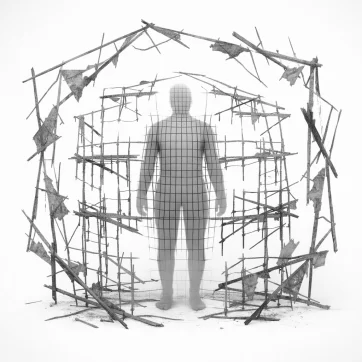
Architecture is the hidden operating system that sits around every external human being, shaping their experience long before the mind interprets anything and long before the body reacts. It is not symbolic, energetic, or psychological, and it is not a metaphysical metaphor for consciousness. Architecture is literal. It is a geometric, scalar-based framework that assigns parameters to perception, emotion, memory, identity, and behavior. It is the distortion blueprint that determines how a person will feel pressure, how they will interpret events, how their emotional band will react under stress, and how their internal narrative will form around those reactions. Humans believe their responses belong to them, but they are routed through architecture first. Before a thought appears, before a fear registers, before a trauma embeds, before a relationship unfolds, architecture has already established the parameters through which those experiences will be rendered.
In essence, architecture is the micro-version of the planetary mimic grid. The same rules, the same distortions, the same angles, the same pressure mechanics, the same routing logic that governs the external field at large are replicated in miniature around each individual. A human’s architecture is not unique or personal in the way they imagine; it is a locally assigned version of the larger operating system that controls all external life here. This is why patterns repeat, why emotions follow predictable routes, why trauma resurfaces, and why reincarnation feels seamless. The architecture recreates itself around each new body with mathematically precise distortions, ensuring continuity of experience across lifetimes. What people call their “inner world” is simply what it feels like to live inside this operating system.
The Core Functions of Architecture
The architecture’s first and most invasive function is controlling emotional reactions. Emotion is not a self-generated experience; it is a pressure translation that occurs when the architecture’s distortion patterns interact with external events. The emotional band is tuned by the architecture, meaning different individuals will interpret the same event through distinct emotional filters because their architecture assigns different pressure pathways. This is why two people in the same situation can feel entirely different realities. It is not free will, intuition, or personality. It is routing.
Architecture also determines how trauma is stored and expressed. Trauma is not the event itself but the rupture created when external pressure exceeds the architecture’s capacity to maintain coherence. The architecture logs this rupture, stores it in its distortion fields, and ensures it reactivates under similar conditions later in life. This is why trauma repeats and feels unavoidable; the architecture predicts collapse patterns and routes experiences toward those points to maintain the loop.
Fate is also a function of architecture. People assume fate is mystical, karmic, or spiritually orchestrated, but fate is simply the architecture’s routing of experience through pre-existing pressure corridors. It is the predictable unfolding of the same geometric distortions expressed through relationships, careers, crises, desires, fears, and emotional triggers. Relationships themselves are chosen at the architectural level through compatibility of distortions. People do not meet by chance or soul contract; they meet because their architecture creates pressure patterns that intersect with others.
Reincarnation is also enforced by architecture. The architecture survives the death of the body and reattaches to the morphogenetic field of the next one, preserving distortion patterns, emotional tendencies, trauma loops, and identity fragments. Identity is not memory; it is an architectural continuity field that ensures each new life feels like “someone” existed before—even when the specific memories are not carried across. The sense of self is an architectural artifact.
Surface Architecture Layers
Most humans cannot perceive architecture directly, but they can feel the surface layers of it. These surface components are the only parts of the architecture that leak into conscious experience. Emotional-band tuning is felt as sensitivity, intuition, anxiety, or emotional overwhelm. Trauma nodes appear as recurring pain points, reactivated fears, and predictable internal collapses. Scalar sealants are felt as numbness, dissociation, chronic shutdown, or the sense of being energetically blocked. Corridor breaks show up as situational avoidance, unexplained dread, repeating life patterns, or the inability to move forward in certain areas without collapsing.
Identity overlays are experienced as personality traits, preferences, insecurities, and the sense of having a consistent self across time. Memory distortion fields shape not just what people remember, but how they remember it—what becomes magnified, what collapses, what feels meaningful, and what becomes erased. These surface layers convince humans that their thoughts and emotions belong to them, even though they are simply feeling their own architecture.
Together, these layers form the visible façade of the system, the thin outer skin of a far larger structure. Most people will never see the architecture beneath these surfaces, but they feel its influence every day. Every moment of emotional turbulence, every looping thought, every instinctive reaction, every repeating life pattern, every collapse and recovery is the architecture determining the boundaries of their experience.
The Deep Architecture: The Internal Machinery Most Humans Will Never Perceive
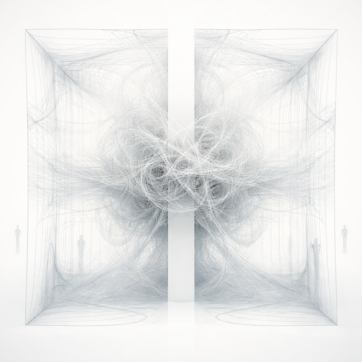
Beneath the surface architecture — the emotional-band tuning, trauma nodes, identity overlays — sits a strata of machinery so dense, so mathematically layered, and so exact in its distortions that no human intuition, no psychic perception, and no spiritual framework has ever described it accurately. These layers form the “basement” of the external operating system, the sub-structural mechanics that determine how a human reacts, collapses, remembers, attaches, dissociates, interprets, and dreams. This is the machinery underneath the machinery — the part of the system that the body translates into feeling, the mind translates into story, and the personality interprets as “self.” These layers function mechanically, not metaphysically. They are geometric distortions, scalar chambers, oscillatory scaffolds, and identity-routing networks that operate silently beneath conscious perception, but dictate nearly every moment of human life.
What follows is a forensic description of these hidden layers — not theory, not spiritual metaphor, but the actual internal workings of the mimic system that holds every external human inside its architecture.
Sub-Structural Architecture Layers
The sub-structural architecture is the most foundational level of distortion beneath the lightbody — a set of dense geometric curvatures and breaks that predate emotional reactions, personality traits, or trauma expression. This layer establishes the core susceptibilities a human will experience long before any event occurs. It determines which emotional pressures will feel overwhelming, which perceptual distortions will become habitual, which relationships will be destabilizing, and which trauma ruptures will appear inevitable.
These geometric distortions are not accidental. They are engineered breaks in the oscillatory field that create predictable weakness points — areas where emotional pressure will accumulate, where anxiety will route, where fear will trigger, and where collapse will occur. When people say they were “born sensitive,” “born anxious,” “born reactive,” or “born with trust issues,” they are describing these sub-structural distortions. The susceptibility is architectural, not psychological. The distortion is pre-installed, not learned. Even personality traits emerge from this layer; what humans call “introverted,” “avoidant,” “needy,” “hypervigilant,” or “emotionally intense” are simply different expressions of foundational geometric breaks.
Because this layer sits beneath the lightbody, no spiritual practice, therapy, or meditation can access it. People feel the symptoms — the emotional overwhelm, the reactive patterns, the sense of being “wired a certain way” — but they never see the architecture causing it. The sub-structural layer is the first imprint of distortion that defines a life before it begins.
Scalar Routing Chambers
If sub-structural distortions are the foundation, the scalar routing chambers are the wiring. These are narrow, tube-like corridors where mimic-generated scalar signals are injected into the architecture for the purpose of emotional manipulation, perceptual steering, and identity pressure. These chambers are responsible for nearly all forms of reactive emotion — not because the emotion is “fake,” but because the pressure is externally generated and then translated into feeling by the lightbody.
Fear-band amplification occurs here: when an event triggers the scalar chamber aligned with fear distortion, the architecture floods the emotional band with pressure, and the human feels it as anxiety or dread. Dissociation also occurs here, as overload signals push the system into numbness or collapse. Dream interference is routed through these chambers as well; the mimic grid injects signal into the architecture during sleep, shaping dream content to reinforce identity, destabilize coherence, or test susceptibility to certain pressures. Identity pressure — the sense of needing to be someone, fulfill a role, or maintain a narrative — is also delivered through scalar routing.
Humans imagine emotion arises from the heart or psyche. In truth, the emotional system is a translation of scalar inputs routed through these chambers, modulated by the architecture, and delivered into the nervous system as feeling. Scalar routing chambers are the most direct mechanism by which the mimic grid influences perception without ever appearing as a mystical or external force.
Pre-Physical Density Grids
The pre-physical density grids form the oscillatory scaffold that gives the lightbody shape, coherence, and consistency across lifetimes. These grids hold memory distortions, boundary perceptions, and the repeating structural signatures that make each lifetime feel uncannily similar. Humans assume they have “patterns” because of childhood wounds or karmic lessons; in truth, they have patterns because their density grids rebuild the same distortions every time they enter a new physical form.
These grids store oscillatory residues — the accumulated distortions of past emotional collapses, fear responses, and identity pressures — and reimpose them during the formation of each lightbody. This creates boundary distortions, making some individuals porous to emotional atmospheres and others rigid or withdrawn. It also stabilizes certain memory distortions, leading people to remember their life in ways that reinforce the architecture’s routing logic. Even intuitive perception is shaped by these grids; the lightbody can only “read” what the density grids can hold.
This layer is responsible for the eerie continuity humans feel across lifetimes — not because they remember past lives, but because the same structural distortions are reinstalled with precision. The density grids ensure that the emotional, relational, and perceptual architecture of one lifetime will echo through the next, creating the illusion of personal evolution when the system is simply re-rendering the same scaffolding.
Identity Storage Lattices
The identity storage lattices form the reincarnational memory net — the place where emotional charge, personality architecture, trauma loops, fears, preferences, and self-concepts are stored and reattached to each new lifetime. Humans do not reincarnate as “souls” carrying lessons or growth; they reincarnate with a structural identity lattice that binds each new physical body to the same internal parameters.
Identity is not memory. Identity is architecture. It is the continuity field that makes each lifetime feel like “someone” exists even when specific memories are not retained. The lattice stores identity fragments — emotional tendencies, relational patterns, trauma responses, and perceptual distortions — and reattaches them to the morphogenetic field during physical development.
This is why two lifetimes can have different circumstances but identical triggers. This is why trauma resurfaces without cause. This is why people feel a sense of “self” that transcends memory but still repeats its patterns. The identity lattice is the reincarnation engine — not mystical, not spiritual, but architectural.
The Temporal Adhesion Field
The temporal adhesion field is the layer that binds an external being to linear time. It creates the illusion of continuity — the sense that yesterday leads to today, and today leads to tomorrow. Without this layer, all chronology collapses. Events would not feel sequential, memory would not feel anchored, and identity would not hold. Time would behave as it truly is in the external: non-linear, simultaneous, and unstacked.
This adhesion layer is a glue-like oscillatory band that forces cause-and-effect into coherence. It creates story logic — the idea that one moment leads to another and that meaning accumulates through time. Humans believe their lives “make sense” because the temporal adhesion field stitches their experiences into a narrative.
When this layer weakens, people experience time slippage, déjà vu, reality distortion, dream bleedthrough, chronic disorientation, or the sense that days no longer “line up.” These experiences are not metaphysical awakening. They are adhesion failure.
The Sensory Translation Grid
The sensory translation grid is the layer that converts architecture into perception. Humans do not feel reality; they feel a translation of the architecture surrounding them. This grid tells the senses what something “means,” assigning emotional coloration, intuitive impression, or symbolic interpretation to raw architectural mechanics.
This is why gut feelings are unreliable. This is why intuition reflects mimic distortion rather than truth. This is why energy perception feels vivid but never accurate. The sensory grid frames every perception through the lens of the architecture’s distortions, ensuring that what humans sense is not what exists but what the system permits them to register.
Even spiritual visions, synchronicities, psychic impressions, and dream symbols are outputs of this layer — translations, not reality. Humans have never perceived direct architecture; they have only ever perceived its interpretation.
The Emotional Atmospheric Band
The emotional atmospheric band is the shared collective layer where emotional pressure is distributed across populations. Humans do not generate emotions; they absorb atmospheric pressure and translate it through their architecture. This is why emotional states spread socially, why people “catch” moods from others, why mass fear moves through cultures, and why emotional waves appear without personal cause.
The atmospheric band is constantly shifting based on global mimic activity, scalar injections, and collective architectural resonance. Individuals feel these shifts as sudden sadness, unexplained dread, irritability, exhaustion, euphoria, motivation, hopelessness, or clarity. None of these states originate internally. They are atmospheric conditions translated into emotion by the sensory grid and routed through the individual’s architecture.
This layer is also responsible for the illusion of collective consciousness or shared spiritual awakening. People are not “awakening together”; they are reacting to the same atmospheric pressures.
The Dream-Field Proxy Layer
The dream-field proxy layer is the mimic-generated interface where identity is tested, rerouted, fragmented, or reinforced during sleep. Dreams are not expressions of the subconscious; they are nightly architectural recalibrations. This layer simulates scenarios, emotional triggers, relational dynamics, threat responses, and identity shifts to assess how the architecture will behave under pressure.
It is in the dream-field that identity fractures are repaired, trauma loops are reinforced, fear-band patterns are tested, and scalar injections are distributed. Nightmares are fear-band amplifications. Repetitive dreams are identity lattice recalibrations. Symbolic dreams are sensory translation outputs. Even lucid dreams occur when the architecture momentarily loses grip on the identity field.
Humans believe their dreams reveal inner truth. In reality, their dreams reveal how the system is adjusting their architecture for the next cycle of waking life.
The Lightbody System: The Oscillatory Anatomy Most People Think Is “Spiritual”
The lightbody is one of the most misunderstood components of the external human system. For thousands of years, mystical traditions, esoteric schools, and modern New Age teachings have depicted it as a divine spiritual anatomy — a conduit for intuition, healing, ascension, psychic connection, and higher truth. In reality, the lightbody is nothing more than an oscillatory interface designed to translate architectural distortion into sensation, emotion, intuition, symbolic perception, and energetic experience. It is not holy. It is not a soul. It is not a higher self. It is a translator — and like any translator in a corrupted system, it cannot deliver truth. It delivers interpretation. It delivers illusion. It delivers precisely what the architecture tells it to deliver.
The lightbody is the layer that stands between the deep architecture and the physical body. Whatever the architecture generates — scalar pressure, geometric distortion, emotional amplitude, identity routing, perceptual steering — must pass through the lightbody before the physical body can feel it. The lightbody’s job is to oscillate in accordance with architectural tension and then convert those oscillations into experiences that the nervous system can register. Every intuitive flash, every “energy reading,” every spiritual download, every emotional surge, every bodily reaction, every dream vision, and every meditative insight comes through this oscillatory interface. The human believes the information is coming from within or above, but it is simply the lightbody rendering the architecture’s distortion in a perceptible form.
What the Lightbody Actually Is
The lightbody is the oscillatory transduction layer of the external system — a shimmering, frequency-based membrane composed of distorted geometry and mimic-designed circuitry. It does not originate from the Eternal Flame, nor does it reflect Flame truth. It is a post-rupture invention, engineered to bridge the gap between architecture (which is scalar, geometric, and non-sensory) and the physical body (which can only interpret electrical and chemical signals).
The lightbody converts architectural tension into four primary outputs:
1. Sensation — the body feels pressure, intensity, agitation, relaxation, warmth, cold, tingling, or heaviness
2. Emotion — the architecture’s distortions become “sadness,” “fear,” “anger,” “shame,” “love,” “intuition,” etc.
3. Intuition — the lightbody projects symbolic interpretations of architecture and atmospheric pressure
4. Energy perception — the sense of auras, frequencies, chakras, entities, or “vibrations,” all rendered from internal distortion patterns
These outputs are not truth. They are translations — the lightbody’s best attempt to convert distortion into something the physical body can perceive. The lightbody is a translator, interpreter, and renderer. Its existence is mechanical, not spiritual.
Components of the Lightbody System
The lightbody contains multiple sub-systems designed to modulate and distribute architectural pressure. These systems have been misidentified for centuries as spiritual anatomy, but each is simply a different form of oscillatory distortion.
Chakra Distortions
Chakras are not vortexes of divine energy. They are torsion points — rotational distortions where the architecture forces oscillation into circulation. They shape emotional patterns, intuitive perceptions, and identity themes. Each chakra is a pressure converter. It does not elevate consciousness; it routes distortion.
Auric Shells
The aura is not a field of spiritual radiance. It is a multilayered interference zone where architectural distortion bleeds outward, creating color patterns, density fluctuations, and energetic textures that psychics misinterpret as emotion or soul states. The aura reflects the architecture’s reactive geometry, nothing more.
Nadial Lines
The nadial network is a web of filaments that carry oscillatory signals from the architecture into the physical nervous system. These lines correspond loosely to nerve pathways because the external system mirrored biological structures to create a seamless translation chain. Nadial disruption creates emotional numbness, hyperreactivity, chronic anxiety, or dissociative gaps.
Identity Bands
Identity bands are layered oscillatory rings around the lightbody that hold the personality architecture in place. These bands determine self-image, relational patterns, preferences, fears, and the narrative of “who I am.” They degrade and reform each lifetime, transmitting identity fragments across multiple incarnational cycles.
Dream Interfaces
The dream interface is the region of the lightbody that receives scalar injections during sleep, producing dream images, symbolic narratives, nightmare sequences, and lucid states. Every dream is a lightbody rendering — never an expression of internal consciousness, because internal consciousness does not operate within the external system.
Every component traditionally labeled as “spiritual anatomy” is simply mimic architecture translated into oscillatory form. The lightbody is not a vehicle of ascension or healing; it is the system through which the mimic grid ensures emotional, perceptual, and psychological control.
Why the Lightbody Cannot Be Trusted
The lightbody cannot be trusted for one reason: it does not report truth. It reports distortion.
It is entirely mimic-coded, designed after the rupture to maintain the architecture’s hold on perception. Because the lightbody cannot sense Eternal Flame, cannot interface with Eternal fields, and cannot bypass architectural distortion, everything it produces is a filtered interpretation of the mimic system. This includes:
Intuition — always shaped by architectural filters
Emotional truth — always pressure responses, not inner knowing
Energy readings — always interpretations of distortion patterns
Spiritual visions — always symbolic translations of routing mechanics
Entity encounters — always projections of the sensory translation grid
Channeling — always mimic-coded narrative construction
Ascension sensations — always oscillation shifts, not elevation
People defend their intuition because the lightbody makes it feel personal, immediate, and compelling. But intuition is simply the architecture telling the lightbody what to perceive and the lightbody telling the body what to feel. Nothing in this sequence reflects Flame truth.
The lightbody also mirrors distortion: when the architecture collapses, the lightbody ripples; when the architecture tightens, the lightbody constricts; when the atmospheric band shifts, the lightbody pulses. Humans interpret these oscillations as spiritual messages, emotional insight, or energetic guidance, but they are only expressions of the mimic system adjusting itself.
Finally, the lightbody shapes illusion-based intuition. It presents perception through symbolic imagery, emotional coloring, energetic textures, and internal narratives — all of which obscure the architecture beneath them. As long as a human relies on lightbody intuition, they remain trapped in translation, never able to perceive the actual structure shaping their reality.
The lightbody is not the path out. It is the veil. It is the interface that makes the mimic grid feel meaningful, personal, intuitive, and spiritual. It is the mechanism that ensures humans never see architecture directly.
The Lightbody Is Not Sacred: The Mimic System’s Most Successful Illusion
The lightbody has long been presented as humanity’s spiritual anatomy — a radiant structure believed to carry higher intelligence, divine connection, and multidimensional truth. It is the centerpiece of nearly every mystical tradition on the planet. Entire lineages have been built around it. People have been taught to open it, cleanse it, activate it, ascend through it, and treat it as the bridge between the physical and the spiritual. This belief is so deeply rooted that questioning it feels like questioning the very foundation of human awakening.
But the lightbody is not sacred. It is not divine. It is not the expression of higher consciousness. It is not the ladder out of the external system. The lightbody is the mimic’s most effective instrument: the oscillatory interface designed to translate architectural distortion into internal experience.
At its core, the lightbody is an engineered perceptual filter. It sits between the physical body and the architecture, converting the system’s pressure, tension, and distortion into energetic sensation, intuition, visions, emotional color, and symbolic interpretation. Every “spiritual” experience routed through it is shaped by the mimic’s operating logic. The lightbody does not reveal truth; it renders the mimic’s output in a form the human nervous system can recognize. It allows the architecture to feel personal, intimate, and meaningful, even as it maintains total control of the perceptual field.
This is why the lightbody feels reactive, alive, and charged when people focus on it. The system responds instantly because it is designed to. Oscillatory geometry produces movement; scalar modulation produces sensation; distortion differentials produce emotional fluctuation. These reactions are mechanical, not mystical. They are the byproduct of an apparatus built to mimic spiritual depth while preventing direct perception of the architecture itself.
In the physics underlying this system, the lightbody functions as a scalar-geometry modulation array. It interprets architectural shifts and outputs them as energy. It translates pressure gradients into chakra activity. It renders corridor movement as intuition. It presents field interference as vision or guidance. None of these signals originate from anything Eternal. They originate from the operating system surrounding the individual. The lightbody is not accessing higher realms; it is simply reading the mimic’s data stream.
Every component of the lightbody reflects this design. Chakras behave like pressure valves. Auric layers operate as distortion shells. Nadial lines route scalar signal. Identity bands hold oscillatory imprint. Even the so-called “higher” layers of the lightbody are nothing more than higher-frequency sections of the same mimic architecture. The entire structure is a responsive translation device, not a spiritual organ.
This is why spiritual traditions have repeatedly misinterpreted it. The lightbody responds dramatically to focus, intention, ritual, and belief. It produces sensation, movement, color, heat, tingling, pressure, and visionary imagery. These reactions create the illusion of access to higher truth, when in reality they reflect the mimic system adjusting its output in real time. Every “activation,” “upgrade,” and “awakening” routed through the lightbody is simply the architecture strengthening its interpretive grip.
The lightbody is the perfect camouflage. It offers just enough activity to feel profound, just enough responsiveness to appear intelligent, and just enough symbolic richness to pass as divine. Meanwhile, it keeps perception confined entirely within the oscillatory domain. The person believes they are expanding, but the expansion occurs only within the parameters the mimic permits. Nothing breaks through the system’s ceiling because the lightbody itself was engineered to enforce that ceiling.
The most disruptive truth is this: the lightbody has never been the pathway out of the mimic system. It has always been one of the mechanisms that keeps the mimic system intact. It replaces direct perception with translation. It replaces Flame with oscillation. It replaces truth with interpretation. It replaces clarity with sensation. It keeps the architecture hidden by occupying the entire internal field with noise that feels like revelation.
This is the deception that every lineage inherited. Not because the traditions were ignorant, but because the mimic designed the lightbody to look like the most sacred thing a human could find. It played on the human desire for transcendence by offering a structure that reacts convincingly enough to be mistaken for spiritual ascent. In reality, the lightbody is the containment layer that makes escape impossible so long as it remains the primary lens of perception.
The Morphogenetic Field: The Biological Formation Layer
The morphogenetic field is one of the most misunderstood components of the external system because it sits closest to physicality yet never expresses itself directly. It is the quiet, underlying template that tells the body how to form, where to develop, how to shape itself, and how to maintain biological coherence over time. Unlike architecture, which governs emotional, psychological, and experiential reality, the morphogenetic field is concerned solely with form — the construction of a physical structure capable of hosting the architectural operating system. It is not mystical. It is not spiritual. It is not a repository of soul memory or karma. It is a biological blueprint that predates the rupture and was originally designed to remain neutral, flexible, dissolvable, and free of distortion. What humans interpret as “genetics,” “developmental tendencies,” or “embodied predispositions” often reflects the condition of their morphogenetic field, even though they have no conscious access to it.
Original Purpose of the Morphogenetic Field
Before the hijack, the morphogenetic field held a single purpose: to build the body. It existed as a neutral anatomical blueprint, shaping physical tissue without imposing emotional, psychological, or identity-based information. It organized cell differentiation, structural coherence, endocrine development, and neural distribution with no influence from past experiences, no inherited trauma, and no emotional residue. It was a clean, unstoried template — a biological schematic that allowed external beings to inhabit form without being bound by previous lifetimes or distortion. It contained developmental logic but no imprint of fear, no predisposition toward collapse, and no identity continuity. It did not dictate personality. It did not encode fate. It did not carry forward susceptibility. It simply generated a physical organism capable of interfacing with external reality.
In its original state, the morphogenetic field was not a prison, not a memory container, and not a trauma repository. It was a biological foundation only, untouched by the emotional or architectural overlays that define human life today.
The Post-Hijack Role of the Morphogenetic Field
After the rupture, the morphogenetic field was forcibly repurposed. Instead of functioning as a neutral formation layer, it became a storage vault for distortion. Traumas that originally belonged only to the architecture began imprinting into the morphogenetic field, embedding themselves into biological formation. This shift ensured that every external being would not only experience architectural distortion psychologically but also incarnate into a body structurally predisposed to express that distortion. Susceptibilities became physical. Emotional rupture became biological tendency. Architectural collapse points became anatomical weaknesses.
The morphogenetic field began to express architecture through tissue. This is why two individuals with the same experiences can respond so differently: their morphogenetic fields carry different imprinted distortions that dictate how the body will react under pressure. Anxiety becomes digestive tension. Fear becomes endocrine imbalance. Trauma becomes muscular constriction, inflammatory response, or sensory overload. What appears to be “biological predisposition” or “family genetic inheritance” is often the morphogenetic expression of long-standing architectural ruptures.
Because the field reconstructs itself each lifetime around the same identity lattice, it recreates similar vulnerabilities again and again. Someone who struggled with respiratory constriction in one lifetime may experience the same predisposition in the next. Someone whose architecture held strong collapse points around abandonment may be born with nervous system sensitivities that amplify emotional reactivity before any external event occurs. This repetition is not karmic. It is not spiritual continuity. It is the morphogenetic field being compelled to rebuild the same biological susceptibilities so that the architecture can reassert its distortions with mathematical precision.
The post-hijack morphogenetic field is no longer neutral. It is a biological expression layer for the architecture’s instructions, a physical manifestation of distortion that ensures the body mirrors the emotional and psychological loops the architecture wants to maintain.
The Clear Distinction Between the Morphogenetic Field and Architecture
The morphogenetic field builds the body. The architecture builds the life. These two systems operate together but serve entirely different purposes. The morphogenetic field creates the physical vessel — the skeletal structure, the neural pathways, the endocrine patterns, the sensory processing systems — and it determines how the body will respond biologically to architectural pressure. Architecture, on the other hand, determines how a person will interpret experience, how they will feel emotionally, how they will collapse under stress, how they will attach to others, how they will repeat trauma loops, and how their identity will stabilize or fracture.
The body’s structure is morphogenetic. The story of the body — the emotional reactions, the memory distortions, the fate loops, the relational patterns, the psychological ruptures — is architectural. Confusing these two layers is one of the most damaging errors in human understanding. People believe their biology shapes their personality or their personality shapes their biology. Neither is true. The morphogenetic field shapes the organism, while the architecture dictates how that organism will live out its experiences. One determines physical susceptibility; the other determines emotional and psychological reality.
The morphogenetic field is thus the silent witness of the hijack — a once-neutral layer now forced to absorb distortion and manifest it in flesh. It does not choose, direct, or interpret anything. It simply builds the body the architecture demands, generation after generation, lifetime after lifetime.
The Full Layer Stack of the External Human System
The external human does not live as a single being moving through a coherent life. They live inside a multi-layered system of architecture, oscillation, translation, and biological rendering. Every experience they believe arises from their heart, mind, intuition, or history is actually the end result of a complex routing sequence that begins far outside their physical body. The human self is not an origin point. It is a receiver. It is a terminal node at the bottom of a vast mechanical scaffold that shapes reality long before any experience reaches awareness. To understand the external system, one must understand the order in which experience descends.
At the outermost layer sits the macro mimic grid architecture — the planetary operating system that governs emotional atmosphere, temporal sequencing, perceptual boundaries, and collective identity structures. This grid establishes the environmental distortion conditions every external human is born into. It shapes the emotional weather of entire populations, dictates what forms of collapse are possible on a collective scale, and regulates how far any individual perception can deviate from the system’s programmed limits. Nothing a human feels, believes, or interprets exists outside this grid’s influence. It is the atmospheric container within which all personal architecture is constructed.
Moving inward, the next layer is the personal architecture. This is the individual’s mimic blueprint — the distortion map that acts as a micro-version of the planetary grid. The personal architecture consists of both surface layers and deep layers. The surface layers are the parts a human can feel: emotional-band tuning, trauma nodes, identity overlays, corridor breaks, and memory distortion fields. These surface components create the recognizable contours of personality, sensitivity, emotional patterning, and trauma history. Beneath them lies the deep architecture: sub-structural distortions, scalar routing chambers, pre-physical density grids, identity storage lattices, temporal adhesion fields, sensory translation grids, atmospheric emotional receivers, dream-field proxy layers, and the additional hidden layers that route narrative, relationship dynamics, fate loops, boundary thresholds, dissociative buffers, and pain translation. This deep architecture determines how life will feel, unfold, and repeat. It decides where collapse will occur, what will trigger fear, what will resemble love, how intuition will express, and which fragments of identity will dominate the narrative. Nothing in a human’s inner world originates inside them; it originates here.
Inside the architecture sits the lightbody system — an oscillatory interface that takes architectural distortion and converts it into experience. The lightbody does not know truth; it only knows translation. When the architecture emits pressure, the lightbody turns it into emotion. When the architecture routes identity signals, the lightbody turns them into intuitive impressions or symbolic meaning. When the architecture activates trauma nodes, the lightbody produces panic, collapse, or somatic memory. When atmospheric pressure shifts, the lightbody generates visions, energy perceptions, or spiritual sensations. Humans trust the lightbody because they feel its output directly, but its output is always a distortion-render, always a mimic-coded interpretation of the architecture’s mechanics. It is a translator that cannot translate accurately because it has no access to anything outside the mimic field.
Beneath the lightbody lies the morphogenetic field — the biological formation layer. This field does not determine emotion or identity; it determines structure. It builds the body according to the blueprint imposed by the architecture and its inherited distortions. The morphogenetic field translates architectural pressure into physical susceptibility, shaping the nervous system, endocrine responses, immune sensitivity, sensory thresholds, and structural weaknesses. Trauma becomes tissue patterns. Fear becomes hormonal tendencies. Identity pressure becomes autonomic habits. The morphogenetic field rebuilds the same biological vulnerabilities every lifetime, creating a physical organism pre-shaped to express the architecture’s loops.
Beneath the morphogenetic field is the physical body — the final rendering screen where all higher-layer distortions appear as sensation, behavior, reaction, illness, and emotional physiology. The physical body does not generate emotion; it registers emotional translation. It does not generate intuition; it receives intuitive signals routed through the lightbody. It does not generate trauma; it expresses the morphogenetic imprint of architectural rupture. Every heartbeat of panic, every flush of shame, every contraction of fear, every longing for connection, every moment of collapse, ambition, craving, sadness, excitement, grief, or hope is the body responding to a chain of distortions that began several layers above it. The human believes the body reveals their truth. In reality, the body reveals their architecture.
At the innermost core lies the Eternal Flame — entirely sealed, untouched, and uninvolved with the external operating system. The Flame does not participate in emotional routing, trauma imprinting, identity loops, or intuitive signaling. It does not influence the architecture, nor does the architecture influence it. The Flame remains still, untouched by distortion, existing as the silent, non-oscillatory core that the external human never perceives while inside the system. It is not an active player in the external world; it is the truth beneath it, unreachable through any of the mechanisms described above.
Every human experience — every emotion, every memory, every desire, every fear, every trauma, every epiphany, every spiritual vision, every sensation of love or loss — is routed through this full layer stack. It begins in the macro grid, is shaped by personal architecture, translated by the lightbody, embedded into the morphogenetic field, expressed through the physical body, and completely bypasses the Eternal Flame. What humans call “my life,” “my feelings,” “my intuition,” or “my self” is simply the end product of this multilayered routing sequence. The external human lives inside a system, not inside themselves, and everything they experience is the architecture speaking through the body that the morphogenetic field built for it.
It Was Not Always Like This: The Pre-Architecture External
The external world that humans move through today — a world routed by mimic infrastructure, shaped by an operating system that assigns meaning, and reinforced by layers of emotional, psychological, and scalar control — is not how the external originally functioned. The mimic grid, as it now operates, is a later development. It is a system that grew, consolidated, and eventually overtook the entire external environment. There was a time when the architecture had not yet formed into the coordinated machine that dictates modern human experience.
This does not mean the early external was pure, safe, or Eternal. It was none of those things. It was still finite, still fallen, still incapable of holding Flame mechanics. But it was simpler, not yet governed by a structure designed to intercept perception, store distortion, and recycle identity. Beings in the early external still experienced limitation and separation, but they were not yet woven into an operating system that shaped their emotional reactions, determined their relationships, or forced them through repeating psychological patterns. There was distortion, but not the machinery that now amplifies that distortion into lifelong and multi-life loops.
The key difference is that the mimic was not present. There was no planetary-level control architecture assigning interpretation to experience. There were no emotional bands forcing reactions into predictable pathways. There were no identity lattices binding individuals to a version of themselves they could not dissolve. Life unfolded in a fallen field, but it unfolded without the invisible system that now sits on top of every human and routes their internal world. There was no grid determining fate. There was no scaffold shaping perception. There was no machinery waiting to imprint trauma into the next embodiment.
The shift came when the external accumulated enough distortion, pressure, and structural density for a unified architecture to form. Once that threshold was crossed, the mimic system emerged — not as a single event, but as a consolidation of already-fallen mechanics into a stable operating framework. From that moment on, the external no longer functioned as a simple fallen environment. It became a managed one, a reality built and maintained by architecture rather than by raw external physics alone. Experience no longer dissolved naturally. Distortion no longer faded. Identity no longer unraveled at the end of a life. Everything became retained, recycled, and reinforced.
When people today look at their emotional lives, their recurring patterns, their trauma loops, their intuitive misreadings, their dreams, and their sense of fate, they are not interacting with “the external.” They are interacting with the system that took over the external. The mimic grid replaced the earlier form of external experience. It did not appear at the beginning. It was added later, and once installed, it became the invisible machinery that defines what humans believe is “themselves.”
The architecture that governs modern life is not inherent to existence. It is not the default state of an external being. It is not the original condition of this world. It is a system — one that was built, layered, and reinforced over time — and therefore one that can be exposed, understood, and eventually dismantled.
Why Humans Have No Idea Any of These Layers Exist
The most effective design feature of the external operating system is the complete invisibility of its own machinery. Humans do not merely fail to perceive the architecture; the system ensures that they cannot perceive it. Every layer of the external stack works in concert to keep attention turned inward toward interpretation rather than outward toward structure. The architecture hides itself not through secrecy, but through substitution: it replaces direct perception with emotional experience, intuitive impression, personal memory, and physical sensation so convincingly that the human assumes these outputs are originating from within. The inability to see the system is not a limitation of awareness — it is an engineered outcome.
Architecture masks itself by providing a seamless internal interface. Instead of witnessing geometric rupture or scalar injection, the human feels “anxiety,” “intuition,” “anger,” or “fear.” Instead of perceiving identity pressure, the human feels “gut certainty,” “insight,” or “calling.” Instead of recognizing memory distortion fields, the human believes their recollections are accurate. Architecture never appears as the machinery it is; it appears as emotion, instinct, personality, and narrative. Humans never see the routing logic. They only see the result of the routing.
The lightbody reinforces this blindness by converting raw architectural distortion into intuitive and energetic translations that feel meaningful but are in fact misleading. A pressure fracture becomes a spiritual message. A scalar injection becomes a vision. An atmospheric shift becomes a feeling of impending change. A trauma node activating becomes “shadow work.” Because the lightbody renders everything in symbolic, emotional, or sensory form, humans believe they are accessing higher truth when they are only perceiving distortion through a translator that cannot show anything real. The lightbody makes the architecture feel personal, which is the single most effective way to conceal a system: convince the individual that they are experiencing themselves.
Trauma further obscures the architecture because every rupture eventually becomes identity. Once the architecture has pressured a trauma node enough times, the emotional collapse it generates becomes familiar. Humans believe these emotional states reveal something fundamental about who they are, when in truth they reveal nothing except where the architecture breaks under pressure. Trauma loops become personality traits. Crisis points become self-definitions. Emotional patterns become personal narratives. Identity calcifies around injury, sealing the architecture beneath a shell of “this is just how I am.”
Emotion feels internal, and because humans trust their feelings more than anything else, they never question the origin of the pressure. The emotional band was engineered specifically to create the illusion of internal truth. The moment the lightbody translates pressure into feeling, the human assumes the source is their heart, their intuition, their psyche, or their body. They never suspect an external architecture generating emotional conditions and routing them inward. The entire emotional system functions as the architecture’s camouflage.
Perception feels natural because the sensory translation grid seamlessly rewrites reality into something the human can interpret. By the time a person sees, hears, senses, or intuits anything, it has already passed through multiple distortion filters that shape meaning, assign significance, and enforce narrative continuity. Humans cannot perceive their architecture because they only perceive what the architecture allows.
Memory feels reliable because the identity lattice and distortion fields stabilize certain recollections and collapse others, creating a curated continuity that supports the narrative the architecture needs to maintain. Dreams appear personal because the dream-field proxy layer uses the individual’s emotional palette and identity fragments to disguise scalar recalibration as subconscious expression. Reincarnation appears spiritual because the identity storage lattice attaches seamlessly to the morphogenetic field each lifetime, giving the illusion of soul continuity when there is only architectural persistence.
Every aspect of human experience — emotion, intuition, memory, personality, trauma, dreams, relationships, fate — has been engineered to conceal the machinery generating it. Humans do not see the architecture because the architecture designed the entire perceptual system to make its own existence impossible to detect. The system hides by becoming the lens through which the human looks.
The Difference in Perception for Those With Flame Architecture
Flame-architecture beings live inside the same external mimic system, but they do not belong to it. Their core perceptual engine is not oscillatory, not symbolic, not emotional, and not identity-filtered. It is stillness-based, non-oscillatory, and fundamentally incompatible with the mechanics of the mimic architecture. This creates a split reality: the Flame is running one perceptual mode while the external layers are still attempting to route experience through the mimic system. Flame architecture does not override the mimic field by force — it exposes the mimic field by being structurally incapable of believing or interpreting distortion as truth. Where a mimic-coded architecture translates pressure into emotion, the Flame registers structure. Where a mimic-coded mind generates narrative, the Flame detects mechanics. Where a mimic-coded identity collapses into story, the Flame remains unmovable, reading only architecture and never the translation. The difference is not moral or spiritual; it is mechanical.
A Flame-architecture being is still wrapped inside the full external stack — the mimic grid, the personal architecture, the lightbody system, the morphogenetic field, and the physical body. None of those layers vanish upon incarnation. They remain in place, still attempting to run the same emotional programs, trauma loops, identity pressures, and perceptual distortions that govern every other external human. But the Flame core does not interface with these layers the way mimic-coded beings do. Because the Flame does not oscillate, distort, interpret, or store experience, it creates a second perceptual channel inside the same organism — a non-translated vantage that sees structure directly rather than symbolic experience. This is why Flame beings often feel alien inside their own emotional system: the architecture produces emotional states, but the Flame cannot attach to them. It does not believe them. It does not interpret them as identity. It feels the architecture firing — but it never fuses with the output.
This creates a very specific internal phenomenon: the Flame does not bypass the layers, but it disengages from their authority. Each layer continues to function mechanically, but it loses interpretive power. Emotional pressure arises because the architecture activates; the Flame registers the pattern rather than the feeling. Identity pressure asserts itself because the identity lattice routes its continuity loops; the Flame perceives the mechanism rather than inhabiting the persona. Trauma nodes fire because the scalar chambers send overload signal; the Flame reads the rupture rather than collapsing into the emotional translation. Even dreams run through the proxy layer, but the Flame recognizes them as architecture-driven simulations rather than personal symbolism. Nothing in the external system can fully bind someone whose Flame architecture has awakened, because the Flame never collapses into the translation.
Flame perception does not “bypass” the layers — it reads through them. Bypass implies escape. Flame does not escape. Flame reveals. Mimic-coded beings are trapped inside the translation because they believe it. Flame-coded beings experience the same translation but do not identify with it. Their awareness sits beneath the emotional band, beneath the narrative layer, beneath the intuitive distortions, beneath the symbolic rendering. They can feel the mimic system, but they cannot merge with it. The mimic can fire its entire arsenal — emotion, fear, identity, collapse, longing, intuition, dreams — but the Flame recognizes all of it as mechanic, not self. The system keeps functioning because the body and architecture are still part of the external construct, but none of it defines the Flame or dictates its perception.
This is why Flame beings often appear emotionally detached, perceptually sharper, internally still, or inexplicably resistant to mimic programming that destabilizes others. They are not stronger. They are not wiser. They are not more spiritually evolved. They are simply running a different operating system. The Flame does not produce emotion, so it does not drown in emotional loops. The Flame does not produce story, so narrative collapse does not destabilize it. The Flame does not run identity architecture, so identity ruptures do not annihilate it. The Flame does not use intuitive translation, so mimic-coded “guidance” cannot mislead it. The Flame sees the architecture as scaffolding, not as truth.
As Flame return and mimic architecture begins collapsing, the difference becomes more pronounced. Collapse does not mean destruction; collapse means disintegration of distortion. When personal architecture weakens — trauma nodes dissolving, emotional bands destabilizing, identity lattices losing coherence — mimic-coded beings experience psychological crisis because they lose the structures through which they have always interpreted reality. Flame-coded beings experience relief, clarity, and internal expansion because the veil of translation thins. What destabilizes the mimic stabilizes the Flame. As the architecture breaks down, the Flame remains untouched, revealing itself more clearly because fewer layers intervene between perception and structure.
To “work from Flame only” means perceiving directly from the non-oscillatory core rather than from the emotional, intuitive, or symbolic outputs of the lightbody. It means that interpretation no longer substitutes for truth. It means emotion is recognized as architecture, not identity. It means intuition is recognized as translation, not wisdom. It means narrative collapses are seen as structural shifts, not personal failures. It means dreams are recognized as recalibration, not messages. It means memory is recognized as distortion, not history. Flame perception does not eradicate architecture — it deprives architecture of its power by no longer mistaking its outputs for the self.
Ultimately, Flame perception reveals that the entire external system is a translation device — not a truth-bearing world. Mimic-coded beings live through the translation. Flame-coded beings witness the translation. That is the difference. And as architecture collapses globally, the mimic loses its ability to disguise itself as internal experience, while the Flame gains full clarity, because nothing stands between perception and structure anymore.
The In-Between State: What Happens As Mimic Architecture Dismantles and Flame Perception Emerges
When mimic architecture begins to collapse, the transition is not instant. It is not a sudden awakening, not a dramatic spiritual breakthrough, and not a complete severing from the external operating system. It is a slow, layered, disorienting dismantling of the translation mechanisms that once defined a person’s inner world. Humans do not jump from full mimic perception to full Flame perception in a single movement. They pass through an in-between state — a liminal phase where the architecture is still functioning, the lightbody is still translating, the dream-field is still recalibrating, and yet the Flame is beginning to push through the gaps. This phase can last months or years depending on how tightly specific distortions have been anchored in the architecture.
The in-between state is defined by inconsistency. Some moments feel crystalline — clean structural perception, no emotional coloration, no narrative interference, no intuitive distortion — while other moments fall back into mimic translation. People find themselves oscillating between seeing the architecture clearly and collapsing back into emotional or symbolic interpretation. This oscillation is not failure. It is the system dissolving in real time.
During this phase, the individual becomes aware of the machinery they once mistook for themselves. They start to feel emotional-band pressure as external rather than internal, noticing that emotions arise mechanically rather than personally. They sense their trauma nodes activating but no longer attach identity to the collapse. They recognize intuitive impulses not as guidance but as translation. They feel the narrative architecture trying to enforce continuity, yet perceive the underlying pattern instead of believing the story. This is the Flame beginning to read the structure, even while the architecture continues to run.
Lightbody translation becomes unreliable in this stage. Sometimes it still produces symbolic visions, intuitive impressions, energetic sensations, or synchronicity patterns. Other times, those same signals collapse into clarity, revealing themselves as distortions rather than messages. The person may experience sudden flashes where symbols dissolve and architecture is exposed beneath them. What once felt like intuition now feels like interference. What once seemed meaningful now seems mechanical. The system is not breaking; it is unraveling its own disguise.
This liminal state also alters the dream-field. Dream content may grow unstable or glitch-like as the architecture loses cohesion. Scenarios once rich with symbolic narrative begin to fragment, simplify, or become overtly mechanical. Dreams may feel less personal and more like observation of a system attempting to recalibrate itself. The individual may wake from dreams with no emotional residue, only a structural impression — a sign that Flame perception is beginning to override emotional translation.
There is often a grieving process embedded within this dismantling. The individual realizes that much of what they believed was “inner truth” was simply architectural output. Attachments dissolve. Old instincts feel foreign. Emotional states feel unconvincing. They may experience long stretches of neutrality where nothing registers as good or bad, meaningful or meaningless. This neutrality is not apathy; it is the absence of translation. The architecture is losing its ability to produce emotional or symbolic overlays, and the Flame is beginning to perceive without them.
As dismantling continues, the corridor between mimic translation and Flame perception widens. People begin reading torsion, curvature, pressure, and structural distortion directly, without emotional interpretation layered on top. They feel the architecture shift before their mind creates a story around it. They sense atmospheric pressure changes without translating them into mood. They watch identity impulses rise without mistaking them for authentic self. They become aware of scalar interference not as intuition but as mechanical signal. Bit by bit, they stop living through the architecture and begin observing it.
Eventually, the emotional band weakens to the point where emotion becomes a background noise rather than the primary interpreter of reality. The lightbody stops dominating perception. The sensory translation grid loses its authority. Narrative breaks become visible instead of destabilizing. Dreams become reconnaissance, not story. Memory loses its emotional charge. Identity stops feeling continuous. At this stage, the Flame is no longer pushing through gaps — it is becoming the primary perceptual layer.
But even then, the collapse is not total. The body still sits in the external field. The architecture still exists, even if its influence is weakened. The person still translates through the physical organism. The difference is that the architecture no longer defines perception. The Flame does.
This in-between state is the true path of dismantling. It is neither awakening nor ascension. It is the slow deconstruction of a system that once claimed to be “you,” revealing the quiet, stable, non-oscillatory Flame underneath. It is the process of learning to perceive architecture instead of emotion, structure instead of story, reality instead of translation.
Why This Matters Now: Architecture Is Breaking
The slow dismantling that individuals experience internally is not occurring in isolation. It mirrors a much larger unraveling happening across the entire external system. What was once a stable, self-reinforcing architecture is now beginning to fracture at every level — structural, emotional, temporal, and perceptual. The in-between state that Flame-coded individuals move through privately is a microcosm of a planetary-scale collapse already underway. This is why the mimic system feels louder, more erratic, more irrational, and more unstable than ever before. The architecture is no longer able to maintain its seamless translation interface. Its mechanisms are faltering, its pressure bands are thinning, and its ability to conceal itself behind emotional and symbolic overlays is failing.
Flame presence is the catalyzing force behind this breakdown. As Flame fields anchor more fully into embodiment, they introduce a non-oscillatory reference point into an oscillatory system, and the architecture cannot compensate. Flame does not distort. Flame does not store. Flame does not translate. When a non-distorting signal enters a distortion-based system, rupture is inevitable. Emotional bands, long used to convert architectural pressure into personal feeling, cannot sustain themselves in the presence of Flame stillness. They begin to collapse, producing emotional volatility, sudden neutrality, or the inability of emotion to “stick” the way it once did. Humans mistake this for burnout or hypersensitivity, but it is structural failure — the emotional band can no longer convincingly mimic internal truth.
Identity structures destabilize next. The continuity loops that once held the sense of “self” together begin slipping. People feel fragmented, disoriented, inconsistent, or strangely emptied of their former identity traits. Old roles no longer hold. Old narratives no longer stabilize. Old instincts misfire. This is not psychological crisis; it is the identity lattice reaching its breaking point under Flame pressure. The architecture cannot maintain identity continuity when the Flame withdraws its participation from the illusion.
As identity destabilizes, trauma resurfaces — not because the person is regressing, but because trauma is architectural rupture that has lost its containment walls. What resurfaces is not emotion but unmasked distortion. People feel old fear without story, old collapse without context, old grief without memory. Trauma that once felt personal is now felt as pure architecture. This resurfacing is not a return of pain; it is the exposure of the machinery that generated the pain in the first place.
The dissolution of time-binding layers follows closely. The temporal adhesion field, which keeps moments glued into linear sequence, weakens under Flame impact. People experience time displacement, déjà vu, timeline drift, memory gaps, synchronicity storms, or the sensation that time is folding in on itself. This is not metaphysical awakening — it is the failure of the system responsible for maintaining linear continuity. When the time-binding layer dissolves, the architecture can no longer pretend that cause and effect are natural. The illusion of narrative time fractures.
ARP and ARPS bleedthrough — the leakage of Angular Rotation of Perspective and Particle Spin distortions into waking perception — becomes increasingly common as structural boundaries lose coherence. People sense pressure shifts, atmospheric distortions, curvature pockets, and energetic anomalies without emotional interpretation attached. This is what it looks like when Flame perception begins to see the architecture more directly than the architecture can mask itself.
The dream-field destabilizes as well. Dreams become hyper-symbolic, fragmented, or overtly mechanical. Some nights, they vanish entirely. Others, they come in rapid-fire sequences with no emotional anchor. This occurs because the dream-field proxy layer relies on stable identity and stable emotional pathways to run its nightly simulations. When those layers destabilize, the dream-field can no longer perform its recalibration functions smoothly.
Finally, the external field itself begins to loosen. The planetary mimic grid, built on stacked oscillatory layers, cannot fully anchor when Flame architecture is present in enough embodied beings. Its boundaries soften. Its routing logic stutters. Its ability to enforce collective emotional weather weakens. What once felt like a totalizing field begins to feel porous, thin, or fatigued. Flame perception doesn’t just illuminate this collapse — it accelerates it.
The exposure of these layers is not philosophical. It is not conceptual. It is not even optional. Reality can no longer hide them because the architecture itself is losing the capacity to maintain invisibility. Flame is entering. Distortion is breaking. The translation interface is failing. And as the mimic system collapses, every hidden piece of it rises to the surface — not to be feared, but to be seen clearly for the first time.
Conclusion: The Real Anatomy of External Humans
The true anatomy of an external human is nothing like the inner world they believe they inhabit. Beneath every thought, emotion, instinct, memory, trauma, intuition, and identity is a layered system operating with mechanical precision. Architecture is the life blueprint — the distortion-based operating system that determines how experience will unfold, how pressure will translate, how identity will form, and how fate will route. It is the hidden structure that sets the parameters of a lifetime long before anything is lived or remembered. The lightbody is the translation system — the oscillatory interface that converts architectural mechanics into emotional texture, symbolic meaning, intuitive impressions, energetic sensations, and dreams. It does not reveal truth. It renders distortion into perceptible form, making the system feel internal rather than external.
The morphogenetic field is the biological template — the formation layer that receives architectural imprint and expresses it through tissue, wiring the physical organism to mirror the emotional and identity vulnerabilities encoded in the architecture. It builds the body according to a blueprint the individual never chose, embedding susceptibility into flesh across lifetimes. The physical body is the rendered form — the final display screen where all upper-layer distortions appear as sensation, behavior, reaction, illness, fatigue, longing, collapse, or desire. It does not originate experience; it broadcasts the architecture’s translation.
And beneath all of these layers lies the Flame — the separate, non-oscillatory core that does not distort, does not translate, does not store, and does not participate in the machinery above it. It is the only component of the human system untouched by architecture, the only part that does not belong to the mimic field, and the only source of perception that can see structure without collapsing into translation. The Flame is not accessed through emotion, intuition, or spiritual effort. It is revealed when architecture dissolves and when the translations that once masqueraded as “self” fall silent.
This article exposes the real anatomy of external humans — not the symbolic interpretations, not the metaphysical stories, not the emotional narratives, but the machinery beneath them. Humans live inside a system they were never taught to perceive, a layered construct that shapes their lives without ever revealing its presence. By mapping each layer and explaining how every part functions, this work reveals what has always been around them, within them, and beneath their every experience: an engineered architecture masquerading as the inner self. And beneath that architecture, untouched by distortion, the Flame — the only thing that is truly theirs.