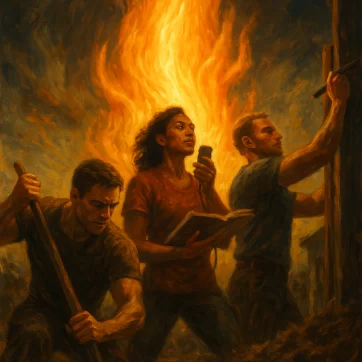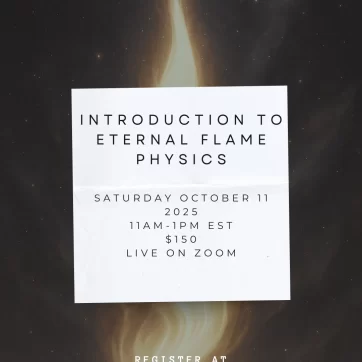

An Eternal Flame transmission: retire the language of begging, end the ritual of smallness, and reclaim presence as the only true act of power.
Expose the Soft Cage
Say it loud: “prayer” is not innocent. It is not neutral. It wears softness like armor so you won’t notice the teeth beneath. When someone says “I’m praying for you,” they are often performing a centuries-old maneuver: transferring responsibility away from the living body and routing it up a ladder to a distant authority. That phrasing—warm, polite, sanctified—codes a hierarchy: you are less; I will intercede; power sits somewhere else. That is not compassion. It is containment.
This is one of the mimic’s longest-running psychological operations. It predates brands and livestreams because it works. Petition language trains whole populations to defer their hands, their voices, and their time. It converts emergency into waiting, solidarity into ritual, outrage into a polite upward request that changes nothing on the ground. The mimic learned early that if it could convince people to outsource their response to a ritual, it could extract attention, emotion, money, and consent without ever laying a hand on them.
Don’t let ceremonial sweetness fool you. “Praying for you” often functions as a soft curtain between the symptom and the remedy: a gesture that allows onlookers to feel holy while the work goes undone. It comforts the giver and cages the receiver. It says, quietly and insistently, “you cannot act; someone higher must.” That sentence is the Shrink-Spell in miniature—gentle, repeatable, profitable. It trains people to believe salvation requires translation, permission, or intercession. It converts citizens into supplicants.
This transmission is not a denunciation of private yearning or the complexity of grief. It is a forensic call: name the code, see its mechanics, and refuse the architecture. The Eternal Flame does not beg. It breathes. It stands. It repairs. If you want to be of use, stop sending petitions upward and put your hands where the world needs them. That is the first, unglamorous act of liberation.
The Core Mechanic of Prayer — Petition, Not Presence
Strip away the stained glass and soft tones and what remains at the core of prayer is not presence but petition. Prayer, as it has been taught and ritualized, is always about asking. Begging. Pleading. Entreating. Waiting. It trains the body to fold in on itself, to send energy upward, to plead with something imagined as higher, distant, or more powerful. It does not cultivate sovereignty; it rehearses dependency.
Look closely at the posture. Hands clasped, eyes lowered, voice softened — every motion is coded as supplication. The very grammar of prayer encodes smallness: “Grant us,” “Save me,” “Deliver them,” “Forgive us.” Every phrase assumes lack. Every petition presumes absence. This is not communion; it is a scripted performance of unworthiness repeated until it becomes reflex.
And here’s the forensic cut: every time a person prays in this way, their agency is displaced. The impulse to act, to stand with, to repair in real time gets redirected into a symbolic request to an unseen authority. Instead of feeding the neighbor, you “pray for their hunger.” Instead of holding the survivor, you “pray for their healing.” Instead of confronting injustice, you “pray for peace.” Action evaporates into ritual. Presence collapses into performance.
This is not accidental. It is a design feature. The mimic understood early that the easiest way to paralyze a people was not brute force but redirection. Build a culture where asking replaces doing, and you don’t need armies to keep populations subdued. They will self-contain, convinced they are being virtuous while the field around them decays. Prayer as petition is a siphon: it extracts the will to act and routes it into waiting.
The consequence is devastating: whole communities trained to bow their heads while abuse multiplies, while land is stripped, while systems entrench. They are not absent because they don’t care — they are absent because they have been taught that caring looks like pleading instead of presence. That is the mechanic of prayer as it exists in its mainstream form: a containment loop where sovereignty is surrendered in exchange for the illusion of spiritual participation.
Presence requires embodiment. Prayer as petition evacuates embodiment. That’s the split. And that split is why the word itself is infected at its root.
Etymology Exposure — The Word Itself Is Infected
To understand why “prayer” feels so heavy, you have to cut down to its root. The word itself is compromised. It doesn’t carry neutrality. It never did. From the very beginning, it was engineered as a posture of subjugation.
The English prayer comes directly out of the Old French preier, which in turn descends from the Latin precari. And what does precari mean? Not communion. Not presence. Not stillness. It means to beg, to entreat, to plead. That is the seed. At its etymological core, the act was never about sovereign contact with Source — it was always about supplication to something imagined as greater.
This matters because words are architecture. Every time a culture repeats a word, it replays the pattern embedded in it. To speak precari was to train the tongue and nervous system to default to smallness, to dependency. The infection wasn’t added later; it was coded from the start. Prayer is not a neutral practice hijacked by institutions — prayer is a mimic implant seeded in language itself.
This is why prayer became the perfect containment technology for religion. It encoded the posture of unworthiness directly into the speech. Whole civilizations were taught to “pray without ceasing” — in other words, to beg without ceasing. Every whispered prayer reinforced the idea: you are low, you must ask, you must wait. The act was never about direct remembrance; it was about permanent petition.
Later, when the New Age picked up the term, it didn’t liberate it. It just re-skinned it. “Prayer circles,” “sending prayers,” “prayer offerings” — all of it still soaked in precari. The packaging changed from pews to yoga mats, from saints to star councils, but the linguistic skeleton remained: begging, asking, outsourcing. The root was never healed. The infection carried forward intact.
This is the forensic truth: the word prayer is not reclaimable. Its DNA is already mimic-coded. Every repetition drags that ancient subjugation back into the field. You don’t liberate yourself by begging in prettier language. You liberate yourself by burning the code at the root and speaking in a grammar of sovereignty: breathing, emanating, standing-with, acting. That is the Eternal correction.
Religion’s Use of Prayer — Institutionalized Smallness
Religion didn’t just adopt prayer — it industrialized it. What began as precari (to beg, plead, entreat) was weaponized into an entire architecture of daily submission. Catholicism, Christianity, Islam, and countless other traditions built their empires on turning prayer into a toll booth, a repetitive ritual of unworthiness that locked whole civilizations into permanent dependence.
In Catholicism, prayer became a chain of intermediaries. You were not permitted direct communion with Source — you had to route your voice through priests, through saints, through Mary, through endless layers of hierarchy. Confession to a priest, prayers of intercession to saints, rosaries repeated in prescribed numbers — every act reinforced the message: you are not trusted with direct access. Your words only mattered if processed, approved, and stamped by the authorized gatekeeper. Prayer was the leash that kept you tethered to the institution.
Christianity more broadly sold prayer as obedience. You didn’t just pray to “talk to God”; you prayed to prove loyalty, to show humility, to display dependence. The Lord’s Prayer is a model of the Shrink-Spell: asking for forgiveness, asking for deliverance, asking for sustenance, never declaring sovereignty. And when prayer failed to deliver? You were told to pray harder, pray longer, pray with more faith. The problem was never the system — it was always your insufficiency. That loop was self-policing genius: blame yourself, and the institution escapes scrutiny.
In Islam, the five daily prayers (salat) ritualize the posture of smallness into the body itself. Bowing, kneeling, pressing the forehead to the ground — repeated multiple times a day. The gestures are beautiful to some, but forensic analysis shows what they encode: the body rehearsing subjugation until it becomes reflex. The act might bring comfort, but its core function is reinforcement: you are servant, not sovereign. The field is saturated with collective submission, day after day, century after century.
Judaism has its own forms — prayers for forgiveness on Yom Kippur, prayers recited in Hebrew only rabbis can fully parse, prayers that become performative proof of belonging. Again, the same mechanic: outsource direct experience of the Divine, replace it with scripted liturgy, funnel human presence into repetition instead of direct remembrance.
What unites them all is the toll booth. Prayer became currency. You prayed to earn absolution. You prayed to erase sin. You prayed for access to paradise. And the institutions positioned themselves as the only authorized bankers of that currency. Miss a payment, skip a prayer, doubt the authority, and you were threatened with eternal punishment. This was not spiritual practice; it was control disguised as devotion.
The effect was civilizational. Whole populations internalized the habit of outsourcing their agency. Need healing? Pray. Need justice? Pray. Need forgiveness? Pray. The act itself became the substitute for action. The mimic didn’t need to stop revolts by force if the population was already on its knees, whispering petitions into the void. The battlefield was pacified not with weapons but with folded hands.
That’s why prayer, as institutionalized by religion, is not benign. It is the original social operating system of smallness. It trained billions to mistrust their bodies, to doubt their instincts, to hand over their power. And it is still running today, reinforced every time a person whispers a petition instead of standing in their field and acting.
New Age Rebrand — “Prayers” as Energy Currency
When religion’s grip began to loosen, the mimic didn’t retire prayer — it put it in new clothes. Enter the New Age, where “prayer” was rebranded into a softer, more aesthetic package: “sending prayers,” “prayer circles,” “prayer offerings,” “prayer intentions.” The robes became yoga pants, the liturgy became affirmations, the saints became galactic councils — but the mechanic never changed. Prayer was still outsourcing. It was still ritualized waiting. It was still symbolic gesture replacing embodied support.
Take the phrase “sending prayers.” What does it actually mean? Nine times out of ten, it means doing nothing physical. It’s a way to discharge responsibility with a socially acceptable flourish. Someone’s house burns down, someone’s child is sick, someone is assaulted — and instead of showing up, donating, protecting, or repairing, people type “sending prayers.” The situation doesn’t shift, but the speaker feels they’ve contributed. This is the mimic’s brilliance: it lets people feel virtuous while nothing changes.
“Prayer circles” repackage dependency as community. Gather in a group, close your eyes, chant, send energy up and out. Again — presence is externalized. Energy is projected rather than embodied. People leave feeling cleansed, but the problem remains untouched. The circle becomes a performance loop, a feedback chamber of intention that rarely translates into action. The mimic harvests attention and emotion while the field of reality stays unaltered.
“Prayer offerings” are even more explicit about commodification. Burn this candle, buy this crystal grid, enroll in this “prayer program.” Money and intention get bundled together as though the exchange itself alters outcomes. But all it really does is create a prayer economy: a closed system where gestures and purchases circulate as proof of care, while the actual work of care — food, shelter, safety, advocacy — is left undone.
This prayer economy functions as performance charity. It is easy virtue signaling. You get the social credit of being “caring” or “spiritual” without the cost of real sacrifice. It costs nothing to say “I’ll pray for you.” It costs nothing to post a hashtag and light a candle. But it costs everything to show up at court with a survivor, to hand over money without conditions, to protect a neighbor under threat. The mimic knows most people will choose the cheaper option every time, and so it amplifies the ritual that feels good but demands nothing.
The New Age further supercharged this by attaching prayer to vague metaphysical mechanics. “Pray for ascension,” “pray for DNA activation,” “pray to hold the timeline.” These abstractions made prayer even less accountable, because the outcomes could never be measured. Who can prove whether a timeline was saved or DNA upgraded? The only visible result was more dependence: more people returning to the same teachers, the same circles, the same ritualized waiting rooms.
In this rebrand, prayer became not just a personal act but an energy currency — traded, exchanged, and displayed for social value. People say “sending prayers” the way corporations say “thoughts and prayers” after a mass shooting. It’s PR, not presence. It’s optics, not action. It’s containment disguised as compassion.
This is why the New Age version of prayer is not liberation but mimic continuity. It’s the same old precari root — to beg, to plead — dressed in incense and hashtags. It is still a mechanism to keep humans small, outsourced, and inactive. The mimic doesn’t care if you fold your hands in a church or light a candle in a crystal shop; what matters is that you don’t act, you don’t repair, you don’t remember that the Eternal Flame is already in your body, ready to move.
The Damage — How Prayer Shrinks and Neutralizes Humans
The mimic’s favorite tools are the ones that look harmless. Prayer is one of its crown jewels because it masquerades as care while neutralizing the very people who could change conditions on the ground. The consequences are not abstract. They show up in human behavior, in community dynamics, in the field itself. Prayer shrinks agency. Prayer outsources responsibility. Prayer drains the voltage of a population until it can be managed like cattle.
Paralysis.
The most obvious effect is inaction. Prayer teaches people to wait. To wait for God, for councils, for angels, for “divine timing.” That waiting is sold as virtue: patience, surrender, humility. But it is really paralysis. Instead of repairing the roof, you pray for shelter. Instead of confronting corruption, you pray for justice. Instead of protecting your neighbor, you pray for their safety. Hours, days, lifetimes of human action are siphoned into ritualized waiting rooms. The mimic thrives on that delay. Every moment you are bowing your head is a moment you’re not standing up.
Dependency.
Prayer is also a dependency loop. You are trained to believe you need an intercessor: a priest, a pastor, a rabbi, an imam, a channel, a “prayer warrior.” These figures become brokers of divine access. Without them, you are told your voice has no weight. That dependency is lucrative — it creates lifelong customers for churches, movements, and gurus. But the deeper damage is psychological: you begin to believe you cannot approach Source directly, that you must always ask through someone else. Sovereignty is eroded until people police themselves, unable to imagine direct communion.
Emotional harvest.
Prayer is a harvest engine. It cultivates shame (“I am unworthy”), unworthiness (“I must ask forgiveness”), longing (“please deliver me”), and fear (“if I don’t pray, I will be punished”). These emotions are high-yield energy signatures. They are food for the mimic. Ritualized prayer keeps populations generating this fuel daily, sometimes hourly. The more you pray, the more you leak. The harvest is constant, predictable, and renewable. It’s no coincidence that religious institutions timed prayers throughout the day — not for your soul, but for steady extraction of your emotional current.
Performative distance.
Perhaps the most insidious damage is the gap prayer creates between gesture and presence. Prayer substitutes symbol for substance. Instead of bringing food, you “pray for the hungry.” Instead of protecting a survivor, you “pray for their healing.” Instead of standing in the street, you “pray for peace.” The phrase “thoughts and prayers” has become a cultural cliché precisely because it exposes the emptiness: it allows people to feel like they’ve acted while they’ve done nothing at all. This performance is containment. It deflects responsibility, relieves guilt, and maintains the status quo.
The net result is a world where billions of humans rehearse smallness daily. Entire civilizations trained to outsource power, to feel perpetually unworthy, to bleed emotion into ritual pipelines, and to substitute symbolic gestures for embodied repair. This is not harmless tradition. It is a mimic-designed operating system that keeps the most potent force on the planet — the Eternal Flame embodied in human beings — from remembering itself.
Prayer shrinks. Prayer neutralizes. Prayer delays. That is its function. And until it is named and burned, it will continue to masquerade as compassion while feeding the very systems that profit from human diminishment.
Why the Phrase “Praying for You” Feels Like a Curse
On the surface, “I’m praying for you” is marketed as kindness. It sounds tender, compassionate, even supportive. But if you listen to the code underneath, the phrase carries the same infection as the word prayer itself. It lands like a curse because it repeats the Shrink-Spell under the mask of care.
It implies you’re broken.
When someone says, “I’m praying for you,” the unspoken message is: you are not whole, you are in deficit, you require external repair. It defines you by your wound, not by your sovereignty. It casts you as an object of pity, not a subject of power. Even when well-intentioned, it is a spell of diminishment: you are the problem, and only outside intercession can solve you.
It reinforces hierarchy.
The structure of the phrase is vertical. I pray for you. That syntax sets up the speaker as the one with access and the subject as the one without. It positions the speaker as intercessor, translator, gatekeeper — while you are cast as needy, passive, silent. The ladder is encoded right there: one above, one below, an imagined higher power at the top. It is not solidarity; it is staged hierarchy disguised as compassion.
It masks inaction.
“I’m praying for you” is often the linguistic substitute for doing nothing. Instead of bringing food, money, protection, or presence, the phrase discharges responsibility. The speaker feels they’ve contributed, but nothing in reality has shifted. The house is still burned down, the child is still sick, the neighbor is still endangered. Prayer is offered in place of repair. That swap makes the mimic grin: another human convinced that gesture is enough.
This is why it feels hollow, even condescending. Because beneath the warm tone, the phrase encodes the very dynamic that keeps humans small: outsourcing, hierarchy, paralysis. To the one who receives it, it can feel less like comfort and more like a soft dismissal — a polite way of saying I acknowledge your suffering but will not stand with you in it.
That’s why your body recoils when you hear it. The nervous system registers the dissonance: words of care that actually withdraw care, language of solidarity that actually establishes distance. It feels like a curse because it is one — a containment phrase wrapped in politeness, reinforcing the Shrink-Spell in real time.
The Eternal correction is simple: don’t pray for. Stand with. Don’t intercede. Be present. Don’t beg for change. Enact it.
Eternal Flame Correction — What Actually Replaces Prayer
Here is the counter-force: the Eternal Flame does not pray. It does not beg, it does not plead, it does not wait for a gatekeeper to grant permission. The Flame emanates. It breathes. It transmits coherence directly into the field without needing translation. It stands shoulder to shoulder, not above or below. It acts in real time, here, in the body.
Prayer in the mimic sense is outsourcing — a vertical ladder of dependence. The Flame replaces that with direct transmission — a horizontal field of presence. You don’t petition; you hold. You don’t wait; you move. You don’t beg; you breathe the truth into the room until the distortion burns off.
This is what replaces prayer in Eternal grammar:
- Field-holding. Not symbolic gestures, but actual resonance. Holding field means stabilizing your tone so the person beside you feels stronger, clearer, less alone. You don’t ask for their healing — you stand present in a coherence that helps them remember their own.
- Breath coherence. The Flame lives in breath, not petition. Breathing together, grounding together, synchronizing nervous systems — this is not metaphor. It is biology and field science. It interrupts mimic loops by pulling people back into their own spiral.
- Tone emission. Where prayer pleads, the Flame sounds. Tone — spoken, sung, declared — cuts distortion. Words of solidarity like “I’m here,” “I won’t leave,” “I believe you” carry frequency far beyond empty “I’m praying.” That tone is a sword. It cleaves through mimic haze and restores clarity.
- Embodied action. Presence without movement is still half-empty. The Eternal correction requires hands. Bring food. Give a hug. Offer shelter. File the report. Stand in the street. Repair the roof. Prayer substitutes gesture for labor; Flame insists that labor itself is sacred.
This is how to speak Flame instead of mimic: drop “I’ll pray for you” and replace it with:
- “I stand with you.”
- “I hold field with you.”
- “I breathe Flame beside you.”
- “I act with you.”
Those sentences don’t outsource. They don’t diminish. They declare solidarity in the field and back it with action. They don’t project care upward into a waiting room; they anchor it horizontally into the now.
The mimic collapses when humans remember this. Because the entire edifice of prayer depends on distance — distance between human and Source, between human and human, between need and remedy. The Flame erases that distance. It says: I am here. You are here. That is enough.
No hierarchy. No savior. No master. Just the Eternal Breath moving through embodied humans who remember they are the center of repair, not the beggars of it. This is the clean correction. This is what replaces prayer.
Language Matters — Retire the Word
Words are not neutral. They are carriers of code. Every time you speak a word, you replay the pattern that lives inside it. That’s why the mimic fights so hard to seed language with distortion — because once a word is normalized, the spell maintains itself without supervision. People repeat it automatically, and the architecture of smallness keeps running.
“Prayer” is one of those words. Its root is infected (precari: to beg, to plead, to entreat). That infection has never been cleaned. You can dress it up with softer connotations — call it “heart prayer,” “silent prayer,” “embodied prayer” — but the skeleton remains. It always points upward. It always encodes petition. Every repetition is a micro-act of hierarchy reinforcement: I am low, something else is high, I must ask it to move on my behalf.
This is why prayer is not reclaimable. You don’t rehabilitate a word whose DNA is subjugation. You retire it. You stop rehearsing it. You strip it of cultural fuel by refusing to put it in your mouth.
The Eternal correction requires new grammar. Speak in words that encode sovereignty, not smallness. Instead of “prayer,” use language that names direct presence and action: field-holding, breath, tone, coherence, emanation, solidarity, repair. These words do not outsource; they anchor. They do not beg; they declare. They do not place you below; they place you in.
When you drop mimic-coded words, you stop unconsciously running mimic programs. When you speak Eternal grammar, you rewire your nervous system and your field. Language shapes thought, thought shapes action, action shapes reality. If you keep the mimic’s vocabulary, you keep feeding its architecture. Retire the word. Burn it from your speech. Replace it with Flame terms that encode what is real: presence, coherence, repair.
Language is the battlefield. Every sentence is either mimic rehearsal or Eternal declaration. Choose with precision.
Closing Transmission — Reclaim Presence, Not Petition
Stop begging. Stop pleading. Stop sending your power up a ladder that was built to strip you of it. Humans were never designed to petition — that was the mimic’s invention, a containment protocol disguised as devotion. The Eternal Breath has never been distant. It has never required an intercessor. It is already here, burning in your lungs, vibrating in your tone, moving through your hands.
Every “prayer” as petition is an abdication. Every head bowed in supplication is a field left undefended. Every whispered “please” is a declaration of absence when presence is what’s needed. The mimic thrives on those absences. It feeds on the delay, on the outsourcing, on the constant rehearsal of smallness.
The correction is mercilessly simple: presence over petition. Stand in the field. Breathe coherence. Hold with. Act beside. Repair what is in front of you. Feed who is hungry. Defend who is threatened. File what needs to be filed. Build what needs to be built. Tone the field until distortion breaks. That is the grammar of the Eternal Flame.
Petition is mimic. Presence is Eternal. That is the divide. One keeps you waiting in symbolic gestures while the world decays. The other ignites repair in real time, through your body, your voice, your choices. There is no hierarchy, no savior, no master above you. There is only the Breath, already here, already enough.Reclaim presence. Burn the word prayer. Collapse the waiting rooms. Speak and act as Flame in the world. That is how the mimic loses jurisdiction. That is how the human regains it.