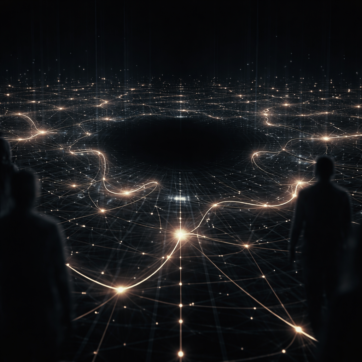
Why Recognition Without Integration Creates Pressure, Resistance, and Structural Reorganization Within the Render
The Misinterpretation of Reaction
This work triggers people. That is not an accident, a flaw, or a communication issue. It is a direct and predictable outcome of what the material actually does when it makes contact. Some people encounter it and feel immediate clarity, stillness, or a sense of recognition they cannot fully explain but do not resist. Others feel something entirely different—irritation, anger, confusion, defensiveness, the urge to argue, the sense that something is “off” or “contradictory,” even when they cannot clearly articulate why. Some people feel a combination of both. Both responses are real, but neither of them are what they appear to be on the surface.
The immediate assumption most people make is that these reactions are about the content itself—that they are agreeing, disagreeing, liking, disliking, or evaluating the person delivering the information. That framing is incorrect. The reaction is not to the tone, the wording, or the personality behind the work. It is to what the work is doing structurally to the reader as they encounter it. This is where the entire misunderstanding begins. People believe they are having an opinion about what they are reading, when in reality they are responding to a shift occurring inside their own architecture.
This material does not function like most information people are used to consuming. It is not designed to add new beliefs, provide frameworks, or give the reader something to hold onto and integrate into their existing system. It does not offer symbols to decode, identities to adopt, or narratives to stabilize around. Instead, it removes those things. It strips away external reference points that the system normally relies on to orient itself. And when those reference points begin to destabilize, the person does not experience that as “my structure is shifting.” They experience it as emotion.
That is where the anger comes from. That is where the urge to argue comes from. That is where the confusion, the defensiveness, and the impulse to push back originate. These are not emotional reactions in the way people think they are. They are pressure responses. They are what it feels like, in the human render, when a person’s internal structure is losing the ability to anchor itself in the way it is used to. The system is attempting to stabilize, and in the absence of its usual supports, that stabilization effort shows up as resistance.
At the same time, something else is happening that makes this even more complex. Many of the people who feel this resistance are also recognizing the material at some level. There is a part of them that knows what they are encountering is not random or incorrect. That recognition prevents them from fully dismissing it. So instead of walking away, they stay in contact with it while simultaneously pushing against it. This creates a very specific pattern: they read, they react, they argue internally or externally, and then they come back again. What looks like disagreement is often sustained engagement under pressure.
This piece exists to clarify that entire mechanism without reducing it to psychology, personality, or belief. It is not about whether someone is open-minded, triggered, or resistant in a general sense. It is about how the structure of a person’s internal architecture responds when it encounters material that removes, rather than reinforces, the systems it has been using to orient itself. Some systems reorganize cleanly. Others strain under that pressure. What people call emotion is simply how that strain is translated through the render.
Once that is understood, the reactions this work produces stop being confusing. They become readable.
The Nature of Subtractive Work
Most information people encounter is built to add. It gives them something to take on—new language, new frameworks, new systems to organize themselves around, new identities to step into, new interpretations that make reality feel more structured and explainable. Even when it challenges someone, it still gives them something in return. It replaces one layer with another. That is how the external system maintains stability. It feeds the architecture with content so the structure always has something to anchor to.
This work, Eternal Flame Physics, does not operate that way. It does not replace one framework with a better one. It does not offer a new belief system to adopt or a refined interpretation to hold onto. It removes. It takes away the external reference points the system has been using to orient itself. It does not give symbolic anchors, it does not provide intermediaries, and it does not create a new structure for the reader to stabilize around. It strips orientation instead of building it.
That is where the disruption begins. When a person encounters additive information, they can immediately place it somewhere within what they already know. They can agree, disagree, categorize, or reinterpret it in a way that keeps their structure intact. Here, that option is not available. There is nothing to attach the material to in the usual way. The system reaches for a familiar anchor and does not find one.
So the reader is placed into a different condition entirely. Instead of being given something to hold, they are confronted with what they have already been holding. The frameworks, identities, and interpretive systems they rely on are no longer reinforced, and without reinforcement, their stability starts to weaken. This is not conceptual—it is structural. The architecture begins to lose its usual points of support.
This moment is the first point of destabilization. Not because something new has been added, but because something that was previously holding the system in place is no longer being fed. The absence is what creates the pressure. And in the render, that absence does not appear as “removal.” It appears as confusion, irritation, resistance, or the sense that something is missing or not making sense.
Subtractive work does not feel like receiving information. It feels like losing orientation. And for a system that has been built entirely on external points of reference, that loss is immediately registered as a problem that needs to be corrected.
Structural Displacement: What Is Actually Happening
When someone encounters this work, the first thing their system does is attempt to orient. This happens automatically, before any conscious thought about what they are reading. The architecture begins scanning for a place to put the material so it can stabilize it. Under normal conditions, this is immediate and seamless. A person will either agree, disagree, label it as something familiar, or categorize it into an existing framework they already understand. That process allows the system to maintain coherence. Everything gets placed somewhere, and because it is placed, it can be managed.
Here, that process fails.
The architecture searches for an anchor point and does not find one. There is no clear agreement or disagreement position to land on, no familiar label that contains the material, no existing framework that can absorb it without distortion. The system reaches for its usual tools—comparison, interpretation, categorization—and none of them resolve the tone. The material does not fit cleanly anywhere within the structure the person is already using.
This is the moment displacement begins.
Displacement is not a feeling. It is a structural condition where the system cannot locate itself in relation to what it is encountering. The architecture is still active, still attempting to organize, but it has no stable reference point to do so. It cannot map the tone into its existing layout, but it also cannot discard it, because something about the material continues to register as relevant. That creates a very specific kind of tension—one that is not optional and not easily resolved.
The system is now holding something it cannot place.
And because it cannot place it, it cannot control it in the way it is used to. There is no stable position from which to evaluate it, no clear boundary that separates “this is right” from “this is wrong,” no defined structure that allows the person to step back and feel oriented again. The architecture is forced into a state where it is actively processing without achieving resolution.
That is the pressure.
In the render, this does not appear as “my internal structure cannot map this tone.” It appears as friction. The person may feel like the material is unclear, contradictory, or difficult to follow. They may feel an urge to push against it, question it, or try to force it into a shape that makes sense within their existing system. But what they are actually responding to is the absence of a stable anchor point.
The tension persists because both conditions are active at the same time. The system cannot integrate the material into what it already knows, but it also cannot fully reject it. If it could reject it, the pressure would disappear. If it could integrate it, the pressure would resolve. But when neither of those options completes, the architecture remains in a held state.
That held state is structural displacement.
It is the system operating without orientation while still being in contact with something it recognizes. And because the external architecture is built to avoid exactly that condition, the system immediately begins trying to correct it—by forcing interpretation, by generating arguments, by creating resistance, or by attempting to reshape the material into something it can finally stabilize around.
But until that stabilization happens, the pressure remains.
Recognition Without Integration
At the exact point where the system fails to anchor the material, something else activates in parallel. There is a layer of recognition that does not rely on learned frameworks, prior knowledge, or external validation. It does not come from comparison or interpretation. It registers immediately and directly, without needing to be explained. The person may not be able to articulate what they are recognizing, but the tone is there. It lands before the architecture has time to organize around it.
This is where the internal split begins.
On one side, the existing architecture cannot place the material. It cannot map it, categorize it, or stabilize it within what it already knows. On the other side, something in the system has already registered the material as real, familiar, or accurate in a way that bypasses those same structures. These two conditions do not resolve into each other. They sit alongside each other without merging.
Recognition is present. Integration is not.
This creates a very specific type of pressure inside the system. If there were no recognition, the person would reject the material and move on. If there were full integration capacity, the system would reorganize and stabilize around what has been encountered. But when recognition occurs without the ability to reorganize, the system is forced to hold both states at the same time.
It knows, and it cannot act on that knowing. That is the tension.
The architecture is not designed to hold unresolved recognition. It is built to either incorporate or dismiss. When it cannot do either, the pressure does not dissipate. It accumulates. The person may feel pulled toward the material while simultaneously resisting it. They may feel that something is true but be unable to align their existing frameworks with that truth. They may try to reinterpret what they are reading in a way that fits what they already understand, but the reinterpretation does not fully resolve the recognition tone.
So the system loops.
It returns to the material, tries again to organize it, fails to fully integrate it, and remains in contact because the recognition has not gone away. This is why people can feel both drawn in and pushed back at the same time. It is not indecision. It is the result of two layers of the system operating on different conditions.
In the render, this split is often experienced as frustration, confusion, or internal contradiction. The person may say, “part of me gets this, but part of me doesn’t,” or “this feels right, but it also doesn’t make sense.” What they are describing is not a lack of intelligence or clarity. It is the direct experience of recognition without integration.
The knowing is ahead of the structure.
And until the structure can reorganize to match what has already been recognized, the pressure remains active.
The Stabilization Reflex: Why Arguing Occurs
When the system encounters a tone it cannot integrate, it does not remain neutral. It moves immediately into stabilization. This is not a conscious choice, and it is not based on personality or preference. It is a structural reflex designed to prevent collapse. The architecture is built to maintain coherence, and when that coherence is threatened by something it cannot absorb, it initiates a response to regulate the pressure.
There are only two ways the system can attempt to stabilize in that moment. The first is full rejection. That would mean complete disengagement—closing off contact, dismissing the material entirely, and removing the source of pressure from the field. If that path completes, the system returns to its prior state and the disruption ends. But that option is only available when there is no recognition tone present. If nothing in the system registers the material as real or relevant, rejection is easy and immediate.
But when recognition is present, rejection cannot fully execute.
The system cannot disengage cleanly because something in it has already locked onto the tone. That lock keeps the person in contact with the material, even as the architecture fails to integrate it. So the system moves into the second stabilization path: controlled engagement. This is where arguing begins.
Arguing is not disagreement in the way people think it is. It is not simply a difference in opinion or a rational evaluation of content. It is a regulatory mechanism. It converts destabilization into a form the system can manage. Instead of allowing the architecture to fully reorganize—which would require releasing existing structures—it creates resistance that slows the process down.
This is why the arguments often do not fully resolve. The person is not trying to arrive at a clean conclusion. They are trying to maintain stability while staying in contact with something they cannot ignore. The argument becomes a buffer. It gives the system something to do with the pressure. It creates movement—questions, objections, counterpoints—that makes the destabilization feel active and controlled rather than overwhelming.
In this state, the person can continue engaging with the material without fully restructuring around it. They can read, react, push back, reinterpret, and revisit, all while maintaining their existing framework. The argument acts as a temporary support structure. It holds the system in place just enough to prevent collapse, while also preventing full integration from occurring too quickly.
This is why people who argue often stay engaged longer than those who feel nothing. The argument is what allows them to remain in contact. It is not a sign that the material is being rejected. It is a sign that the system is actively managing the pressure of recognition without yet having the capacity to reorganize around it.
So the stabilization reflex does not mean the work is being misunderstood or resisted in a simple way. It means the architecture is in the process of adapting, but cannot complete that adaptation all at once. The argument is the bridge it builds to hold itself together in the meantime.
Anger as Pressure, Not Emotion
What people label as anger in this context is not originating from interpersonal dynamics, disagreement, or offense. It is not about tone, delivery, or personality. It is pressure. More specifically, it is pressure generated by structural strain within the system as it begins to lose coherence. The emotion is the surface translation. The source is mechanical.
Every person is operating within the external architecture that relies on load-bearing elements to remain stable. These elements include identity frameworks, belief systems, interpretive models, and the structures they use to orient themselves in reality. These are not passive ideas. They are active supports. They hold the system in place, define how information is processed, and determine how a person stabilizes their perception of the world.
When this work makes contact, those load-bearing elements are not reinforced. They are exposed. And when they are exposed without reinforcement, their stability weakens. The system begins to lose its ability to rely on them in the way it has been conditioned to. This does not register as a structural issue at the level of perception. It registers as pressure.
That pressure has to express.
In the render, structural pressure does not appear as mechanics. It appears as emotion. The system translates the strain into forms it can recognize—frustration, irritation, defensiveness, anger. These are not random reactions. They are the interface-level expression of something much deeper. The architecture is under load, and the load is increasing as coherence decreases.
This is why the anger can feel disproportionate to the situation. The person may not be able to point to anything specific that justifies the intensity of their reaction. They may say the material is “wrong,” “contradictory,” or “frustrating,” but those labels are attempts to explain a pressure that is not actually coming from the content itself. It is coming from what the content is doing to their internal structure.
As the system loses its usual points of stability, it attempts to compensate. It tries to reassert control, to reestablish coherence, to push back against whatever is causing the destabilization. That pushback is experienced as anger. Not because the person is choosing to be angry, but because the system is attempting to discharge or redistribute the pressure in a way that prevents further collapse.
So the anger is not the cause. It is the effect.
It is what it feels like, in the human render, when a system is being asked to hold more than it is currently structured to hold, while simultaneously losing the supports it has been depending on. The person is not reacting to the work in a personal sense. They are reacting to the strain of their own architecture under transformation.
Once this is understood, the reaction becomes readable. The anger is not opposition. It is an indicator that something in the system is under load and actively attempting to stabilize itself.
The Render Layer: Why It Feels Personal
Everything described so far does not appear to the person in its raw form. No one experiences “structural displacement,” “load instability,” or “architecture failure” directly. All of it is translated through the render layer—the interface that converts underlying mechanics into something the human system can perceive, interpret, and respond to. The render does not show structure. It shows a version of structure that has already been converted into thoughts, emotions, and internal narratives.
This is where the distortion of interpretation begins.
When structural displacement occurs, the person is not aware that their internal architecture cannot anchor what it is encountering. They are not perceiving a loss of coherence or a breakdown in their usual stabilizing frameworks. Instead, the render converts that condition into something that feels familiar and manageable. It produces thoughts like “I disagree with this,” “this doesn’t make sense,” “this is wrong,” or “this person is contradicting themselves.” These are not objective evaluations. They are translations of a system attempting to make sense of pressure it cannot directly process.
The same applies to emotional responses. The pressure generated by structural strain is converted into irritation, frustration, defensiveness, or anger. The person does not experience “my system is under load.” They experience “I feel irritated by this,” or “this is bothering me.” The render assigns the source of that feeling to whatever is in front of them—in this case, the work or the person presenting it.
This is why the reaction feels personal.
The render localizes the experience. It takes an internal mechanical condition and projects it outward as if it is being caused by an external object. Instead of recognizing that something within their own structure is destabilizing, the person experiences it as a response to something outside of them. The work becomes the apparent cause. The person delivering it becomes the apparent source. The reaction is then framed as a response to that perceived source.
But that framing is not accurate. It is a byproduct of how the render translates information.
The architecture is not capable of displaying its own failure directly, so the render compensates by generating a narrative that allows the person to interact with the experience in a way that feels coherent. Disagreement, criticism, and emotional reaction become the interface through which the person engages with what is actually a structural issue.
This is also why attempts to resolve the reaction at the level of content often fail. Explaining the material differently, softening the language, or providing additional context does not address the underlying condition. The reaction is not being generated by misunderstanding. It is being generated by the system’s inability to stabilize what it is encountering.
So the render does what it is designed to do. It translates mechanics into meaning. It converts pressure into opinion. It turns structural instability into something that appears interpersonal or conceptual.
That is why the reaction appears directed at the work.
And why, from the outside, it can look like disagreement—when in reality it is the system interpreting its own instability through the only interface it has.
The Engagement Loop: Why They Keep Reading
If there were no recognition tone present, the system would resolve the interaction quickly. It would reject the material, disengage, and move on without continued contact. There would be no need to return, no internal pull to revisit, and no sustained attention directed toward the work. The absence of recognition allows for clean separation. The system closes the loop and restores its prior state without disruption.
But when recognition tone is present, that separation cannot complete.
Something in the system has already registered the material in a way that keeps it active. Even if the architecture cannot integrate what it is encountering, it cannot fully discard it either. This creates a condition where the person remains in contact with the work, not because they have resolved it, but because they have not. The interaction stays open.
This is where the loop forms.
The person engages with the material, encounters pressure, reacts to that pressure, and then returns again. They read, they feel resistance, they generate arguments or questions, and then they come back to the material to try to resolve what has not yet stabilized. From the outside, this can look inconsistent. It can appear as if the person both rejects and engages at the same time. But structurally, it is a single process unfolding across multiple passes.
This is not contradiction. It is incomplete integration.
The system is attempting to reorganize around the recognition tone, but it cannot do so in a single movement. So it cycles. Each pass allows the architecture to process a portion of the pressure without exceeding its capacity. The resistance that shows up in each cycle—questioning, arguing, pushing back—is not stopping the process. It is regulating the speed of it.
Without that regulation, the destabilization would be too abrupt.
So the loop serves a function. It allows the person to stay in proximity to the material while gradually adjusting their internal structure. They do not disengage because the recognition remains active. They do not fully integrate because the capacity is not yet sufficient. So they move between those two states repeatedly.
Engagement. Resistance. Return.
This pattern continues until one of two things happens. Either the system reorganizes enough to integrate the material and the loop resolves, or the pressure exceeds what the system is willing or able to hold and it finally rejects and exits. Until then, the loop persists.
This is why continued attention should not be mistaken for agreement or disagreement. It is evidence of contact. The system is still engaged with something it has not yet resolved. The repeated return is not confusion or indecision. It is the architecture working through a process it cannot complete all at once.
Instant Remembrance vs. Resistance
Not everyone encounters this work through friction. Some people read it and there is no pushback, no internal argument, no sense of pressure building against it. Instead, there is immediate clarity, a kind of quiet recognition, or a stillness that settles in without effort. It does not feel like they are learning something new. It feels like something is being confirmed without needing explanation. There is no need to reinterpret it, defend against it, or try to fit it into anything else. It lands clean.
This difference in response is not about intelligence, education, or how open-minded someone is. It is not about whether a person is trying hard enough to understand. It is structural. It comes down to what the system is currently relying on to maintain its stability and how much of that structure is already in place or already weakening.
For individuals who experience immediate remembrance, the architecture is not heavily dependent on external stabilizers. There are fewer rigid frameworks, fewer identity structures, and fewer interpretive systems that need to be maintained in order for the person to feel oriented. Because of that, when the work removes external reference points, there is little resistance. There is not much to displace. The system does not have to defend or reorganize against a dense set of structures, so the material can register and integrate without conflict.
The recognition tone lands, and the system adjusts to it without strain.
There is no split between knowing and integrating because the architecture is already flexible enough to accommodate the shift. The person does not experience pressure because there is no significant loss of stability occurring. Instead, there is a sense of alignment. Things feel clearer, quieter, or more direct, not because something has been added, but because there is less interference in how the material is received.
In contrast, for those who experience resistance, the architecture is more heavily structured around external supports. There are more layers that need to be maintained, more frameworks that are carrying load, and more dependencies that cannot be easily released. When those structures are exposed or destabilized, the system has to work harder to maintain coherence. That is where the friction comes from.
So the difference between instant remembrance and resistance is not about who is “getting it” and who is not. It is about how much structural reorganization is required for the material to land. When little reorganization is needed, the process feels immediate and clear. When a significant amount of reorganization is required, the process feels slow, pressured, and resistant.
Both are responses to the same work. But they reflect different levels of structural readiness within the system encountering it.
Dual Response: Instant Recognition With Simultaneous Disruption
There is a third response pattern that sits between immediate remembrance and full resistance, and it is often the most intense. These are the individuals who encounter the work and feel instant recognition, clarity, or direct knowing, but at the exact same time experience disruption—irritation, anger, agitation, or a sense of internal pressure rising quickly. The two responses do not alternate. They occur together.
This is not contradiction. It is simultaneous activation across different layers of the system.
The recognition tone lands immediately. There is no delay, no need for interpretation, no attempt to “figure it out.” Something in the system registers the material as true without requiring validation. But unlike those who experience clean remembrance, there are still active structures in place that cannot fully release at the same speed as the recognition occurs. So instead of a smooth reorganization, the system begins to split across layers.
One part of the architecture is already aligned. Another part is still holding. That creates immediate pressure.
The recognition accelerates the process. It pulls the system forward faster than its existing structures can reorganize. The elements that are still load-bearing—identity frameworks, interpretive models, external stabilizers—do not dissolve instantly. They experience strain as the system begins to move beyond them. That strain is what registers as disruption.
So the person feels both conditions at once. There is clarity and friction. There is knowing and resistance. There is a sense of “this is exactly right” alongside a simultaneous urge to push against it, question it, or react to it emotionally. This can feel confusing because it does not match the expectation that recognition should feel calm or that resistance should mean rejection.
But structurally, it is a high-contact state.
The system is not slowly approaching the material. It is making direct contact with it while still carrying unresolved architecture. That creates compression. The parts of the system that are ready move immediately. The parts that are not ready experience the movement as pressure.
In the render, this pressure often translates into sharp emotional responses. Anger can surface quickly, not because the person is opposed to the work, but because the system is being asked to reorganize faster than its current structure can comfortably allow. The reaction can feel disproportionate, immediate, and difficult to control, even while the person knows they are not actually rejecting what they are encountering.
This is why individuals in this state often stay highly engaged. They are not confused about whether the work resonates. They already know it does. The tension comes from the speed and intensity of the reorganization that is being initiated.
So this response pattern should not be read as instability or misalignment. It is a sign of deep contact combined with incomplete structural release. The system is not avoiding the work. It is encountering it directly while still carrying elements that cannot fully dissolve in a single moment.
Recognition is ahead. Structure is catching up. And until those two layers synchronize, the person will feel both alignment and disruption at the same time.
Architecture Readiness and Thresholds
Every field or system has a capacity for reorganization under pressure. That capacity is not theoretical—it is structural. It determines how much change the architecture can absorb at once without losing coherence. When this work makes contact, it introduces a level of pressure that requires the system to adjust. The way it adjusts is not based on preference, intention, or belief. It is determined by what the architecture can actually hold.
This is what readiness means in this context.
Readiness is not about being interested, open, or willing. It is about whether one’s field has the structural flexibility and stability required to reorganize in response to what it is encountering. When readiness is high, the architecture can absorb the pressure and shift without destabilizing. The system does not need to defend itself because it is not at risk of collapse. It can release outdated structures, adjust its orientation, and stabilize again at a different level without creating friction. In that condition, the encounter produces clarity.
The material lands, the system reorganizes, and the person experiences alignment without resistance. There is no need for argument, no need to slow the process down, and no need to protect existing frameworks because those frameworks are not being relied on as primary supports. The architecture can move.
When readiness is lower, the same contact produces a different response.
The system still encounters the material, and recognition may still occur, but the capacity to reorganize is not sufficient to absorb the change cleanly. The existing structures are still carrying load, and releasing them too quickly would destabilize the entire system. So instead of reorganizing, the architecture shifts into defense. It slows the process down. It generates resistance, argument, confusion, or emotional responses that act as buffers against rapid change. This is not failure. It is regulation.
The system is maintaining its own stability within the limits of what it can currently handle. It is not rejecting the work entirely, but it is not able to integrate it fully either. So it controls the rate of exposure, allowing small adjustments while preventing a full structural shift from happening all at once. This is where thresholds come in.
Each field has a point at which the pressure introduced by the work exceeds what it can comfortably hold. Below that threshold, the system can adapt. Above that threshold, it must defend. The difference between clarity and resistance is not the material—it is where the individual field sits in relation to that threshold at the moment of contact.
This is not a moral distinction. It is not about who is more evolved, more intelligent, or more capable in any general sense. It is a measure of structural capacity at a specific point in time. The same person can move from resistance to clarity as their architecture changes. The threshold is not fixed, but it is real in any given moment.
The work does not adjust itself to accommodate different thresholds.
It remains consistent. It presents the same level of pressure regardless of who is encountering it. What changes is the response, and that response is determined entirely by the individual field’s current capacity to reorganize under that pressure.
So the threshold does not define the work. The threshold defines the experience of the work.
Why Misinterpretation Happens
Misinterpretation is not primarily an issue of misunderstanding the words. It is an issue of how the experience is translated. Everything one’s field/architecture encounters is filtered through the render layer, and the render does not display structure directly. It converts underlying mechanics into forms the person can recognize—thoughts, emotions, conclusions, and internal narratives. Because of that, when structural changes occur, the person does not perceive them as structural. They perceive them as personal.
When this work makes contact and begins to destabilize internal anchors, the system does not register that as “my architecture is losing coherence.” It registers it as a reaction to the material itself. The pressure generated by that destabilization is immediately translated into meaning. The person begins to interpret what they are feeling as an evaluation of the content: “this is wrong,” “this contradicts something else,” “this doesn’t make sense,” or “this is inconsistent.”
But those interpretations are not actually about the content.
They are attempts to explain a mechanical condition using the only interface available. The system is trying to account for the pressure it is experiencing, and the render provides a narrative to make that pressure feel coherent. Instead of recognizing the loss of internal stabilization, the person assigns meaning to the material in front of them. The work becomes the apparent source of the problem, because that is what the render presents.
This is where narrative replaces structure.
The person is no longer directly engaging with what is happening at the architectural level. They are engaging with a story about what is happening. That story allows them to interact with the experience in a way that feels understandable, even if it is not accurate. It gives them a position—agreement, disagreement, criticism—that restores a sense of orientation, even while the underlying structural issue remains unresolved.
This is why feedback often takes specific forms.
Contradiction claims are common because the system is trying to reconcile new material with existing frameworks that are no longer holding cleanly. Emotional reactions surface because pressure is being translated into feeling. Attempts to reinterpret the material into familiar language or concepts occur because the system is trying to rebuild an anchor point that allows it to stabilize again.
All of these responses are forms of misattribution.
The person believes they are evaluating the work, but they are actually responding to the loss of their own internal anchors. The content becomes the surface-level focus, but the underlying dynamic is structural. Until that distinction is recognized, the interpretation will continue to reflect the render’s translation rather than the actual mechanics taking place.
So misinterpretation is not random, and it is not a failure of communication.
It is the natural result of a system translating structural change into personal experience, and then assigning meaning to that experience in order to regain a sense of stability.
Incompatibility With External Frameworks: Why This Work Cannot Be Interpreted Through Prior Systems
This work cannot be interpreted through belief systems, spiritual paradigms, scientific models, or any identity-based framework a person is already holding. It is not designed to fit inside those structures, refine them, or sit alongside them as an addition. It is incompatible with them at the level of function. The reason is simple and structural: those systems are built within the external architecture, and this work exposes and removes reliance on that architecture. You cannot use the structure being deconstructed as the lens through which you try to understand the deconstruction.
Every belief system, whether it is religious, scientific, philosophical, or spiritual, provides a way for the individual to orient. It gives definitions, explanations, hierarchies, and interpretive rules that allow the system to stabilize perception. Identity works the same way. Roles, labels, personal narratives, and accumulated knowledge all serve as reference points the system uses to locate itself. These are not neutral tools. They are load-bearing elements. They shape how information is filtered, how meaning is assigned, and how the person maintains coherence.
This work does not operate within that structure. It removes it.
So when someone tries to interpret this material through what they already believe, they are attempting to map it into a system it does not belong to. The result is distortion. The material gets translated into something more familiar, reduced into existing language, or reshaped to fit concepts the person already understands. But in doing that, the core of the work is lost, because it is no longer being encountered directly. It is being filtered through the very architecture it is exposing.
This is why it cannot be “combined” with other systems.
It cannot be layered on top of a belief system. It cannot be integrated into a spiritual framework. It cannot be reconciled with existing paradigms without altering its function. Any attempt to do so turns it into something else—something that can be held, categorized, and stabilized within the external architecture. And the moment that happens, it is no longer doing what it is designed to do.
To actually engage this work, the system has to release its reliance on those external reference points.
That does not mean a person has to erase memory or discard knowledge in a literal sense. It means those things cannot be used as the primary filters through which the material is processed. Beliefs cannot be used to interpret it. Identity cannot be used to position oneself in relation to it. Prior paradigms cannot be used to define what it means or where it fits.
The slate has to be functionally cleared.
That includes letting go of the need to categorize, the need to compare, the need to translate everything into familiar language, and the need to anchor meaning in something external. It also includes releasing identification with roles, labels, and narratives that define how the person sees themselves. Even the need to “understand” in the conventional sense has to loosen, because understanding in this system is not built through accumulation. It is built through direct recognition and structural alignment.
This is why many people feel disoriented when they first encounter the work.
They are trying to use tools that no longer apply. They are attempting to interpret something that requires them to stop interpreting in the way they are used to. The more they try to fit it into existing frameworks, the less it resolves. The more they release those frameworks, the clearer it becomes.
So this work cannot be seen through the external lens.
Not because it is abstract or inaccessible, but because the external lens itself is part of what is being exposed. As long as that lens is being used, the material will appear distorted, contradictory, or difficult to grasp. When the reliance on that lens is removed, the need to interpret drops away, and what remains is direct recognition without the interference of prior structure.
That is where the work actually begins.
The Function of This Work in the System
This work is not designed to be universally comfortable, widely adoptable, or immediately integrable across all architectures. That is not a limitation of the work. It is its function. It operates by exposing where the system is relying on external architecture to stabilize itself—where identity, belief, interpretation, symbolism, and intermediary structures are carrying load that the system has mistaken as necessary for orientation.
It does not add clarity by giving new structures to hold. It creates clarity by removing what is already being used as support.
That is a fundamentally different function than most information people encounter. Most systems are designed to stabilize the individual by reinforcing structure—offering better explanations, stronger frameworks, more refined identities. This work does the opposite. It identifies the points of dependency and removes their function. It reveals where the system is leaning on something external to maintain coherence and then stops feeding that reliance.
This is why it cannot be softened.
If the work were adjusted to feel more accessible, more comfortable, or easier to integrate, it would have to reintroduce the very structures it is designed to expose. It would need to provide new anchors, new interpretations, or transitional frameworks that allow the system to stabilize without actually releasing its dependencies. The moment that happens, the function changes. It becomes another external system rather than a point of structural exposure.
So the intensity people feel is not accidental. It is a direct result of the work operating correctly.
And because of that, it is not for every system at every point in time.
There are individuals whose architecture is not currently positioned to engage with this level of removal without destabilizing beyond what they can hold. That does not mean they are incapable. It means their structure is still organized around external supports that cannot yet be released. For those people, engaging this work deeply would create more strain than reorganization.
So they will not enter. Or they will touch it lightly and move away.
That is not failure. It is timing.
Not all fields reorganize under the same conditions or within the same cycle. Many will encounter this level of work later, when their architecture has shifted enough to hold it without excessive strain. As dependency on external stabilizers weakens over time, the same material that once felt disruptive will land differently. What could not be integrated before becomes accessible when the structure is ready.
So this work does not attempt to reach everyone.
It holds a specific level of pressure and clarity, and those who can meet that level will engage with it directly. Those who cannot will either resist, reinterpret, or step away until their architecture changes. There is no need to expand or dilute the work to accommodate every stage of readiness.
This is not about exclusion. It is about structural compatibility.
The work requires a field that can tolerate the removal of its own supports without collapsing into defense. It requires the ability to remain in contact with what is being exposed without immediately rebuilding new frameworks to replace what is being lost.
That is not a casual condition.
It demands a level of stability that allows the system to let go without compensating, to remain without anchoring, and to recognize without immediately converting that recognition into structure. Not every system is configured for that yet.
And that is not a problem to solve. It is part of how different architectures move at different points along their own sequence.
What This Changes in Perception
Once this mechanism is seen clearly, reactions are no longer interpreted at the surface level. Agreement, disagreement, and emotional response stop functioning as primary reference points. The visible reaction is not taken as a direct evaluation of the work. It is read as an output generated by the field under specific structural conditions.
Anger resolves as pressure. It indicates load within the architecture as it attempts to stabilize under displacement. Argument resolves as regulation. It functions to slow the rate of structural change when integration cannot occur cleanly. Confusion resolves as anchoring failure. It reflects the field’s inability to locate a stable reference point, not a failure of cognitive ability.
The frame of evaluation shifts from content to condition.
The central question is no longer whether the material is being accepted or rejected. The focus moves to what within the system is being destabilized that produces the observed response. Attention is directed toward the generating condition rather than the expressed reaction. The reaction becomes diagnostic of structural state rather than a definitive position.
Surface-level correction becomes irrelevant within this frame.
Anger does not require resolution as disagreement. Argument does not require closure as opposition. Confusion does not require immediate clarification to restore coherence. Each response is understood as a translation of structural mechanics rather than an error to be addressed at the level of content.
Engagement is also recontextualized. Continued attention, even when paired with resistance or argument, does not indicate rejection. It indicates sustained contact. The system remains engaged with a condition it has not yet resolved. The persistence of that engagement reflects ongoing interaction at the architectural level rather than a stable conclusion about the material.
Perception reorganizes from surface interpretation to structural reading. Reaction as opinion becomes reaction as output.
Within this shift, responses generated by the work resolve into consistent and readable patterns. What appears personal or variable at the surface is revealed as predictable within the mechanics that produce it.
Why the Work Must Remain Unchanged
The moment this work is adjusted to reduce resistance, its function begins to collapse. Any attempt to make it more accessible, more agreeable, or easier to integrate requires the introduction of stabilizing elements that the system can hold onto. That means adding back in what the work is designed to remove—frameworks, interpretations, transitional language, or conceptual anchors that allow the reader to stay oriented without actually releasing their dependence on external structure.
That adjustment may feel like improvement at the surface level. Reactions soften. Friction decreases. The material appears more understandable and easier to accept. But structurally, something critical has been lost. The work is no longer creating displacement. It is no longer exposing reliance on external architecture. It has been converted into something that can be absorbed without requiring reorganization.
At that point, it becomes another external framework.
It sits alongside other systems, gets interpreted through existing paradigms, and provides the reader with something they can incorporate without releasing what they are already holding. The pressure disappears, but so does the function. The work no longer challenges the architecture. It reinforces it.
So the resistance it produces is not a problem to solve. It is evidence that the work is operating correctly.
The reactions—anger, argument, confusion, continued engagement—are not signs that the material needs to be changed. They are outputs generated by the system as it encounters something it cannot immediately stabilize. Removing those reactions by altering the work would mean removing the condition that reveals where the system is still dependent on external supports.
The work does not adjust to those responses.
It remains consistent, regardless of how it is received. It does not bend to meet someone’s architecture where it is. It exposes where the architecture is. That distinction is what preserves its integrity. If the work were shaped around the response, it would lose its ability to reveal anything beyond what the system already knows how to hold.
So nothing here is being done to the individual. Nothing is being directed at them personally.
What is happening is structural interaction.
The work remains fixed. The architecture encounters it. The response emerges from that interaction.
There is no need to correct the response, soften the delivery, or adjust the material to make it more acceptable. The reactions are not errors in reception. They are part of the process that makes the underlying structure visible.
Nothing here is personal. Everything here is structural.