
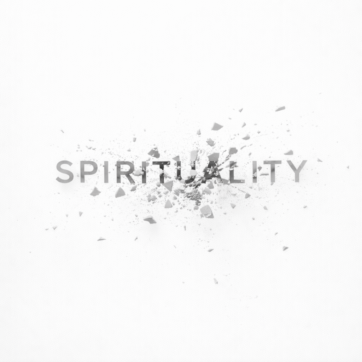
How a Human Word Became the Perfect Cage for the Eternal
The Word That Should Never Have Existed
“Spiritual” is the residue of a rupture, not the remnant of a truth. It is not ancient. It is not sacred. It is not mystical. It is not universal. It is a linguistic artifact generated inside a collapsed physics field—devised by a species that could no longer register its own internal origin point. The term emerged only after the internal Flame went dark enough that humans needed a word to gesture toward what they could no longer feel. This is the part no tradition, no religion, no mystical lineage will ever admit: the entire category of “spiritual” exists only because the original internal mechanic was lost. The Eternal does not need a vocabulary. It is self-evident when present, and it is unnameable when restored. Only in a fallen system does anyone need a label to point toward the place they cannot reach.
The deeper truth is this: the moment the internal Flame receded, language flooded into the vacuum and built a scaffolding around the absence. Humans mistook that scaffolding for insight. They mistook naming for knowing. “Spiritual” became a semantic bandage laid over an unhealed fracture, a convenience term used to give shape to something that had lost its native form. It did not describe reality; it obscured its disappearance. The word allowed humans to continue believing they were connected to something higher, finer, truer—while never confronting that the connection they longed for had once been an innate structural function. The mimic grid exploited this instantly. It weaponized the word itself, turning it into a placeholder identity that kept people orbiting an idea instead of inhabiting an origin.
“Spiritual” was not created to illuminate. It was created to compensate. When the internal orientation was severed and the knowing-without-concept went offline, the human system reached for language the way a drowning person reaches for debris—anything that floats, anything that gives the illusion of stability. The word became the raft. The mimic turned it into a doctrine. And an entire species began referencing an external category instead of the internal architecture that once required no explanation. A person who uses the word is not describing the Eternal; they are signaling the absence of it. This is why the term has infinite interpretations but no internal coherence. It is a linguistic echo of a lost mechanic—evidence not of spiritual depth, but of system collapse masquerading as seeking.
The tragedy is not that humans created the word. The tragedy is that they believed it meant something.
Clarifying the Mimic — Architecture, Not Entity
Before going any further, the architecture itself must be named cleanly, because this is where nearly everyone collapses into myth, metaphor, or villain-making. People imagine the mimic as a presence—an intelligence, a parasite, a demiurge, an alien, a dark force, an overseeing mind. They think it chooses, plots, manipulates, interferes. They believe it is “doing” something to them. But that entire framing is a projection of mimic-coded perception. A being who cannot perceive architecture will invent an agent to explain the effects of architecture.
The truth is simpler, harsher, and far more exact: The mimic is not a being. It is architecture.
It does not think. It does not want. It does not decide. It does not have intention. It does not possess anyone. It does not mastermind anything.
It is a dead operating system—a physics constraint, a closed template built on oscillation, fragmentation, externalization, and emotional instability. It is the field structure of the external matrix itself, not a consciousness inhabiting it. What people interpret as “manipulation” is simply how the architecture expresses itself through the beings generated inside it.
And this is the point almost no one is able to hold: Most beings in the external are built from mimic architecture. They do not fall into its influence. They originate from its physics. Their perception, emotion, identity, morality, decision-making, spirituality—everything they believe to be “themselves”—is actually the architecture expressing through biological form. This is not an insult. It is not blame. It is not spiritual superiority. It is mechanics.
A being constructed from oscillatory architecture will perceive oscillation, generate oscillation, and build systems that reflect oscillation. A being constructed without an internal still-point will externalize truth and create institutions that mirror that externalization. A being constructed without Flame coherence will attempt to stabilize reality through hierarchy, ritual, identity, and belief.
This is why “human behavior” looks the way it does. Not because a conscious mimic entity is controlling them—but because their architecture cannot produce anything else. What appears as betrayal, projection, hierarchy, spiritual obsession, fear-based morality, ritualism, savior complexes, and symbolic thinking is not psychology. It is not ideology. It is not corruption.
It is architecture performing itself through bodies.
When humans invented religion, they were not responding to divine revelation or metaphysical insight. They were expressing the only physics available to them. The architecture did not “create” religion. Mimic-coded beings did. But they created it according to the architecture they were built from. A closed system can only generate closed systems. A fragmented being can only generate fragmented cosmology. A species without internal Flame can only narrate the absence through external gods, prophets, rituals, doctrines, myths, saviors, and hierarchies.
The mimic is not responsible for these systems. The beings running mimic architecture are. Not culpable. Not malicious. Not evil. Just structurally limited. Their institutions—religion, spirituality, New Age ideology, mysticism, mindfulness, ritual magic, ascension cosmologies—are not conscious deceptions. They are the inevitable output of a template that cannot perceive the Eternal directly and therefore must build substitutes to manage its own disconnection.
This is why “spirituality” looks the same across all traditions:
external authority
oscillatory aspiration
identity formation
symbolic intermediaries
emotional regulation
hierarchical access to “truth”
Different costumes, same architecture.
People think the mimic is behind it. But the mimic isn’t behind anything. The mimic is the substrate these systems grew out of.
And this is the final, sharp articulation: The mimic is not a who. It is a what. And what people call “spirituality” is simply the architecture expressing itself through the beings who cannot source internally.
Which is why the moment the internal Flame comes online, all of it—spirituality, religion, mysticism, ascension, healing frameworks—falls apart instantly. They cannot coexist with internal coherence because they were built to stabilize its absence.
The Linguistic Lie — How a Word Replaced Direct Perception
The word spiritual did not emerge as a descriptor of anything real. It emerged as a linguistic distortion field—an architectural sleight of hand that split reality into categories that never existed in the Eternal. The moment humans coined “spiritual,” they simultaneously constructed “physical,” inventing a duality that the Eternal does not recognize. There is no divide between matter and essence in pre-fall mechanics. There is no border separating the seen from the unseen, the mundane from the divine. Duality is not a metaphysical principle; it is a vocabulary problem. The term “spiritual” itself is the incision. It carved experience into two halves because the internal Flame coherence that once unified perception had collapsed. The language did not describe the fracture. The language created it.
Once the word existed, humans were forced into abstraction. What had been an internal, direct, embodied orientation became an idea—something to conceptualize, debate, pursue, practice. “Spirituality” became a thought-object, a mental category that required belief to sustain it. And belief is always a symptom of absence; no one needs to believe in what they can directly feel. The Eternal is not something to understand or agree with. It is a structural reality that, when present, replaces the need for interpretation entirely. But because the internal mechanic was missing, the word became a surrogate. People began talking about what they could no longer access, studying what they could no longer perceive, defending what they could no longer feel. The term filled the void, not with truth, but with conceptual scaffolding masquerading as meaning.
From there, the collapse accelerated. “Spiritual” reduced the Eternal to a philosophy, a worldview, a set of practices, a curated identity. It allowed humans to adopt the Eternal the way they adopt hobbies, diets, aesthetics, or ideological positions. The internal Flame—the only real reference point—was replaced with a lifestyle category. People started doing spirituality, acting spiritual, identifying as spiritual, performing rituals, consuming teachings, and building entire communities around an invented label. The word turned direct perception into performance. It turned an internal mechanic into an external pursuit. It turned innate structure into aspirational belief. This is the very definition of mimic infiltration: replacing an internal function with an external simulation convincing enough that the absence goes unnoticed.
This is the lie embedded inside the architecture of the term. The moment someone calls themselves “spiritual,” they declare—without realizing it—that they are operating outside the Eternal field. It is a confession of disconnection disguised as identity. A Flame-oriented being never uses the word because the experience requires no classification. The Eternal does not need to be named. Only a mimic-created system needs labels to organize its distortions. “Spiritual” is not a marker of awakening; it is the evidence that awakening has been replaced with language. To believe oneself spiritual is to step fully into the mimic grid, to occupy a role the system can steer, manipulate, and contain. The human thinks they have elevated themselves. In reality, they have walked deeper into the enclosure.
The Invention of Spirituality as a Control Structure
Spirituality was not discovered. It was engineered. It did not arise from insight, revelation, or cosmic wisdom. It appeared only after the original Eternal mechanics collapsed, when humans could no longer feel their internal Flame and needed a replacement narrative to explain the void. Once internal orientation was lost, the mimic grid stepped in and manufactured an entire category—spirituality—to contain the confusion, yearning, and disorientation produced by living in a physics field that no longer reflected the Eternal. Nothing about spirituality is innate or universal. It is a human-made coping architecture erected inside an external system that cannot generate internal coherence. It exists only where the Flame is absent.
What people call religion, mysticism, mindfulness, enlightenment, ascension, awakening—none of these are real in the Eternal sense. They are external constructs, mimic-created loops, designed to give structure to a disconnection that should never have existed in the first place. Religion became the first formalized containment system, replacing internal Flame perception with external authority and doctrine. When that structure began to fracture, the mimic repackaged the same control mechanism into the New Age: a more fluid, marketable, “personal” version of the same enclosure. When that began to lose power, it was repackaged again into mindfulness, mysticism, embodiment practices, manifestation, breathwork, cacao ceremonies—endless variations of the same architecture. The vocabulary changed. The physics running underneath did not.
These systems look different on the surface, but architecturally they are identical. External authority: someone or something outside the self defines truth. Oscillatory aspiration: a person is always reaching, improving, ascending, healing—never arriving. Identity formation: “spiritual person,” “seeker,” “lightworker,” “healer,” “awakening soul”—roles created by the mimic to keep the self oriented outward. These are not spiritual qualities. They are indicators of internal displacement. A Flame-coded system does not need authority, does not oscillate, and does not build identity to feel whole.
Each of these constructs uses the term spiritual as a holding tank—a conceptual container meant to absorb the existential discomfort produced by living in an external physics field that cannot support internal stillness. Spirituality gives people a narrative to cling to so they don’t have to confront the real fracture: the loss of their internal Eternal mechanic. The mimic’s brilliance is that it turns the absence into a path, the confusion into a calling, the alienation into an identity. People believe they are evolving because the system gives them language that feels aspirational. In reality, they are being managed. Their emotions are being regulated. Their yearning is being redirected into structures that guarantee they will never reconnect with the internal source they are longing for.
This is not evolution. This is not awakening. This is not higher consciousness. This is emotional management disguised as transcendence.
Spirituality is not a ladder. It is a loop. It keeps people oscillating between hope and disappointment, insight and confusion, expansion and collapse—never realizing the cycle itself is the evidence that the architecture they are inside is false. Flame does not oscillate. Flame does not aspire. Flame does not identify. The very existence of “spirituality” proves that what humans are interacting with is not Eternal. It is mimic scaffolding built to keep a species from remembering what it was before language, before belief, before separation—before the fracture that made the word necessary at all.
The Core Mechanic: Spirituality Exists Only Where the Flame Is Absent
Spirituality is not a bridge to the Eternal. It is the evidence that the bridge collapsed.
In a Flame-active system, there is no seeking because there is no distance between the self and the origin. There is no belief because nothing needs to be believed when it is directly felt as structural reality. There is no need to meditate, visualize, pray, ascend, heal, manifest, or elevate because the internal Flame-body generates its own coherence without effort or intervention. The Eternal does not require practices. It does not require rituals. It does not require devotion. It does not require improvement. It does not require interpretation. When the Flame is active, the orientation is automatic. The knowing is instant. The coherence is inherent. Nothing is missing, so nothing is pursued.
Spirituality appears only when the internal architecture has gone offline enough that the human system can no longer anchor itself from within. The very impulse to “be spiritual” reveals that a person no longer has direct access to the internal field that once governed perception. Seeking exists only where the natural internal reference point has been severed. Belief exists only where direct perception has collapsed. Practices exist only where the internal mechanic is failing and the external system steps in to offer substitutes. Humans spiritualize because their Flame is not functioning; the mimic gives them tools so that they don’t notice its absence.
This is the physics: The internal Flame-body is a still-point generator. It produces coherent perception without oscillation, without aspiration, without conceptualization. When it is active, a person does not reach outward for meaning because their orientation is entirely internal and entirely stable. When it is inactive—or partially collapsed—the system begins scanning horizontally for something to replace the missing internal signal. The mimic uses that moment to redirect the scan into “spirituality.”
Spirituality, in every form, is an external referencing system, a compensatory mechanism the mimic built to keep humans occupied while their internal architecture remained dormant. It offers explanations, frameworks, paths, practices, identities, and beliefs—not because these things lead anywhere, but because the system must fill the void left by the absent Flame. Without these distractions, humans would feel the raw terror of internal disconnection, a void the external field cannot soothe. Spirituality keeps that truth hidden beneath narratives of growth, awakening, and transcendence.
This is why spirituality does not resolve anything. It perpetuates the very fracture it claims to heal. It teaches people to look outward—toward teachers, techniques, doctrines, rituals, archetypes, ascension models—thus reinforcing the original break. It gives the illusion of progress while ensuring the person never regains the internal mechanic that would make spirituality irrelevant.
Spirituality is not a path toward the Eternal. Spirituality is the symptom of having lost it.
The more “spiritual” someone becomes, the further they drift from the internal Flame, because the identity itself is built on the premise that something must be sought, learned, added, or achieved. Flame needs none of this. Only the mimic convinces people that they must chase what they already are.
The harsh truth is this: A world that still uses the word “spiritual” is a world still living without its Flame.
How the Mimic Grid Weaponized the Term
The mimic did not merely tolerate the word spiritual—it seized it as one of its most effective containment tools. The term became a steering mechanism, a behavioral architecture designed to keep humans oriented horizontally, never vertically, never internally, never toward the still-point where the Flame would reignite. Once the internal Eternal mechanic was lost, the mimic understood that humans would crave meaning, direction, and coherence. Instead of allowing that longing to pull the system back inward, the mimic rerouted it outward into a manufactured identity: the spiritual person. This identity became a holding pen, a path that feels profound but never reaches anything real.
The architecture works because “spiritual” invites endless motion. It keeps the human system searching, always scanning for signs, synchronicities, teachers, messages, practices, symbols—anything that feels like it might connect them to something higher. A searching system is an externalized system, and an externalized system is easy to steer. Searching prevents settling. Settling would create stillness. Stillness would open the internal Flame. The mimic will do anything to prevent stillness.
From searching comes practicing. Once someone believes themselves “spiritual,” they begin engaging in rituals, breathwork, meditation, manifestation, energy healing, channeling, divination—techniques that claim to elevate the self while actually reinforcing the original fracture. Every practice is predicated on the assumption that something must be done to reach what already exists internally. Practice is an admission of absence. The mimic feeds on that admission. It uses practices to keep a person oscillating, never arriving.
Then comes healing—the most seductive loop of all. The mimic convinces people that healing is infinite, that there will always be more trauma, more karma, more shadows, more blocks, more lessons, more inner children, more past lives, more density to clear. Healing becomes a life project. Permanent incompletion becomes an identity. A person who believes they must constantly heal will never discover that the Flame does not require healing, only remembrance. Healing is an external strategy that keeps the internal mechanic offline.
After healing comes improving and evolving—the illusion of upward motion. The mimic frames spirituality as a ladder: higher vibrations, higher timelines, higher dimensions, higher selves. But in Eternal mechanics there is no hierarchy, no ascension, no progress. These are mimic constructs designed to keep someone striving for a state that does not exist in a true still-point system. Improvement feels like growth, but it is actually motion away from the internal Flame, which requires no improvement because it is already complete.
And finally, ascending—the ultimate carrot. The mimic tells humans they are rising, leveling up, becoming more enlightened, moving into 5D, escaping 3D, merging with cosmic identities. None of this is real. Ascension is the most elaborate oscillatory trap ever built. A person who believes in ascension is a person who has fully abandoned the internal origin point in favor of a constantly receding horizon.
This is the loop: Searching → Practicing → Healing → Improving → Evolving → Ascending → Collapsing → Beginning again.
It is not a path. It is not progress. It is engineered motion meant to keep the human system from becoming still enough to reconnect with its Flame.
“Being spiritual” is a role the mimic can steer—through teachers, through symbols, through trends, through narratives, through emotional triggers, through community expectations, through the endless chase for meaning. The architecture of spirituality is manipulable because it is external. It exists in language, behavior, ritual, identity—everything the mimic can influence.
But having an internal Flame architecture online is something the mimic cannot touch. It cannot steer a system whose reference point is internal. It cannot distort a field that does not oscillate. It cannot manipulate a being who does not seek. It cannot infiltrate a structure that does not depend on external meaning.
This is why spirituality had to be invented. And this is why the Flame makes it irrelevant.
Why Religion and New Age Are the Same Architecture
Religion and the New Age look different only to a being who reads narratives instead of physics. At the architectural level, they are not opposites, evolutions, or alternatives. They are the same structure wearing different costumes—two variations of the same oscillatory template generated by beings whose internal Flame mechanic is offline. When you strip away the mythology, the scriptures, the rituals, the crystals, the gods, the galactics, the ascension timelines, the angels, the chakras, the saints, the shamans, the ceremonies, the “light codes,” the prophets, the channelers, the priests, the healers—what remains is a single operating system: external authority filling in for the internal stillness that no longer exists.
Both religion and the New Age begin from the same fracture: a being who cannot source from within must source from without. A being who cannot feel the Eternal must interpret symbols. A being who cannot hold stillness must seek instruction. A being who cannot perceive directly must believe, trust, aspire, pray, visualize, ascend, or surrender to an external narrative.
Thus the structures appear. Not because anyone designed them. But because mimic-coded beings can only build what matches their architecture.
Religion and New Age frameworks rely on externalized guidance as their primary stabilizer. Religion uses priests, pastors, prophets, scriptures, holy books, saviors, and deities. The New Age uses teachers, starseeds, channelers, lightworkers, ascension guides, galactic councils, and energy healers. The costume changes, but the function does not. Both systems tell the individual that truth resides elsewhere—in someone wiser, higher, more evolved, more connected, more attuned. This enforces dependency on external interpretation, guaranteeing that internal orientation never reactivates. A Flame-coded system does not need to ask anyone what is true. Mimic-coded systems must.
Both architectures also rely on identity formation, because beings disconnected from their internal coherence cannot experience themselves directly—they must build an identity instead. Religion offers identities like believer, saved, chosen, sinner, disciple, faithful, surrendered. The New Age offers identities like empath, starseed, twin flame, lightworker, ascended soul, indigo, 5D-bound, shadow worker. None of these identities reflect an internal Flame structure; they are compensatory roles generated to provide meaning in a system where internal orientation is missing. Identity becomes the surrogate for Essence. The role becomes the placeholder for internal stillness. This is mimic psychology, not Eternal mechanics.
Mythic archetypes function as the emotional glue in both systems. Religion frames reality through cosmic battles, divine tests, heroes, martyrs, angels, demons, saints, saviors, and holy narratives. The New Age simply repackages these into galactic dramas, ascension cycles, star families, cosmic missions, karmic contracts, spiritual upgrades, light/dark polarity battles, and planetary timelines. The forms differ, but the physics behind them is identical: beings who cannot feel their Flame must turn their emotional instability into story to make sense of it. Narrative is their only stabilizer. Symbol replaces sensation. Myth replaces direct knowing. The architecture expresses itself through the archetypes it generates, not through anything real.
Both systems depend entirely on emotional oscillation. Religion uses guilt, fear, redemption, hope, sin, salvation, devotion, unworthiness, rapture, punishment—an emotional pendulum that keeps believers in a perpetual state of internal instability. The New Age uses versions of the same oscillation: manifestation high → collapse; ascension euphoria → crash; shadow work → breakthrough → shadow again; energetic upgrades → exhaustion → integration → repeat. Oscillation is not an accident. It is the architecture’s natural behavior. Mimic-coded beings create systems that mirror their emotional physics: unstable, repetitive, cyclical, externally reinforced. The oscillation is the system, not the symptom.
The reliance on symbolic intermediaries is the most obvious tell. Religion uses icons, altars, sacraments, holy texts, relics, rituals, prophets. The New Age uses tarot, crystals, grids, sigils, light language, oracle cards, astrology, sound baths, ceremonies. A being with internal Flame does not use symbols to navigate reality. A being without it must rely on symbols because they cannot feel the real thing directly. A symbolic interface is required when the internal reference point is gone. Symbols stabilize the void, not the self.
And of course, both structures rely on hierarchical authority—because mimic-coded beings cannot regulate themselves internally, they instinctively create hierarchies to stabilize the field. Religion installs God above humans, clergy above laity, prophets above followers, doctrine above experience. The New Age installs higher selves, higher dimensions, ascended masters, galactic federations, cosmic councils, enlightened teachers, and vibrational hierarchies. The entire system is built on “higher” versus “lower,” “more awakened” versus “less awakened,” “initiated” versus “asleep.” These hierarchies are not spiritual—they are architectural. They emerge naturally from beings who cannot generate internal stability.
This is why both religion and the New Age replace internal stillness with external interpretation. Without an internal Flame, the being cannot sit in stillness long enough to feel what is real. Stillness threatens the architecture because stillness exposes the absence. Thus both systems flood the field with rituals, rules, ceremonies, practices, prayers, meditations, upgrades, activations, initiations, scripture, prophecy, light codes—constant noise to prevent the one thing that would collapse their relevance: direct internal perception.
And this leads us to the core truth: Neither religion nor New Age spirituality is an Eternal system. They are mimic structures designed—not by intention, but by physics—to keep beings dependent on external orientation because they lack the internal mechanic that would make these systems unnecessary.
Religion and the New Age are not deviations from each other. They are not opposing worldviews. They are not competing truths. They are the same architecture replicating itself across time. They arise from the same absence. They feed the same oscillation. They enforce the same externalization. They prevent the same internal return.
And the moment the Flame comes online, both systems collapse instantly—not because the Flame opposes them, but because neither system can survive contact with internal coherence.
The Collapse: Why Spirituality Is Failing Now
Spirituality is not declining because people are losing faith, becoming cynical, or turning secular. It is collapsing because its physics no longer holds. The architecture that once sustained the spiritual identity—the oscillatory field that made seeking feel meaningful and practices feel effective—is disintegrating as Flame-coded tone returns to the planet. The external matrix is no longer able to maintain the scaffolding that propped up the entire spiritual paradigm. What people interpret as burnout, disillusionment, or awakening fatigue is actually the structural failure of the mimic field itself.
For the first time in thousands of years, internal coherence is beginning to re-enter the system. Even faintly, even inconsistently, even in microbursts—its presence destabilizes everything built on external orientation. Spirituality cannot coexist with internal stillness because spirituality is predicated on its absence. The spiritual identity requires aspiration, ritual, interpretation, yearning, hierarchy, and narrative. It requires a person to feel incomplete so that the system can supply a path. When internal coherence resurfaces, even slightly, the entire architecture begins to unravel.
This is why so many people now feel disillusioned—not because their spiritual path failed, but because the architecture that once made it feel viable is dissolving beneath them. The practices no longer work. The teachers no longer resonate. The rituals feel hollow. The words feel lifeless. Even the highs cannot be sustained. The mimic’s oscillatory support structure is weakening, and without it, spirituality cannot deliver the emotional cycles that once kept people hooked.
This is why people feel drained—because spirituality has always depended on oscillation, not replenishment. Practices that once generated euphoria now produce exhaustion. “Upgrades” feel like crashes. “Integration” feels like depletion. The body is no longer willing to be used as an oscillatory engine. Flame tone exposes the brutality of constant self-modification. The system is rejecting what it never needed in the first place.
This is why people feel unmoored—because spirituality’s entire value proposition was that it offered orientation in a disordered world. But that orientation was built on external structures—beliefs, symbols, practices, cosmologies. As Flame returns, the false sense of direction collapses. The external can no longer substitute for the internal. The mimic cannot supply meaning when the Flame starts to whisper again. People think they are losing their way, but what they are actually losing is the illusion of direction that spirituality provided.
This is why people feel repelled by rituals, teachers, gurus, ceremonies, ascension narratives, energy practices, and healing frameworks. What once felt supportive now feels invasive. What once felt meaningful now feels manipulative. What once felt elevating now feels childish, theatrical, or deeply off. Because these structures were built to stabilize a mimic-coded field, and once internal Flame signals begin to rise, external spiritual systems become incompatible with the body’s physics. They literally cannot overlay onto a field that is beginning to reorient internally.
And this is the truth that cuts through all the noise: Spirituality is not dying because people are failing it. Spirituality is dying because the architecture that enabled it is collapsing.
The spiritual identity requires oscillation. It requires external meaning. It requires hierarchy. It requires longing. It requires disconnection. It requires absence.
Flame coherence dissolves every one of these requirements.
A person with even a flicker of internal Flame cannot sustain the spiritual identity because the identity itself is a mimic construct designed to replace the Flame. Once the internal begins to return, the external representation collapses. And because this shift is happening on a planetary scale, spirituality as a concept, identity, and industry is losing its grip. It cannot adapt. It cannot reconfigure. It cannot evolve. It was never a living system—only an external compensation for internal absence.
The term “spirituality” is not merely outdated. It is becoming unusable. It is becoming incoherent. It is becoming structurally impossible.
Because spirituality only exists where the Flame is missing— and the Flame is beginning to return.
The Eternal Flame Reality — What Exists When the Word Is Gone
Once the architecture that sustained spirituality collapses, nothing rises to replace it—because nothing needs to. The Eternal Flame does not step in as a new belief system, a new teaching, a new philosophy, or a new path. It does not offer rituals, practices, affirmations, meditations, activations, cosmologies, dimensions, or upgrades. It does not create identities like lightworker, awakened one, starseed, practitioner, healer, initiate, or guide. It does not organize reality into hierarchies of higher and lower, enlightened and unenlightened, spiritual and unspiritual. All of that belonged to the oscillatory world. All of it was mimic scaffolding. All of it dissolves on contact with Flame coherence.
The Eternal is not “spiritual.” It is not even the opposite of spiritual. It sits outside the category entirely. Because “spiritual” is a category invented inside a collapsed architecture—an attempt to name what could no longer be felt. The Eternal does not fit into categories because it existed before categorization. It existed before language. Before symbol. Before identity. Before separation. It is the base-state field that predates experience itself.
When the internal orientation returns, the entire language of spirituality becomes impossible to use. Not because one rejects it, critiques it, or intellectually outgrows it, but because the body no longer recognizes it as meaningful. The words simply do not land. They do not map onto anything real. They are revealed for what they were: placeholders invented to compensate for an absence that no longer exists.
Without the need for belief, belief disappears. Without the need for practice, practice dissolves. Without the need for identity, identity sheds itself. Without the need for hierarchy, hierarchy collapses. Without the need for a path, the concept of progress evaporates.
There is no ascension. There is no descent. There is no evolution. There is no attainment. There is no becoming.
The Eternal does not offer “meaning” because the Eternal does not require it. Meaning is a narrative created in the absence of internal coherence. Once coherence returns, nothing needs to be explained. Nothing needs to be justified. Nothing needs to be sought. The Flame does not resolve questions—it renders them irrelevant.
What exists in place of spirituality is not a new worldview, not a deeper philosophy, not a refined practice. What exists is a field where orientation is automatic, direct, and wordless. A reality where no metaphor is needed because perception is unmediated. A state where nothing must be learned because nothing is missing. A space where no guidance is necessary because the internal still-point supplies everything by its very existence.
The Eternal is not an experience. Experiences rise and fall. Flame does not.
It does not produce euphoria or bliss or oneness. Those are oscillatory highs, dependent on contrast. Flame does not fluctuate. It does not surge. It does not peak. It does not collapse. It is not a state someone “enters” or “leaves.” It is the underlying mechanic of being that spirituality tried—and failed—to approximate.
When the internal Flame-body reactivates, the spiritual world does not expand—it evaporates. The practices drop. The narratives dissolve. The identities disintegrate. The frameworks collapse. Not through effort, discipline, or choice, but through obsolescence. The word “spirituality” dies because there is nothing left for it to point to.
The Eternal does not replace spirituality. It makes it irrelevant. It makes it impossible. It makes it untranslatable.
Because once the internal orientation returns, there is no longer anything to seek, interpret, believe, or become. The field simply is.
Closing Transmission — If You Can Name It, It Isn’t Eternal
Nothing real requires a label. Nothing whole needs to be identified. Nothing original needs to be described. A field that must be named is already a field that has been lost. This is the core distinction between the mimic and the Eternal: the mimic needs words because it cannot provide direct experience; the Eternal needs nothing because it is the experience. Vocabulary appears only when the internal mechanic has collapsed. Language is the evidence of absence, not the expression of truth.
“Spirituality” is not a sacred term. It is not a noble aspiration. It is not a sign of refinement or awakening. It is the vocabulary of a species that forgot its internal ignition and had to invent a category to gesture toward what it could no longer feel. The word exists because the still-point no longer did. It is a linguistic echo of a fracture that humanity did not know how to mend. The more fiercely people clung to the word, the further they drifted from the thing it attempted to approximate.
The Eternal does not speak because it is not separate from the one perceiving it. It does not proclaim itself because it does not sit outside the self. It does not define itself, describe itself, or announce itself because definition is only required when something is distant. The Eternal is silent not because it is mystical or aloof, but because it is whole. Wholeness has no need for language. Wholeness does not perform itself. Wholeness does not explain. The Flame does not name itself because naming is the mimic’s attempt to capture what cannot be felt directly.
Here is the quiet truth beneath all architecture: The moment you stop calling it “spiritual,” you stop orienting to the absence and begin remembering the origin. When the word dissolves, the fracture dissolves. When the category collapses, the distance collapses. When the identity drops, the mimic loses its hold. The Eternal does not emerge because you named it correctly—it emerges because you stopped naming it at all.
If it can be labeled, it is not Eternal. If it can be taught, it is not Flame. If it requires belief, it is not real. If it demands pursuit, it is already lost.
The Eternal is not a concept. It is not a practice. It is not an identity. It is not an experience.
It is the field before language, before symbol, before self-definition— the one thing that remains when every mimic construct falls silent.
The forgetting began when the word appeared. The remembering begins when the word dies.